



Post Graduate Diploma in Buddhist Studies at Lotus Academic College is a 10-month academic program offered at the college’s campus in Khwayabahil, Patan, Lalitpur. The college states that this diploma is meant for Bachelor’s degree holders from any discipline and functions as a starting point for students who want to move toward advanced study in Buddhism.
Students often reach this point after noticing a gap: you may have interest in Buddhist philosophy and Nepal’s Buddhist heritage, yet you have not studied the subject in a structured academic way. The diploma exists for that exact need. The college itself was founded by the Lotus Research Centre and has operated since 2007 in Patan, Lalitpur.
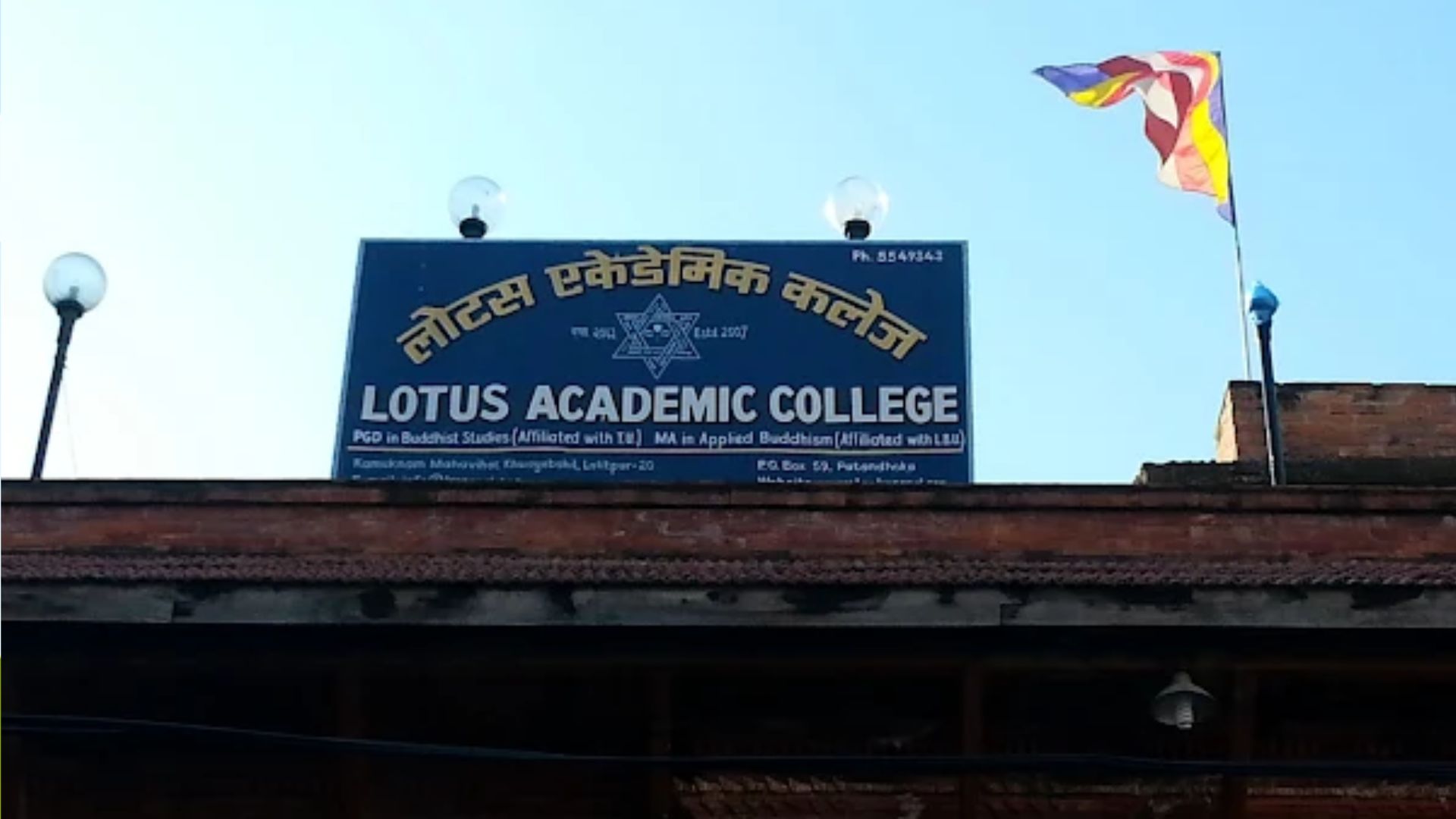
Program name: Post Graduate Diploma in Buddhist Studies
Duration: 10 months
Entry requirement: Bachelor’s degree (any discipline)
College location: Khwayabahil, Patan, Lalitpur
Academic context: Lotus Academic College is linked to Lotus Research Centre.
The college describes this diploma as a base for further study in Buddhism. That single line matters for students who plan their education step by step. A postgraduate diploma can help you build subject confidence before you enter a master’s program, especially when your bachelor’s degree comes from a different field.
The Lotus Academic College also runs MA-level Buddhist programs, and it states that the master’s program in Applied Buddhism is conducted in affiliation with Lumbini Buddhist University (LBU).
The college teaches as part of its introductory-level study, including:
Basics of Buddhist philosophy
Buddhist art and iconography
Main aspects of Nepalese Buddhism
The college also states that it tries to connect Buddhist teachings with daily life. This statement is relevant for diploma-level learners because many students want both a textual base and a clear way to interpret Buddhist ideas in real settings, including family, work, and community life.
The diploma is 10 months long, so details like weekly load and assessment style shape your daily routine. Students should request the following official items from Lotus Academic College:
Updated course outline or subject list for the 10-month diploma
Class schedule (days and timings)
Attendance requirement and internal evaluation method
Reading list and language expectations (Pali/Sanskrit/Tibetan exposure, if any)
Fee sheet and payment schedule
The diploma objective stated: it serves as a base for advanced studies in Buddhism. Students can translate that into learning priorities during the 10 months:
Students need clear understanding of core concepts.
Students need basic academic reading and writing habits in Buddhist studies.
Students need familiarity with Nepal’s Buddhist heritage context, since the college itself highlights Nepalese Buddhism as part of its introductory teaching.
The diploma sits in Patan, Lalitpur, within a living cultural setting where Buddhist heritage is visible in art, practice, and community spaces. The Lotus Research Centre organized conferences in 2000 and 2005 and started a digital archive to collect information on traditional Buddhist heritage connected to Nepal Mandala.
Students who study in this environment often gain a stronger sense of what “heritage documentation” means in practice: careful description, correct terminology, and respect for sources. The diploma can be useful for that learning foundation because it starts from basic content areas the college itself mentions, such as Buddhist philosophy, art, iconography, and Nepalese Buddhism.
Diploma as preparation for higher study. Students who treat the diploma seriously usually focus on outcomes like:
You explain key Buddhist concepts using correct terms, without mixing traditions casually.
You identify major features of Nepalese Buddhism and relate them to local heritage, since Nepalese Buddhism is stated as part of the college’s introductory teaching areas.
You read academic material with note-making habits that support later MA-level work.
You write short academic responses and reflections using references and clear structure.
These outcomes stay consistent with the diploma’s stated role as preparation for advanced study.
Students often begin Buddhist studies with unfamiliar terms and layered arguments. A steady reading plan helps you track concepts, authors, and examples.
Students can learn how Buddhist art and iconography connect to historical context, symbolism, and practice, because the college highlights these areas in its introductory teaching.
Students planning to move into master’s study benefit from structured writing habits early, because later programs expect term work, presentations, and research-focused tasks .
The teaching methods for the Buddhist Studies programs shown under LBU-linked sections, including lectures, discussion sessions, oral and written presentations, audio-visual support, term papers, seminar papers, book reviews, and field visits.
The postgraduate diploma uses the same method list. Students should confirm the diploma’s exact classroom approach directly with Lotus Academic College.
The diploma entry level is Bachelor’s degree holders from any discipline can enter.
The diploma is described as a base for advanced studies in Buddhism. Students who complete the diploma often look at next steps that match their goals:
Master’s-level study in Buddhist studies or applied Buddhist studies
Research assistance roles connected to heritage documentation, archiving, and cultural studies, especially when students already hold a bachelor’s degree in social sciences, humanities, education, or related areas.
Teaching-support roles in community learning spaces, depending on institutional requirements and your prior degree background.
Career direction depends strongly on your bachelor’s degree discipline and your writing and research ability, so students should map diploma learning to a clear plan.
Students should request a written fee sheet and ask whether any need-based or merit-based support exists for the 10-month intake.
The most practical reason sits inside the diploma’s own description: it is meant to act as a base for advanced study, and it accepts bachelor’s graduates from any discipline. This combination is useful when you want a structured entry into Buddhist studies without restarting at an undergraduate level.
The college location and institutional link to Lotus Research Centre also matter for students who value Nepal Mandala heritage documentation and academic exposure connected to Buddhist cultural heritage work.
Post Graduate Diploma in Buddhist Studies at Lotus Academic College is a 10-month program open to bachelor’s graduates from any discipline, and the. The program inside a college context in Khwayabahil, Patan, Lalitpur, founded by Lotus Research Centre and active since 2007.







