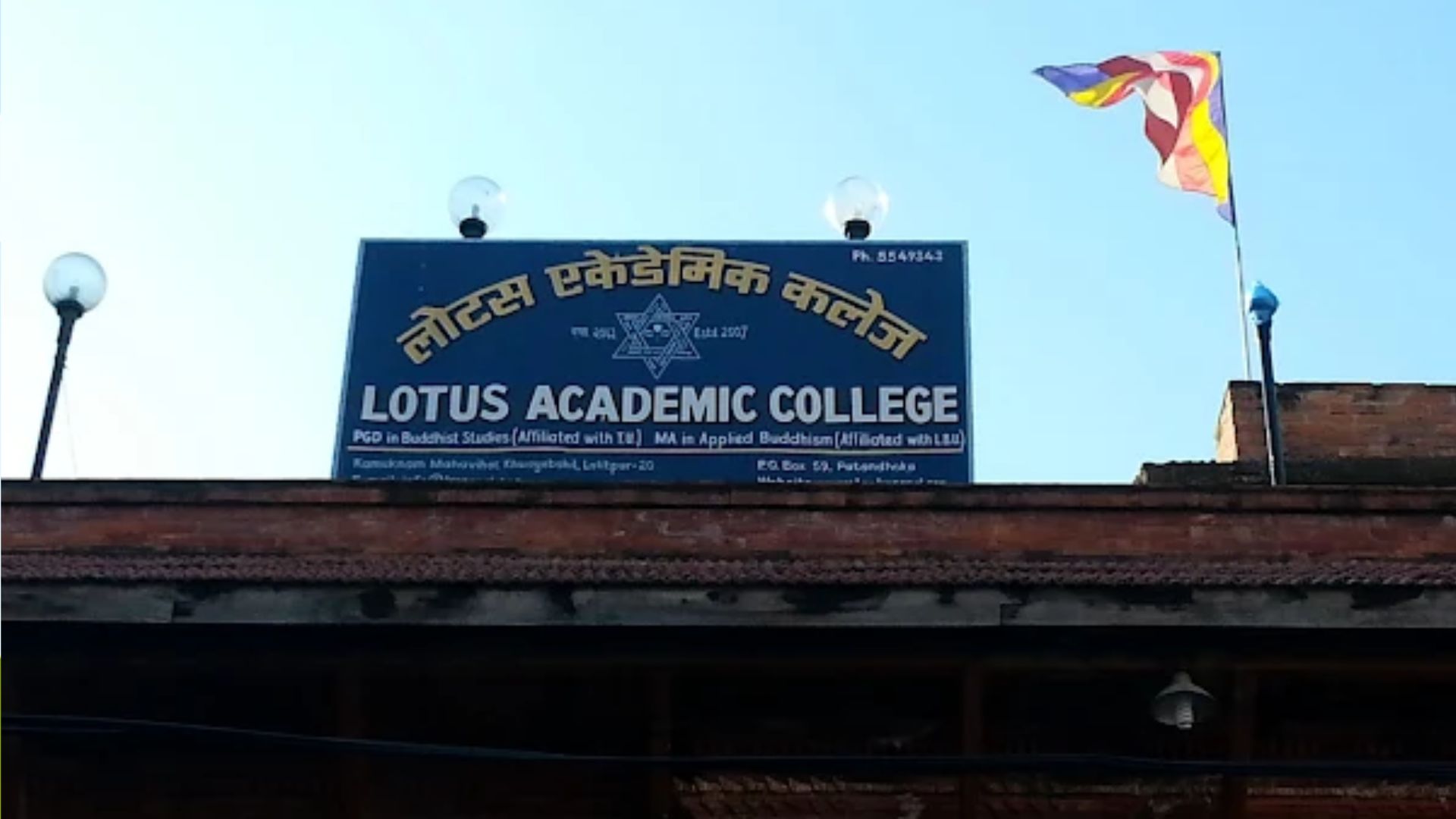
MA in Buddhist Studies at Lotus Academic College, Khwayabahil, Patan (Lalitpur), is a graduate-level program listed under Lumbini Buddhist University’s Buddhist Studies offerings, delivered through lecture and seminar modes at the affiliated campus setting. This course is meant for students who want structured academic study of Buddhism through history, philosophy, literature, art, iconography, and Nepal Mandala-related knowledge, supported by classroom discussion, academic writing tasks, and field visits.
Students often come with a practical concern: “How will this degree help my future work?” The strongest answer comes from the way the program trains you to read carefully, write clearly, speak with evidence, and connect Buddhist knowledge to Nepal’s living heritage and wider Asian contexts.
Program name is Master in Buddhist Studies (MBS)
Campus listing includes Lotus Academic College, Lalitpur (also listed with LBU central campus)
Level: Graduate
Teaching mode: Lecture, Seminar
Admission path: bachelor’s degree, written entrance exam, interview, maximum 35 students per class
Teaching practices include presentations, term papers, seminar papers, book reviews, and field visits
Internal and external assessment share is stated as 60/40, and the pass mark is stated as 50%
The first-semester set of papers build a foundation for Buddhist studies through history, doctrine, regional traditions, textual literacy, and visual culture.
MBS 511: History of Buddhism (3 credit hours; 40 internal / 60 external)
MBS 512: Buddhist Religiosity, Basic Teachings and Traditions (3; 40/60)
MBS 513: Buddhism in Asia (3; 40/60)
MBS 514: Buddhist Pāli Literature (3; 40/60)
MBS 515: Buddhist Art History and Iconology (3; 40/60)
MBS 511 gives you the historical backbone. Students who previously learned Buddhism only through informal reading often struggle to place events, councils, schools, and regional developments in a clear timeline. This paper supports that skill through guided academic study.
MBS 512 centers the basics of teachings and traditions through the lens of lived religiosity. Students preparing for teaching or research work often need the ability to explain concepts accurately in plain language. This paper supports that ability by keeping doctrine and practice in the same conversation.
MBS 513 helps you see Buddhism across Asia, not as a single uniform story. Students in Nepal often meet questions about how traditions differ across regions and cultures. This paper builds a comparative view that is useful for educators, tour-heritage workers, and researchers.
MBS 514 brings text-based study into focus through Buddhist Pāli literature. Students who want real confidence in Buddhist studies need steady practice reading textual traditions and understanding how literature carries doctrine, ethics, and historical memory.
MBS 515 links Buddhist studies with art history and iconology. Students in Patan and the Kathmandu Valley often see Buddhist heritage daily, yet still need academic vocabulary and method to interpret images, symbols, and artistic contexts responsibly. This paper supports that bridge between heritage observation and scholarly explanation.
Objectives include three central directions:
Students receive detailed knowledge of Buddhism, including history, philosophy, literature, art, and architecture.
Students study Buddhist perspectives across disciplines through focused academic work.
Students learn fundamental ideas connected to Buddhism of Nepal Mandala
Scope in Nepal connects directly to where Buddhist knowledge is used in real work and public life. Nepal holds living Buddhist heritage, monastic and lay traditions, pilgrimage routes, art and architecture, museums, and academic institutions. The program’s subject areas and field-visit practice fit that reality.
Students often enter the MA with one of these goals:
Students preparing for teaching roles in colleges, monasteries, or community learning settings
Students planning research writing in Buddhist history, doctrine, texts, or heritage
Students who work in heritage documentation, museums, cultural organizations, or community projects and want academic grounding
Students seeking a structured foundation before higher research study, where academic writing and seminar practice become daily requirements
Learning outcomes should stay tied to the curriculum and teaching practices. The program supports outcomes such as:
You explain Buddhist history and major developments using a clear timeline and evidence-based writing.
You describe core teachings and traditions in accurate, student-friendly language, supported by readings and discussion.
You compare Buddhism across Asian regions using academic structure, not casual generalization.
You build familiarity with Buddhist textual study through Pāli literature and related reading habits.
You interpret Buddhist art and iconography in a way that respects heritage context and scholarly method.
You write term papers, seminar papers, and book reviews using academic conventions taught through coursework.
Skill development in this course shows up through recurring academic tasks listed in the teaching methods section.
Students write term papers and seminar papers. This builds topic selection, structured argument, reading notes, citation discipline, and revision habits.
Students complete oral and written presentations. This helps you explain complex ideas with clarity, answer questions, and stay grounded in readings rather than opinion.
Students join field visits as part of the teaching approach. This supports observation, documentation, and connecting classroom topics with Nepal’s Buddhist sites, art, and community traditions.
Students prepare book reviews as part of coursework. This practice supports critical reading, summary writing, and careful evaluation of arguments.
Teaching methods include lectures, discussion sessions, oral and written presentations, audio-visual support, term papers, seminar papers, book reviews, and field visits.
Students usually benefit most when they treat seminars as a weekly habit rather than an exam-season activity. Students can prepare short reading notes before class, bring one question for discussion, and keep a running file of references for term paper use. This matches the program’s teaching structure and protects you from last-minute pressure.
Admission criteria:
Students from any discipline who have completed a bachelor’s degree (or equivalent) from a recognized university are eligible.
Students apply through an application form, and the online availability.
Students sit a written entrance examination and then an interview.
The maximum number of students is set to 35 per class.
Assessment methods are in two connected places.
Each course is evaluated against 50 marks and the marks are divided into 60:40, where the university term-end examination carries 60% and internal evaluation carries 40%. The pass mark in each subject is stated as 50%.
The first-semester table also shows each listed paper with 40 marks internal and 60 marks external.
Students can use this structure as a practical guide:
You plan for both regular internal work and the term-end exam.
You treat presentations, papers, and reviews as score-bearing work, not optional class tasks.
Career direction should match skills and knowledge taught through the curriculum and teaching methods listed. The MA supports academic and professional paths where research writing, heritage interpretation, and structured teaching matter.
Teaching and academic support roles related to Buddhist studies, religious studies, culture, and heritage topics, where seminar practice and academic writing are daily tools
Research and documentation roles connected to Buddhist heritage, where art history, iconology, and field observation add value
Work in museums, archives, and cultural organizations where careful interpretation of texts, history, and objects is required
Roles connected to cultural communication and education where students explain Nepalese Buddhist contexts to wider audiences using evidence-based language
Students and parents usually need written clarity on tuition, university fees, exam fees, and payment timelines. The campus administration can provide the official fee sheet for the current intake.
MA in Buddhist Studies can fit your plan when you want graduate-level study that stays close to Buddhist history, philosophy, literature, art, iconography, and Nepal Mandala-related knowledge, supported by seminar learning and academic writing.
Students who gain the most value often share one habit: students treat reading, writing, and discussion as weekly work. The teaching methods reward that pattern through internal evaluation and coursework outputs such as term papers and seminar papers.
MA in Buddhist Studies at Lotus Academic College is a graduate program under the Lumbini Buddhist University’s Buddhist Studies track, delivered through lecture and seminar teaching. The curriculum table for the first semester shows a foundation across Buddhist history, teachings and traditions, Buddhism in Asia, Pāli literature, and Buddhist art history and iconology.
Students from any discipline who have completed a bachelor’s degree (or equivalent) from a recognized university can apply.
Students submit an application, sit a written entrance exam, and attend an interview. The maximum intake at 35 students per class.
It includes lectures, discussion sessions, presentations, audio-visual support, term papers, seminar papers, book reviews, and field visits.
The MBS 511 (History of Buddhism), MBS 512 (Religiosity, teachings and traditions), MBS 513 (Buddhism in Asia), MBS 514 (Buddhist Pāli literature), and MBS 515 (Buddhist art history and iconology).
It has 60/40 split between term-end university exam and internal evaluation, and it sets the pass mark at 50%. The semester table also shows 40 internal and 60 external for each listed paper.