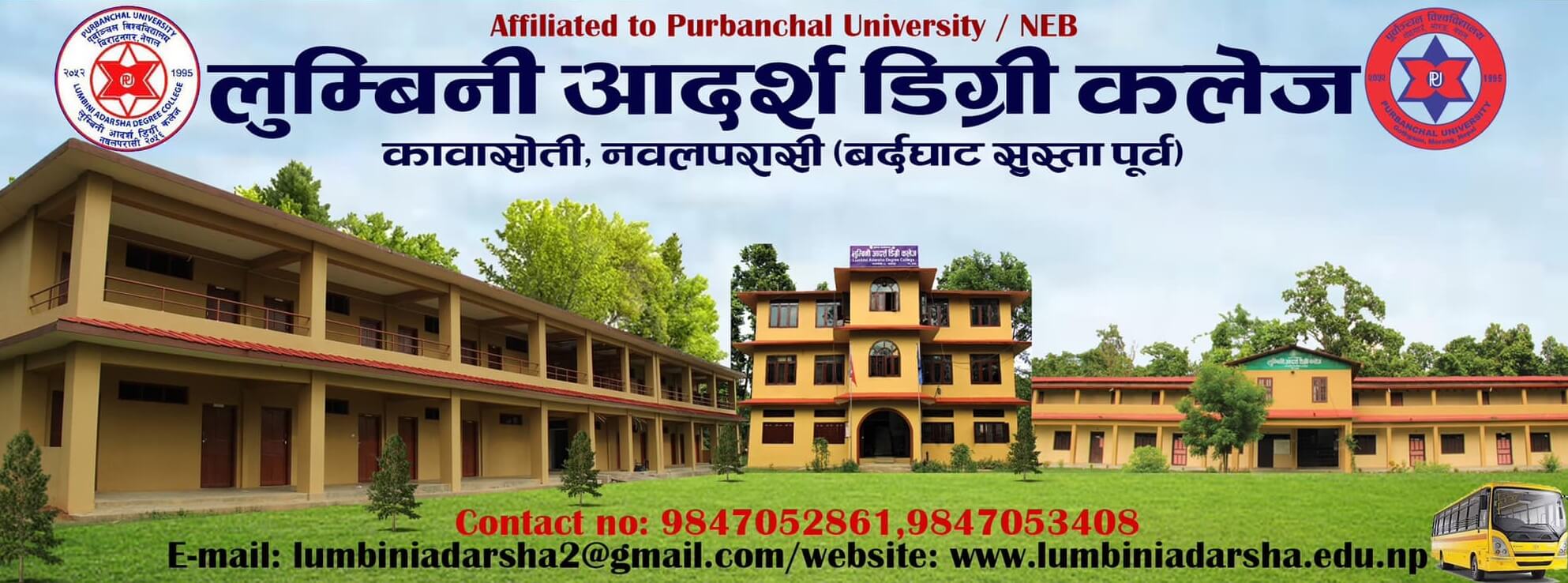
Bachelor of Education in Information Technology (B.Ed. IT) at Lumbini Adarsha Degree College is part of the college’s education faculty in Kawasoti-5, Nawalparasi. The college runs its university-level programs under Purbanchal University and places education study within a wider academic environment that also includes B.Ed., One Year B.Ed., M.Ed., and Bachelor of Information Technology (BIT).
The course sits in a campus setting where practical classes, computer-based learning, internal evaluation, library use, orientation support, and IT-related facilities are already part of student life. The college also maintains regular and periodical internal examinations, 20 percent internal assessment in subjects, and an academic environment that connects classroom learning with paper presentation, assignment work, and attendance-based review. This makes B.Ed. IT a subject-focused option for students interested in education, technology, and teaching practice.
Course Name: Bachelor of Education in Information Technology (B.Ed. IT)
College Name: Lumbini Adarsha Degree College
Location: Kawasoti-5, Nawalparasi, Nepal
Affiliation: Purbanchal University
Academic Stream: Education
Course Area: Information Technology in Education
Learning Setting: Classroom study, practical work, teaching methods, and internal evaluation
Campus Support: Orientation, library, computer lab, internet and multimedia support, scholarship support
The available education syllabus connected with Information Technology in Education under Purbanchal University combines foundational IT study with teaching-method content. Within the college’s education environment, this gives the course a balance between subject knowledge and classroom application.
Fundamentals of Information Technology
Method of Teaching Information Technology
Information and Communication Technology in Education
Introduction to Computer
Computer hardware, software, and storage
Database and DBMS basics
Networks and Internet
Applications of Information Technology
ICT-supported teaching and learning strategies
E-learning and virtual classroom concepts
Educational Technology
Teaching materials, communication tools, and classroom planning
Scope of ICT in teaching, evaluation, research, publication, and administration
Curriculum and classroom changes linked with ICT use
Legal and ethical issues related to internet use
Student safety in online environments
Use of application software in education
Search engines, e-library, websites, blog, wiki, and internet communication tools
Build understanding of information technology and its use in education
Develop familiarity with computer systems, hardware, software, and networks
Study the meaning, scope, and role of ICT in education
Prepare students for teaching-related use of information technology
Strengthen lesson planning, classroom strategy, and educational technology use
Connect subject study with practical and presentation-based academic work
The scope of B.Ed. IT at Lumbini Adarsha Degree College is tied to teacher preparation and technology-related education study within the college’s education faculty. It connects information technology content with teaching methods, classroom communication, educational technology, and structured academic practice.
The course also benefits from the college’s broader academic environment. Students study in a community-based campus with regular practical classes, IT-related facilities, library support, orientation programs, and internal examinations. This gives the course an academic setting where technology use is linked with daily teaching and learning processes rather than treated as a separate technical field alone.
Understand the meaning and scope of ICT in education
Build basic understanding of computer structure, storage, software, and networks
Use common communication tools and online academic resources
Identify legal and ethical issues related to internet use and student safety
Apply ICT-supported teaching and learning strategies
Prepare lesson-related academic work in information technology education
Use educational technology concepts in classroom settings
Take part in practical, assignment-based, and presentation-based evaluation
Computer fundamentals
Hardware and software basics
Database concepts
Network and internet use
ICT in education
E-learning concepts
Educational technology
Lesson planning
Classroom presentation
Assignment writing
Practical class participation
The teaching pattern connected with the Information Technology area combines theory, classroom participation, and practical work. The college’s academic system also gives attention to regular internal monitoring through assignment work, paper presentation, and attendance.
Lecture
Question-answer sessions
Classroom presentation
Discussion
Group work
Assignments
Self-study
Problem solving
Practical class
School-level teaching in technology-related education areas
ICT-supported classroom work
Educational support roles linked with teaching and learning technology
Academic pathways in education and educational technology
Further study in education-related fields
Partial scholarship support is available at the college
Full scholarship support is available at the college
Offered within the college’s education faculty under Purbanchal University
Course area that connects education with information technology
Computer lab, internet, and multimedia-supported academic environment
Regular practical classes in the college’s IT setting
Orientation support for new students
Regular and periodical internal examinations
Library support for teaching and learning
Scholarship support at the college level
Choose the B.Ed. IT course at the college
Submit academic records during the admission process
Complete the admission formalities required by the college
Join the orientation program after admission
Hard copy of academic documents
Academic records required for admission
Other admission-stage records required by the college
The college follows regular and periodical internal examinations across its academic programs. Internal evaluation includes assessment or assignment work, paper presentation, and attendance. The college also applies 20 percent internal assessment in its academic setting.
Within the Information Technology teaching area, the available university syllabus uses practical evaluation and final annual examination. Practical work, attendance, participation, presentation, and viva form part of the evaluation process in the teaching-method paper, and the practical and final examination components are treated separately.
B.Ed. IT at Lumbini Adarsha Degree College places information technology study inside the college’s education environment in Kawasoti-5, Nawalparasi. The course connects computer fundamentals, ICT in education, educational technology, teaching methods, and practical academic work within a university-affiliated academic setting.
At the college, the course is supported by orientation, library access, internal assessment, practical classes, computer facilities, and scholarship support. For students looking for an education course linked with information technology at this campus, B.Ed. IT remains a subject-focused option within the college’s education stream.
It is an education course at Lumbini Adarsha Degree College that connects information technology study with teaching methods and classroom use of ICT.
The course is offered under Purbanchal University.
The college is located in Kawasoti-5, Nawalparasi, Nepal.
The available education syllabus linked to the IT area includes Fundamentals of Information Technology, Method of Teaching Information Technology, ICT in Education, internet tools, e-learning, and educational technology.
Yes. The academic setting includes practical classes, and the Information Technology teaching area includes practical evaluation.
The college uses regular and periodical internal examinations. Internal evaluation includes assessment or assignment work, paper presentation, and attendance.
The course is supported by the college’s computer lab, internet and multimedia support, library, orientation program, and regular practical classes.
Yes. The college provides partial and full scholarship support.