Lumbini Adarsha Degree College is a community-based campus in Kawasoti, Nawalparasi, Nepal. Established in 1999, it offers academic pathways from Grade 11 and 12 to bachelor’s and master’s level study. The college is affiliated with Purbanchal University for university programs and with the National Examinations Board (NEB) for +2 programs. It is also recognized by Nepal’s University Grants Commission (UGC).
The campus presents itself as a service-oriented institution formed through community effort and local participation. Its academic structure combines annual and semester systems across different programs, along with regular internal assessment, orientation support for new students, library and laboratory use, scholarship support, and a study environment that covers education, management, arts, science, and information technology.
College Name: Lumbini Adarsha Degree College
Establishment Year: 1999
Type: Community-based campus
Location: Kawasoti, Nawalparasi, Gandaki Province, Nepal
Affiliation: Purbanchal University (PU), National Examinations Board (NEB)
Recognition: University Grants Commission (UGC), Nepal
Programs Offered: +2, BA, BBS, BBA, BIT, B.Ed., One-Year B.Ed., M.Ed.
Study Systems: Annual and semester, depending on program
Primary Contact: +977-78-540405 | info@lumbiniadarsha.edu.np
Admission Contact: 9847052861, 9847053408, 9843979602 | lumbiniadarsha2@gmail.com
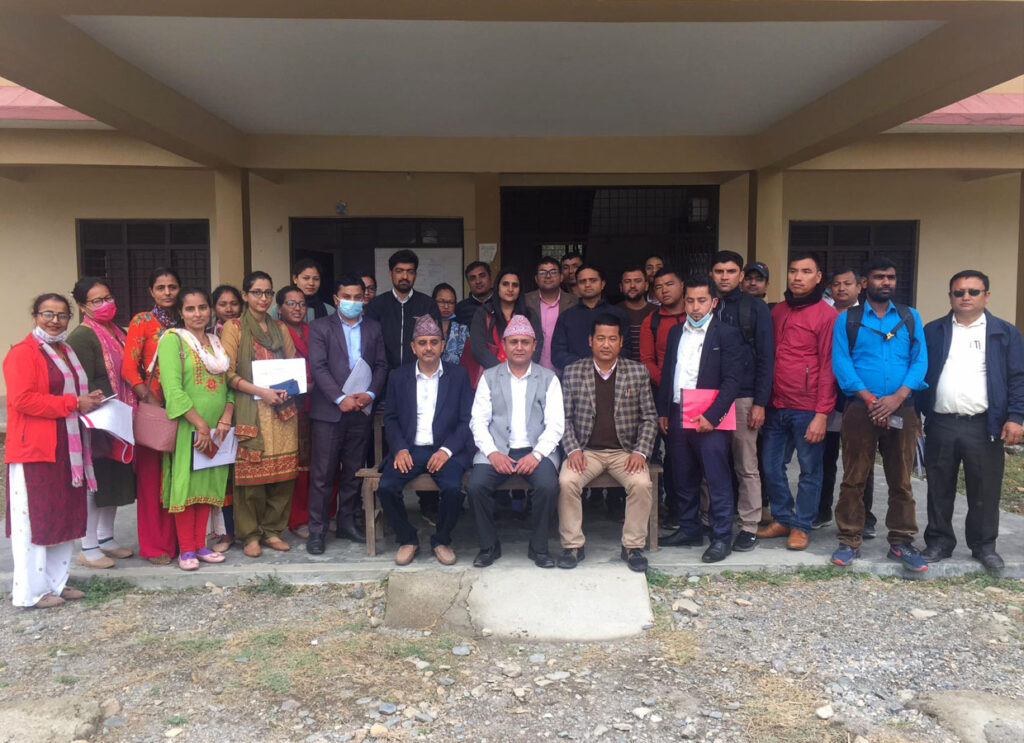
Lumbini Adarsha Degree College grew out of a local demand for accessible higher education in the Nawalparasi area. The founding idea was to create a college where ordinary families could send their children for further study at an affordable and reachable location. Community members, social workers, businesspeople, teachers, students, public figures, and other local supporters played a part in building that foundation.
The first phase of academic operation began with +2 study under the then higher secondary system, and classes were initially run at Gyanodaya Lower Secondary School. Over time, the institution expanded its academic scope and physical setup. It later developed its own buildings and campus infrastructure, adding classrooms, library space, laboratories, a computer lab, a conference hall, a canteen, common rooms, and outdoor play space.
Its vision centers on ethical, dependable, socially sensitive, and professionally prepared graduates. Its mission focuses on building a sustainable education base through learning and professionalism strong enough for national and global participation. The stated goals of the college connect academic study with social development, community improvement, research, training, and preparation of self-reliant human resources.
The campus also reports a Council of Research and Development. This unit is intended to coordinate research activity, guide learners and researchers in research methodology, and identify new areas of study suited to student interests and academic aptitude.
Lumbini Adarsha Degree College offers programs at secondary, undergraduate, and postgraduate levels. The institution’s academic range covers education, management, arts, information technology, and general higher secondary study.
At the +2 level under the National Examinations Board (NEB), the college has promoted the following streams:
The admission poster for Grade XI mentions morning and day shifts. It also presents career counseling, practical lab access, scholarship support, extracurricular activities, and experienced faculty as part of the +2 study environment.
The undergraduate level includes semester and annual programs under Purbanchal University:
The BBA program follows an eight-semester, four-year structure with 120 credit hours under Purbanchal University. It includes foundation courses, core management courses, specialization area courses, capstone courses, and internship work. The BBS program is a four-year course focused on business study areas such as accounting, economics, finance, marketing, management, business law, entrepreneurship, organizational behavior, and strategic management.
The BA program is also a four-year structure. Students complete 20 subjects of 100 full marks each and select two major areas, with one serving as the specialization area and the other as a minor. The one-year B.Ed. program is a one academic year professional education program designed for secondary-level teacher preparation and related educational roles, with core courses plus specialization options.
At the postgraduate level, the college offers Master of Education (M.Ed). The program is listed as a two-year annual system course at the college. The admission poster identifies major areas including English, Mathematics, Nepali, Health, Population, and EPM. The M.Ed. structure carries core courses, specialization courses, teaching practice, and thesis work under Purbanchal University.
The college offers admissions according to the structure and eligibility of each program. The general process indicated by the available material can be understood as follows:
Select the intended level and program under NEB or Purbanchal University.
Check the qualification required for that program.
Submit academic records during the admission process.
Complete any entrance or interview stage required by the specific program.
Attend the orientation program arranged for new students after admission.
Program-wise admission rules differ. For BBA, applicants must have completed twelve-year schooling or equivalent and must pass the university’s written entrance test, followed by a personal interview at the college. For BBS, applicants must have completed +2 in Science or Management, or an equivalent qualification, with English as a compulsory subject. Students from other faculties need a secondary background in Mathematics or Economics. For BA, students with a higher secondary degree are eligible for admission.
For the one-year B.Ed. program, a bachelor-level pass certificate or equivalent is required, along with subject background conditions for particular specialization areas. For the M.Ed. program, the required qualification is a B.Ed. degree of one year, two years, or three years from Purbanchal University or a university recognized by it.
The available admission material points to academic documentation as a core requirement. In practice, the required set is tied to the chosen level and program. The supported document requirements include:
Hard copy of academic documents
Academic records showing completion of the qualifying level for the selected program
Subject-background records for programs with subject-based eligibility, such as the one-year B.Ed. specializations
Admission-stage records for programs that include entrance and interview procedures, such as BBA
The college presents teaching as a mix of classroom instruction, practical work, academic monitoring, and student participation. Its internal examination system is described as regular and periodical, allowing programs to be monitored over the course of study. The internal evaluation pattern includes assessment or assignment work, paper presentation, and attendance. This gives academic departments an ongoing basis for reviewing student progress.
Orientation is part of the college’s academic culture. New students from different social and educational backgrounds are introduced to campus study, teamwork, and the general academic environment through organized orientation sessions. The college also notes that eminent personalities from different fields are invited to speak to students on education and career-related themes.
Methodology in the M.Ed. program is described in more detail and offers a useful picture of the teaching style used at the campus. It includes lecture, group discussion, PRA, demonstration, seminar, term paper presentation, assignment work, case analysis, problem solving, practical experience, and field work. These approaches point to a pattern of instruction that combines theory with applied work, especially in teacher education and related disciplines.
The college’s academic environment also places emphasis on regular practical classes. This is supported by the presence of science, IT, and hotel management labs, along with computing and multimedia resources.
The college has developed a sizable physical setup with owned land and permanent buildings. The reported infrastructure includes:
Occupied land area of 5 Bigaha 18 Kattha
Five permanent buildings
Adequate outdoor playground
22 classrooms
1 library
2 laboratories
1 computer lab
2 common rooms
1 conference hall
2 office rooms
1 teachers’ association room
1 student welfare room
1 hotel management lab
1 canteen
10 toilet rooms
Generator, store, and security guard rooms
360+ sets of desk and bench
25+ tables
60+ chairs
10+ cupboards
25+ lecturer desks
10,742+ books in the library
8+ journals
42 desktop computers
Website, internet, and software-based multimedia support
Drinking water through tap and filter system
Alternative power source through generator and petrol max
Student life at Lumbini Adarsha Degree College is shaped by a mix of academic routines and campus support systems. The college identifies itself as a place for learners from different streams and social and economic backgrounds. Its orientation program is one example of how it brings new students into campus life and helps them settle into study and group work.
The physical campus includes common rooms, a student welfare room, outdoor ground space, a canteen, and conference space. These features give students room for daily study, informal discussion, and academic events beyond the classroom. The admission poster also presents career counseling and extracurricular activities as part of student experience at the college.
The environment is presented as peaceful, and the campus material refers to regular practical classes backed by science, IT, and hotel management labs. Excursion options are also noted, which suggests that off-campus academic exposure forms part of the broader student experience.
Orientation program for fresh students
Career counseling
Extracurricular activities listed in admission material
Educational tours
Hotel management tour
Commercial tour
Paper presentation and seminar activities
Talks by invited personalities on education and career themes
Scholarship support appears in more than one form at the college. The infrastructure section reports partial and full scholarships, while the admission poster lists merit-based and reservation scholarship seats in several programs.
Partial scholarship support
Full scholarship support
Merit-based scholarship in BIT: 2 seats
Reservation scholarship in BIT: 3 seats
Merit-based scholarship in BBA: 2 seats
Reservation scholarship in BBA: 3 seats
Merit-based scholarship in BBS: 6 seats
Reservation scholarship in BBS: 6 seats
Merit-based scholarship in One-Year B.Ed.: 2 seats
Reservation scholarship in One-Year B.Ed.: 3 seats
Merit-based scholarship in M.Ed.: 7 seats
Reservation scholarship in M.Ed.: 7 seats
Established in 1999 as a community-based campus
Began its early +2 classes at Gyanodaya Lower Secondary School
Expanded from higher secondary study to bachelor’s and master’s level programs
Developed its own buildings and campus grounds over time
Formed a Council of Research and Development
Five M.Ed. students received the Nepal Bidhya Bhusan “Kha” award
Built an academic range that extends from +2 to postgraduate level
Community-based campus with a long local academic presence
Affiliated with Purbanchal University and National Examinations Board (NEB)
Recognized by the University Grants Commission (UGC)
Study options from Grade 11 to M.Ed.
Annual and semester programs across different fields
Library, labs, computer access, conference hall, canteen, and sports ground
Regular internal evaluation and orientation support
Scholarship and excursion provisions in several programs
Principal Baburam Rana Magar places the college within a public academic mission that connects +2 study, bachelor’s education, and master’s level preparation. His message links the college’s growth to the trust of students, parents, supporters, and the wider community that helped bring the institution to its current stage.
Chairperson Mahendra Dhowj GC emphasizes the founding purpose of preparing young minds for national advancement. His message also acknowledges the role of local people, service-oriented individuals, and community support in building the institution. He places attention on access for women, indigenous communities, marginalized groups, underprivileged learners, and differently abled students.
Lumbini Adarsha Degree College presents a broad academic profile within the Kawasoti and Nawalparasi area. Its community-based foundation, affiliation with Purbanchal University and NEB, and recognition from Nepal’s UGC place it within a formal academic framework. The institution combines higher secondary, undergraduate, and postgraduate study with campus infrastructure, internal assessment, practical work, scholarship support, orientation, and student services. For students looking for a college with study options across several levels in Kawasoti, it remains a notable academic presence.
Contact Lumbini Adarsha Degree College's administrative office for detailed information on the course, admissions, location, fees, scholarships, facilities, counseling, or eligibility.
Lumbini Adarsha Degree College
Email Address: info@lumbiniadarsha.edu.np
Phone Number: +977-78-540405
Location: Kawasoti-5 Nawalparasi, Nepal
Lumbini Adarsha Degree College is affiliated with Purbanchal University for university programs and with the National Examinations Board (NEB) for +2 programs. It is also recognized by Nepal’s University Grants Commission (UGC).
Lumbini Adarsha Degree College was established in 1999.
The college is located in Kawasoti, Nawalparasi, Nepal.
The college offers +2 programs, BBA, BIT, BBS, BA, B.Ed., One-Year B.Ed., and M.Ed.
Yes. The college provides partial and full scholarship support. Merit-based and reservation scholarship seats are also available in BIT, BBA, BBS, One-Year B.Ed., and M.Ed.
The campus includes classrooms, a library, laboratories, a computer lab, common rooms, a conference hall, a canteen, outdoor ground space, drinking water facilities, and alternative power support. The library holds more than 10,742 books and 8 or more journals.
Yes. The college conducts an orientation program for fresh students and also arranges talks by invited speakers on education and career-related topics.
Yes. BBA admission includes a written entrance test under the university system and a personal interview conducted by the college.