



The Bachelor of Management Studies (BMS) at Lumbini Banijya Campus is a four-year undergraduate program offered in eight semesters. The campus has operated BMS as an autonomous program since the academic year 2020. It is run at a community-based management campus in Devinagar, Butwal Sub-Metropolitan City, Rupandehi, where management education remains the central academic area.
At Lumbini Banijya Campus, BMS is supported by a management-centered academic setting that includes academic sections, EMIS, IQAC, examination units, library and e-library access, computer labs, seminar halls, counseling support, and scholarship provisions. The program combines management study with communication, accounting, finance, marketing, business research, internship, and specialization-area learning.
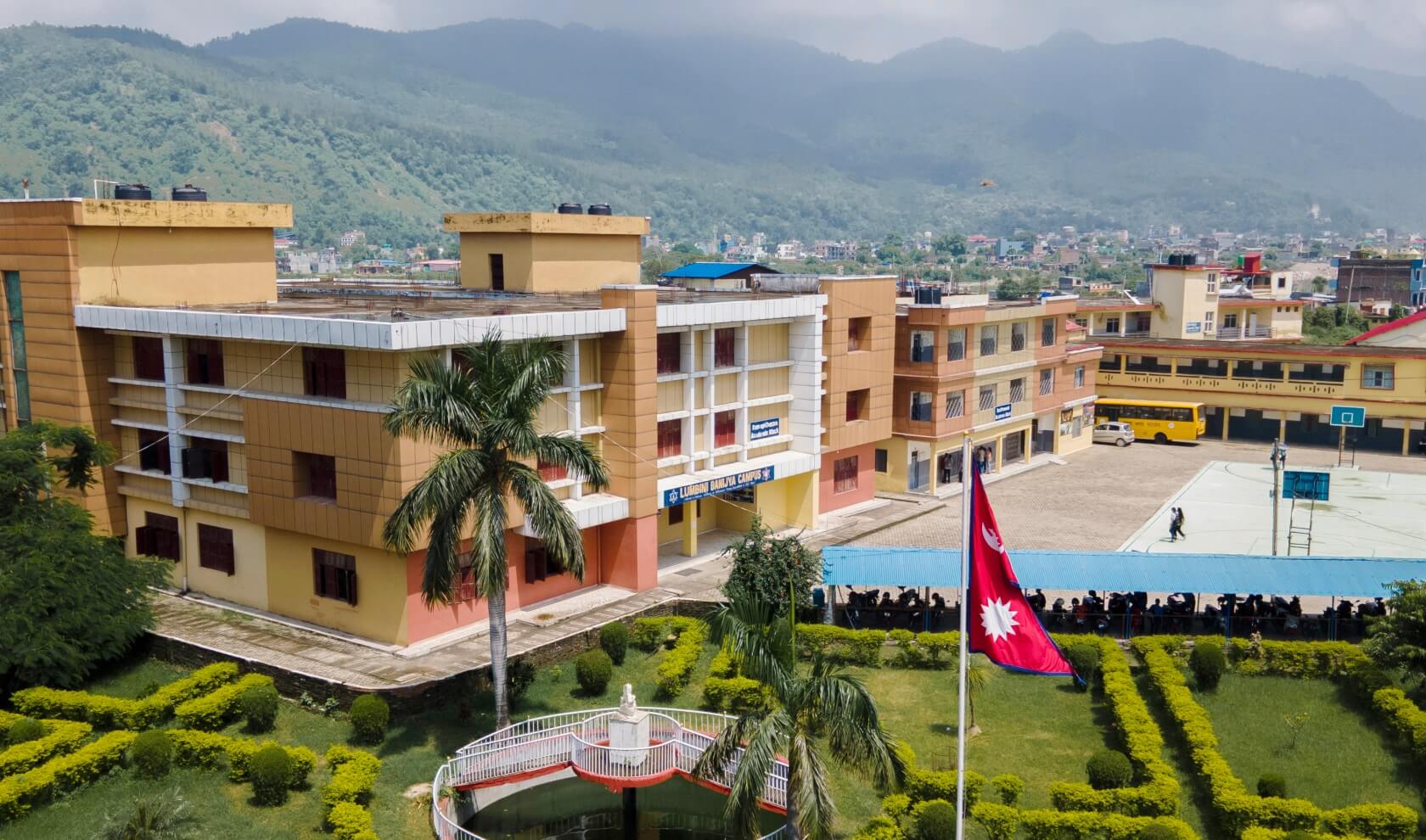
Course: Bachelor of Management Studies (BMS)
Campus: Lumbini Banijya Campus
Location: Devinagar, Butwal, Rupandehi
Institutional context: Community-based management campus
Campus affiliation context: Tribhuvan University-affiliated campus
Accreditation context: Reaccredited by the University Grants Commission (UGC) Nepal
Program status: Autonomous program
Start of BMS operation at the campus: Academic year 2020
Duration: Four years
Academic structure: Eight semesters
Eligibility: 10+2 or equivalent with at least D+ grade in all subjects of Classes 11 and 12
Admission requirement: Entrance examination
Specialization areas: Finance, Accounting, Management, and Marketing
Final academic components: Research Project Report and Internship
Learning support: Library, e-library, computer labs, seminar halls, counseling support, and scholarships
The BMS curriculum at Lumbini Banijya Campus is organized around foundation study, core management subjects, specialization-area courses, electives, and final academic work. Its structure is designed to move students from introductory management and social science subjects into applied business areas and later-stage research and internship work.
Program duration: Four years
Semester structure: Eight semesters
Foundation Courses: 36 credits
Core Courses: 63 credits
Specialization Area Courses: 15 credits
Elective Courses: 6 credits
Research Project Report and Internship: 6 credits in total
Foundation courses include:
English I and II
Basic Mathematics
Business Statistics I and II
Economics I and II
Foundation of Psychology
Foundation of Sociology
Business Law
IT and E-Commerce
Communication and Legal Drafting
Core courses include:
Principles of Management
Human Resource Management
Organizational Behavior
Small Business Management
Tourism and Destination Management
Agri-Business Management
Strategic Management
Retail and Supply Chain Management
Entrepreneurship Development
Business Research Methods
Contemporary Management Issues
Financial Accounting I and II
Cost Accounting
Management Accounting for Decision Making
Financial Management I and II
Corporate Finance
Fundamentals of Marketing
Foundations of International Business
Events Management
The specialization structure allows students to study one area only:
Accounting
Finance
Management
Marketing
Examples from the specialization pool include:
Accounting: Business Accounting, Accounting for Partnership, Fundamentals of Taxation in Nepal, Practice in Auditing, Co-operative Accounting
Finance: Essential of Investment, Financial Institutions and Market, Cooperatives Management, Micro Finance, Bank Management
Management: Project Management, Creativity and Innovation, New Venture Creation, Labor Relation, Quality Management
Marketing: Consumer Behavior, Integrated Marketing Communication, Service Marketing, Strategic Brand Management, Digital and Social Media Marketing
Elective options include:
Foundation of Econometrics
Data Analysis and Modeling
Development Economics
Public Relations Management
Political Science
The final academic stage includes:
Research Project Report
Internship
Develop lateral thinking skills among students
Strengthen communication skills
Build social responsibility
Improve analytical, interpersonal, organizational, and decision-making skills
Provide a basic understanding of modern management practices
Support entrepreneurship-related learning
Help students develop competency and skills for employment
Sensitize students to challenges in the global market
The scope of BMS at Lumbini Banijya Campus is shaped by both the course design and the college setting. The program brings together management, accounting, finance, marketing, research, communication, sociology, psychology, economics, and e-commerce within one undergraduate structure. That makes it suitable for students who want management study with room for specialization in a selected business area.
At the college level, the program is situated in an institution that focuses on management education. Academic delivery is supported by departments, program coordinators, EMIS, IQAC, examination units, counseling support, and library services. The campus also connects teaching with field work, research-related activity, and seminar-based academic engagement. For BMS students, this gives the course a clear institutional context rather than treating it as a standalone program.
Develop a general management perspective
Build communication and analytical skills for business study
Strengthen decision-making ability in organizational settings
Understand core functions of management, accounting, finance, and marketing
Complete advanced study in one specialization area
Carry out research project work and internship in the later stage of the program
Prepare for entry-level work in different business sectors
Build an academic base for further study in management
Communication and legal drafting
Business statistics and basic quantitative analysis
Management and organizational understanding
Accounting and finance application
Entrepreneurship-related thinking
Research and report writing
IT and e-commerce use
Interpersonal and organizational skills
Decision-making in business contexts
The teaching setting for BMS at Lumbini Banijya Campus is linked with the wider academic practices used across the campus. The institutional structure includes research-active faculty, department-level coordination, academic sections, EMIS, IQAC, and examination support. The campus also connects academic work with field work and research activity.
Teaching practices used in the campus context include:
Interactive classroom sessions
Business case studies and simulations
Group activities and article reviews
Term papers and academic writing
Guest lectures and panel discussions
Research-based assignments and presentations
Entry-level roles in management support
Office and administrative work in business organizations
Finance and accounting support roles
Marketing-related support work
Entrepreneurship and small business activity
Work in sectors that require organizational and decision-making skills
Further study in management and related fields
Merit-based scholarships
Merit-cum-means scholarships
Support for students from disadvantaged backgrounds
Support for differently-abled students
Performance-based awards for academic toppers
Financial aid for students from low-income families
Support for students from marginalized communities
Incentives linked to extracurricular and leadership participation
Pass 10+2 or equivalent
Secure at least D+ grade in all subjects of Classes 11 and 12
Pass the entrance examination
Apply for admission within the campus intake process for undergraduate management programs
The BMS program follows an eight-semester structure. Academic completion includes coursework across foundation, core, specialization, and elective components, followed by Research Project Report and Internship in the later stage of the program. Examination and academic administration at the campus are supported through formal examination units within the institutional structure.
The BMS program at Lumbini Banijya Campus is defined by its autonomous structure, eight-semester format, and management-centered academic setting. Its curriculum moves from foundation subjects to advanced management study, specialization, internship, and research project work.
For students in Butwal and nearby areas, the course is supported by a campus structure that includes academic coordination, EMIS, IQAC, examination units, counseling support, scholarships, library services, e-library access, computer labs, and seminar facilities. Within that framework, BMS offers an undergraduate route into management study with options in finance, accounting, management, or marketing.
The BMS program runs for four years and is divided into eight semesters.
The campus has operated BMS as an autonomous program since the academic year 2020.
Applicants must have passed 10+2 or an equivalent qualification with at least D+ grade in all subjects of Classes 11 and 12 and must pass the entrance examination.
The specialization areas available in BMS are Finance, Accounting, Management, and Marketing. Students pursue the course in one specialization area only.
Yes. The final academic components include a Research Project Report and an Internship.
BMS students study in a campus setting supported by library and e-library services, computer labs, seminar halls, counseling support, scholarships, EMIS, IQAC, and examination units.






