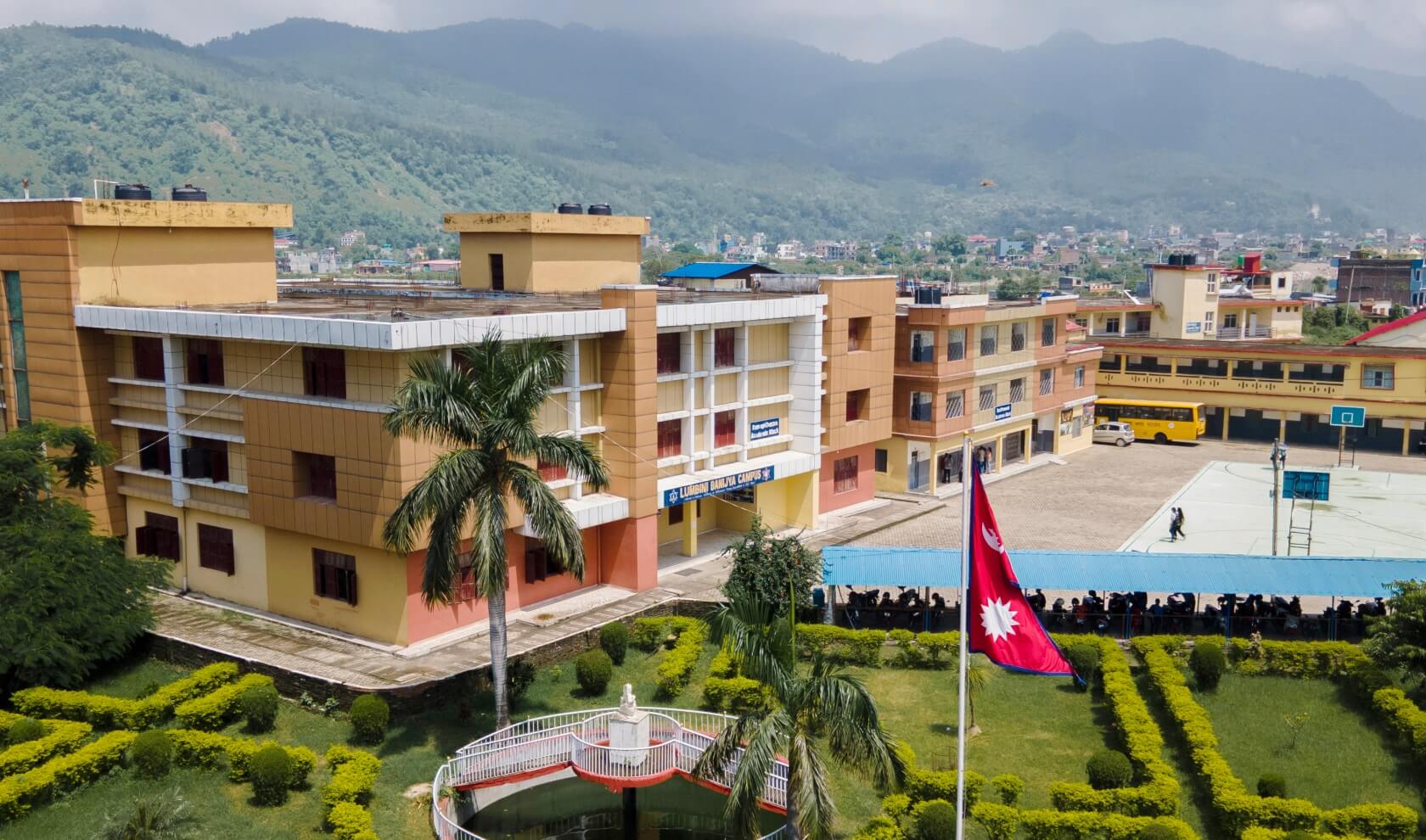
The Master of Business Studies (MBS) at Lumbini Banijya Campus is a two-year postgraduate program under the Faculty of Management of Tribhuvan University. At this campus in Devinagar, Butwal Sub-Metropolitan City, MBS is part of a long-running management education setting where the institution has continued to focus on business and management study as its main academic area.
The campus received approval to run MBS classes in 2001 after phasing out PCL. Within the college context, the program is supported by a structured academic environment that includes departments, program coordination, IQAC, EMIS, examination units, library services, e-library access, computer labs, seminar halls, counseling support, and research-related academic activity. For students seeking a TU postgraduate management degree in Butwal, MBS is one of the college’s central academic offerings.
Course: Master of Business Studies (MBS)
Campus: Lumbini Banijya Campus
Location: Devinagar, Butwal, Rupandehi
Affiliation: Tribhuvan University
Faculty: Faculty of Management
Level: Postgraduate
Duration: Two years
MBS approval at the campus: 2001
Institutional context: Community-based management campus
Campus accreditation context: Reaccredited by the University Grants Commission (UGC) Nepal
Total course requirement: 1000 marks
Academic structure: 14 analytical and core courses, 2 specialization courses, and a thesis or two seminar papers
Specialization areas named in the course: Management, Accounting, Marketing, and Information Systems
Eligibility: Bachelor’s degree or equivalent from a recognized board, plus the entrance examination conducted by Tribhuvan University
Learning support: Library, e-library, computer labs, seminar halls, counseling support, and scholarship support
The MBS curriculum at Lumbini Banijya Campus follows the Tribhuvan University postgraduate framework in business studies. Its structure is centered on advanced management study, specialization, and research work.
Program duration: Two years
Total course requirement: 1000 marks
Analytical and core courses: 14 courses carrying 700 marks
Specialization courses: 2 courses carrying 200 marks
Research component: Thesis or two seminar papers carrying 100 marks
Specialization areas available in the course:
Management
Accounting
Marketing
Information Systems
The overall structure shows that the program is not limited to classroom instruction alone. It combines analytical coursework with specialization and a formal research component in the later stage of the degree.
Equip students with conceptual knowledge of business and management
Prepare managers for functional areas of management
Develop knowledge and skills related to the business environment in national and global perspectives
Encourage entrepreneurial capability
Develop research capability
Prepare students for higher-level managerial responsibility in organizations
The scope of MBS at Lumbini Banijya Campus extends across business, industry, government, and nongovernmental sectors. The program is intended for students who already hold a bachelor’s degree and want to continue into advanced management study with room for specialization.
The college setting adds useful context to that scope. Lumbini Banijya Campus is organized around management education, and MBS sits alongside other business and management programs within a single academic environment. Students study in a campus system supported by academic sections, program coordinators, examination functions, EMIS, IQAC, library services, seminar use, and research-related institutional units.
The research orientation of the campus is also relevant to MBS. The institution’s Research Management Cell supports research planning, proposal guidance, workshops, training, documentation, and publication-related academic work. Together with seminar halls, library access, e-library support, and faculty engagement in research and academic discussion, this gives the MBS program a setting that fits postgraduate study more closely than a basic classroom model.
The longer-term academic scope of the course is also clear. The program is meant to prepare students for managerial work in areas such as accounting, marketing, finance, and general management, while also building a foundation for higher studies and later academic work in teaching, research, and consultancy.
Develop postgraduate-level understanding of business and management
Build functional knowledge in management-related areas
Strengthen understanding of business environments in national and global contexts
Complete specialization study in a selected academic area
Develop research capability through thesis or seminar-based academic work
Prepare for managerial responsibility in organized sectors of activity
Build an academic base for further study, teaching, research, and consultancy
Conceptual understanding of business and management
Functional management understanding
Business environment analysis
Specialization-area study
Research and academic writing
Seminar-based academic presentation
Entrepreneurial orientation
Decision-making in organized sectors of activity
The teaching environment for MBS at Lumbini Banijya Campus is shaped by the broader academic practices used across the college. The campus structure includes experienced and research-active faculty, department-level coordination, IQAC, EMIS, and examination support. The college also connects academic work with field work and research activity.
Teaching and learning practices in the campus context include:
Interactive classroom sessions
Business case studies and simulations
Group activities and article reviews
Term papers and academic writing
Guest lectures and panel discussions
Research-based assignments and presentations
Field work and research-oriented academic activity
Seminar use for academic events and presentations
Managerial roles in business organizations
Functional roles in accounting, marketing, finance, and general management
Work in industry, government, and nongovernmental sectors
Academic progression to higher studies in management
Longer-term pathways in teaching, research, and consultancy
Entrepreneurship-related professional activity
Merit-based scholarships
Merit-cum-means scholarships
Support for students from disadvantaged backgrounds
Support for differently-abled students
Purely merit-based scholarship support
Performance-based awards for academic toppers
Financial aid for students from low-income families
Support for students from marginalized communities
Pass a bachelor’s degree or equivalent from a recognized board
Appear in the entrance examination conducted by Tribhuvan University
Complete admission through the campus process for postgraduate management programs
Academic completion in the MBS program is tied to a total of 1000 marks. Students complete 14 analytical and core courses, two specialization courses, and either a thesis or two seminar papers. At the college level, examination work is supported through formal examination and student evaluation functions within the campus structure.
The research component is a defined part of the degree. Students complete either a thesis or two seminar papers as part of the final academic requirement.
The MBS program at Lumbini Banijya Campus combines Tribhuvan University’s postgraduate management structure with a college environment built around business and management education. Its two-year format, specialization options, and research requirement give the course a clear academic direction for students who want to continue beyond bachelor-level management study.
At the campus level, MBS is supported by academic coordination, library services, e-library access, computer labs, seminar halls, examination units, counseling support, and research-related structures. For students in Butwal and nearby areas, it offers a postgraduate route in management within a college that has run MBS since 2001.
The MBS program is a two-year postgraduate course under the Faculty of Management of Tribhuvan University.
The campus received approval to run MBS classes in 2001.
Applicants must have passed a bachelor’s degree or equivalent from a recognized board and must pass the entrance examination conducted by Tribhuvan University.
The program requires completion of 1000 marks, including 14 analytical and core courses, two specialization courses, and either a thesis or two seminar papers.
The specialization areas named in the program are Management, Accounting, Marketing, and Information Systems.
MBS students study in a campus setting supported by library and e-library services, computer labs, seminar halls, counseling support, examination units, EMIS, IQAC, and research-related academic structures.