



The Bachelor of Arts and Bachelor of Laws (B.A. LL.B.) at Lumbini Integrated Academy is a five-year undergraduate program affiliated with Purbanchal University. It combines humanities and social science subjects with legal education, research, professional ethics, advocacy, and clinical work.
The curriculum progresses from political theory, economics, history, sociology, and basic legal concepts to criminal law, constitutional law, human rights, contract law, company law, international law, specialized electives, trial advocacy, and dissertation work. The course is available at Lumbini Integrated Academy in Tilottama-3, Rupandehi.
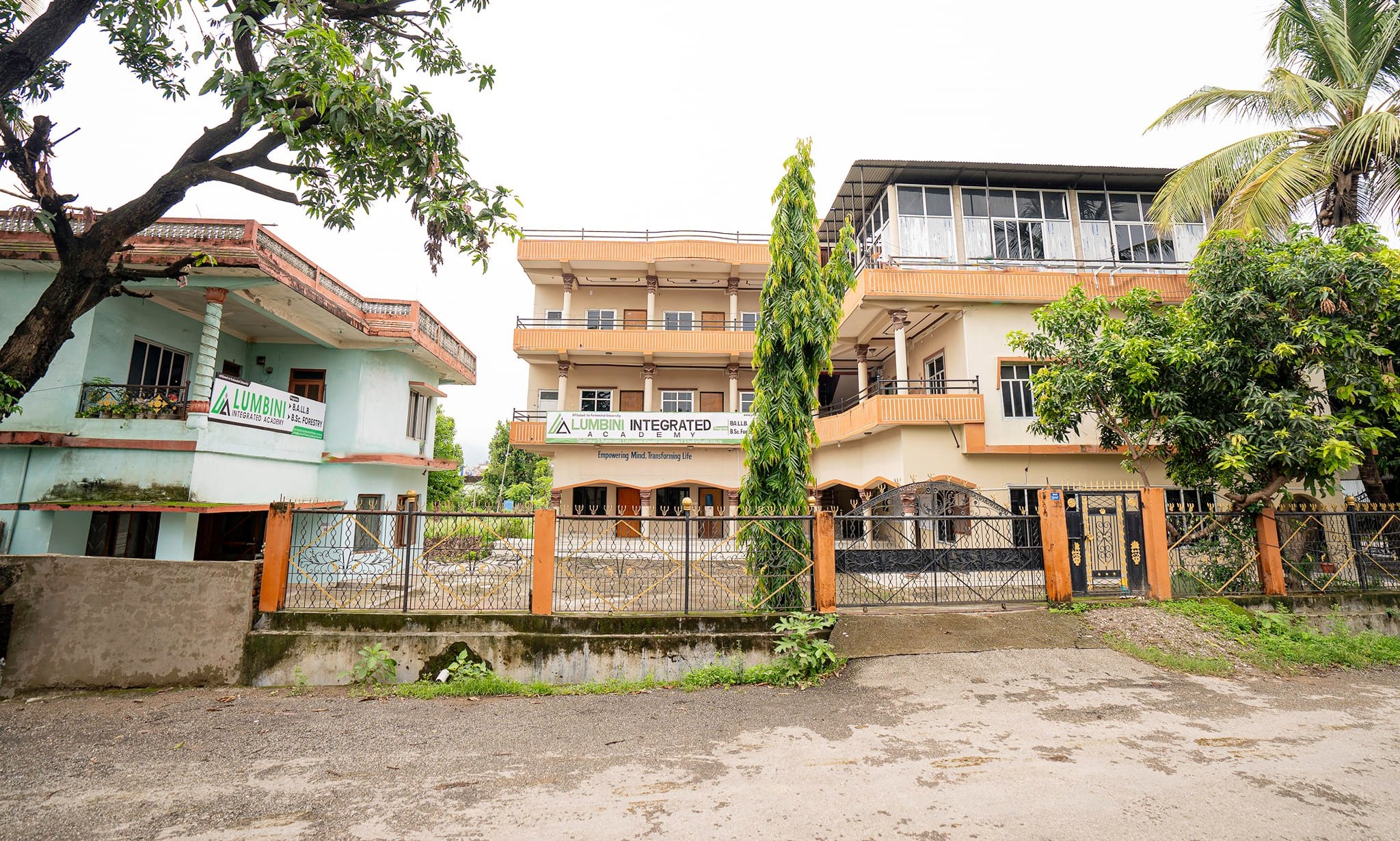
| Field | Details |
|---|---|
| Course Name | Bachelor of Arts and Bachelor of Laws |
| Abbreviation | B.A. LL.B. |
| Institution | Lumbini Integrated Academy |
| Affiliation | Purbanchal University |
| Level | Undergraduate |
| Duration | Five years |
| Eligibility | +2 in any stream with a minimum 2.0 GPA or minimum C grade in all subjects |
| Entrance Examination | Conducted by Purbanchal University |
| Selection | Based on previous academic performance and entrance test scores |
| Attendance | At least 80% in theory and practical classes for each subject |
| Location | Laxmi Prasad Marg, Janakinagar, Tilottama-3, Rupandehi |
B.A. LL.B. is an integrated law degree that connects legal study with subjects from the humanities and social sciences. The arts component helps students examine the historical, political, economic, and social settings in which laws and legal institutions operate.
The legal component covers legal principles, constitutional systems, criminal law, procedural law, evidence, international law, contract law, company law, administrative law, legal research, advocacy, and professional ethics.
Clinical courses are included throughout the curriculum. These components involve legal writing, community-based advocacy, observation of legal institutions, trial preparation, and professional practice exercises.
The course may suit students interested in law, governance, public institutions, social issues, legal research, and structured argument.
Students should be prepared for substantial reading, written assignments, legal analysis, classroom discussion, research, and practical exercises. The curriculum also requires students to study social science subjects alongside legal courses.
Applicants must have completed the +2 level in any stream with:
A minimum GPA of 2.0; or
A minimum C grade in every subject.
Applicants must sit for the entrance examination conducted by Purbanchal University. Selection is based on previous academic performance and entrance examination scores. Students are also required to participate in an orientation class.
Admission to the B.A. LL.B. program follows the Purbanchal University entrance and merit-selection process.
The main stages are:
Meeting the stated +2 eligibility criteria.
Appearing in the Purbanchal University entrance examination.
Participating in merit-based selection.
Attending the orientation class.
The five-year curriculum moves from introductory humanities and legal principles to advanced legal subjects, clinical education, optional areas, advocacy, and dissertation work.
| Year | Main Study Areas | Clinical or Applied Component |
|---|---|---|
| First Year | Political Theory Thoughts, Economics, History of Nepal, Sociology, General Principles of Law, General Concept of Law, and Theories of Logic and Legal Reasoning | Clinical Works |
| Second Year | Legal English, Legal Nepali, International Relations and Diplomacy, Legislative Principles and Law Making Process, Procedural Law, Sociology of Law, and Criminal Law | Jail visits and a report on sentencing systems and reforms |
| Third Year | International Human Rights Law, Interpretation of Statutes, Law of Evidence, Public International Law, Constitutional Law and Constitutionalism, Legal Research, and Professional Ethics | Civil-case legal writing and community advocacy |
| Fourth Year | Advanced Jurisprudence, Contract Law, Company Law, Administrative Law, and Settlement of International Disputes | Rural law advocacy, criminal-case legal writing, and optional subjects |
| Fifth Year | Legal Philosophy, Agrarian Law, Labor Law, International Humanitarian Law and Conflict Resolution, Conservation Law, and Private International Law | Trial advocacy, legal professionalism, dissertation, and optional subjects |
Students select an optional group during the fourth and fifth years.
| Group | Fourth-Year Subjects | Fifth-Year Subjects |
|---|---|---|
| Criminal Law | Forensic Science and Medical Jurisprudence; Criminology and Penology | Law against Organized Crime; Fiscal Crime Law |
| Business Law | Banking and Insurance Law; International Trade Law | Intellectual Property; Taxation Law |
| Constitutional Law | Law on Good Governance; Electoral Law | Law of Equity, Torts and Consumer Protection; Law on Gender and Disadvantaged Sections of Population |
| Environment and Development Law | Environment Law; Water and River Law | Energy Law; Civil Aviation and Tourism Law |
Clinical education forms a recurring part of the program rather than being limited to the final year.
Practical components include:
Clinical works
Visits to jails
Preparation of a report on sentencing systems and reforms
Effective legal writing for civil cases
Community advocacy and outreach
Rural law advocacy services
Effective legal writing for criminal cases
Pre-trial presentation
Trial and appellate advocacy
Legal professionalism development
Dissertation work
These activities connect legal concepts with writing, research, communication, case preparation, and community-based legal issues.
Through its humanities, law, research, and clinical courses, the program addresses:
Legal reasoning and interpretation
Legal research
Civil and criminal legal writing
Written and oral communication
Analysis of evidence and legal principles
Advocacy and case presentation
Understanding of constitutional and international law
Professional ethics
Community-based legal work
Dissertation research
Skill development depends on academic participation, practical engagement, individual effort, and performance throughout the five-year course.
Students must maintain at least 80% attendance in the theory and practical classes of each subject.
This requirement applies across the academic and clinical components of the program.
Graduates may consider career areas connected with:
Legal practice
Judicial services
Legal consultancy
Legal advisory work
Public and private institutions
Organizations requiring legal research or legal support
Entry into regulated legal professions remains subject to the applicable professional, examination, licensing, and recruitment requirements.
Lumbini Integrated Academy is located at Laxmi Prasad Marg, Janakinagar, Tilottama-3, Rupandehi. The institution is affiliated with Purbanchal University and offers the B.A. LL.B. program within its multidisciplinary academic setting.
Students have access to classrooms, library resources, campus activities, cultural programs, sports, clubs, and community engagement opportunities. Career-related activities include guidance, workshops, networking, and professional development discussions.
B.A. LL.B. stands for Bachelor of Arts and Bachelor of Laws. It is an integrated undergraduate program combining humanities and social science subjects with legal education.
The program takes five years to complete.
The B.A. LL.B. program at Lumbini Integrated Academy is affiliated with Purbanchal University.
Applicants must have passed +2 in any stream with a minimum 2.0 GPA or a minimum C grade in every subject.
Yes. Applicants must appear in the entrance examination conducted by Purbanchal University.
Selection is based on previous academic performance and entrance examination scores.
Yes. The curriculum includes clinical work, legal writing, jail visits, community outreach, advocacy exercises, trial preparation, professional development, and dissertation work.
Students must attend at least 80% of the theory and practical classes in each subject.






