Nepal Open University, Faculty of Science Health and Technology, Master in Information Technology (MIT), Specialized in Cyber Security/Data Science.
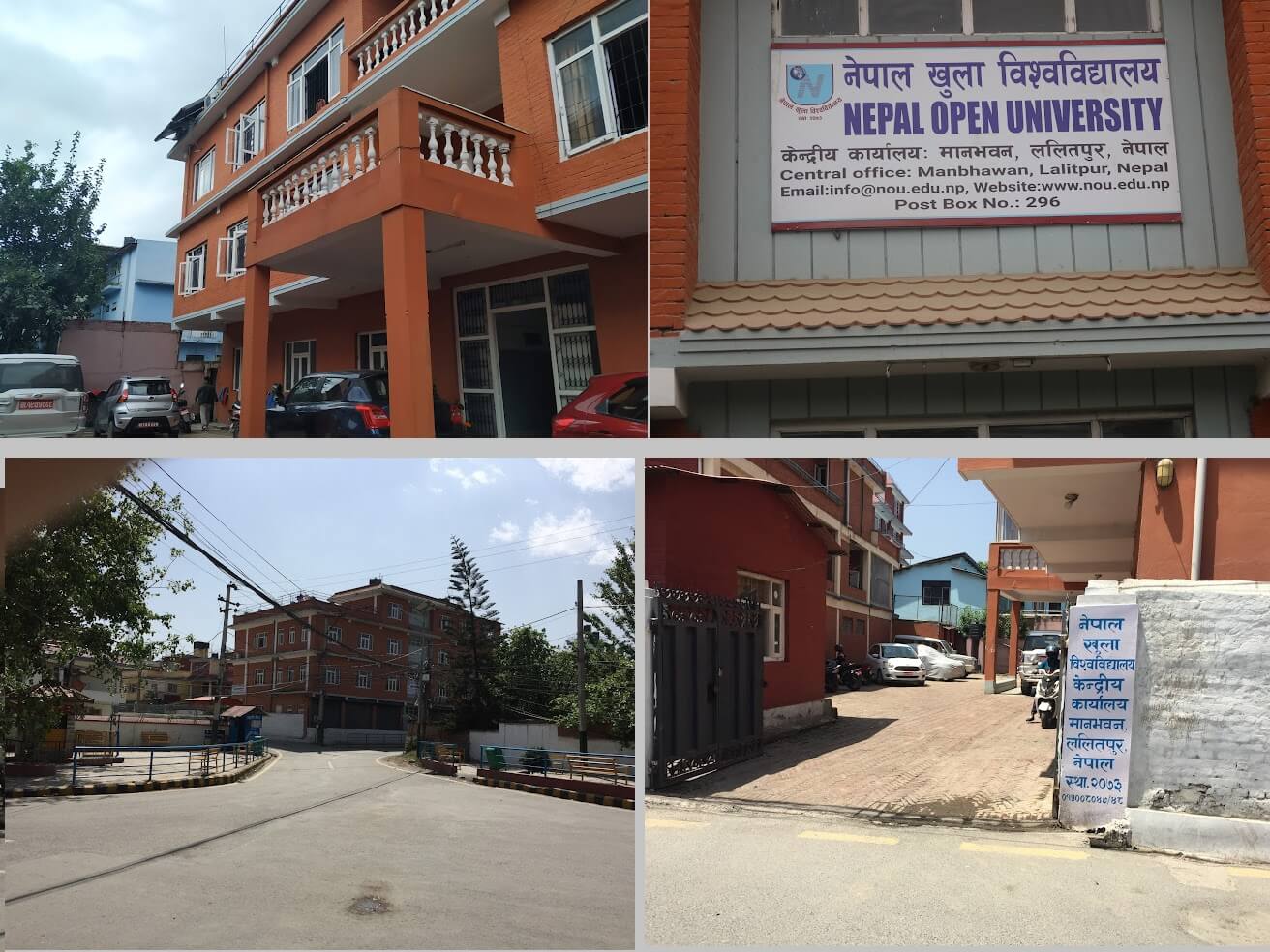
Master in Information Technology degree has been developed to ensure course content remains highly relevant in a rapidly evolving IT industry. The main objective of the degree is to upgrade the IT undergraduate students and learners with advanced knowledge and technical skills necessary to design, implement, manage, and innovate within the field of information technology.
The program also includes specialization courses in data science and cyber security, which allows students to tailor their learning needs to suit their career goals. This program typically focuses on both the technical and managerial aspects of IT, aiming to prepare students for leadership roles in IT-related fields such as Data Scientist, Cyber Security Expert, Cloud Engineer, etc.
It further strengthens the learner's aptitude to comprehend how and why these systems provide economic, technological, operational, and strategic importance to an accepting business. The program gives students the necessary idea and ability to elaborate and use relevant Information Technology (IT) methodologies to help an individual or society achieve its objectives.
Learners can apply their knowledge and skills to analyze the shifting trend of IT and appraise the effectiveness of new technologies, conduct research works related to Information Technology, and also be capable of working in the IT industry.
Upon successful completion of this program, students will be able to:
Identify and analyze user needs and take them into account in the selection, creation, integration, evaluation, and administration of computing-based systems,
Enhance depth knowledge of key IT areas such as Database Design, Cloud Computing, Cyber Security, and Data Science,
Develop leadership, strategic thinking, and project management skills to lead IT teams,
Apply critical thinking and problem-solving skills to tackle real-world IT problems. Design and implement secure IT infrastructures to protect organizational data and digital assets from cyber threats,
Create an environment to engage in research and development to the advancement of IT technologies, methodologies, and best practices.
The minimum qualification required to apply for the program is the completion of Bachelor's degree in Information Technology or an equivalent degree from a recognized university.
Undergraduate degree in IT (BIT, BCA, B.Sc. CSIT, BIM, BCIS, BE IT, Bed ICT) or equivalent are eligible to apply.
Any stream with an undergraduate level followed by Post-graduate Diploma in Information Technology (PGDIT) awarded by a recognized University or equivalent is eligible to apply.
Only those who successfully pass the entrance exam will be eligible for admission. A merit list will be published by the faculty based on the evaluation of the candidates.
After successful completion, graduates will be awarded with "Master in Information Technology (MIT)” degree. Depending on the specialization courses, learners select in the second, third, and fourth semesters and the topic of their thesis, they may be awarded a “Master in Information Technology (MIT)” degree with a specialization in “Cyber Security” or “Data Science” or a “Master in Information Technology (MIT)”.
MIT degree was divided into 2 years including 4 semesters.
1st Semester 5 courses 3 X 5 = 15 Credit
2nd Semester 5 courses 3 X 5= 15 Credit
3rd Semester 5 courses 3 X 5= 15 Credit
4th Semester 2 courses 2X 3= 6 Credit
And Thesis 9 X 1= 9 Credit
Total Credit 60 Credit
| Subject (Code) | Credit |
|---|---|
| Advance Database Design and Implementation (TEADD501) | 3 |
| Computational Mathematics (TECOM502) | 3 |
| Network and System Administration (TENSA503) | 3 |
| Object Oriented Analysis and Design (TEOOA504) | 3 |
| International Business (TEINB505) | 3 |
| Subject (Code) | Credit |
|---|---|
| Digital Marketing (TEDIM551) | 3 |
| Enterprise Architecture and Cloud Computing (TEEAC552) | 3 |
| Research Methodology in IT (TEREM553) | 3 |
| Specialization I | 3 |
| Specialization II | 3 |
| Subject (Code) | Credit |
|---|---|
| Machine Learning (TEMAL601) | 3 |
| Software Project Management (TESPM602) | 3 |
| Block Chain Technology (TEBCT603) | 3 |
| Specialization III | 3 |
| Specialization IV | 3 |
| Subject (Code) | Credit |
|---|---|
| Specialization V | 3 |
| Elective I | 3 |
| Thesis (TETHE699) | 9 |
Total credits 60
Cyber Security
TEETH571- Ethical Hacking
TECNS572- Cryptography and Network Security
TECSD573- Cyber Security & Digital Forensic
Data Science
TESMD581- Statistical Method for Data Science
TEDAV582- Data Analytics and Visualisation
TELRL583- Linear Regression & Logistic Regression
Information Technology
TEDAS591- Database Administration and Security
TEDIG592-Digital Governance
TEADV593- Advanced Programming
Cyber Security
TEISA621- Information System Audit
TECSA622-Cyber Security Architecture
TECST623-Cyber Security Techniques and Tools
Data Science
TEBUA631- Business Analytics
TEPPS632- Programming for Problem-Solving with Python
TEAVC633- Analysis of Variance and Covariance
Information Technology
TUIOT641-Internet of Things
TEBUI642- Business Intelligence
TEUBC643- Ubiquitous Computing
Cyber Security
TEMWA651- Mobile and Web Application Security
TECSR652-Cyber Security Legal Frameworks (Policies and Laws),
TEDAC653-Data Analytics for Cyber Security
Data Science
TEBDT661-Big Data Technology
TESNA662- Social Network Analysis
TEADA663- Advance Data Mining and Analytics
Information Technology
TEDEV671- DevOps for Web Development
TEVTA672- Virtualization Technique and Application
TEINS673- Information System
TEBIO681- Bio-informatics
TEAIB682- AI for Business
TECOS683- Cognitive Science
Note:
Each specialization and elective course offered by the university must have a minimum of 10 students enrolled. If fewer than 10 students enroll in a particular course, the university reserves the right to cancel the course.
After the admission of the learners/students to the program, NOU will arrange an in-house and virtual orientation program to familiarization of Learning Management System (LMS) of NOU.
This program will be delivered on a distance and online delivery mode using instructional learning mode. Course instructor/teacher will facilitate e-learning process (LMS). Video Conferencing or face-to-face classes will be provided based on the nature of the courses.
The study includes coursework, practicum, and Thesis. Learners/Students will engage in coursework and project preparation and examinations will be held at the end of each semester.
Since NOU adopts of distance and online delivery modes for teaching-learning purposes, all the practical exercises will be conducted online and will use simulation software as necessary. Five days of physical boot camp (students can participate virtually in special cases) is needed for each semester.
In Semester: 40%
End Semester: 60%
The performance of students will be evaluated through ongoing in-semester evaluation and semester-end evaluation. NOU shall have the final authority in conduction, evaluation and awarding grades in semester-based examinations. The course facilitator (instructor) will decide the grade in the in-semester evaluations.
The in-semester evaluation shall generally have a total weight of 40% percent in online virtual learning mode. The assigned instructor shall be responsible for the continuous in-semester evaluations.
In-semester evaluation shall be based on a learner’s e-portfolio in the assignment, attendance, assessment, case study/project work, and peer learning between the students. End of each semester, a group of learners shall be responsible to conduct the seminar at the given location of NOU.
After the completion of the semester, 60% of marks will be allocated for the written assessment exam to evaluate the understanding and knowledge of the student on the specific subject matter.
The student should appear in the designated examination centre and take up the proctored examination. University can take the exam online as an alternate mode of examination.