If you're a +2 graduate interested in understanding people, society, history, or current affairs—and wondering how these areas connect to your future—then the Bachelor of Arts (BA) program at Pathari Multiple Campus offers a structured path to begin that journey.
This course isn’t just about studying theories. It’s about connecting ideas to real life in Nepal, building analytical thinking, and preparing for roles in education, civil service, research, media, and community development. Whether you're from the Humanities, Education, Management, or Science stream, this program opens several academic and professional doors.
Affiliated with Tribhuvan University, this BA program follows the revised four-year academic structure introduced in 2076 B.S., reflecting national and global academic developments.
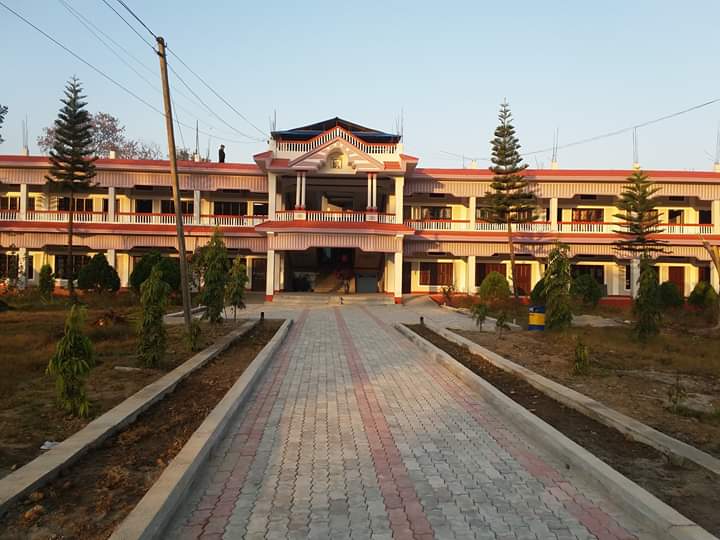
Institution: Pathari Multiple Campus, Patharishanishchare-1, Morang
Affiliation: Tribhuvan University
Faculty: Humanities and Social Sciences
Program Duration: 4 Years (Annual system – 500 marks per year, total 2000 marks)
Medium of Instruction: Nepali and English
Teaching Mode: Full-time, regular shift
Classroom Environment: Interactive, discussion-based, and project-integrated
Here’s what you’ll study over four years. The course offers both flexibility and depth:
Compulsory Subjects:
English (200 marks – studied in Year 1 and 3)
Nepali (100 marks – studied in Year 2)
Nepal Studies (100 marks – usually in Year 4)
Major Subjects (2 subjects, 700 marks each): Choose from: Sociology, Rural Development, Social Work, English, Nepali, Population Studies, History, Anthropology, Psychology, Geography, Political Science, and more.
Elective Subjects (2 subjects, 100 marks each): These support your major with interdisciplinary understanding.
Each subject includes written examinations (70 marks) and internal assessment (30 marks). Internal assessments often involve project work, presentations, and collaborative classroom activities.
This program is structured to:
Help students build strong foundations in Humanities and Social Sciences
Encourage analytical, research, and reflective thinking about Nepalese society and global issues
Prepare students for teaching, administration, research, and public service roles
Offer subject knowledge that supports postgraduate studies and professional qualifications
Graduates of this program can move into:
Teaching (secondary level after completing B.Ed or applying through TSC)
Public service via Lok Sewa Aayog
NGOs, INGOs, and development projects
Journalism, writing, and content creation
Postgraduate studies in Sociology, Development Studies, English, Political Science, Psychology, and more
Interested in a Master’s in a different subject? If you’ve majored in a related discipline, you may be eligible for MA programs in fields such as Rural Development, Conflict and Peace Studies, Political Science, Library Science, or Anthropology.
After completing the BA program at Pathari Multiple Campus, students will be able to:
Understand social, historical, political, and cultural processes with critical awareness
Communicate ideas effectively in written and verbal form in both Nepali and English
Participate in research, debate, and academic inquiry with ethical understanding
Apply theoretical knowledge in analyzing real-world social issues
The BA program encourages skill development through:
Academic writing and referencing
Public speaking and group discussion
Qualitative and quantitative research skills
Interviewing, survey design, and mini research projects
Social fieldwork (especially in Rural Development and Social Work majors)
Pathari Multiple Campus blends traditional and activity-based approaches:
Lectures and classroom interaction
Case studies, role plays, and debates
Presentation and micro-research
Group assignments and discussions
Local field studies (for social work, rural development, etc.)
Classes are led by subject experts with academic qualifications and real-world knowledge. Students are also encouraged to explore academic journals and community-based topics during their study.
To join the BA program at Pathari Multiple Campus, students must:
Have passed +2 or equivalent in any stream (Humanities, Management, Education, or Science)
Secure at least D+ in all subjects (as per NEB guidelines)
Submit all required academic documents
Meet specific requirements if choosing Journalism or Major English/Economics (see TU criteria)
Graduates of this program often work as:
School teachers or academic instructors
Government officers through competitive exams
Field officers in NGOs and research organizations
Media professionals (especially with Journalism or English major)
Social workers and community organizers
Research assistants and policy trainees
The degree also lays the foundation for students aiming to pursue Master’s degrees or apply for civil service posts, particularly under the Nepal Public Service Commission (Lok Sewa Aayog).
Pathari Multiple Campus offers:
Need-based scholarships (for disadvantaged or marginalized groups)
Academic merit scholarships based on internal examination scores
Special consideration for students from Dalit, Janajati, Madhesi, and remote communities
Government or municipal aid programs (as available)
Students must attend classes regularly and participate in internal assessments to remain eligible.
For many students in Nepal—especially in Morang and nearby districts—this course provides a steppingstone toward academic, civil service, or social engagement careers. It supports those who wish to pursue education with a local base, while remaining connected to national and global developments in the Humanities and Social Sciences.
Worried about career outcomes or confused between major subjects? The college faculty provides guidance based on your academic interest and long-term plans. Your effort, consistency, and participation will determine how much you benefit.
The Bachelor of Arts (BA) program at Pathari Multiple Campus is more than just a degree. It’s a four-year journey of academic growth, personal development, and meaningful career preparation. With a flexible curriculum, local relevance, and university-level credibility, it allows students to think critically, act responsibly, and prepare for careers that truly matter in society.