Diploma in Civil Engineering at Pokhara Engineering College is a three-year technical program under the Council for Technical Education and Vocational Training (CTEVT). The program is organized across six semesters and has 48 seats at PEC.
The course is designed to prepare middle-level technical workforce with knowledge and practical skills related to civil engineering. Its study areas begin with mathematics, physics, chemistry, computer application, and engineering drawing before moving into surveying, workshop practice, applied mechanics, fluid mechanics and hydraulics, building construction, and engineering materials.
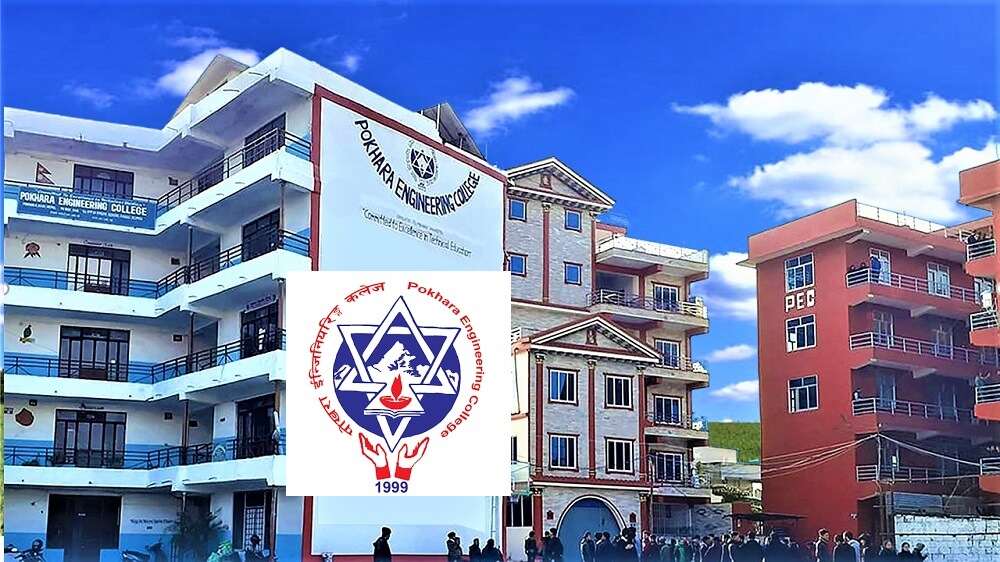
| Particular | Details |
|---|---|
| Course | Diploma in Civil Engineering |
| College | Pokhara Engineering College |
| Affiliation | CTEVT |
| Level | Diploma |
| Duration | 3 Years |
| Academic Structure | 6 Semesters |
| Seats | 48 |
| Location | Pokhara, Nepal |
Diploma in Civil Engineering is a technical education program centered on the knowledge and practical abilities used in civil engineering work.
At PEC, students enter a six-semester curriculum that combines general academic subjects with engineering drawing, computer application, workshop practice, surveying, mechanics, hydraulics, construction, and engineering materials.
The program is intended to prepare middle-level technical workforce for the civil engineering field. Its academic structure gives practical study a defined role alongside classroom-based subjects.
Applicants can meet the stated entry requirement through either SLC/SEE or a relevant pre-diploma route.
The eligibility requirements are:
SLC pass or SEE with a minimum C grade in Compulsory Mathematics and Science and D+ in English; or
Pre-Diploma in Civil Engineering with a minimum of 67.00 percent; and
passing the entrance examination administered by CTEVT.
Entrance examination is part of the admission requirement for Diploma in Civil Engineering. Eligible applicants are required to pass the entrance examination administered by CTEVT.
Pokhara Engineering College has 48 seats for the program.
Diploma in Civil Engineering takes three years to complete and is divided into six semesters.
The curriculum begins with general science, mathematics, language, computing, and drawing. Civil engineering-specific study becomes more prominent as students progress through surveying, workshop practice, applied mechanics, hydraulics, building construction, and engineering materials.
This progression allows students to build the mathematical and scientific base needed for technical civil engineering subjects while also working with drawing, workshop, laboratory, and field-oriented areas.
The first semester establishes the academic and technical foundation for later civil engineering study.
| Course Code | Subject |
|---|---|
| EG 1101 SH | Applied Nepali I |
| EG 1102 SH | Applied English I |
| EG 1103 SH | Engineering Mathematics I |
| EG 1104 SH | Engineering Physics I |
| EG 1105 SH | Engineering Chemistry I |
| EG 1211 CT | Computer Application |
| EG 1101 AR | Engineering Drawing I |
Mathematics, physics, and chemistry provide the basic science foundation, while Engineering Drawing I introduces technical drawing. Computer Application gives students an early computing component within the diploma curriculum.
The second semester continues mathematics and science while adding workshop study, further engineering drawing, and mechanics.
| Course Code | Subject |
|---|---|
| EG 1201 SH | Engineering Mathematics II |
| EG 1202 SH | Engineering Physics II |
| EG 1203 SH | Engineering Chemistry II |
| EG 1201 CE | Workshop Practice I |
| EG 1201 AR | Engineering Drawing II |
| EG 2102 CE | Applied Mechanics |
Engineering Drawing II develops the drawing sequence established in the first semester, while Workshop Practice I adds a practical component. Applied Mechanics introduces engineering principles that support later civil engineering subjects.
The third semester moves more directly into civil engineering.
| Course Code | Subject |
|---|---|
| EG 2101 SH | Engineering Mathematics III |
| EG 2101 CE | Surveying I |
| EG 1202 CE | Workshop Practice II |
| EG 2103 CE | Fluid Mechanics and Hydraulics |
| EG 2104 CE | Building Construction |
| EG 2105 CE | Engineering Materials |
Surveying I introduces measurement and surveying study, while Fluid Mechanics and Hydraulics covers the behavior and movement of fluids within the engineering curriculum.
Building Construction and Engineering Materials introduce subjects directly related to construction work, materials, and building processes. Workshop Practice II continues the practical sequence established in the second semester.
The program continues through the fourth, fifth, and sixth semesters. Social Engineering appears in the fourth-semester curriculum.
Across the full three-year structure, the course is intended to combine civil engineering knowledge with practical skills suitable for middle-level technical work.
Engineering drawing appears in both the first and second semesters.
Engineering Drawing I gives students an early technical drawing foundation. Engineering Drawing II continues the subject in the second semester alongside Applied Mechanics and Workshop Practice.
For civil engineering students, drawing is closely connected with understanding and communicating technical forms, dimensions, and construction-related information.
Surveying I is introduced in the third semester.
Its placement after mathematics, engineering drawing, and introductory practical work reflects the transition from foundation subjects toward civil engineering-specific study.
Surveying adds a field-oriented technical area to the curriculum and forms part of the program's stated emphasis on practical civil engineering skills.
Workshop Practice is studied in two stages:
Workshop Practice I appears in Semester II, followed by Workshop Practice II in Semester III.
The curriculum allocates substantial practical time to these courses. This gives workshop activity a meaningful place within the early part of the diploma rather than limiting the course to classroom theory.
Fluid Mechanics and Hydraulics is included in the third semester.
The subject follows earlier study in mathematics, physics, chemistry, and applied mechanics. It adds a civil engineering area concerned with fluid behavior and hydraulic principles.
Its position in the curriculum marks a shift from general engineering foundations toward discipline-specific technical study.
Building Construction is a third-semester subject.
It introduces students to construction-related study alongside Surveying, Engineering Materials, Fluid Mechanics and Hydraulics, and Workshop Practice II.
This grouping makes the third semester particularly important in the transition from general science and engineering foundations to direct civil engineering study.
Engineering Materials is also studied in the third semester.
The subject sits alongside Building Construction and gives students an academic basis for understanding materials within civil engineering work.
Combined with workshop practice and construction study, it supports the practical orientation of the diploma curriculum.
Engineering Mathematics runs through the first three semesters as Engineering Mathematics I, II, and III.
Engineering Physics is studied in the first and second semesters, while Engineering Chemistry also continues through both semesters.
This sequence gives students repeated exposure to mathematical and scientific subjects before and during their move into surveying, mechanics, hydraulics, building construction, and engineering materials.
Computer Application appears in the first semester.
Its inclusion gives students a computing component at the beginning of the diploma alongside Mathematics, Physics, Chemistry, language subjects, and Engineering Drawing.
The subject forms part of the broad technical foundation before the course moves further into specialized civil engineering subjects.
Practical learning is visible directly in the diploma curriculum through Engineering Drawing, Workshop Practice, Surveying, Fluid Mechanics and Hydraulics, Building Construction, and Engineering Materials.
Pokhara Engineering College also has laboratories for engineering disciplines. The college library contains more than 14,000 textbooks and reference books and includes technical journals and digital library resources.
Internet access is provided through a 35 Mbps broadband leased line and Wi-Fi zones within the college premises.
Students work with several areas that have direct technical application during the diploma.
Through the subjects included in the curriculum, students may develop abilities connected with technical drawing, workshop practice, surveying, mathematical problem-solving, mechanics, construction materials, building construction, computing, and basic hydraulic study.
The course combines these areas rather than focusing on one narrow part of civil engineering.
The program may suit students who want to enter technical civil engineering education after SLC/SEE or through the stated pre-diploma pathway.
Students should be prepared for both academic and practical study. Mathematics and science remain important in the first part of the course, while later study introduces more direct civil engineering subjects.
The curriculum requires engagement with drawing, workshop practice, surveying, mechanics, fluids, construction, and engineering materials. Students interested in these areas may find the course academically aligned with their interests.
Pokhara Engineering College offers civil engineering at more than one academic level.
Diploma in Civil Engineering is the three-year CTEVT pathway with 48 seats. The college also offers Bachelor of Civil Engineering under Pokhara University with 96 seats.
The diploma and bachelor's programs are separate qualifications with different academic structures, affiliations, and admission requirements.
The program takes three years and is organized across six semesters under CTEVT.
Pokhara Engineering College has 48 seats for Diploma in Civil Engineering.
Applicants may qualify through SLC/SEE with a minimum C grade in Compulsory Mathematics and Science and D+ in English, or through Pre-Diploma in Civil Engineering with at least 67.00 percent. Applicants must also pass the entrance examination administered by CTEVT.
Yes. Passing the entrance examination administered by CTEVT is included in the eligibility and admission requirements.
Yes. Surveying I is included in the third semester.
Yes. Workshop Practice I is included in the second semester and Workshop Practice II in the third semester.
Yes. Engineering Drawing I is taught in Semester I and Engineering Drawing II in Semester II.
The third semester includes Surveying I, Workshop Practice II, Fluid Mechanics and Hydraulics, Building Construction, Engineering Materials, and Engineering Mathematics III.