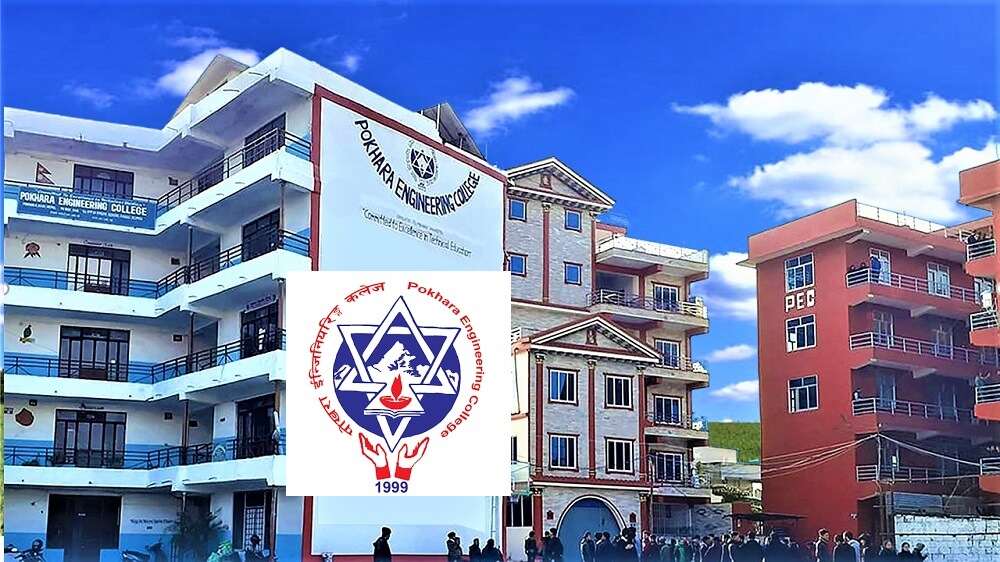
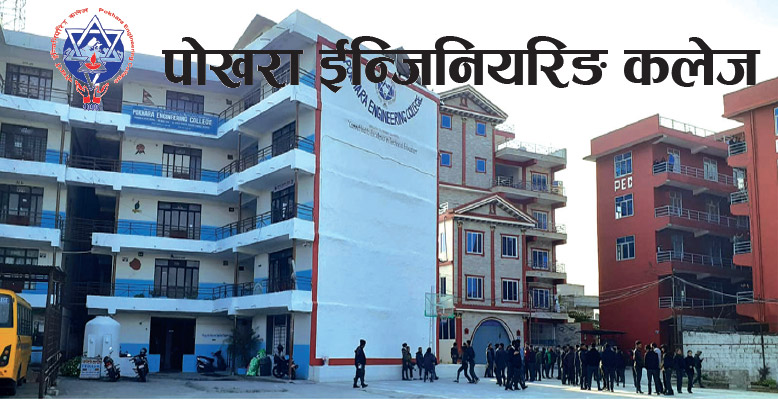
Pokhara Engineering College (PEC) is an engineering college in Pokhara, Nepal, established in 1999 AD. Its academic scope covers technical education from pre-diploma and diploma study to bachelor's and master's degrees. Programs at the college are affiliated with Pokhara University or the Council for Technical Education and Vocational Training (CTEVT), depending on the academic level and program.
PEC was founded by the late Er. Lekh Bahadur Gurung. The college began with undergraduate programs in Civil Engineering, Electronics and Communication Engineering, and Computer Engineering. Its academic range later expanded to include technical diploma education and postgraduate study.
The college now offers CTEVT diploma and pre-diploma programs alongside Pokhara University bachelor's programs in engineering and architecture and a master's program in construction management. The listed intake ranges from 30 seats in Master of Science in Construction Management to 96 seats in Bachelor of Civil Engineering.
Pokhara Engineering College began its academic activities in 1999. Its initial undergraduate areas were Civil Engineering, Computer Engineering, and Bachelor of Electronics and Communication Engineering (BE).
The late Er. Lekh Bahadur Gurung served as founder principal. His recorded life dates are 18 June 1953 to 21 November 2020. His role is closely associated with the establishment and early development of the college.
As PEC developed, its academic coverage moved beyond its original bachelor's programs. Technical education at pre-diploma and diploma levels and postgraduate study in construction management became part of its academic structure.
This development has created two main affiliation streams. The university-level engineering, architecture, and construction management programs operate under Pokhara University, while the listed diploma and pre-diploma programs operate under CTEVT.
PEC's vision focuses on professional education and achievement within a wider academic context.
Its mission places emphasis on:
developing creative engineers with original ideas;
encouraging innovation that can contribute to the nation;
maintaining ethical standards in personal, social, and public life;
developing leadership alongside academic education;
responding to the needs of society and the nation; and
pursuing excellence in professional education.
The academic structure across PEC's programs includes theoretical study as well as laboratories, workshops, projects, field activities, internships, and research, depending on the program and academic level.
Pokhara Engineering College offers programs from pre-diploma level through master's level.
| Program | Affiliation | Seats |
|---|---|---|
| Diploma in Civil Engineering | CTEVT | 48 |
| Diploma in Electrical and Electronics Engineering | CTEVT | 48 |
| Diploma in Computer Engineering | CTEVT | 48 |
| Pre-Diploma in Civil Engineering (Civil Sub-Overseer) | CTEVT | 40 |
| Bachelor of Engineering in Information Technology (BE IT) | Pokhara University | 48 |
| Bachelor of Architecture (B.Arch) | Pokhara University | 48 |
| Bachelor of Computer Engineering (BE Computer) | Pokhara University | 48 |
| Bachelor of Civil Engineering (BE Civil) | Pokhara University | 96 |
| Master of Science in Construction Management | Pokhara University | 30 |
The program structure shows a sustained emphasis on engineering and construction-related study. Civil engineering is available at pre-diploma, diploma, and bachelor's levels, while construction management extends the academic pathway to postgraduate study. Computer-related education is available through diploma, computer engineering, and information technology programs.
PEC's Pokhara University bachelor's portfolio includes Bachelor of Engineering in Information Technology, Bachelor of Architecture, Bachelor of Computer Engineering, and Bachelor of Civil Engineering.
The Bachelor of Computer Engineering program follows a four-year, eight-semester structure. It deals with the analysis, design, and evaluation of computer systems across hardware and software.
The program covers areas such as computer organization and architecture, systems programming, operating systems, digital hardware, programming, networking, databases, software engineering, and related computing subjects.
Students progress through subjects that include:
Programming in C;
Digital Logic;
Electronic Devices and Circuits;
Data Structure and Algorithms;
Object Oriented Programming in C++;
Database Management System;
Microprocessor and ALP;
Operating Systems;
Advanced Programming with Java;
Computer Architecture;
Artificial Intelligence;
Software Engineering;
Computer Networks;
Machine Learning;
Cloud Computing and Virtualization;
Data Science and Analytics; and
Network and Cyber Security.
The later stages of the program also contain electives, an internship, Project I, and Project II.
The structure combines programming and software study with hardware, digital systems, networking, mathematics, management, data-related subjects, and project work.
The Bachelor of Civil Engineering curriculum approved by Pokhara University in 2025 consists of 129 credits across eight semesters.
The opening semesters build a foundation through Applied Chemistry, Applied Physics, Calculus I, Computer Programming, Engineering Drawing, Applied Mechanics, Algebra and Geometry, Basic Electrical and Electronics Engineering, Civil Engineering Materials, Engineering Geology, and Civil Engineering Workshop.
As students progress, the curriculum moves into core civil engineering areas, including:
Building Technology;
Fluid Mechanics;
Strength of Materials;
Surveying I and II;
Hydraulics;
Soil Mechanics;
Structural Analysis;
Engineering Hydrology;
Foundation Engineering;
Transportation Engineering;
Water Supply Engineering;
Concrete Technology and Masonry Structure;
Engineering Economics;
Design of Steel and Timber Structure;
Irrigation and Drainage Engineering;
Sanitary Engineering;
Construction Project Management;
Design of R.C.C. Structures;
Estimating and Valuation; and
Hydropower Engineering.
The degree also contains project work, a Survey Field Project, electives, Engineering Professional Practice, and an internship.
This progression combines basic sciences and mathematics with structures, surveying, geotechnical engineering, transportation, water resources, construction, design, field activities, and professional practice.
Bachelor of Engineering in Information Technology (BE IT) is a Pokhara University program offered at PEC with 48 seats.
It forms part of the college's undergraduate engineering portfolio alongside Computer Engineering and Civil Engineering.
Bachelor of Architecture (B.Arch) is offered under Pokhara University with 48 seats.
The program covers architectural design principles, construction methods, and sustainability-related aspects of architecture.
PEC also offers technical education under CTEVT. The available programs include three diploma options and one pre-diploma program.
Diploma in Civil Engineering — 48 seats
Diploma in Electrical and Electronics Engineering — 48 seats
Diploma in Computer Engineering — 48 seats
Pre-Diploma in Civil Engineering (Civil Sub-Overseer) — 40 seats
Diploma in Civil Engineering provides foundational study and practical preparation in civil engineering, including areas such as surveying and project-related work.
Diploma in Electrical and Electronics Engineering develops technical foundations in electrical and electronics engineering principles.
Diploma in Computer Engineering introduces areas that include programming, database management, and hardware and software integration.
Pre-Diploma in Civil Engineering (Civil Sub-Overseer) provides basic civil engineering study that includes surveying and drafting. It is academically distinct from the diploma and bachelor's programs and should be considered according to its own qualification level.
Master of Science in Construction Management is the postgraduate program offered at PEC under Pokhara University. The program has 30 seats.
The MSc in Construction Management follows a two-year structure spread over four semesters. Students complete 45 credit hours of coursework and 15 credit hours of research project work.
Its curriculum is organized into five main components:
foundation and analytical courses;
core and functional courses;
capstone courses;
elective courses; and
thesis and research work.
Students are required to take two elective courses of three credit hours each. The research component carries 15 credit hours and involves fieldwork, empirical analysis, and preparation of a thesis in the prescribed format.
The program focuses on construction management knowledge and the analytical, decision-making, implementation, leadership, and communication skills connected with construction project responsibilities.
Teaching includes classroom discussions, presentations, group work, case analysis, guest lectures, and research project work.
Pokhara University undergraduate engineering eligibility requires applicants to have completed Grade 12 in the Science stream or an equivalent qualification from a recognized institution.
The academic requirements include:
Physics, Chemistry, and Mathematics, with at least one course carrying a minimum of 100 full marks or 5 credits in each subject;
at least a C grade or 45 percent in Physics, Chemistry, and Mathematics;
an overall GPA of 2.0 on a 4.0 scale or equivalent; and
a Mathematics course carrying at least 100 marks in Grade 11 or Grade 12.
The Bachelor of Computer Engineering program follows these academic requirements.
Students coming from different school-level qualification systems may also refer to information on Cambridge International Education when comparing their academic background with university admission requirements.
Applicants to the Master of Science in Construction Management may come from relevant engineering fields, including:
Civil Engineering;
Electrical Engineering;
Mechanical Engineering;
Geotechnical Engineering;
Hydropower Engineering; and
Architecture.
Applicants must have at least 15 years of formal education and a minimum CGPA of 2.0 or 45 percent at bachelor's level.
The selection structure includes previous academic performance, professional experience, and an entrance test.
| Selection component | Marks |
|---|---|
| BE/BTech score | 20 |
| Experience | 20 |
| Entrance test | 60 |
The total selection score is 100.
PEC has laboratories for its engineering disciplines. The laboratory facilities are identified in relation to standards set by the Nepal Engineering Council.
Practical work is also built into several program structures.
Computer Engineering contains a computer workshop, programming courses, electronics-related subjects, instrumentation, networking, projects, and an internship.
Civil Engineering includes Engineering Drawing, Civil Engineering Workshop, surveying, laboratory-oriented subjects, a Survey Field Project, project courses, and internship study.
Different programs therefore use practical work in different ways, from programming and computer systems to materials, surveying, structures, hydraulics, field exercises, and engineering design.
The college library contains more than 14,000 books, including textbooks, reference materials, and technical journals.
A digital library is also available for students. The combination of printed and digital resources supports regular coursework, technical reference work, project preparation, and research activities.
The research component is particularly relevant to MSc Construction Management students, who undertake fieldwork, empirical analysis, and thesis preparation as part of the postgraduate curriculum.
PEC provides internet access through a 35 Mbps broadband leased line and Wi-Fi zones.
Students and staff have individual login credentials and email addresses within the college domain.
Internet access also supports the college's digital library and academic activities involving programming, project preparation, online resources, and research.
The college cafeteria provides Nepali, Indian, and continental food options. The cafeteria space is described as spacious and airy and includes Wi-Fi connectivity.
PEC also has a mini-conference hall designed for conferences, workshops, and training sessions. The facility provides a separate setting for academic and group activities outside regular classroom teaching.
PEC provides facilities for basketball, volleyball, and table tennis.
Football and cricket playgrounds are located outside the campus. These facilities support recreational and team-based sports alongside students' academic activities.
| Facility | Available provision | Academic or campus use |
|---|---|---|
| Laboratories | Engineering discipline laboratories | Practical and laboratory work |
| Library | More than 14,000 books and digital resources | Reading, reference and research |
| Internet | 35 Mbps leased line and Wi-Fi zones | Online academic access |
| Mini-conference hall | Conference and training space | Workshops and academic activities |
| Cafeteria | Nepali, Indian and continental food | Meals and breaks |
| Sports | Basketball, volleyball and table tennis | Recreation and team activities |
| Outdoor playfields | Football and cricket grounds outside campus | Outdoor sports |
Practical and independent academic work appears at several levels of PEC's university programs.
Bachelor of Computer Engineering students complete workshop study in the early stages of the degree and later undertake Project I, internship, and Project II.
Bachelor of Civil Engineering includes a Survey Field Project, two project stages, and a six-credit internship in the eighth semester.
At postgraduate level, MSc Construction Management students complete a 15-credit research project and thesis involving fieldwork and empirical analysis.
The form of practical study changes according to academic level and discipline. Bachelor's programs combine engineering theory with laboratories, projects, field activities, and internships, while the master's program includes a substantial independent research requirement.
| Academic area | Details |
|---|---|
| Institution | Pokhara Engineering College (PEC) |
| Established | 1999 AD |
| Founder | Late Er. Lekh Bahadur Gurung |
| Location | Pokhara, Nepal |
| Academic levels | Pre-Diploma, Diploma, Bachelor's, Master's |
| Affiliations | Pokhara University and CTEVT |
| Largest listed intake | BE Civil — 96 seats |
| Library | More than 14,000 books |
| Internet | 35 Mbps broadband leased line and Wi-Fi zones |
Pokhara Engineering College brings technical and university-level engineering education together within one institution. Its academic portfolio extends from CTEVT pre-diploma and diploma programs to Pokhara University bachelor's degrees in civil engineering, computer engineering, information technology, and architecture, followed by postgraduate study in construction management.
Civil engineering has the largest bachelor's intake at 96 seats. BE IT, B.Arch, and BE Computer each have 48 seats. At the technical level, each diploma program has 48 seats, while Pre-Diploma in Civil Engineering (Civil Sub-Overseer) has 40 seats. Master of Science in Construction Management has 30 seats.
The college's academic environment includes engineering laboratories, a library with more than 14,000 books, digital library access, internet and Wi-Fi facilities, a mini-conference hall, cafeteria services, and sports facilities.
Across the academic programs, classroom study is complemented by different forms of practical learning. Depending on the course, these include workshops, laboratory activities, surveying, field projects, engineering projects, internships, and postgraduate research.
For prospective students, the main distinction among PEC's programs is the academic level and affiliation. The listed pre-diploma and diploma programs operate under CTEVT, while the listed bachelor's and master's programs operate under Pokhara University.
Pokhara Engineering College (PEC) was established in 1999 AD in Pokhara, Nepal. The college was founded by the late Er. Lekh Bahadur Gurung.
PEC operates programs under two academic bodies. Its bachelor's and master's programs are affiliated with Pokhara University, while its listed diploma and pre-diploma programs operate under the Council for Technical Education and Vocational Training (CTEVT).
PEC offers Pre-Diploma in Civil Engineering (Civil Sub-Overseer), Diploma in Civil Engineering, Diploma in Electrical and Electronics Engineering, Diploma in Computer Engineering, Bachelor of Engineering in Information Technology, Bachelor of Architecture, Bachelor of Computer Engineering, Bachelor of Civil Engineering, and Master of Science in Construction Management.
The listed intake is 96 seats for Bachelor of Civil Engineering; 48 seats each for BE IT, Bachelor of Architecture, Bachelor of Computer Engineering, Diploma in Civil Engineering, Diploma in Electrical and Electronics Engineering, and Diploma in Computer Engineering; 40 seats for Pre-Diploma in Civil Engineering; and 30 seats for Master of Science in Construction Management.
Applicants must have completed Grade 12 in the Science stream or an equivalent qualification from a recognized institution. The academic requirements include Physics, Chemistry, and Mathematics, at least a C grade or 45 percent in each of these subjects, an overall GPA of 2.0 on a 4.0 scale or equivalent, and a Mathematics course carrying at least 100 marks in Grade 11 or Grade 12.
Applicants may come from relevant fields including Civil Engineering, Electrical Engineering, Mechanical Engineering, Geotechnical Engineering, Hydropower Engineering, and Architecture. They must have at least 15 years of formal education and a minimum CGPA of 2.0 or 45 percent at bachelor's level.
The selection structure carries 100 marks in total. The BE/BTech score accounts for 20 marks, professional experience for 20 marks, and the entrance test for 60 marks.
Yes. Practical components vary by program. Bachelor of Computer Engineering includes workshop study, projects, and an internship, while Bachelor of Civil Engineering includes surveying, a Survey Field Project, project work, and an internship. MSc Construction Management includes a 15-credit research project and thesis.
PEC has engineering laboratories, a library with more than 14,000 books, a digital library, internet and Wi-Fi access, and a mini-conference hall. The college also provides cafeteria and sports facilities.
PEC provides facilities for basketball, volleyball, and table tennis. Football and cricket playgrounds are located outside the campus.