



The Bachelor of Science in Medical Laboratory Technology (BSc MLT) at Purbanchal University School of Health Sciences (PUSHS), Gothgaun, Morang, is a four-year bachelor’s program under Purbanchal University.
The course follows an eight-semester system and carries 160 credits. Its academic work combines medical laboratory science, basic medical sciences, diagnostic disciplines, laboratory practice, hospital exposure, research, project work, seminars, and professional internship. The program is structured for students preparing for work connected with medical laboratories in clinical and community health settings.
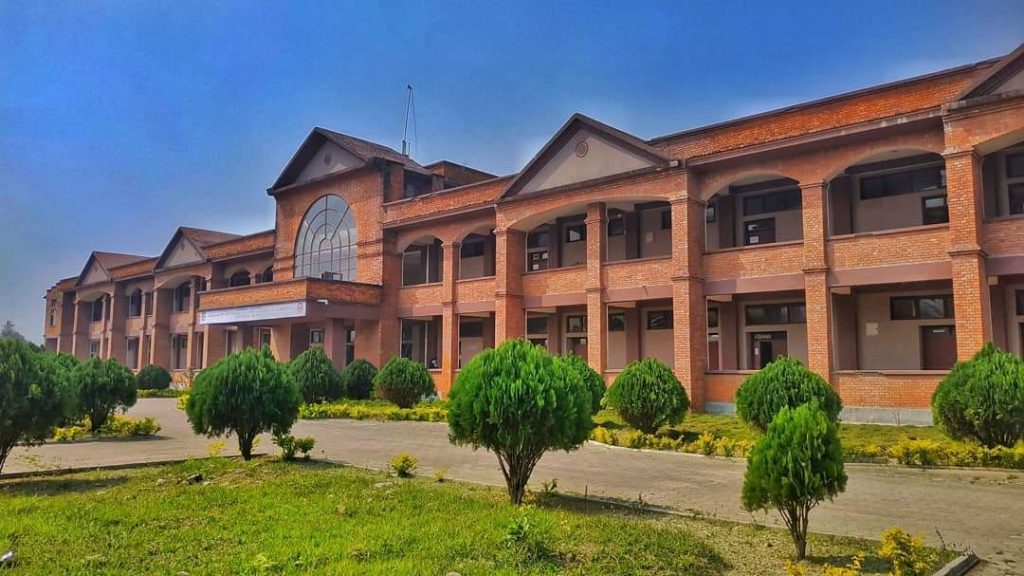
| Field | Details |
|---|---|
| Course | Bachelor of Science in Medical Laboratory Technology (BSc MLT) |
| Institution | Purbanchal University School of Health Sciences (PUSHS) |
| University | Purbanchal University |
| Location | Gothgaun, Morang, Nepal |
| Duration | 4 years |
| Academic System | 8 semesters |
| Total Credits | 160 |
| Medium of Instruction | English |
| Academic Area | Medical Laboratory Technology |
The 160-credit structure consists of 91 theory credits, 27 practical credits, 6 seminar credits, 8 hospital-posting credits, 8 project-work credits, and 20 professional-internship credits.
BSc MLT focuses on the scientific and technical work involved in medical laboratory services. Purbanchal University sets the program objective around preparing competent and responsible Medical Laboratory Technologists with academic knowledge, laboratory skills, laboratory-management ability, and an understanding of their role within clinical and community health teams.
Study moves from foundational sciences into specialized laboratory areas. Students encounter subjects connected with disease investigation, biological samples, pathology, microbiology, hematology, immunology, molecular techniques, laboratory quality control, research, and professional practice.
At PUSHS, the course forms part of a broader health sciences setting that also includes nursing, public health, and pharmacy programs.
Eligibility: Applicants may enter the BSc MLT program through one of the following academic backgrounds:
Intermediate in Science (I.Sc), or
Higher Secondary Level (10+2 Science) in the biology stream, or
Proficiency Certificate Level in Medical Lab Technology (CMLT) recognized by an accredited university.
The academic requirement is at least 50% marks or 2.4 GPA/CGPA under the grade system. The curriculum connects this entry requirement with the Medical Education Commission.
Duration: 4 years
The program is divided into eight semesters, with two semesters in each academic year. Each semester consists of a minimum of 16 weeks. The curriculum requires at least 180 working days in an academic year, with 90 working days per semester.
The degree structure gives substantial space to practical learning alongside theory:
Theory: 91 credits
Practical: 27 credits
Seminar: 6 credits
Hospital Posting: 8 credits
Project Work: 8 credits
Professional Internship: 20 credits
Total: 160 credits
This distribution reflects the laboratory-based nature of the degree, where scientific understanding and hands-on work are studied together.
The curriculum covers a broad sequence of medical laboratory and supporting subjects. Major areas include:
Fundamentals of Medical Laboratory Science
Anatomy and Physiology
Biochemistry
Microbiology
Pathology
Hematopathology
Immunology
Molecular Cell Biology and Molecular Techniques
Biotechnology
Clinical Pharmacology
Health and Disease
Molecular Epidemiology
Histopathology and Cytopathology
Forensic Medicine and Medical Ethics
Bioinformatics
Laboratory Management and Quality Control
Research Methodology and Biostatistics
Project Work
Seminar
Internship
These areas take students from basic biological and medical concepts into laboratory investigation, specialized diagnostic sciences, research, quality management, and supervised professional practice.
Practical work is a central part of the BSc MLT structure. Students carry out prescribed laboratory activities under the supervision of teachers or laboratory personnel. Practical instruction may include demonstrations alongside direct laboratory work.
The curriculum also includes visits and observations in hospitals, research laboratories, and community laboratories. Hospital posting takes place in a medical college, hospital, or pathology laboratory that meets university requirements for clinical or diagnostic laboratory facilities.
This structure gives students repeated contact with laboratory procedures rather than placing practical exposure only at the end of the degree.
Research-related work becomes more visible in the later part of the program.
In the seventh semester, students undertake seminar work connected with scientific publications, review articles, and case studies. Students prepare and present assigned topics as part of the academic assessment.
During the eighth semester, project work is completed in groups of four students. The process includes literature review, research activity, preparation of a project report under supervision, and defense of the completed work.
Project assessment considers dissertation writing, literature review and references, research work in a hospital or laboratory, scientific content, results and discussion, presentation, and communication.
Professional internship is a compulsory component of the BSc MLT degree. It takes place in a medical college or hospital with clinical or diagnostic laboratory facilities, or in a fully equipped pathology laboratory meeting Purbanchal University requirements.
Internship assessment includes the student’s log book, report submission, presentation, and viva. Completion of the prescribed internship and project work forms part of the requirements for receiving the BSc MLT degree from Purbanchal University.
Teaching combines lectures, practical or demonstration sessions, problem-oriented learning, and self-directed learning where appropriate.
The laboratory component requires students to perform practical work to learn prescribed skills under supervision. This combination allows scientific theory to be studied alongside the procedures and working methods used in medical laboratory education.
Medium of Instruction: English is used for both instruction and examinations.
Students are required to maintain at least 80% attendance in theory and practical classes.
Assessment is divided between internal evaluation and end-semester examinations. Internal theory assessment considers academic assessments, attendance, class performance, and discipline. Practical evaluation includes laboratory performance, record files, attendance, and viva.
For individual subjects, the curriculum requires a minimum of 50% in theory and 60% in practical components separately. End-semester examinations are conducted through the Examination Management Office of Purbanchal University.
The academic structure develops familiarity with laboratory work across microbiology, pathology, hematology, immunology, biochemistry, histopathology, cytopathology, molecular techniques, and related diagnostic areas.
Students also encounter laboratory management, quality control, research methodology, biostatistics, medical ethics, bioinformatics, scientific presentation, project preparation, and supervised professional practice.
The course objective includes preparing graduates to manage medical laboratory work in community and hospital settings, provide laboratory information and education, and work as members of health-care teams in clinical and community environments.
The program is relevant to eligible students from a biology-science or CMLT background who want sustained study in laboratory science and are comfortable with practical work, biological sciences, diagnostic subjects, research, and structured laboratory procedures.
Because the degree includes regular practical classes, hospital exposure, project work, seminar activity, and professional internship, students should consider both the academic and hands-on requirements of the course when deciding whether it matches their interests.
The BSc MLT program runs for four years and is divided into eight semesters.
The program carries 160 credits, divided among theory, practical work, seminars, hospital posting, project work, and professional internship.
Eligible academic routes include I.Sc, 10+2 Science in the biology stream, or CMLT recognized by an accredited university, with at least 50% marks or 2.4 GPA/CGPA.
Yes. The curriculum contains practical laboratory work, hospital posting, visits and observations, project work, and compulsory professional internship.
Major study areas include biochemistry, microbiology, pathology, hematopathology, immunology, molecular cell biology, biotechnology, histopathology and cytopathology, bioinformatics, laboratory management, quality control, research methodology, and biostatistics.
Students must maintain at least 80% attendance in theory and practical classes.
English is the medium of instruction and examination for the BSc MLT program.






