Purbanchal University School of Health Sciences (PUSHS) is a health sciences academic unit located in Sundar Haraicha Municipality, Gothgaun, Morang, Nepal. Its academic portfolio covers nursing, public health, pharmacy, and medical laboratory technology, with study options at bachelor’s, post-basic bachelor’s, and master’s levels.
The school operates within Purbanchal University (PU), a public university established in 1993 by the Government of Nepal. Purbanchal University conducts academic programs through seven constituent campuses and more than 122 affiliated colleges. Its wider academic priorities include teaching, research, practical study, professional and technical education, and broader access to higher education.
PUSHS brings several health disciplines into one academic setting. Rather than concentrating on a single profession, its programs cover patient care, population health, pharmaceutical sciences, nursing advancement, laboratory diagnostics, and postgraduate public health and pharmacy education.
Purbanchal University School of Health Sciences (PUSHS) is located in Sundar Haraicha Municipality, Gothgaun, Morang, Nepal.
The school operates under Purbanchal University and focuses on university-level education in health sciences.
Academic programs cover four major areas: nursing, public health, pharmacy, and medical laboratory technology.
Programs include BSc Nursing, Post Basic Bachelor of Nursing, Bachelor of Public Health, Bachelor of Pharmacy, BSc in Medical Laboratory Technology, Master of Pharmacy, and Master of Public Health.
The Bachelor of Public Health follows an eight-semester curriculum with laboratory, field-based, and public health practice components.
The BSc MLT program runs for four years across eight semesters and includes practical study, hospital posting, project work, seminars, and professional internship.
The Bachelor of Pharmacy curriculum combines basic sciences, medical sciences, pharmaceutical sciences, practical learning, internship, and research-related work.
The Master of Public Health is a two-year, four-semester program covering areas such as epidemiology, biostatistics, environmental health, health policy and administration, and social and behavioral sciences.
Post Basic Bachelor in Nursing Science is structured as a three-year program with specialty areas including Midwifery, Community Nursing, Hospital Nursing, and Psychiatric Nursing.
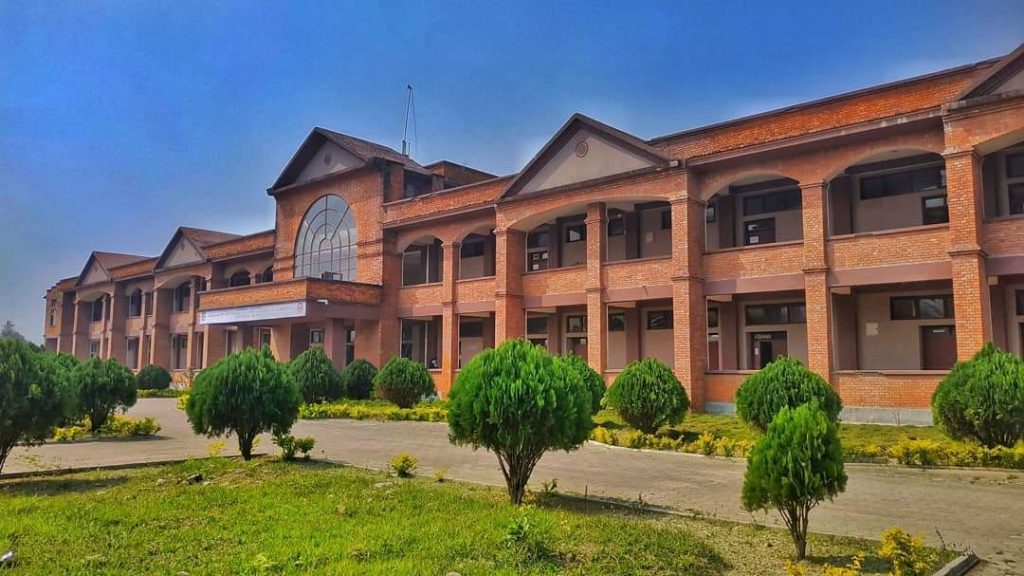
Purbanchal University was established with objectives related to preserving, refining, creating, adopting, extending, and transmitting knowledge in an academic environment that supports inquiry and scholarly discussion. Its development goals also connect higher education with the social, economic, and sustainable development needs of the country.
The university identifies affordability and accessibility among its educational priorities while maintaining a broad range of professional, technical, and career-oriented programs. Teaching, research, practical study, and the application of academic knowledge form part of this approach.
PU has also emphasized the use of local, national, and international resources to support its academic activities and respond to changing social and economic needs. The university’s Gothgaun setting in Morang forms an important part of its institutional base in eastern Nepal.
The academic mix at PUSHS can be grouped into four main areas:
Nursing, through BSc Nursing and Post Basic Bachelor of Nursing
Public health, through Bachelor of Public Health and Master of Public Health
Pharmacy, through Bachelor of Pharmacy and Master of Pharmacy
Medical laboratory science, through BSc in Medical Laboratory Technology
These disciplines involve different forms of classroom study, laboratory work, field-based learning, clinical or hospital exposure, research, project work, and professional practice depending on the program and curriculum.
| Program | Level |
|---|---|
| Bachelor of Science in Nursing (BSc Nursing) | Bachelor’s |
| Post Basic Bachelor of Nursing (PBNS) | Post-basic bachelor’s |
| Bachelor of Public Health (BPH) | Bachelor’s |
| Bachelor of Pharmacy (B. Pharm) | Bachelor’s |
| BSc in Medical Laboratory Technology (BSc MLT) | Bachelor’s |
| Master of Pharmacy (M.Pharm) | Master’s |
| Master of Public Health (MPH) | Master’s |
The range allows PUSHS to cover both direct health-service disciplines and fields concerned with population health, medicines, laboratory investigation, health management, and advanced professional study.
The Bachelor of Public Health curriculum follows an eight-semester structure. Its study areas move from foundational health sciences into epidemiology, population health, environmental and occupational health, family health, nutrition, reproductive health, and other public health subjects.
Early coursework includes Introduction to Public Health, Anatomy, Physiology and Patho-physiology, Public Health Microbiology, Public Health Biochemistry, and Applied Professional English. Later semesters introduce areas such as epidemiology, family health, environmental and occupational health, demography, reproductive health, and non-communicable diseases.
Practical learning is built into the curriculum through laboratory-based and field-based components. The structure therefore combines the scientific foundation of health with community and population-oriented study rather than limiting learning to classroom theory.
PUSHS offers both an undergraduate BSc Nursing route and a post-basic nursing program for nurses continuing their academic development.
The Post Basic Bachelor in Nursing Science curriculum is structured over three years. Its academic direction builds on previous nursing education and includes advanced nursing knowledge, management, leadership, health education, research, and practical nursing responsibilities.
The post-basic curriculum identifies four specialized areas: Midwifery, Community Nursing, Hospital Nursing, and Psychiatric Nursing. These areas allow nursing study to move beyond general practice into maternal and reproductive care, community-based nursing, institutional nursing services, and mental health-related nursing practice.
The Bachelor of Pharmacy curriculum uses a semester system and is organized across eight semesters. Its academic foundation combines basic sciences, basic medical sciences, and pharmaceutical sciences.
Basic science study includes areas such as pharmaceutical chemistry, organic chemistry, physical chemistry, and mathematics. Medical science components include anatomy and physiology, biochemistry, microbiology, and pathophysiology.
The pharmaceutical component covers fields such as pharmaceutical chemistry and instrumental analysis, pharmacognosy and natural products, pharmacology, pharmacotherapeutics, pharmacy practice, and other areas connected with the preparation, use, management, and evaluation of medicines.
The curriculum also addresses pharmaceutical care, medication distribution and control, community and hospital pharmacy, drug information, pharmaceutical manufacturing, and collaborative work in health settings. Internship and research-project components are incorporated into the wider academic structure.
At postgraduate level, PUSHS also offers the Master of Pharmacy program, extending its pharmacy education beyond the bachelor’s level.
The BSc in Medical Laboratory Technology is a four-year program organized into eight semesters. The curriculum carries 160 credits across theory, practical study, seminar work, hospital posting, project work, and professional internship.
Its academic areas include fundamentals of medical laboratory science, anatomy and physiology, biochemistry, microbiology, pathology, hematopathology, immunology, molecular cell biology, biotechnology, clinical pharmacology, molecular epidemiology, histopathology and cytopathology, bioinformatics, laboratory management, quality control, research methodology, and biostatistics.
The structure gives practical training a defined place alongside theoretical study. Hospital posting, project work, seminars, and professional internship are separate curriculum components, reflecting the technical nature of laboratory education.
The Master of Public Health is a two-year program spread across four semesters. It is designed around advanced public health education and includes five core disciplinary areas: biostatistics, epidemiology, environmental health, health policy and administration, and social and behavioral sciences.
The curriculum contains 18 courses and combines core study with specialization. The two specialization areas identified in the curriculum are Public Health Service Management and Health Promotion and Education.
Its academic objectives cover the application of epidemiology, statistics, research, environmental and occupational health, demography, reproductive and family health, behavioral sciences, health promotion, public health management, program planning, research, and professional leadership.
This postgraduate structure gives the school a public health pathway extending from undergraduate study in BPH to advanced study through the MPH.
One clear feature across several PUSHS curricula is the formal inclusion of learning outside conventional lectures.
BPH contains laboratory and field-based practice across multiple semesters. BSc MLT assigns credits to practical work, hospital posting, projects, seminars, and professional internship. Bachelor of Pharmacy includes practical pharmaceutical study as well as internship and research-project elements. The post-basic nursing curriculum combines advanced nursing study with specialty-oriented professional preparation.
This varies by discipline: a public health student works with community and population-health concepts, laboratory technology requires extensive technical practice, pharmacy combines scientific and pharmaceutical applications, and nursing focuses on professional nursing responsibilities.
Admission requirements differ according to the academic level and professional background expected by each program. The health sciences curricula also show that regulatory requirements are not identical across disciplines.
For example, the BSc MLT curriculum refers to the Medical Education Commission in relation to its admission framework.
The MPH curriculum accepts specified health-related bachelor’s qualifications and requires registration with the relevant professional council for the applicant’s field. The councils named in that curriculum include the Nepal Medical Council for applicants whose professional qualification falls within its scope, alongside other health professional councils.
Because the entry pathway differs between nursing, public health, pharmacy, and laboratory science, applicants should use the requirements for their intended program rather than applying the criteria of one PUSHS course to another.
PUSHS is situated in Sundar Haraicha Municipality, Gothgaun, Morang, Nepal. The location places the school within Purbanchal University’s academic setting in Morang.
The wider university development at Gothgaun is associated with land provided by the Government of Nepal near the East-West Highway, about 30 kilometers from Biratnagar. This location forms part of PU’s long-term institutional base for higher education in the area.
For students looking specifically at health sciences, the significance of PUSHS lies in the concentration of nursing, public health, pharmacy, and laboratory technology programs within the university’s own academic structure.
Purbanchal University School of Health Sciences has a focused academic identity built around health education. Its seven listed programs cover nursing, public health, pharmacy, and medical laboratory technology from undergraduate and post-basic study through master’s-level education.
The curricula also show meaningful differences between the disciplines. Public health incorporates field and population-based study; medical laboratory technology gives substantial space to practical work, hospital posting, projects, and internship; pharmacy combines scientific, medical, and pharmaceutical study; and nursing provides both undergraduate and post-basic academic routes.
Within Purbanchal University, PUSHS therefore serves students seeking university-level study across several distinct branches of health sciences while retaining the academic and professional structure specific to each program.
Purbanchal University School of Health Sciences (PUSHS) is located in Sundar Haraicha Municipality, Gothgaun, Morang, Nepal.
Yes. PUSHS operates under Purbanchal University and focuses on health sciences education at undergraduate, post-basic, and postgraduate levels.
PUSHS offers BSc Nursing, Post Basic Bachelor of Nursing, Bachelor of Public Health (BPH), Bachelor of Pharmacy (B. Pharm), BSc in Medical Laboratory Technology (BSc MLT), Master of Pharmacy (M.Pharm), and Master of Public Health (MPH).
The BSc in Medical Laboratory Technology is a four-year program divided into eight semesters. Its curriculum includes theory, practical study, seminars, hospital posting, project work, and professional internship.
The Bachelor of Public Health follows an eight-semester curriculum. It combines public health theory with laboratory and field-based learning across different stages of the program.
The Post Basic Bachelor in Nursing Science is structured as a three-year program. Its curriculum includes specialty areas such as Midwifery, Community Nursing, Hospital Nursing, and Psychiatric Nursing.
The Master of Public Health is a two-year program spread over four semesters. Its core areas include biostatistics, epidemiology, environmental health, health policy and administration, and social and behavioral sciences.
Yes. Practical learning varies by program. BPH includes laboratory and field-based practice, BSc MLT includes hospital posting and professional internship, and Bachelor of Pharmacy includes practical, internship, and research-related components.

.png)