Koshi Health Institute, also associated with the name Koshi Health & Science Campus, is a health science education institution in Biratnagar, Morang. It operates as a wing of Nepal Suwasthiya Bikas tatha Anusandhan Sahakari Sanstha Limited (NSBAS), alongside Morang Cooperative Hospital.
The institute offers health-sector education at diploma, proficiency certificate, and bachelor levels. Its academic programs are affiliated with the Council for Technical Education and Vocational Training (CTEVT) and Purbanchal University.
KHI's CTEVT programs cover general medicine, medical laboratory technology, nursing, pharmacy, and physiotherapy. Its Purbanchal University programs include Bachelor of Public Health (BPH) and Post-Basic Bachelor of Nursing Science (PBNS).
| Field | Details |
|---|---|
| Institution: | Koshi Health Institute |
| Also Known As: | Koshi Health & Science Campus |
| Location: | Biratnagar, Morang |
| Institutional Structure: | A wing of Nepal Suwasthiya Bikas tatha Anusandhan Sahakari Sanstha Limited (NSBAS) |
| Academic Affiliations: | CTEVT and Purbanchal University |
| CTEVT Programs: | PCL in General Medicine, Diploma in Pharmacy, CMLT, PCL Nursing, and Diploma in Physiotherapy |
| Purbanchal University Programs: | Bachelor of Public Health (BPH) and Post-Basic Bachelor of Nursing Science (PBNS) |
| Professional Context: | Programs are connected with the relevant professional councils, including NHPC, Nepal Nursing Council, and Nepal Pharmacy Council |
| Learning Facilities: | Classrooms, library, computer laboratory, and health science laboratories |
| Healthcare Connection: | NSBAS also operates Morang Cooperative Hospital, a 100-bed healthcare facility |
| Academic Approach: | Classroom instruction combined with laboratory, clinical, practical, and field-based learning |
| Medical Education Admission: | Applicable medical and nursing admissions follow prevailing Medical Education Commission rules and procedures |
Koshi Health Institute was developed within the cooperative structure of NSBAS with a focus on health education and health workforce development. NSBAS operates through two principal wings: Koshi Health Institute for health education and Morang Cooperative Hospital for healthcare services.
The institutional purpose has centered on preparing lower- and middle-level health personnel for primary and community healthcare. Earlier programs included Community Medicine Assistant (CMA), Auxiliary Nurse Midwifery (ANM), and Lab Assistant training.
These pre-diploma programs were later phased out as health education policy moved toward diploma-level upgrading. The institute's present academic structure therefore includes diploma, proficiency certificate, and university-level health science education.
Koshi Health Institute operates within two academic systems.
Its technical and proficiency certificate programs are affiliated with CTEVT. These include General Medicine, Medical Laboratory Technology, Nursing, Pharmacy, and Physiotherapy.
The Bachelor of Public Health and Post-Basic Bachelor of Nursing Science programs are affiliated with Purbanchal University.
Professional health education also involves the relevant regulatory councils. KHI is associated with the Nepal Health Professional Council (NHPC) and the Nepal Pharmacy Council in relation to applicable health professions. Nursing education and professional practice fall within the regulatory framework of the Nepal Nursing Council.
Students completing regulated professional health programs must meet the licensing requirements of the respective professional council before entering professional practice.
Koshi Health Institute offers CTEVT and Purbanchal University programs across several health disciplines.
| Program | Affiliation | Duration |
|---|---|---|
| Diploma in Physiotherapy | CTEVT | 3 years |
| PCL Nursing (Staff Nurse) | CTEVT | 3 years |
| Certificate in Medical Laboratory Technology (CMLT) | CTEVT | 3 years |
| Diploma in Pharmacy | CTEVT | 3 years |
| Post-Basic Bachelor of Nursing Science (PBNS) | Purbanchal University | 3 years |
| Bachelor of Public Health (BPH) | Purbanchal University | 8 semesters |
| PCL in General Medicine (Health Assistant) | CTEVT | 3 years |
The CTEVT programs at KHI cover different areas of healthcare practice, with each program following its respective technical and professional curriculum.
PCL in General Medicine prepares middle-level health personnel through study in medicine, surgery, clinical pathology, pharmacology, environmental health, health education, primary healthcare, epidemiology, health management, clinical practice, and community field practice.
The program runs for three academic years and combines theoretical study with practical and community-based learning.
The Certificate in Medical Laboratory Technology develops knowledge and practical skills in clinical microbiology, immunology, hematology, blood banking, biochemistry, parasitology, clinical pathology, histopathology, instrumentation, laboratory management, and clinical practice.
The three-year program progresses from basic and foundational subjects to laboratory-specific learning and practical work in hospitals and medical laboratory settings.
The Diploma in Pharmacy combines pharmaceutical science with practical study in pharmaceutics, pharmacology, pharmaceutical chemistry, pharmacognosy, biochemistry, microbiology, pharmacotherapeutics, public health pharmacy, hospital and clinical pharmacy, community pharmacy practice, and professional field practice.
The program follows a three-year yearly system.
PCL Nursing covers fundamental nursing, community health nursing, anatomy and physiology, medical and surgical nursing, geriatric nursing, mental health nursing, midwifery, gynecological nursing, child health nursing, leadership, and management.
Clinical and practical components form part of the three-year curriculum.
The physiotherapy program includes applied anatomy and physiology, basics of physiotherapy, biomechanics, pathology and pharmacology, medicine and surgery, behavioural science, rehabilitation, physiotherapy in medical and surgical conditions, clinical practicum, and community physiotherapy.
The program is organized over three academic years.
The Bachelor of Public Health follows the Purbanchal University Faculty of Medical and Allied Sciences curriculum and is organized over eight semesters.
The program covers public health sciences, anatomy and physiology, microbiology, biochemistry, nutrition, environmental health, epidemiology, family health, demography, reproductive health, communicable and non-communicable disease studies, and field-based practice.
Laboratory and field-based components are included alongside theoretical coursework.
Post-Basic Bachelor of Nursing Science is a three-year Purbanchal University program.
First-year study includes anatomy and physiology, pharmacology, pathophysiology, microbiology, biochemistry, nutrition, medical-surgical nursing, nursing concepts and theories, pediatric nursing, sociology and anthropology, and professional English.
Later study includes midwifery, community health nursing, psychiatric nursing, epidemiology, geriatric nursing, educational science, leadership and management, nursing research and biostatistics, oncology nursing, and elective nursing subjects.
Admission to medical and nursing education programs is governed by the prevailing rules of the Medical Education Commission (MEC).
Where MECEE-BL applies, admission follows the MEC entrance and matching framework together with the prevailing code of conduct, scholarship provisions, seat allocation system, fee structure, and admission procedures.
Seats, fees, scholarships, examination arrangements, and admission procedures are subject to revision according to MEC decisions and the official MEC calendar. Seat numbers may therefore vary from one academic year to another.
After completing a regulated health program, graduates must pass the licensing examination of the respective professional council before entering professional practice.
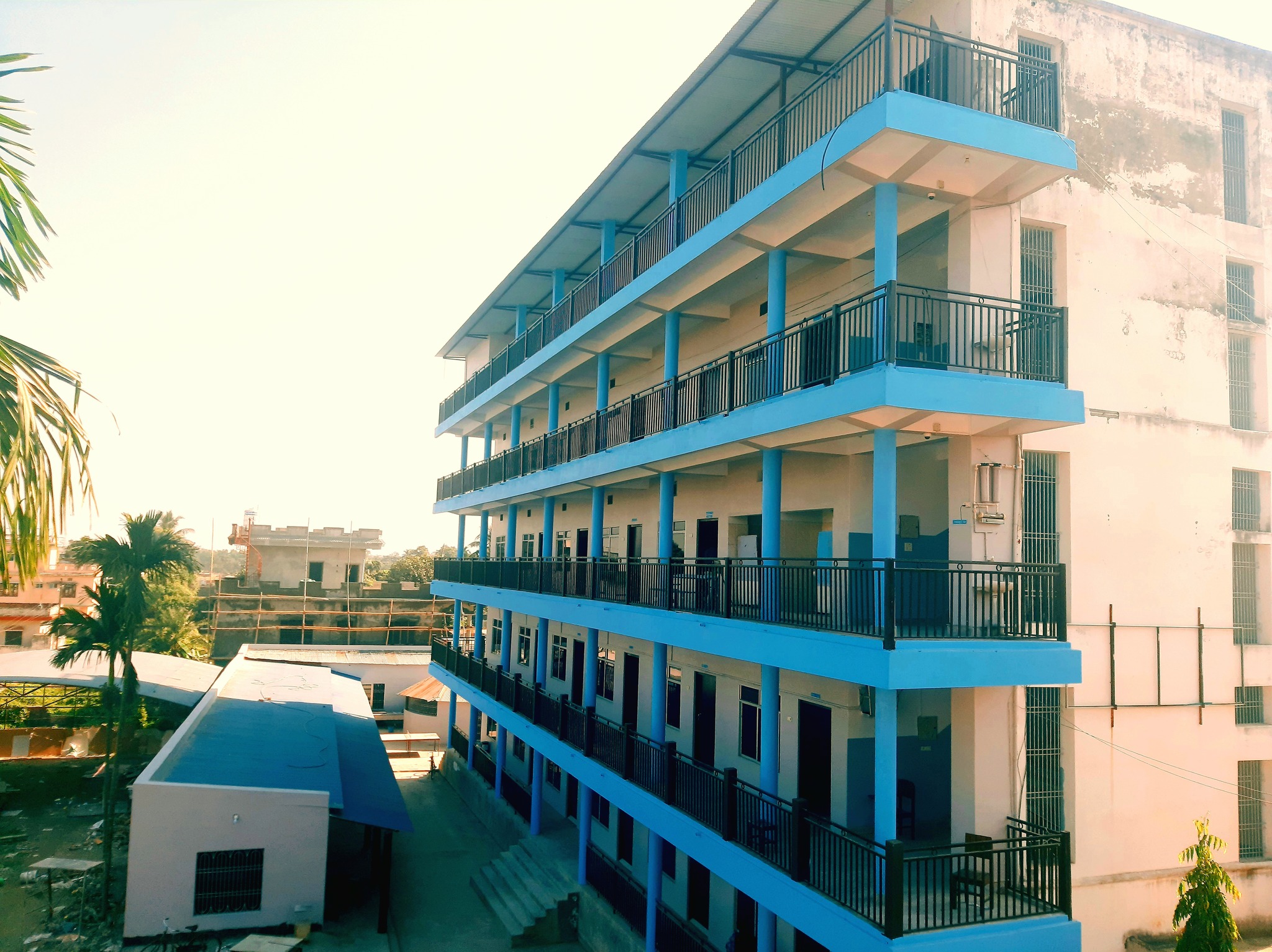
KHI operates from its own building within a 12-kattha compound in Biratnagar Metropolitan City.
The campus includes classrooms, a library, laboratories, administrative space, and a computer laboratory. Laboratory facilities cover areas used in health science education, including physics, chemistry, biology, zoology, botany, biochemistry, microbiology, parasitology, hematology, anatomy, midwifery, community nursing, and fundamental nursing.
Academic activities combine classroom learning with laboratory and practical work. Monthly and internal evaluations are also part of the institute's academic practice.
Students also participate in curricular and extracurricular activities intended to support discipline, communication, self-reliance, confidence, and leadership development within the learning environment.
Morang Cooperative Hospital is the other institutional wing of NSBAS. It is a 100-bed hospital recognized by the Department of Health Services and provides healthcare services ranging from primary care to specialized services.
Its service activities include routine immunization, hemodialysis, and obstetric services in cooperation with government health programs.
The hospital's presence within the same cooperative structure connects KHI with an operating healthcare setting. Course-specific clinical practice, fieldwork, and professional training requirements remain governed by the applicable curriculum and academic or regulatory arrangements.
KHI's educational direction is centered on health workforce preparation, practical education, primary healthcare, community health, and institutional development.
Its strategic priorities include:
maintaining qualified faculty and staff in each department;
strengthening technology-based learning;
upgrading laboratories and equipment;
expanding collaboration with relevant organizations for practical learning;
developing human resources;
strengthening institutional capacity and financial sustainability;
supporting practical health education and health service delivery.
The institution's vision emphasizes equity, effectiveness, and efficiency in health services, while its mission connects health education with research, management, public health practice, and community partnership.
KHI operates within the cooperative governance structure of NSBAS. The organization has founder members and a seven-member governing body formed through its cooperative election process.
| Name | Position |
|---|---|
| Chudamani Acharya | President |
| Dr. Yadav Bhakta Joshi | Vice-President |
| Dr. Puspa Prasad Rijal | Treasurer |
| Meghraj Shrestha | Secretary |
| Aitu Maya Chhetri | Member |
| Shyam Sundar Poudel | Member |
| Bikash Adhikari | Member |
Institutional committees include:
Academic Committee
Examination Committee
Library Committee
Research and Publication Committee
Students Welfare and Placement Committee
Koshi Health Institute is focused specifically on health science education rather than a broad multidisciplinary college model.
Students can choose among general medicine, nursing, laboratory technology, pharmacy, physiotherapy, public health, and post-basic nursing pathways. The programs differ by academic level, professional focus, affiliation, curriculum structure, and regulatory requirements.
CTEVT programs follow technical and proficiency certificate frameworks, while BPH and PBNS follow Purbanchal University academic structures. Professional practice after graduation is also connected with the licensing requirements of the relevant health council.
Students considering admission should pay close attention to the program level, current eligibility criteria, entrance requirements, annual seat allocation, fees, scholarships, admission procedures, and licensing rules applicable to their chosen course and academic year.


.png)