PCL in General Medicine (Health Assistant) at Koshi Health Institute, Biratnagar, is a three-year proficiency certificate program affiliated with the Council for Technical Education and Vocational Training (CTEVT).
The curriculum is designed to prepare middle-level technical health personnel with knowledge and practical skills in general medicine, surgery, primary healthcare, family health, clinical procedures, public health, and community-based care. The program uses a yearly system and combines classroom instruction with practical work, clinical exposure, and community field practice. Koshi Health Institute has offered General Medicine (HA) as one of its CTEVT-affiliated health programs.
| Field | Details |
|---|---|
| Course: | PCL in General Medicine |
| Common Title: | Health Assistant (HA) |
| Institution: | Koshi Health Institute |
| Location: | Biratnagar, Morang |
| Affiliation: | CTEVT |
| Duration: | 3 academic years |
| Academic System: | Yearly system |
| Curriculum Revision: | Third Revision, 2024 |
| Attendance: | Minimum 90% in each subject |
The current CTEVT curriculum is the third revision of 2024. The program is organized over three academic years, with each year consisting of 35 academic weeks including the evaluation period.
PCL in General Medicine is structured around the responsibilities of middle-level health personnel working with individuals, families, and communities. Students study patient assessment, provisional diagnosis, treatment within the level of training, referral, routine investigations, minor medical and surgical procedures, emergency care, maternal and child health, nutrition, family planning, public health programs, administration, and medical record keeping.
The course combines clinical medicine with primary healthcare and community health. This makes the program broader than a purely hospital-based course because students also study health education, environmental health, epidemiology, family health, and community diagnosis.
The CTEVT curriculum specifies the following entry routes:
SLC, SEE, or equivalent pass with a minimum GPA of 2.0 and grades in Compulsory Mathematics, English, and Science; or
CMA equivalent with a minimum of 68.33%.
Applicants must also meet the entrance examination requirement prescribed for the program.
Admission to medical education programs follows the prevailing rules of the Medical Education Commission (MEC). Where MECEE-BL applies, admission follows the prevailing MEC entrance, matching, code of conduct, scholarship, seat allocation, fee, and admission procedures.
Seats, fees, scholarships, and admission arrangements may change according to MEC decisions and the academic calendar for the concerned intake.
The program progresses from foundational health science study to clinical subjects and then to extended clinical and community practice.
The first year establishes the basic academic and health science foundation required for later clinical study.
The second year contains the main introductory clinical and public health subjects:
Medicine I
Surgery I
Basic Medical Procedures and First Aid
Clinical Pathology
Pharmacology and Pharmacy
Environmental Health
Health Education
Primary Health Care and Family Health
Primary Health Care and Family Health includes maternal and child health, family planning, and nutrition. Theory and practical components are integrated across several subjects.
The third year continues with:
Medicine II
Surgery II
Health Management
Epidemiology and Demography
Community Diagnosis
Comprehensive Clinical and PHC Practicum
Comprehensive Community Field Practicum
Medicine II includes areas such as pediatrics, neonatology, psychiatry, and dermatology, while Surgery II includes ENT, dentistry, and ophthalmology.
Clinical training forms a substantial part of the third year. The comprehensive clinical practicum runs for 16 weeks, covering areas such as emergency care, medicine, surgery, clinical pathology observation, pharmacy and pharmacology, obstetrics and gynecology, maternity care, family health, basic medical procedures, and physiotherapy.
Students also complete an eight-week comprehensive community field practicum.
Clinical learning includes history taking, physical examination, identification of abnormal findings, selection of appropriate laboratory tests, provisional and differential diagnosis, treatment of simple conditions within the defined scope, and referral of complex cases.
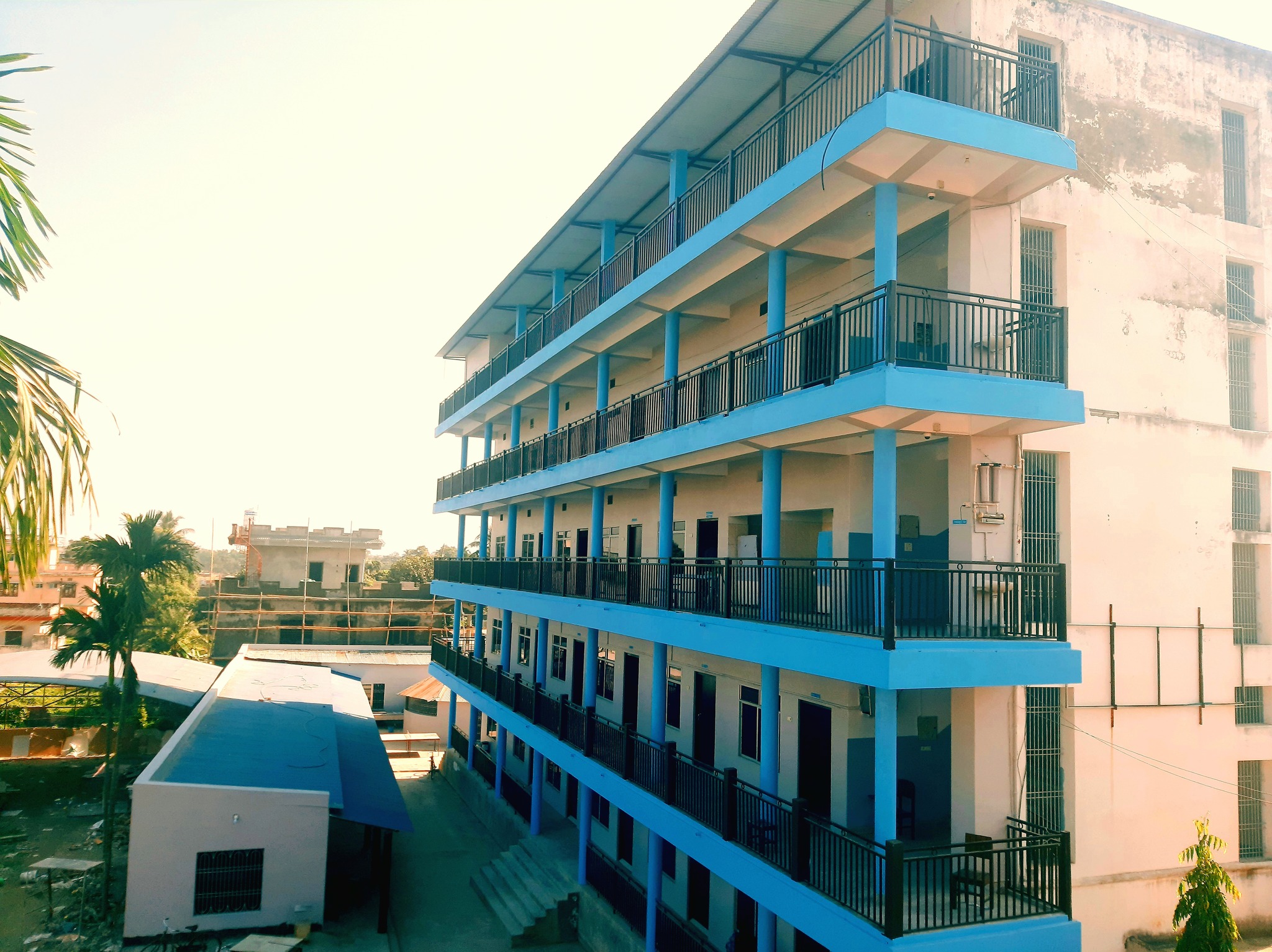
Koshi Health Institute operates within the same cooperative structure as Morang Cooperative Hospital, a 100-bed hospital used for clinical field practice. The institute also has health science laboratories, classrooms, a library, and other practical learning facilities.
Students must maintain at least 90% attendance in each subject to appear in the respective final examination.
Assessment includes continuous or internal assessment and final examinations according to the examination scheme assigned to each subject. Theory and practical components are evaluated separately where applicable.
The grading categories are:
Distinction: 80% and above
First Division: 65% to below 80%
Second Division: 50% to below 65%
Pass Division: pass marks to below 50%
Students who pass all components of all subjects across the three years complete the program and are awarded the Proficiency Certificate Level in General Medicine qualification.
Koshi Health Institute is associated with the Nepal Health Professional Council (NHPC) for applicable health professional programs.
After completing the course, graduates must meet the prevailing professional council licensing requirements before entering regulated professional practice.
The CTEVT curriculum connects graduates with Health Assistant-level technical positions. It states that graduates are eligible for positions equivalent to non-gazetted first class/Level 5 technical posts as prescribed by the Public Service Commission of Nepal and other related agencies.
Actual employment depends on professional licensing, recruitment rules, individual competency, experience, and available positions. Completion of the qualification does not guarantee appointment to a particular post.
The course may suit students interested in a combination of clinical care, primary healthcare, community health, emergency care, maternal and child health, and public health work.
Students should be prepared for substantial practical learning. The later part of the course involves clinical rotations, community fieldwork, case assessment, physical examination, basic procedures, and public health activities in addition to classroom study.
The program runs for three academic years under the CTEVT yearly system.
Yes. The program is commonly identified as PCL in General Medicine or Health Assistant (HA) at Koshi Health Institute.
Applicants can enter through SLC, SEE, or equivalent with a minimum GPA of 2.0 and grades in Compulsory Mathematics, English, and Science, or through a CMA-equivalent qualification with at least 68.33%.
Second-year subjects include Medicine I, Surgery I, Basic Medical Procedures and First Aid, Clinical Pathology, Pharmacology and Pharmacy, Environmental Health, Health Education, and Primary Health Care and Family Health.
Yes. The third year includes a 16-week comprehensive clinical practicum covering medicine, surgery, emergency care, maternity, family health, clinical pathology, pharmacy, basic procedures, and other clinical areas.
Yes. The third year includes an eight-week comprehensive community field practicum in addition to clinical practice.
Students who successfully complete all required components receive the Proficiency Certificate Level in General Medicine qualification.
Yes. Graduates must meet the prevailing licensing requirements of the relevant professional council before entering regulated professional practice.