The Bachelor of Public Health (BPH) at Koshi Health Institute, Biratnagar, is an eight-semester bachelor's degree affiliated with Purbanchal University. The program follows the curriculum of the Faculty of Medical and Allied Sciences and combines public health theory with laboratory work, concurrent field-based practice, epidemiological study, community health, research-related learning, health management, and population-focused subjects.
The curriculum progresses from basic health sciences and introductory public health to applied epidemiology, family health, environmental health, community work, statistics, health education, and public health service subjects.
| Field | Details |
|---|---|
| Course: | Bachelor of Public Health (BPH) |
| Institution: | Koshi Health Institute |
| Location: | Biratnagar, Morang |
| Affiliation: | Purbanchal University |
| Faculty: | Faculty of Medical and Allied Sciences |
| Duration: | 8 semesters |
| Academic Level: | Bachelor's Degree |
| Curriculum: | Revised BPH Curriculum, 2019 |
The Purbanchal University BPH curriculum is structured across eight semesters and includes classroom, laboratory, field-based, and applied public health components.
BPH is concerned with health at population and community levels. Rather than concentrating only on individual clinical treatment, the course includes epidemiology, disease prevention, environmental health, nutrition, reproductive and family health, health education, community participation, health systems, statistics, and public health services.
The academic structure also places students in laboratory and field-based learning settings. Early semesters introduce basic sciences and public health concepts, while later semesters move toward epidemiological methods, community action, public health planning, statistics, and applied field work.
Admission to the BPH program falls under the prevailing medical education framework of the Medical Education Commission (MEC).
Admission is based on MECEE-BL and follows the prevailing MEC rules concerning entrance procedures, matching, seat allocation, scholarships, fee structure, code of conduct, and the official academic calendar.
The number of seats, fee provisions, scholarship arrangements, and admission procedures can change between academic years according to MEC decisions.
The eight-semester curriculum develops public health knowledge in stages.
The first semester introduces basic public health and biomedical foundations through:
Introduction to Public Health
Anatomy, Physiology and Patho-physiology
Public Health Microbiology
Public Health Biochemistry
Applied Professional English
laboratory-based practice in anatomy, physiology, microbiology, and biochemistry
The second semester includes:
Public Health Entomology and Rodentology
Public Health Pharmacy, Pharmacology and Toxicology
First Aid and Safety
Basic Foods and Nutrition
Ecosystem and Environmental Health
Epidemiology of Risk Factor and Communicable Diseases I
related laboratory and field-based practice
The middle stage moves further into public health practice, communicable diseases, family health, nutrition, environmental and occupational health, demography, population studies, reproductive health, epidemiological methods, and social dimensions of public health.
Fourth-semester subjects include:
Reproductive Health and Gender
Epidemiology of Non-communicable Diseases and Mental Health
Family Health II
Public Health Epidemiology Methods
Sociology, Anthropology and Social Psychology in Public Health
Rural, Urban and International Health
Several subjects are paired with Concurrent Field Based Practice, while epidemiology of non-communicable diseases and mental health includes term-paper preparation.
The fifth semester introduces subjects such as:
Public Health Statistics and Computer Application I
Community Organization, Participation and Action
Public Health Infrastructure Engineering and Disaster Management
Fundamentals of Health Education
Health-Promoting School Program
Fundamental of Public Health Service
The full program continues through eight semesters, with later study building on the epidemiological, statistical, community, health-service, and applied public health foundation developed in the earlier semesters.
Practical learning begins from the first semester through laboratory-based practice in anatomy, physiology, microbiology, and biochemistry.
Field-based work becomes more prominent as students progress. The curriculum includes concurrent field-based practice in areas such as communicable disease epidemiology, family health, nutrition, environmental and occupational health, reproductive health, and public health epidemiological methods.
This structure allows students to connect classroom subjects with community and population-health activities rather than studying public health only through theory.
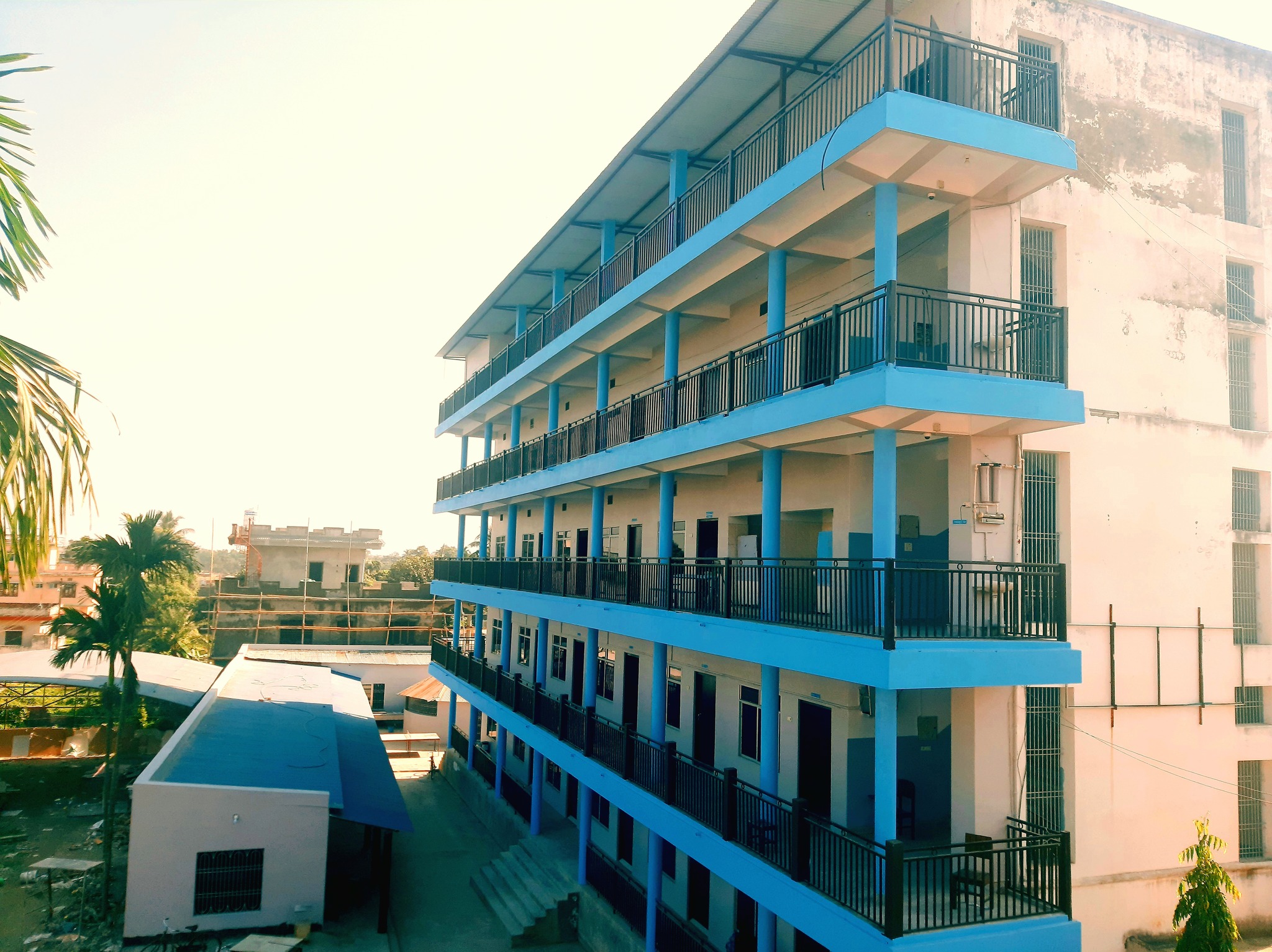
Koshi Health Institute also has health science laboratories, classrooms, library facilities, and an academic environment shared with its other health programs.
Across the eight semesters, students encounter public health from several connected directions:
epidemiology and disease patterns;
environmental and occupational health;
nutrition and food-related health;
family and reproductive health;
demography and population studies;
community organization and participation;
public health statistics;
health education;
disaster management;
public health service systems;
laboratory and field-based public health practice.
The mix of biological sciences, social sciences, statistics, health systems, and community work reflects the multidisciplinary nature of the BPH curriculum.
BPH is a health science degree connected with Nepal's professional and regulatory health education framework.
After completing the course, graduates must meet the applicable licensing requirements of the respective professional council before entering regulated professional practice. Professional requirements remain subject to the rules in force at the time of graduation.
BPH may suit students whose interests are closer to community health, disease prevention, epidemiology, population studies, health education, environmental health, research-related work, and health service planning than to direct bedside clinical care.
Students should also be prepared for quantitative study, field-based assignments, community interaction, laboratory work, written academic work, and subjects drawn from biological, behavioral, social, and public health sciences.
The Bachelor of Public Health is structured across eight semesters under Purbanchal University.
The program is affiliated with Purbanchal University and follows the curriculum of its Faculty of Medical and Allied Sciences.
Yes. The curriculum includes laboratory-based practice and Concurrent Field Based Practice in several public health subjects.
First-semester study includes Introduction to Public Health, Anatomy, Physiology and Patho-physiology, Public Health Microbiology, Public Health Biochemistry, Applied Professional English, and related laboratory-based practice.
Yes. Epidemiology appears throughout the curriculum, including communicable diseases, non-communicable diseases, mental health, risk factors, and public health epidemiological methods.
Yes. Community Organization, Participation and Action and several concurrent field-based practice components are included in the curriculum.
Yes. Admission follows the prevailing Medical Education Commission framework, including MECEE-BL and the applicable entrance, matching, seat allocation, scholarship, fee, and admission procedures.
Graduates must meet the applicable professional council licensing requirements before entering regulated professional practice.