



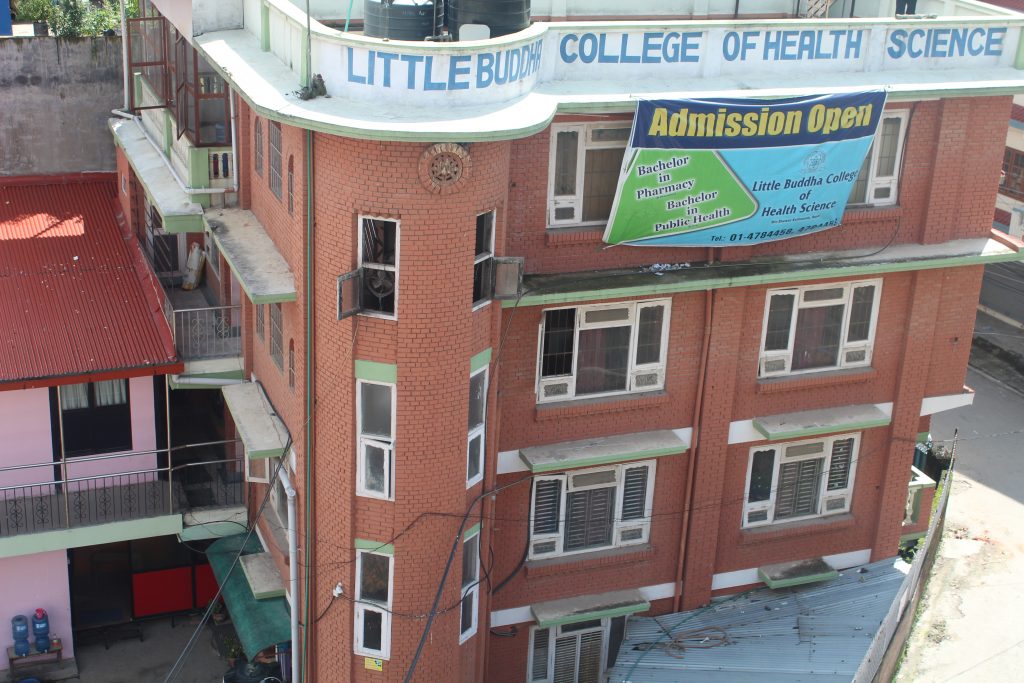
The Bachelor of Public Health (BPH) at Little Buddha College of Health Science in Kathmandu is a four-year undergraduate health science program affiliated with Purbanchal University. The curriculum is organized across eight semesters and combines public health theory with laboratory work, field-based practice, community work, research and program-management study.
The program is intended to prepare graduates for responsibilities connected with public health planning, health education, research, community participation and the management of health programs.
Its academic direction includes identifying health problems, planning and assessing interventions, working with communities and understanding the social, environmental and managerial factors that influence population health.
| Area | Details |
|---|---|
| Course | Bachelor of Public Health (BPH) |
| College | Little Buddha College of Health Science |
| Location | Kathmandu, Nepal |
| Affiliation | Purbanchal University |
| Level | Bachelor's degree |
| Duration | 4 years |
| Academic structure | 8 semesters |
| Admission entrance | MECEE-BL |
| Professional council | Nepal Health Professional Council |
The opening semesters establish the scientific and public health foundation of the course. Subjects include Introduction to Public Health, Anatomy, Physiology and Patho-physiology, Public Health Microbiology, Public Health Biochemistry and Applied Professional English. The curriculum then moves into Public Health Entomology and Rodentology, Public Health Pharmacy, Pharmacology and Toxicology, First Aid and Safety, Basic Foods and Nutrition, Ecosystem and Environmental Health and epidemiology. Laboratory and field-based components are included alongside these subjects.
The middle part of the program deals more directly with population health problems and community practice. Students study Public Health Core Actions, communicable diseases, Family Health, Applied Public Health Nutrition, Environmental and Occupational Health, Demography, Population Studies and Family Planning. Reproductive Health and Gender, non-communicable diseases and mental health, epidemiological methods, social sciences in public health and Rural, Urban and International Health are also part of the curriculum.
Later semesters place greater weight on statistics, management, policy, health education and applied public health work. Areas include Public Health Statistics and Computer Application, Community Organization, Participation and Action, disaster management, health education, Public Health and Medical Services in Nepal, Public Health Policy, Plan and Program in Nepal and Community Health Diagnosis and Intervention.
The final stages include Public Health Research, Health Program Supervision Monitoring and Evaluation, Health Economics and Financing, Health Management Information System and Logistic Management, comprehensive public health management field practicum, Public Health Profession and Entrepreneurship, Public Health Project Management and Public Health Research Practicum.
BPH is not structured only around classroom subjects. Laboratory-based practice, concurrent field-based practice, residential field-based practice, proposal writing and research practicum appear at different stages of the eight-semester curriculum.
The seventh semester includes a Comprehensive Public Health Management Field Practicum as residential field-based practice, while the eighth semester includes Public Health Research Practicum. These components connect public health concepts with community assessment, program management and research activities.
Academic entry routes include 10+2 Science in the Biology Group or equivalent study under the prescribed requirements. Specified Health Science Proficiency Certificate Level or diploma backgrounds are also included within the eligibility pathways, subject to the applicable academic requirements and registration with the relevant professional council.
Admission for the current academic intake is governed by the prevailing Medical Education Commission requirements rather than by treating older eligibility wording as a permanent admission rule.
Admission to BPH is based on MECEE-BL and follows the prevailing rules, guidelines, code of conduct and admission procedures of the Medical Education Commission (MEC), Nepal.
MEC provisions apply to admission procedures, scholarship arrangements, seat allocation and the applicable fee structure. Seats, scholarships, fees and examination-related guidelines can be revised through MEC decisions and the official MEC calendar.
Seat numbers should therefore be understood as intake-specific. A seat allocation determined for one academic year may change for another admission cycle.
Completing the BPH degree and entering regulated professional practice are separate stages.
After completing the program, graduates must pass the applicable professional licensing examination conducted under the Nepal Health Professional Council (NHPC) framework before entering the profession.
The academic and practical components are directed toward skills used in public health work, including:
identifying and assessing community health problems
planning and managing public health activities
applied public health research
epidemiological assessment
health education and promotion
community organization and participation
program supervision, monitoring and evaluation
health information and logistics management
communication and group organization
The program also addresses leadership in Primary Health Care and district-level public health programs, along with research and management skills used in health services.
BPH graduates may work in settings connected with public health programs, community health, health education, research, planning and health-service management. The academic scope is relevant to government and non-government health agencies, hospitals, educational institutions and community-based health activities.
Career opportunities depend on professional licensing requirements, individual qualifications, experience, recruitment criteria and available positions. The degree itself does not guarantee employment in a particular organization or position.
At Little Buddha College of Health Science, BPH students study within a health science setting that includes classrooms, a library, computer-supported study and laboratories. The college also includes public speaking, group discussions, quizzes, exhibitions and field or educational visits among its student activities.
These resources sit alongside a curriculum in which laboratory work, community engagement, residential field practice and research are already part of the academic structure.




.png)





