The Bachelor of Public Health (BPH) at Hope International College, Lalitpur, is a four-year undergraduate program affiliated with Purbanchal University. The course runs across eight semesters and combines public health science, epidemiology, community health, environmental and occupational health, nutrition, health education, research, statistics, health policy, program management, and field-based practice.
Students progress from basic health sciences to public health methods, community interventions, research, management, and project work. Practical components include laboratory activities, community assignments, residential field practice, proposal writing, health-program work, and a final public health research practicum.
| Field | Details |
|---|---|
| Course | Bachelor of Public Health (BPH) |
| Level | Bachelor |
| Duration | 4 years |
| Academic System | 8 semesters |
| Institution | Hope International College, Lalitpur |
| Affiliation | Purbanchal University |
| Theory Credits | 124 |
| Practical Credits | 41 |
| Total Credits | 165 |
| Admission | MECEE-BL under prevailing MEC provisions |
| Professional Council | Nepal Health Professional Council (NHPC) |
BPH prepares students for work concerned with population health rather than individual clinical care alone. The curriculum addresses disease patterns, health risks, nutrition, environmental conditions, family health, community participation, health education, research, planning, policy, and management.
Purbanchal University's revised BPH structure contains 41 theory-based courses and 27 practical-based courses. The program carries 124 theory credits and 41 practical credits, giving a total of 165 credits. Practical work is organized through laboratory-based practice, field-based practice, concurrent field activities, residential field practice, classroom-based practice, proposal writing, and research.
Applicants must meet the prevailing eligibility requirements for BPH admission under the Medical Education Commission framework.
The Purbanchal University curriculum identifies Intermediate Science or 10+2 Science with Biology, along with specified certificate-level health science backgrounds, with at least 50% marks or an equivalent grade, among the academic entry routes for BPH.
Admission at HIC is based on the Medical Education Common Entrance Examination for Bachelor Level (MECEE-BL) and follows the prevailing rules, guidelines, code of conduct, scholarship provisions, seat allocation system, fee structure, and admission procedures set by the Medical Education Commission (MEC), Nepal.
Seats, fees, scholarship arrangements, examination provisions, and admission procedures may be revised according to MEC decisions and the applicable official admission calendar.
The opening year establishes a base in health and biological sciences alongside introductory public health study.
Subjects include:
Introduction to Public Health
Anatomy, Physiology and Patho-physiology
Public Health Microbiology
Public Health Biochemistry
Applied Professional English
Public Health Entomology and Rodentology
Public Health Pharmacy, Pharmacology and Toxicology
First Aid and Safety
Basic Foods and Nutrition
Ecosystem and Environmental Health
Epidemiology of Risk Factor and Communicable Diseases-I
Several subjects include laboratory or field-based practice.
Study moves further into disease epidemiology, family health, nutrition, environmental health, reproductive health, and public health methods.
Students cover areas such as Public Health Core Actions, Epidemiology of Communicable Diseases-II, Family Health, Applied Public Health Nutrition, Environmental and Occupational Health, Demography and Population Studies, Reproductive Health and Gender, Epidemiology of Non-communicable Diseases and Mental Health, Public Health Epidemiology Methods, Sociology and Anthropology in Public Health, and Rural, Urban and International Health.
These semesters place greater attention on health education, statistics, community participation, infrastructure, disaster management, health services, policy, and community intervention.
Coursework includes Public Health Statistics and Computer Application, Community Organization, Participation and Action, Public Health Infrastructure Engineering and Disaster Management, Fundamentals of Health Education, Health-Promoting School Program, Public Health Service Management, Applied Health Education and Promotion, Public Health and Medical Services in Nepal, Public Health Policy, Plan and Program in Nepal, and Community Health Diagnosis and Intervention.
The final year brings together research, monitoring, economics, health information, management, training, and project work.
Students study Public Health Research, Health Program Supervision Monitoring and Evaluation, Health Economics and Financing, Health Management Information System and Logistic Management, Education and Training of Human Resource, Public Health Profession and Entrepreneurship, and Public Health Project Management.
The final stages also include Public Health Research Proposal Writing, Comprehensive Public Health Management Field Practicum, training-program conduction, project proposal writing, and Public Health Research Practicum.
Field learning is built into the BPH curriculum from the early semesters. Students encounter laboratory-based practice first and then move into community, field, intervention, and management-oriented activities.
Later semesters include Community Health Diagnosis and Intervention and a residential Comprehensive Public Health Management Field Practicum. The eighth semester includes a Public Health Research Practicum, giving students a formal research component near the end of the degree.
At HIC, this academic work is supported by the college's Research and Development Unit (RDU) and Institutional Review Board (IRB). Students also have access to library, laboratory, computer, transportation, and counseling facilities established within the college.
The course develops abilities connected with:
Identifying community health problems
Applying epidemiological investigation
Planning community health interventions
Assessing communicable and non-communicable disease risks
Preparing and conducting health education activities
Working with health statistics and information systems
Participating in supervision, monitoring, and evaluation
Planning public health programs and projects
Conducting public health research
Working with communities in health-related programs
Preparing and conducting training activities
These competencies are addressed through theory, research assignments, practical work, and community-based learning.
Purbanchal University's BPH curriculum identifies employment areas that include:
Universities and education or research settings
Colleges and academic institutions
Public health organizations
Government and non-government health agencies
INGOs and private health organizations
Health-related consultancy agencies
Research organizations and institutions
Hospital research units
Self-employment or public health entrepreneurship
Actual employment depends on professional registration, individual qualifications, experience, available positions, and employer requirements.
After completing BPH, graduates must pass the applicable professional licensing examination before entering the regulated profession.
For BPH graduates, the relevant professional body is the Nepal Health Professional Council (NHPC).
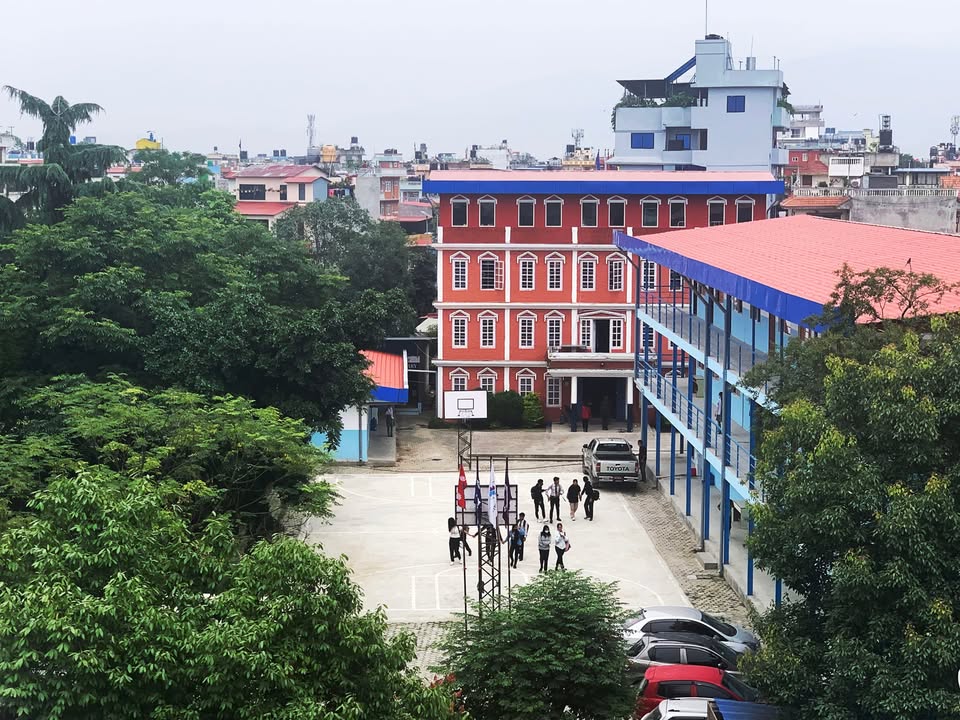
BPH students at HIC study within a health sciences setting that supports classroom, laboratory, field, and research activities.
The college uses problem-based learning, group discussions, case studies, project work, presentations, and blended face-to-face and online teaching. Its library contains health-related books, journals, periodicals, and research materials, while the computer laboratories support coursework and research activities.
Transportation arrangements are available for field duties and college-organized academic activities. Counseling services also cover academic, career, and personal or social development.
College: HOPE International College
Location: Mahalaxmisthan-14, (TikheDewol), Lalitpur, Nepal
Postal Address: P.O.Box: 8975 EPC 1365
Landmark: Old Genius School building (250 Meters from Ring Road)
Telephone: +977-1-5171268, 01-5171122, 01-5171167, 01-5171236
Fax: +977 1 5151222
Email: info@hopecollege.edu.np
Website: www.hopecollege.edu.np
The Bachelor of Public Health runs for four years across eight semesters.
BPH at Hope International College is affiliated with Purbanchal University.
The revised program carries 124 theory credits and 41 practical credits, totaling 165 credits.
Yes. Admission at HIC is based on MECEE-BL and follows the prevailing Medical Education Commission admission framework.
Yes. The curriculum contains laboratory, community, field, residential field, intervention, management, proposal-writing, and research-practicum components.
Yes. Public Health Research, proposal writing, and a Public Health Research Practicum are included in the later semesters.
Yes. Graduates must pass the applicable Nepal Health Professional Council licensing examination before entering the regulated profession.