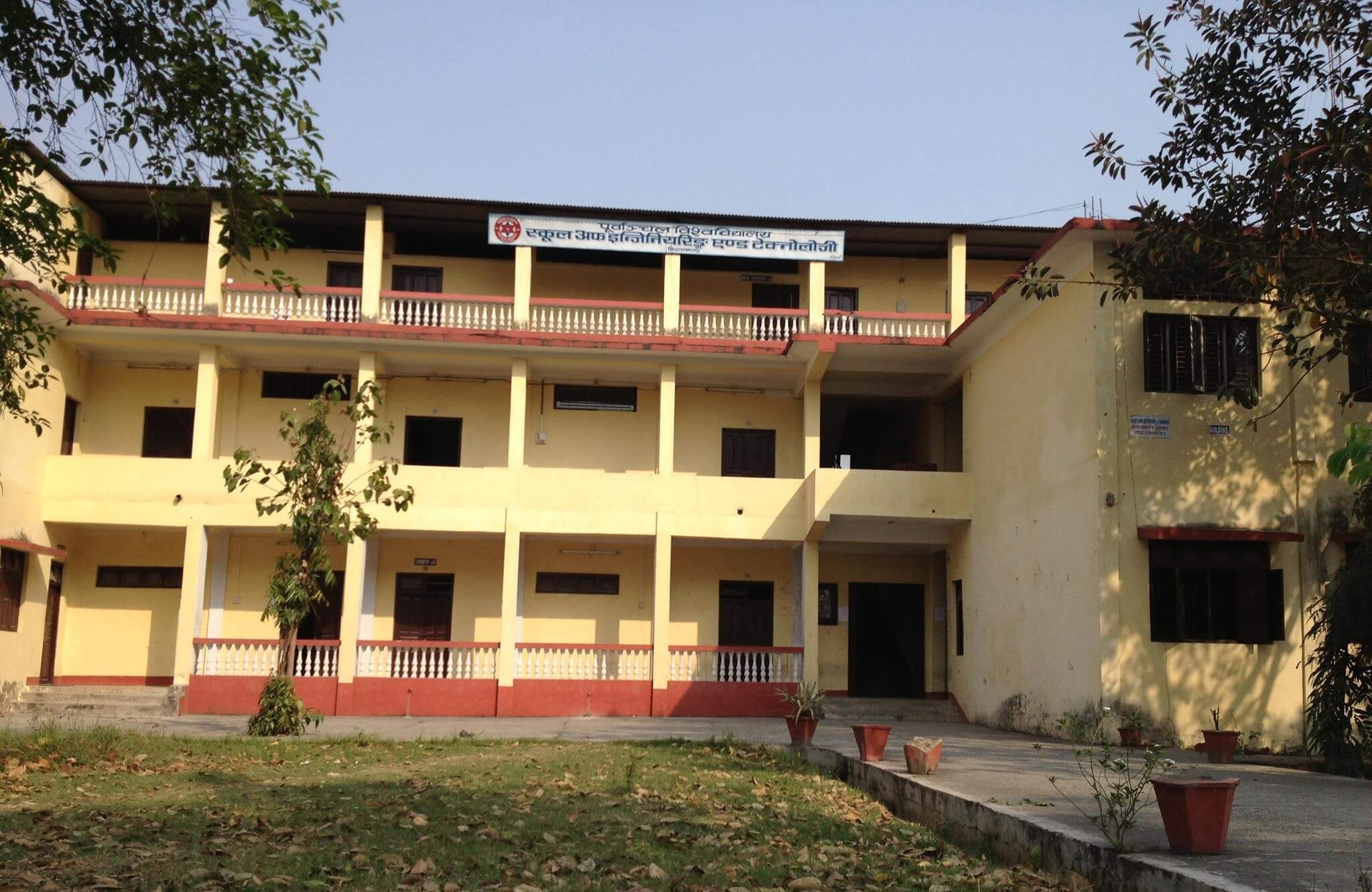
The Bachelor in Information Technology (BIT) at Purbanchal University School of Science and Technology (PUSAT) is an undergraduate information technology program offered in Biratnagar, Morang. It follows the academic curriculum of Purbanchal University and is organized from Year I through Year IV across eight semesters.
The curriculum brings together programming, mathematics, computer systems, electronics, databases, networking, web technology, management subjects, information systems, research, electives, and recurring project work. Students encounter both theory and practical components as they progress from introductory computing subjects to software, network, database, and system-oriented coursework.
| Field | Details |
|---|---|
| Course: | Bachelor in Information Technology (BIT) |
| Level: | Bachelor's |
| Institution: | Purbanchal University School of Science and Technology (PUSAT) |
| Location: | Biratnagar, Morang |
| University: | Purbanchal University |
| Academic Structure: | Eight semesters across Year I to Year IV |
| Seats: | 60 |
| Study Components: | Lectures, tutorials, practical work, laboratories, projects, and electives |
The minimum eligibility criteria effective from the 2082-2083 intake provide several academic routes for BIT applicants.
Applicants must have passed +2 or equivalent with:
a minimum D grade in each subject, with D+ applicable under the old grading system; and
an aggregate GPA of at least 2.0.
Applicants may also qualify with at least 45 percent marks in Intermediate where Mathematics or Computer Science carries 100 marks, or through a three-year diploma in any stream.
For A Level, applicants must have at least an E grade in each subject or an aggregate of 45 percent.
The BIT curriculum extends from Semester I in Year I to Semester VIII in Year IV. Individual semesters combine theory courses with tutorials, practical hours, or project work according to the nature of each subject.
First-semester study begins with Mathematics-I, Fundamentals of Information Technology, Technical Communication (English), Basic Electrical System & Circuit, Principles of Management, Computer Programming-I, and Project-I. This opening semester carries 19 credits.
Semester II includes Mathematics-II, Electronics Devices & Circuits, Digital Logic, Object Oriented Programming in C++, Project-II, and Financial Management & Accounting.
As the program progresses, the coursework moves into subjects such as System Analysis & Design, Microprocessor & Assembly Language, Data Structure & Algorithm, User Interface Design, Numerical Methods, Communication System, Computer Organization, Web Technology-I, Database Management System, and Discrete Mathematics.
The later semesters broaden the curriculum into communication, software, information systems, and computing applications.
Year III includes Probability & Statistics, Society & Ethics in IT, Data Communication, Web Technology-II, Computer Graphics, Operating System, Embedded System Programming, Computer Network, Data Mining & Data Warehousing, Advance Object-Oriented Programming, and Research Methodology.
Year IV includes Artificial Intelligence, Network Programming, Software Engineering, Management Information System, E-commerce, Wireless Communication System, and Software Project Management.
This progression gives the program a broad IT orientation rather than concentrating on a single computing area.
Project work appears repeatedly in the BIT curriculum. The first semester includes Project-I, followed by further project courses in subsequent stages and an Application Project in Semester VIII.
For example, Project-II requires students to work with object-oriented programming, prepare software, submit written documentation, and give an oral presentation. The project process includes topic selection, information gathering, system requirements, algorithms and flowcharts, coding, implementation, and documentation.
Later project courses continue with application development, report preparation, presentations, documentation, and viva components. Project-VII, for example, includes work connected with software engineering practices, RDBMS, and object-oriented programming.
A number of BIT subjects combine classroom instruction with laboratory work. Fundamentals of Information Technology includes both theory and practical hours, covering computer systems, software, databases, telecommunications, networking, internet technologies, information security, and applications of information technology.
Other practical areas include programming, digital logic, data structures, numerical methods, databases, web technology, operating systems, computer networks, data communication, and artificial intelligence.
At PUSAT, students also have access to computer laboratories, library resources, broadband internet, science laboratories, and project space as part of the wider academic setting.
BIT includes elective choices in the final year.
Semester VII elective options include:
GIS
Multimedia System
Cloud Computing
Distributed Processing
Theory of Computation
Internet and Intranet
Simulation and Modeling
Semester VIII elective options include:
Remote Sensing
Multimedia Communication
E-Governance
System Administration
Design and Analysis of Algorithm
Network Security and Cryptography
Image Processing and Pattern Recognition
BIT covers several connected academic areas rather than treating information technology only as programming.
Students encounter:
programming and object-oriented programming;
computer hardware, digital systems, and microprocessors;
data structures and algorithms;
database management;
web technologies;
operating systems and computer organization;
data communication and computer networks;
software engineering and system analysis;
management and information systems;
statistics and research methodology;
artificial intelligence;
wireless communication;
project planning, software development, and documentation.
The mix is suitable for students who want an undergraduate curriculum spanning software, systems, networking, databases, web technologies, and organizational uses of information technology.
PUSAT is located in Biratnagar and operates within Purbanchal University. Its broader academic portfolio includes undergraduate and postgraduate programs in computer applications, information technology, and related technology fields.
For BIT students, the college environment supports a curriculum that requires computer-based practical work and recurring projects. Computer laboratories, broadband internet, library resources, and project space complement the program's scheduled practical and project components.
BIT stands for Bachelor in Information Technology. The program is offered at Purbanchal University School of Science and Technology in Biratnagar.
The curriculum runs from Year I to Year IV and is divided into eight semesters, ending with Semester VIII.
The BIT program at PUSAT has 60 seats.
For the 2082-2083 eligibility criteria, applicants need a minimum D grade in each subject, D+ under the old grading system, and an aggregate GPA of at least 2.0. Alternative routes include the specified Intermediate, diploma, and A Level qualifications.
Yes. The curriculum includes Computer Programming-I, Object Oriented Programming in C++, Advance Object-Oriented Programming, and programming-related project work.
Yes. Subjects include Database Management System, Data Communication, Computer Network, Network Programming, and Wireless Communication System.
Yes. Project courses appear across the curriculum, and Semester VIII includes an Application Project. Project work involves software or application development, documentation, presentations, and evaluation.
Yes. Final-year elective choices cover areas such as Cloud Computing, Distributed Processing, GIS, System Administration, Network Security and Cryptography, Remote Sensing, and Image Processing and Pattern Recognition.