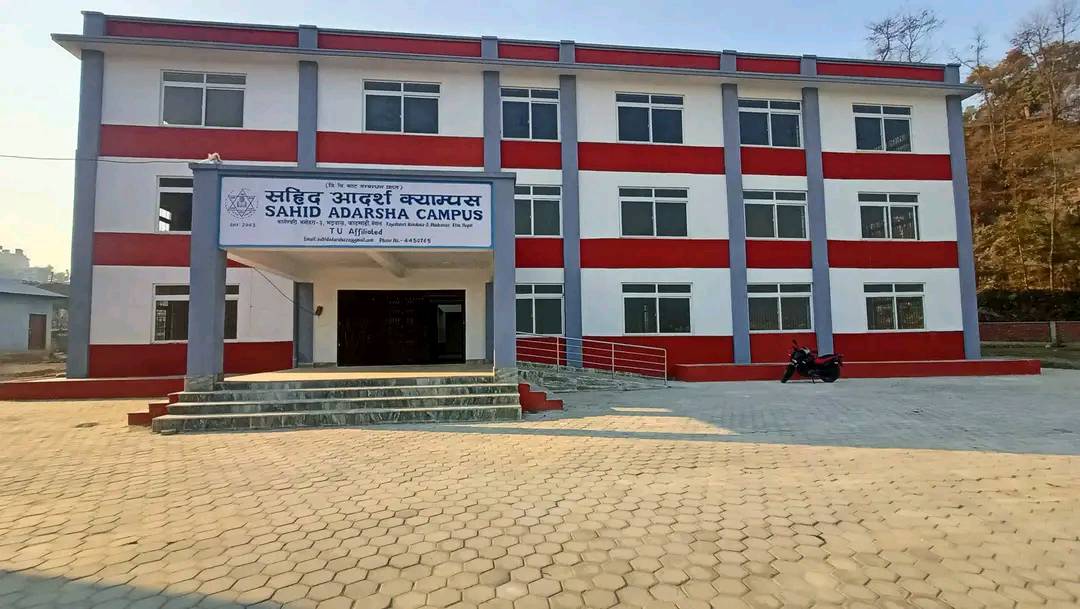
The B.Ed. at Sahid Adarsha Campus, Bhadrabas, Kathmandu, runs under Tribhuvan University (TU) for four academic years. Students seeking teacher education in Nepal find a clear pathway that links subject knowledge, pedagogy, and school practice.
Your decision to study here focuses on verifiable course structure, assessment, and classroom-based experience relevant to Nepali schools.
The program prepares you for classroom teaching and education services. Study progresses through communication skills, professional pedagogy, a major subject, a minor subject, and a school practicum. The annual exam system supports steady learning for students who commute from Bhadrabas and nearby areas.
Affiliation: Tribhuvan University, Faculty of Education
Program Type: Four-year bachelor’s program (annual examination)
Mode: Classroom instruction, tutorials, guided assignments, and practicum
Location: Bhadrabas, Kageshwari Manohara, Kathmandu
TU’s model organizes courses into five groups that cover skills, pedagogy, specialization, and practice teaching.
Group A: Communication skills and academic writing
Group B: Professional core (education psychology, curriculum, assessment, classroom management)
Group C: Major specialization (subject-area courses as per campus offering)
Group D: Minor specialization (supporting subject)
Group E: Teaching practice in a partner school
Campus notices each intake confirm available subject groups (e.g., English Education, Nepali Education, Mathematics Education, Health/Physical Education, Social Studies Education). Check the program office for the current list.
Build a strong base in pedagogy and assessment used in Nepali schools.
Develop subject competence suitable for Grades 6–12 teaching tracks.
Prepare for lesson planning, classroom records, and reflective practice.
Graduates seek teaching roles as per national rules, education support posts in schools or local programs, and further study in M.Ed. or related fields. The pathway serves students who plan to work in Kathmandu Valley and adjoining districts.
Plan clear lessons with measurable objectives and fair assessment.
Explain subject ideas in simple language with local examples.
Maintain teaching files, observe learner progress, and adjust strategies.
Practice professional ethics and school protocols during placement.
Communication: Academic writing, classroom language, micro-teaching scripts
Pedagogy: Learning theories, assessment tools, remedial support
Subject Methods: Syllabus mapping, resource selection, test construction
Practicum: Supervised teaching, mentor feedback, reflective journals
Faculty follow TU course outlines and provide lectures, tutorials, model lessons, and observation visits. Micro-teaching prepares you for the practicum. Mentor teachers review your lessons and give written feedback that supports improvement.
Minimum Qualification: 10+2 or equivalent from a recognized board
Process: Form submission, document verification, and intake rules as per TU and campus notices
Documents: Academic transcripts, character certificate, recent photos, and ID copies
School teaching posts after meeting regulatory criteria
Education support roles in libraries, resource centers, and community programs
Higher study routes to M.Ed. and sector exams
Types: Merit-based and need-based support (as per campus decisions)
How to Apply: Follow annual notices for categories, forms, and deadlines
Students receive a steady four-year route to teaching that connects subject expertise and real classrooms. The practicum anchors learning in day-to-day school contexts, which helps you move from theory to practice with confidence.
The B.Ed. at Sahid Adarsha Campus follows TU’s four-year framework with subject specialization and school practice. Confirm subject groups, seats, class timings, and fee details at the program office for the intake you plan to join.