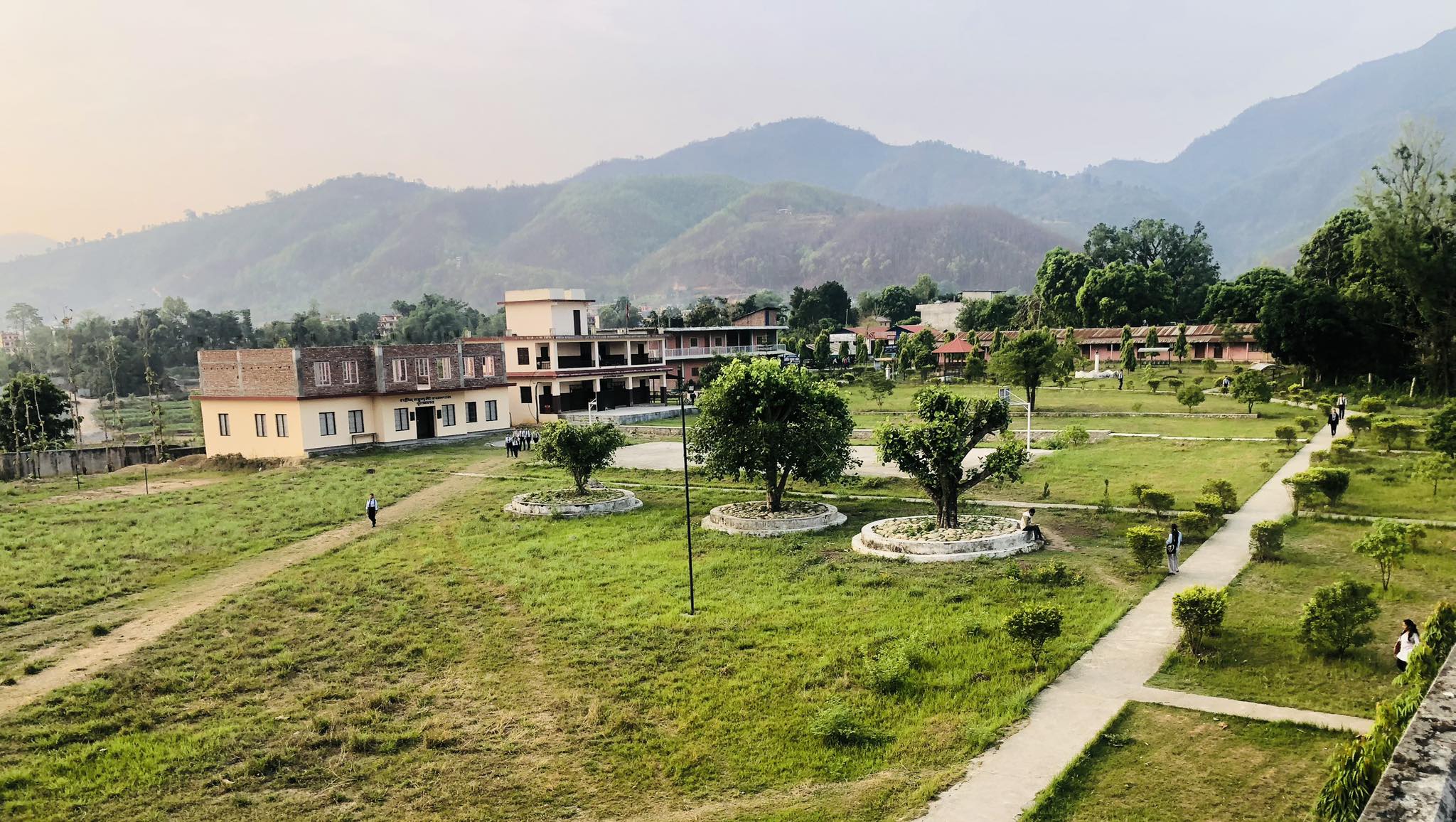
The Master of Education (M.Ed.) at Shahid Multiple Campus is a two-year postgraduate program affiliated with Tribhuvan University. The campus is a public, community institution in Rampur, Palpa, and its master’s programs follow the semester system. M.Ed. began at the campus in 2069 BS and is available in the education stream with Nepali and EPM specializations.
At Shahid Multiple Campus, M.Ed. is delivered within a master’s-level academic setting supported by ICT use in teaching, multimedia and internet access, library use, computer lab facilities, internal academic follow-up, and software-based academic record systems. For students in eastern Palpa and nearby areas, it provides a local route into postgraduate education study under the TU framework.
Program: Master of Education (M.Ed.)
College: Shahid Multiple Campus, Rampur, Palpa
Affiliation: Tribhuvan University
Recognition: University Grants Commission of Nepal
Duration: Two years
Academic system: Four semesters
M.Ed. started at the campus in 2069 BS
Campus specialization areas: EPM and Nepali
TU M.Ed. carries 69 credit hours
The structure includes core courses, specialization courses, teaching practice, and thesis
Semester evaluation combines internal assessment and semester-end examination
Teaching support includes ICT materials, multimedia, internet, library, and computer lab access
The M.Ed. program follows the TU semester structure and combines professional core study with subject specialization, practice teaching, and thesis work. At Shahid Multiple Campus, the available specialization areas are EPM and Nepali, which place the program within the campus’s established education stream.
Total duration: Two academic years
Structure: Four semesters
Total credit hours: 69
Core courses: 7 courses, 21 credit hours
Specialization courses: 17 courses, 39 credit hours
Teaching Practice: 3 credit hours
Thesis Writing: 6 credit hours
The first three semesters include both core and specialization courses
The fourth semester includes core study, an elective in the specialization area, teaching practice, and thesis work
TU specialization areas include Educational Planning and Management and Nepali Education among other subjects
At Shahid Multiple Campus, the M.Ed. specializations are EPM and Nepali
Prepare qualified and competent teachers for upper high schools
Develop educational planners, administrators, managers, supervisors, and related education professionals
Strengthen advanced knowledge in education policy, pedagogy, and educational research
Support subject-based specialization at master’s level
Connect theory, research, and practice through teaching practice and thesis
Promote educational leadership and transformation within changing contexts
The scope of M.Ed. extends across advanced study in education, specialization-based coursework, research, teaching practice, and thesis writing. It is designed not only for subject-based academic study but also for educational planning, management, supervision, and professional work linked with the education sector.
At Shahid Multiple Campus, the program has a defined institutional base because the campus already runs education-related programs at bachelor’s and master’s level. The presence of M.Ed. in EPM and Nepali gives the course a direct link with the campus’s identified education stream rather than treating it as a general postgraduate offering without a subject focus.
Understand advanced concepts in education, pedagogy, and educational research
Develop specialization-based knowledge in EPM or Nepali
Apply theory and research to teaching and professional practice
Complete teaching practice and thesis within the semester system
Build readiness for academic, professional, and administrative roles in education
Educational research
Academic writing
Seminar and assignment-based study
Case study and field study work
Specialization-based subject competence
Teaching practice
Thesis preparation and presentation
At Shahid Multiple Campus, M.Ed. study operates within a teaching environment that uses ICT materials, multimedia, internet access, library use, and computer lab support. The TU M.Ed. structure also defines a semester-based teaching process that goes beyond lecture-only delivery.
Lecture sessions
Project work
Assignments
Seminars
Case studies
Field studies
Library and computer lab use
ICT-supported teaching and learning activities
Upper high school teaching
Educational planning and administration
Academic supervision and management roles
Education-related professional work in institutions and organizations
Research-oriented academic pathways
Further higher study in education
The campus provides scholarships and free-ships in multiple disciplines
At least 4% of total tuition-fee income from enrolled students is allocated from internal campus sources for scholarships
Internal scholarship support covers academically sound and needy students, underprivileged and marginalized groups, ethnic communities, scheduled castes, Indigenous students, differently abled students, girls, and other eligible groups
Additional support is available through OK Baji Trust
Scholarship support is also available through memorial trusts established in the college
Other support sources include the University Grants Commission, Lumbini Province Government, and the Mayor Scholarship Fund of Rampur Municipality
Full and partial fee waivers are also available for needy students through the campus scholarship system
Apply after the campus publishes the M.Ed. admission notice
Meet the academic eligibility of bachelor’s degree or equivalent
For the campus M.Ed. entry category, the prospectus mentions Bachelor or equivalent
Applicants meeting the eligibility criteria take an entrance examination
Complete the prescribed application form
Submit the required academic and personal documents
Complete admission through fee payment and campus procedures
Academic registration follows TU rules and the campus schedule
Completed admission form
Bachelor’s transcript or equivalent academic record
Character certificate
Transfer certificate, if applicable
Migration certificate, if applicable
Citizenship certificate or birth certificate copy
Passport-size photographs
Entrance-related document, if required
Admission fee payment receipt
Equivalence certificate, if applicable
The M.Ed. program at Shahid Multiple Campus follows the TU semester system. The subject teacher evaluates student performance during semester teaching and learning activities, and this internal component carries 40 percent of the total evaluation mark of each subject. At the end of each semester, students appear in the semester-end examination conducted by the Office of the Dean.
Teaching Practice/Practicum and Thesis are practical components within the program. Their final examination is conducted by the Dean’s Office of the Faculty of Education. At campus level, semester study is also supported by ICT-based academic administration and software-based maintenance of result and examination records.
The M.Ed. program at Shahid Multiple Campus places postgraduate education study within a public community-campus setting in Rampur, Palpa. Its structure combines TU’s four-semester framework with specialization-based study, teaching practice, and thesis work.
For students seeking postgraduate education study close to home, the program brings together EPM and Nepali specialization options, ICT-supported teaching, library and computer lab access, semester-based evaluation, and scholarship support. Its place within the campus is closely tied to the institution’s established education stream and its expansion from bachelor-level to master’s-level study.
Yes. Shahid Multiple Campus offers Master of Education (M.Ed.) as a master’s-level program under Tribhuvan University.
The M.Ed. program runs for two years and follows a four-semester system.
The campus offers M.Ed. in EPM and Nepali.
The academic basis is bachelor’s degree or equivalent.
Yes. The TU M.Ed. structure includes Teaching Practice and Thesis as part of the program.
The program follows semester-based evaluation. Internal assessment carries 40 percent of the total evaluation mark of each subject, and semester-end examinations are conducted by the Office of the Dean.