Shahid Multiple Campus is a public, non-profit community campus in Rampur Municipality, Palpa, Lumbini Province of Nepal. Established in 1992 AD (2048 BS), it began with intermediate study in Humanities and Social Sciences and later expanded across bachelor’s and master’s levels.
The campus is affiliated with Tribhuvan University, approved by the University Grants Commission, and runs +2 programs under the National Examinations Board. It was named in memory of martyr Surya Prasad Ghimire. Its academic development reflects a local effort to sustain access to higher education in eastern Palpa and nearby areas.
Established in 1992 AD (2048 BS)
Located at the center of Rampur Municipality, Palpa, about 65 km east of Tansen
Public owned, community campus
Affiliated with Tribhuvan University
Approved by the University Grants Commission of Nepal
NEB affiliation for +2 programs since 1996 AD
Offers +2, bachelor’s, and master’s level study
+2 streams: Education, Humanities, and Management
Bachelor’s programs: BA, B.Ed., and BBS
Master’s programs: M.Ed. and MBS
BBS is available in Nepali and English medium
Bachelor’s level follows the annual system
Master’s level follows the semester system
Around 50 ropani of campus land is used by the institution
Teaching and learning use ICT materials, multimedia, internet, and internal examinations
The campus has library, computer lab, playground, canteen, drinking water, toilet, and road access
Scholarship support includes merit-based, internal, trust-based, government, and need-based support
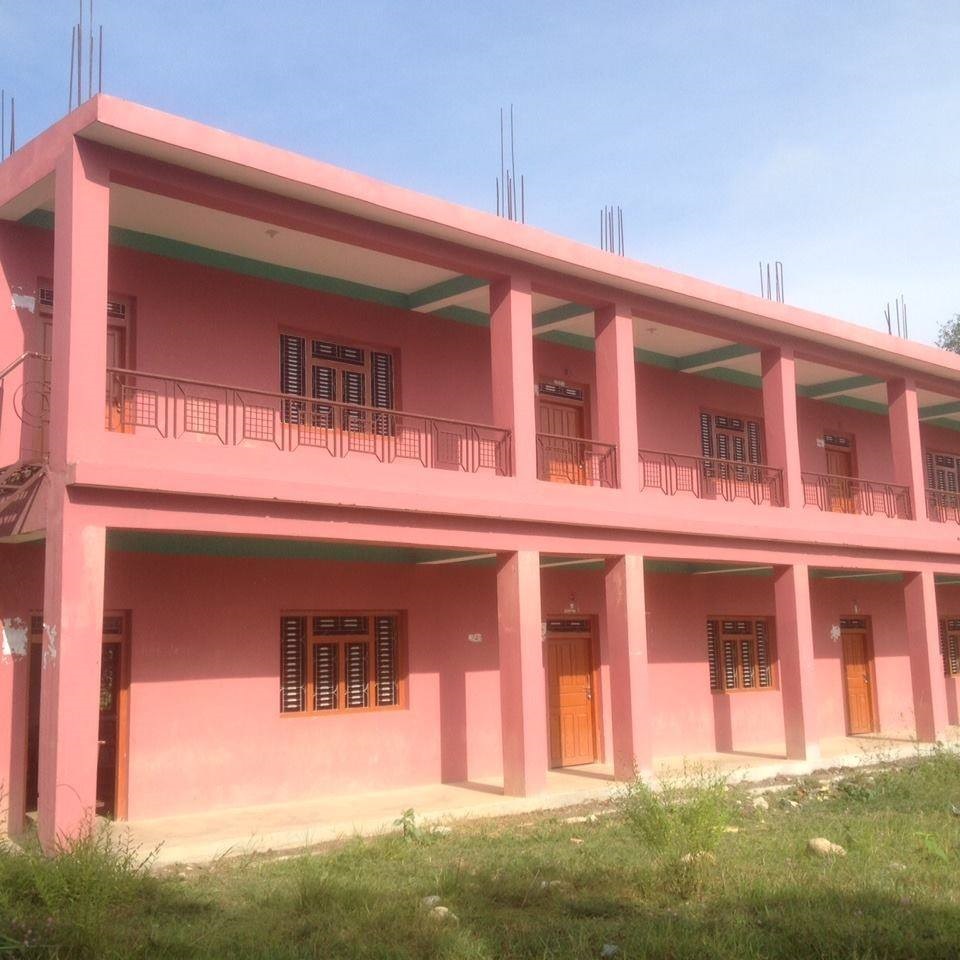
Shahid Multiple Campus was established with the participation of local community members, teachers, educationists, social workers, academicians, and social organizations. The campus began with intermediate-level study in Humanities and Social Sciences and was created to make higher education available at the local level.
Its institutional growth followed a gradual academic expansion. The campus received affiliation to run classes in Humanities and Social Sciences, later expanded to bachelor’s programs in the Faculty of Humanities and Social Sciences and the Faculty of Education, then added Bachelor of Business Studies. It later introduced master’s level study in education and management.
The campus identifies itself as a public and non-profit academic institution. Its vision centers on building an academic center for higher studies and research in western Nepal. Its mission focuses on expanding and strengthening academic and job-oriented programs. Its stated goal connects academic excellence with research-oriented study and wider access to higher education.
The campus has also developed a governance and committee structure. The management committee includes community representatives, teacher and student representatives, a TU representative, and the campus chief as member secretary. The current campus leadership material also names Netra Prasad Bhattarai as chairperson and Murari Prasad Kafle as campus chief.
Shahid Multiple Campus runs programs under both NEB and Tribhuvan University.
These +2 programs follow the NEB framework for Class 11 and Class 12. The prospectus also notes English and Nepali options within Education and Humanities.
The bachelor’s level follows a four-year annual structure.
The campus materials identify these subject areas and academic groupings at bachelor’s level:
Management: BBS with English and Nepali medium; specialization courses include Accountancy, Finance, and Marketing
Education: English, Nepali, Population, and Health & Physical Education
Humanities and Social Sciences: English, Nepali, and Political Science
The master’s level follows a two-year, four-semester structure. The prospectus identifies M.Ed. specializations in EPM and Nepali.
The available institutional history shows this sequence of academic growth:
2048 BS: establishment with intermediate study in Humanities and Social Sciences - PCL/+2
2054 BS: bachelor’s level in Humanities and Social Sciences - BA
2061 BS: Bachelor’s level in Education - B.Ed.
2066 BS: BBS
2069 BS: M.Ed.
2078 BS: MBS
Admission to +2 begins after SEE results under the NEB framework.
Applicants for +2 generally submit the campus application form, academic records, photographs, and related documents.
Depending on the stream and campus requirement, admission may include an entrance examination, interview, or merit-based selection.
The campus prospectus states that applicants meeting the eligibility criteria take an entrance examination.
For +2 Education and +2 Management, the prospectus mentions at least a C grade or GPA 2.0 in SEE.
Bachelor’s admission follows the rules of the relevant TU faculty, dean’s office, and the campus.
After the admission notice is published, eligible applicants submit the prescribed form with required documents.
Bachelor’s admission may include an entrance examination, merit-based selection, or both, depending on the program or campus process.
For B.Ed. and BBS, the prospectus mentions +2 pass or equivalent as the academic entry basis.
Master’s admission begins with a campus or concerned authority notice.
Applicants for MBS and M.Ed. submit the prescribed form and required records.
For master’s programs, the prospectus mentions bachelor’s degree or equivalent as the academic entry basis.
Selected applicants complete admission through document submission and fee payment.
Academic registration, examinations, and results follow NEB or TU rules and the applicable calendar.
Completed admission or application form
Previous-level academic transcript or marksheet
Character certificate
Transfer Certificate (TC)
Migration certificate, if applicable
Citizenship certificate or birth certificate copy
Passport-size photographs
Entrance scorecard, if applicable
Admission fee payment receipt
Equivalence certificate, if applicable
For master’s admission, bachelor’s degree certificate or provisional certificate
For NEB Class 11 registration, the Class 11 registration or subject registration form
The campus reports 28 teaching staff and organizes teaching across management, language teaching, and health education and population areas. The academic delivery described in the institutional materials places emphasis on ICT-based pedagogy. Teachers are encouraged to use research-based techniques and ICT materials in regular teaching.
Multimedia and internet are used in classroom teaching, and students are encouraged to use the library and computer lab. Internal examinations are described as result-oriented, and the campus also mentions weekly and monthly formative tests, terminal examinations, re-examinations, and feedback practices. Special classes and remedial support are also part of the student-support approach for weaker students.
Academic monitoring is tied to the work of the monitoring and supervision unit. The campus also links quality assurance to academic review, internal examinations, research-based teaching, tracer study, and academic audit activity. At campus level, ICT is used not only for teaching but also for administration, results, examination records, library work, and accounting records.
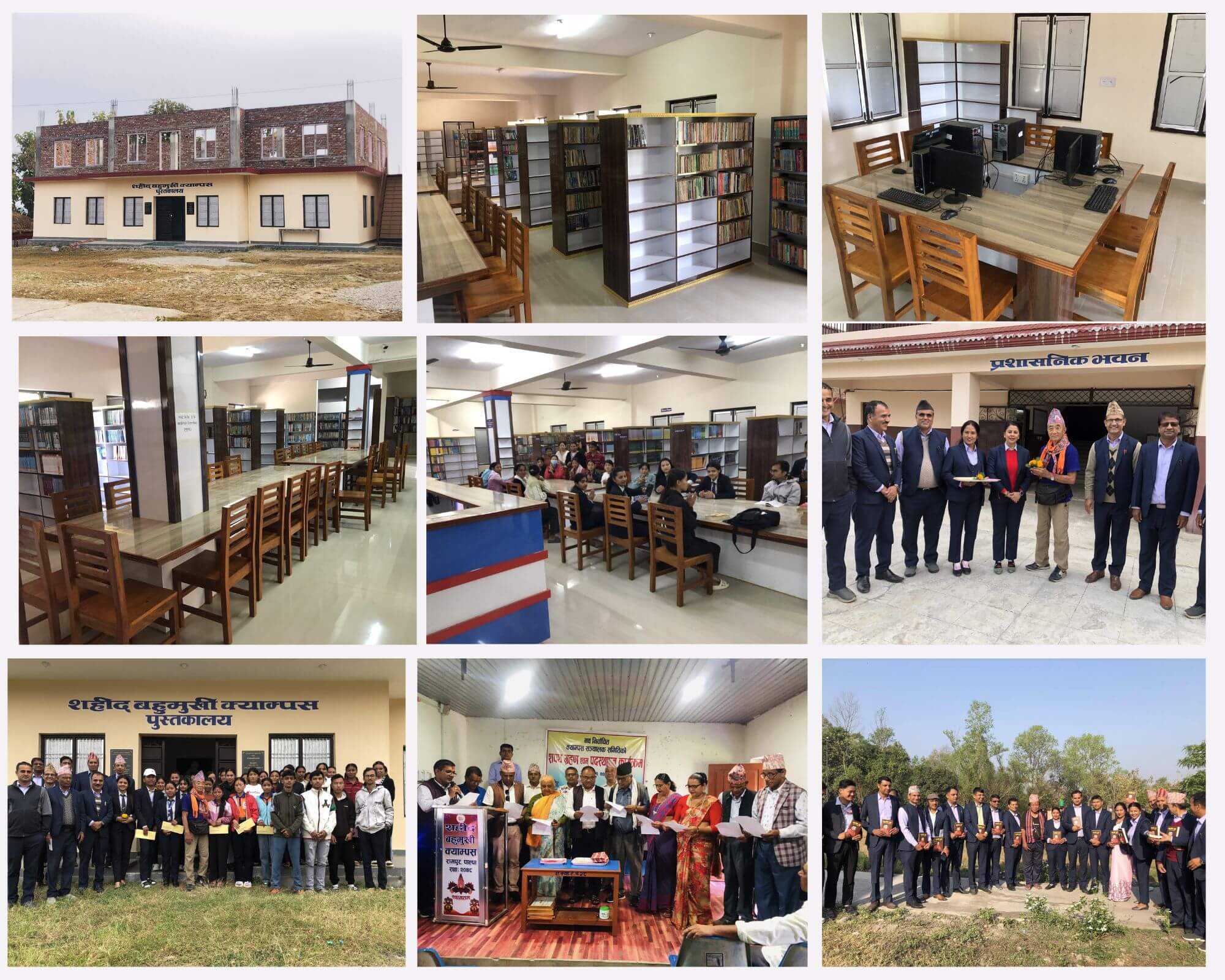
About 50 ropani of land is used by the campus
Classroom spaces for regular teaching
Library
Library building developed with support from Kajumasa Kakimi (O.K. Baji) and campus resources
Multimedia room
Computer lab
Departmental and administrative rooms
Conference hall under development above the library hall
Playground
Canteen blocks
Drinking water facility
Toilet facility
Road access to the campus
Internet access
Software-supported record keeping for accounting, results, examination records, library work, and extracurricular records
Student life at Shahid Multiple Campus is tied closely to its local setting and community character. The campus maintains public links with the surrounding society and treats student support as part of campus administration rather than as a separate add-on. Student-related work is coordinated through the Student Affair Division, which addresses discipline, regularity, counseling, and participation in campus affairs.
The campus has also formed a Free Students’ Union and a Students’ Quality Circle to support student welfare and coordination with administration. Orientation classes, counseling support, and educational tours appear across the campus materials as regular parts of student engagement.
A strong female student presence is one of the distinguishing features recorded in the annual progress material. That record presents the campus as locally recognized as the “campus of Chhori-Buhari,” reflecting the scale of women’s participation in study at the institution.
Regular extracurricular activities
Educational tours and field trips
Orientation programs
Leadership training
General study classes
Debate competitions
Essay competitions
Quiz contests
Music and dance competitions
Talent hunt activities
Exhibitions
Spelling contests
Art competitions
Annual sports events
Outdoor sports such as basketball, cricket, football, and volleyball
Indoor games such as table tennis, badminton, and chess
Merit-based scholarship at Grade XI:
GPA 3.6 and above: 75% tuition fee waiver
GPA 3.2 and above: 50% tuition fee waiver
Merit-based scholarship at bachelor’s level:
NEB result 3.6 and above: 75% tuition fee waiver
NEB result 3.2 and above: 50% tuition fee waiver
At least 4% of tuition fee from total enrolled students is allocated from internal campus sources for scholarship support
Internal-source scholarships target academically sound and needy students, underprivileged groups, marginalized communities, ethnic groups, scheduled castes, Indigenous groups, differently abled students, girls, and other eligible groups as per rule
Scholarship support is also available from O.K. Baji Trust
Memorial trusts established in the college provide scholarship support
University Grants Commission scholarship support is available
Lumbini Province Government scholarship support is available
Mayor Scholarship Fund of Rampur Municipality is available
Full and partial fee waivers are provided to needy students according to economic status
The scholarship distribution framework includes Dalit, tribal, disabled, women, minority, marginalized, and open categories
Scholarship selection bases include academic standing, internal examination participation, discipline and regularity, financial condition, and geographical distance from home
Established in 2048 BS (1992 AD)
Named in memory of martyr Surya Prasad Ghimire
NEB affiliation for +2 programs from 1996 AD
Bachelor’s level in Humanities and Social Sciences started in 2054 BS
Bachelor’s level in Education started in 2061 BS
BBS started in 2066 BS
M.Ed. started in 2069 BS
MBS started in 2078 BS
EMIS unit has been set up and is in operation
IQAC is working on campus quality assurance activities
Academic audit activity is in progress
The campus publishes annual progress reporting and research-based journals
The chairperson’s message presents the campus as a place for disciplined study, academic seriousness, and future preparation. It welcomes students after SEE, +2, and bachelor’s study and places emphasis on study guidance and support for future academic direction.
The campus chief’s message places the institution in the context of eastern Palpa and surrounding districts. It presents the campus as serving students from nearby areas through higher education access and a teaching approach that combines academic study with student support and campus participation.
Shahid Multiple Campus has grown from an intermediate-level beginning in Humanities and Social Sciences into a multi-level public campus with NEB and TU programs. Its academic structure now includes +2, bachelor’s, and master’s study, supported by community roots, scholarship systems, ICT-based teaching practices, and student-support mechanisms.
For students in Rampur, eastern Palpa, and nearby areas, the campus offers a local study option across education, humanities, management, and postgraduate study. Its institutional character is shaped by gradual academic expansion, public ownership, and sustained links with the surrounding community.
College Name: Shahid Multiple Campus (शहिद बहुमुखी क्याम्पस, रामपुर, पाल्पा)
Location: Rampur, Palpa, Nepal
Address: Rampur Municipality, Palpa
Phone: 075-401062, 9847100362, 9857065726
Email: info@shahidcampus.edu.np, shahidmultiple48@gmail.com
Website: www.shahidcampus.edu.np
Shahid Multiple Campus is a public owned, community campus operating as a non-profit academic institution.
The campus is affiliated with Tribhuvan University for higher education programs and runs +2 programs under the National Examinations Board. It is also approved by the University Grants Commission of Nepal.
The campus offers +2 in Education, Humanities, and Management; bachelor’s programs in BA, B.Ed., and BBS; and master’s programs in M.Ed. and MBS.
Yes. The prospectus identifies BBS as available in both English and Nepali medium.
The bachelor’s level follows the annual system, while the master’s level follows the semester system. The +2 level follows the NEB annual framework for Class 11 and Class 12.
The campus prospectus mentions at least a C grade or GPA 2.0 in the SEE examination for +2 Education and +2 Management.
The campus provides library access, computer lab, multimedia support, classrooms, playground, canteen, internet, drinking water, toilet facilities, and road access.
Yes. The campus offers merit-based tuition waivers, internal-source scholarships, trust-based support, government-linked support, and need-based fee waivers for eligible students.