The Bachelor of Business Studies (BBS) at Shahid Multiple Campus is a four-year undergraduate management program affiliated with Tribhuvan University. The campus is a public, community institution in Rampur Municipality, Palpa, and offers BBS in both Nepali and English medium.
At Shahid Multiple Campus, BBS is part of a bachelor-level academic setting that follows the annual system. The program is connected with ICT-supported teaching, internal examinations, library use, computer lab access, and scholarship support. For students in Rampur, eastern Palpa, and nearby areas, it offers a local path to management study within the TU framework, with final-year concentration study and project work as part of the degree.
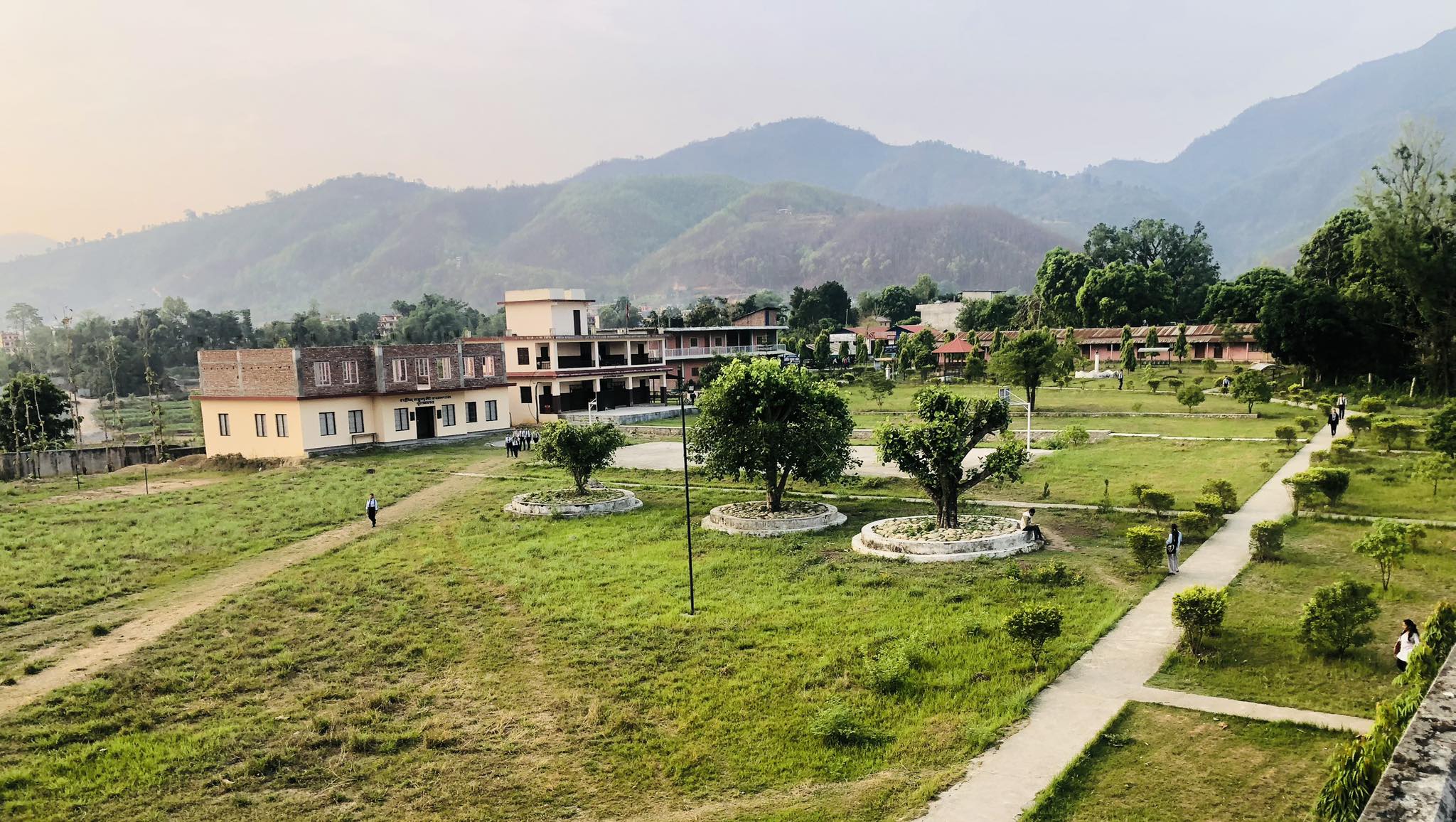
Course: Bachelor of Business Studies (BBS)
College: Shahid Multiple Campus, Rampur, Palpa
Affiliation: Tribhuvan University
Recognition: University Grants Commission of Nepal
Faculty: Management
Duration: Four years
Academic system: Annual
Medium: Nepali and English
BBS classes started in 2066 BS
Final year includes concentration study, business research methods, and project work
The campus management faculty material names Accountancy, Finance, and Marketing as specialization courses
BBS study is supported by library, computer lab, multimedia use, internet access, and internal examinations
The TU BBS structure builds management study across four academic years. The early years cover business foundations and core management areas, while the final year moves toward concentration study and project work.
The program extends over four academic years under the TU annual system
The degree requires 19 courses and a final project
Foundation and allied areas include language, economics, legal environment, and quantitative study
Core business areas include accounting, management, finance, marketing, taxation, organizational behavior, and business strategy
First year: Business English, Business Statistics, Microeconomics for Business, Financial Accounting and Analysis, Principles of Management
Second year: Business Communication, Macroeconomics for Business, Cost and Management Accounting, Organizational Behavior and Human Resource Management, Fundamentals of Financial Management
Third year: Business Law, Foundation of Financial Systems, Business Environment and Strategy, Taxation in Nepal, Fundamentals of Marketing
Fourth year: Entrepreneurship, Business Research Methods, Final Project, and concentration courses
The final year follows concentration-area study within the TU BBS structure
At Shahid Multiple Campus, the management faculty material names Accountancy, Finance, and Marketing among the specialization courses
Build conceptual knowledge of business and administration
Develop a general management perspective
Strengthen attitudes, abilities, and practical skills for organized sectors of activity
Encourage entrepreneurial capability
Prepare students for higher studies in management
Support academic preparation for teaching, research, and consultancy after further study
The academic scope of BBS covers business language, economics, accounting, finance, management, marketing, taxation, law, strategy, research, and concentration-based study. This gives students a broad undergraduate base in management before they move into final-year specialization and project work.
At Shahid Multiple Campus, the program is tied to a public community-campus setting where bachelor-level study follows the annual system. The campus context adds dual-medium teaching, library use, computer access, internal examinations, and ICT-supported classroom practice. That makes the course relevant for students seeking management study close to home while remaining within the TU structure.
Understand major concepts in business and administration
Develop working knowledge in accounting, finance, communication, and management
Study a concentration area in the final year
Complete business research methods and final project work
Prepare for management-related work, entrepreneurship, and further study
Business communication
Business statistics
Financial accounting and analysis
Cost and management accounting
Financial management
Organizational behavior and human resource management
Marketing and taxation
Business research methods
Project writing and presentation
At Shahid Multiple Campus, BBS study is linked with ICT-based pedagogy and internal academic monitoring at bachelor’s level. Teachers are encouraged to use research-based techniques and ICT materials, while students are expected to use the library and computer lab as part of regular study.
Multimedia and internet are used in classroom teaching
ICT materials are used in regular instruction
Students are encouraged to use the library and computer lab
Internal examinations support academic progress
Weekly and monthly formative tests are used
Terminal examinations and re-examinations are conducted
Feedback and special support classes are used for student learning
Entry into business, industry, and government-related work
Roles connected with accounting, finance, marketing, and administrative functions
Entrepreneurship and self-employment
Higher study in management, including MBS
Teaching, research, and consultancy pathways after further study
Bachelor-level students with NEB result 3.6 and above receive 75% tuition fee waiver
Bachelor-level students with NEB result 3.2 and above receive 50% tuition fee waiver
At least 4% of tuition-fee income from enrolled students is allocated from internal campus sources for scholarships
Internal scholarships support academically sound and needy students, underprivileged and marginalized groups, ethnic communities, scheduled castes, Indigenous students, differently abled students, girls, and other eligible groups
Additional support is available through OK Baji Trust, memorial trusts, the University Grants Commission, Lumbini Province Government, and the Mayor Scholarship Fund of Rampur Municipality
Apply after the campus publishes the BBS admission notice
Meet the academic eligibility of +2 pass or equivalent
Complete the prescribed application form
Appear in an entrance examination if required by the campus or applicable process
Submit the required academic and personal documents
Complete admission through fee payment and campus procedures
Academic registration follows TU rules and the campus schedule
Class 12 / +2 or equivalent academic transcript
Character certificate
Migration certificate, if applicable
Transfer certificate
Citizenship certificate or birth certificate copy
Passport-size photographs
Entrance scorecard, if required
Completed admission form
Admission fee payment receipt
Equivalence certificate, if applicable
The BBS program at Shahid Multiple Campus follows the TU annual examination system at bachelor’s level. Final examinations are conducted by the Office of the Controller of Examinations, Tribhuvan University.
Students need a minimum of 70 percent attendance in the classes actually held to qualify for the annual examination. A student cannot appear in the second-year final examination without first appearing in the first-year final examination. In courses where theory, practical, or project components apply, each component must be passed separately. The fourth year includes final project work, with field-based study, report preparation, evaluation, and viva-voce under the prescribed process.
The BBS program at Shahid Multiple Campus combines the TU annual structure with a local public-campus setting in Rampur, Palpa. Its academic sequence moves from business foundations to core management subjects and then to concentration study and final project work.
For students who want to study management in Nepali or English medium within eastern Palpa and nearby areas, the program brings together annual-system study, ICT-supported teaching, library and computer access, internal academic support, and a defined scholarship framework. The result is a management degree with a clear academic structure and a campus context that is directly tied to the institution’s bachelor-level teaching environment.