



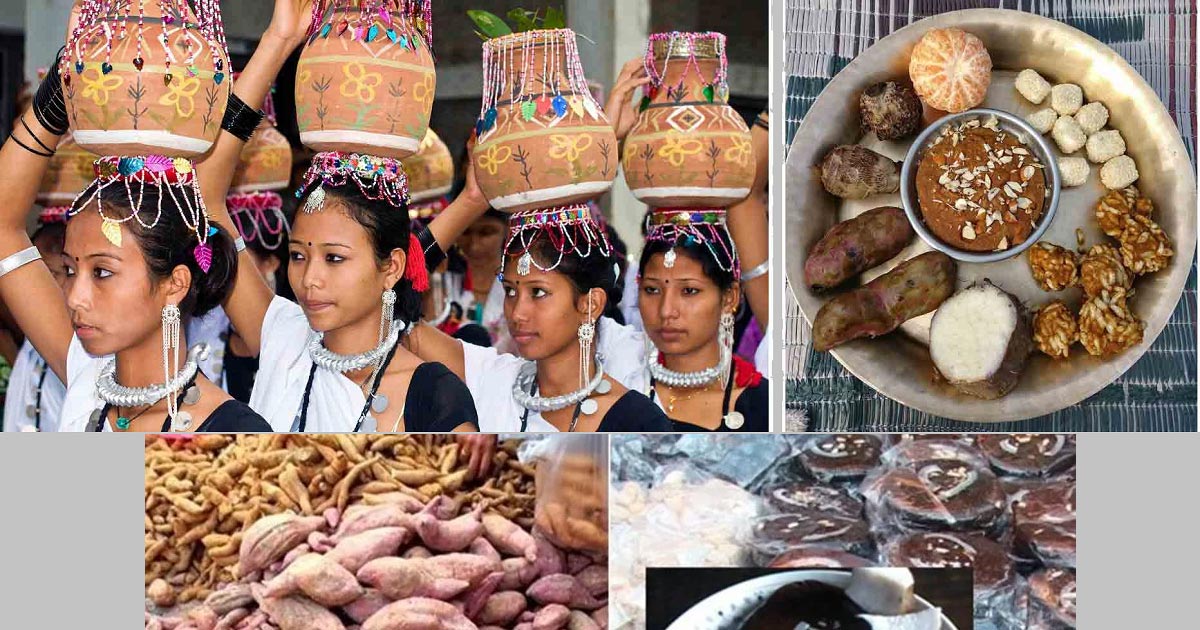
Maghe Sankranti: A Scientific, Cultural, and Practical Analysis
In Nepali culture and the Vedic calendar, the word “Sankranti” carries a special meaning. The day the sun enters from one zodiac sign into another is called Sankranti.
There are 12 Sankrantis in a year, but among them, Maghe Sankranti (Makar Sankranti) holds the most distinct importance.
From an astrological and astronomical perspective, on this day the sun moves from Sagittarius into Capricorn, which is why it is called “Makar Sankranti.”
However, Maghe Sankranti is not only a festival. It is a kind of “system” (process) connected to nature, health, and social structure—one that our ancestors developed thousands of years ago based on science.
The younger generation needs to understand its deeper impact, rather than viewing it only as “a day to eat yam and chaku.”
Astronomical and Scientific Background
Our Earth orbits the sun while tilted by about 23.5 degrees. From the day of Maghe Sankranti, the sun’s journey of “Uttarayan” begins.
For the six months before Magh 1, the sun leans toward the south (Dakshinayan). Because of this, in the Northern Hemisphere, nights are longer and days are shorter.
Astronomical fact
From Magh 1, the days gradually start getting longer. Since the sun begins to tilt northward, this period is called “Uttarayan.”
In Hindu philosophy, Uttarayan is considered a time of light and positive energy. Texts such as the Shrimad Bhagavad Gita and the Mahabharata also discuss the importance of Uttarayan, where light is seen as a symbol of knowledge and darkness as a symbol of ignorance.
Health aspect
From a scientific point of view, the period that signals the end of the cold season (winter) and the beginning of warmth can increase the risk of weakened immunity in the human body.
The foods eaten during Maghe Sankranti are designed precisely to protect the body from cold and to keep metabolism balanced.
The Diet of Maghe Sankranti: The Science of Nutrition
The author’s experience and research in nutrition science show that every dish eaten during Maghe Sankranti is like medicine. Practically, we can analyze it like this:
a) Til (Sesame Seeds)
During Maghe Sankranti, sesame laddus are essential. Sesame contains oleic acid and is rich in calcium, magnesium, and iron.
In winter, joint and bone pain can affect both young and old. Sesame helps maintain body temperature and strengthens the digestive system. Donating and consuming sesame helps bring glow to the skin and reduces winter dryness.
b) Ghee and Chaku
We often say, “Sankranti is for eating ghee and chaku.” Chaku contains a high amount of iron and minerals.
The combination of chaku and pure ghee provides immediate energy to the body. In winter, when the body becomes sluggish, this mix of calories and carbohydrates helps restore alertness and strength.
c) Tarul and Kandamul (Yams and Root Vegetables)
Tarul is a natural source of probiotics. These root vegetables found underground during Magh contain a high amount of fiber. This helps cleanse the intestines.
In ancient times, when food storage technology did not exist, root vegetables that stayed protected underground during winter were the best means to prevent hunger and stay healthy.
d) Khichdi
Khichdi made from rice and lentils (especially black gram lentils) maintains a balance of carbohydrates and protein. It is light to digest and rich in energy.
A Unique Meeting Point of Ethnic and Cultural Diversity
Looking at Nepal’s geographical and cultural diversity, Maghe Sankranti has tied everyone into a single garland.
a) The Tharu Community’s “Maghi”
For the Tharu community, Maghi is the biggest festival. For them, it is also the New Year.
In Tharu culture, there is a tradition of choosing the “Badghar” (the main person of the village) and planning work for the coming year.
This shows that Maghe Sankranti is not only worship and rituals—it is also an “administrative and governance system” (a system of management and leadership).
b) The Main Festival of the Magar Community
In the Magar community, there is a tradition of honoring daughters and sisters on this day, and collectively playing archery, dancing, and worshipping nature.
This day is also considered important for ancestral rituals.
c) The Newar Community’s “Ghyo Chaku Sanlhu”
The Newar community of the Kathmandu Valley celebrates it as “Ghyo Chaku Sanlhu.”
On this day, they apply oil to the head and pray for protection of health.
d) The Madhesh Khichdi Festival
In Madhesh, it is celebrated with special joy as the “Khichdi” festival.
In Mithila culture, Makar Sankranti is highly valued for bathing and giving donations.
Spiritual and Philosophical Importance: “Makar Snan”
During this festival, there is a tradition of going to the river for a bath (Makar Snan). Special fairs take place in places such as Triveni Dham, Devghat, Ridi, and Pashupati.
Closeness to nature:
Why bathe in a river in the cold? There are two reasons:
-
Psychological strength: People make a commitment on this day to give up negative thoughts and laziness.
-
Natural therapy: The flowing river water contains minerals, and the first rays of the sun help produce vitamin D. This supports resetting the body’s biological clock.
Practical Problems and Solutions
As the writer and researcher of this article, I want to present a few challenges faced by today’s younger generation, along with solutions:
Problem 1: Adulterated Food
It has been found that chaku available in the market may contain artificial sugar, and ghee may be mixed with vegetable fat. Such food causes harm rather than benefit.
Solution: Build the habit of purchasing organic products directly from local producers. Only by using pure jaggery and homemade ghee can we receive the “health benefit” envisioned by our ancestors.
Problem 2: Cultural Dilution
Many young people are treating it only as a “picnic.”
Solution: Understand its astronomical and biological importance. Sit with elders, listen to old stories, and try to learn the deeper meaning of traditions. “Intergenerational dialogue” is the best way to preserve this festival.
Problem 3: Lack of Health Awareness
Eating too much sweet chaku and ghee can also be harmful to health.
Solution: Adjust the quantity scientifically by considering a person’s age and health condition (for example, if someone has diabetes or hypertension). For diabetic patients, using more sesame and yam than chaku is safer.
Environmental Importance
Maghe Sankranti connects “soil and production.” Everything eaten on this day is a natural product obtained from the soil or directly from nature. It teaches humans to be grateful to nature.
In an agriculture-based country like Nepal, this festival defines the rest period between the end of one farming season and preparation for the next.
Conclusion
Maghe Sankranti teaches us “self-discipline.” Bathing in a river even at the peak of cold reflects strong willpower.
Just like the sweetness of chaku, our speech should carry sweetness. And like sesame, even a small thing can give great energy—this festival delivers that message.
For the younger generation, this festival is an opportunity: to recognize one’s roots, adopt scientific practices, and maintain harmony in society.
Until we understand the science of our food and the astronomy hidden within our culture, the traditions we follow may become meaningless. But if we understand and practice it, it will not remain only a “ritual”—it will become a “life philosophy.”
Maghe Sankranti is not only of a particular religion. It is a powerful science of the Earth’s geographical change, human health, and social unity. Let us understand it, experience it, and celebrate it organically.
The facts in this article are based on various Ayurvedic texts, astrological studies, and ethnographic studies of Nepal.

.png)

Comments 0
No comments yet. Be the first to start the conversation.