



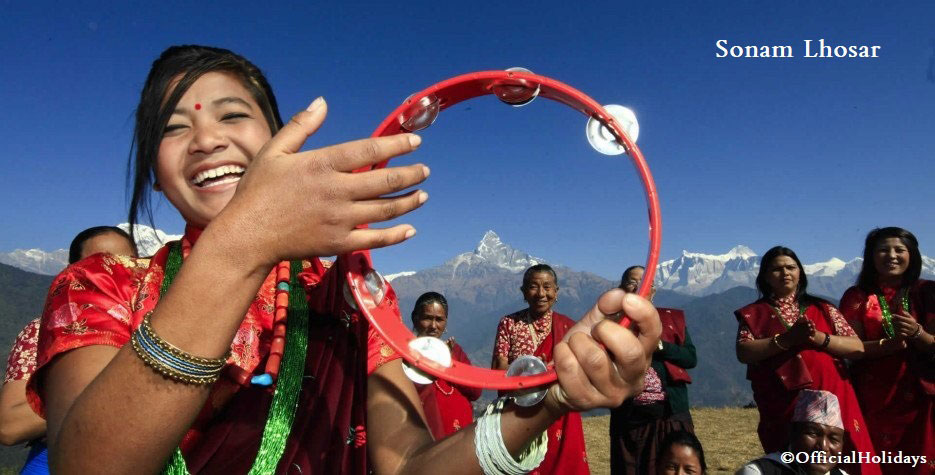
Nepali society is rich in diversity. Behind every festival, there are scientific foundations, historical contexts, and social philosophies. The Tamang community’s Sonam Lhosar is not only a public holiday or an occasion for gatherings and feasts.
It represents a cultural revival, a renewed relationship between nature and human life, and an ancient method of time calculation.
The word “Lhosar” is formed from two words: “Lho” meaning year, and “Sar” meaning new. Therefore, Lhosar means “New Year.”
According to the lunar calendar used by the Tamang community, the New Year begins on the first day of the bright fortnight of Magh, which is known as Sonam Lhosar.
Historical Background and Origins: A Link to Agrarian Civilization
The word “Sonam” is connected with the meaning of “farmer” or “agriculture.” Historically, the Tamang community has lived closely with farming and nature.
Influenced by the Tibeto-Burman language family and Tibetan culture, this community has its own original system of timekeeping.
Many people may feel confused about why Lhosar is celebrated at different times. The Sonam Lhosar of the Tamang community, the Tamu Lhosar of the Gurung community, and the Gyalpo Lhosar of the Sherpa community differ in timing and calculation methods.
Sonam Lhosar is based on the agricultural cycle and the movement of the moon. In ancient times, when formal calendars did not exist, farmers developed a system to determine farming schedules and understand seasonal changes. Over time, that system became established as Sonam Lhosar.
The 12-Year “Lho” Cycle: The Science of Time Calculation
One of the most interesting and scientific aspects of Sonam Lhosar is that each year is named after one of 12 animals. This is known as “Lho-Khor.”
These 12 animals form a complete cycle that repeats every 12 years.
The 12 animals are as follows:
-
Mouse (Jyuwa)
-
Cow/Ox (Lang)
-
Tiger (Tag)
-
Rabbit (Hyoi)
-
Dragon/Cloud (Druk)
-
Snake (Pul)
-
Horse (Ta)
-
Sheep (Lhuk)
-
Monkey (Te)
-
Bird (Chya)
-
Dog (Khyu)
-
Pig (Phag)

A common issue today is that many young people view this only as a “zodiac sign.” However, it holds deeper meaning. According to Tamang astrology (Chui), a person’s nature, fortune, and future are connected with these Lhos.
Each year is symbolically “farewelled,” and the next year is “welcomed.” This reflects the message that all living beings have equal existence and importance in nature.
Religious and Spiritual Dimensions: The Role of Monasteries and Lamas
Although Sonam Lhosar is a cultural festival of the Tamang community, it is also deeply influenced by Buddhist philosophy. Before Lhosar begins, there is a tradition of cleaning the home and courtyard, removing old waste, and bidding farewell to negative energy.
Worship and Prayer
On the morning of Lhosar, Tamang people visit a monastery (gumba) or stupa to offer prayers. They receive blessings from Lama gurus and plant “Dajhyu” (colorful prayer flags).
It is believed that the mantras written on these flags spread through the universe with the wind and bring peace.
Forgiveness and Reconciliation
A major social aspect of this festival is letting go of past anger and resentment. If there has been conflict with someone, the New Year becomes a time to ask for forgiveness and improve relationships.
This serves as a practical way to build a healthier society.
Food and Traditional Dishes: A Blend of Taste and Health
A culture is often reflected through its food. During Sonam Lhosar, several special dishes are prepared, each with its own cultural significance.
Key traditional dishes include:
-
Alum (Alum): A special Tamang dish
-
Sel Roti and Babar: Rice-flour breads that become a main attraction during the festival
-
Gensar: A dish prepared by mixing various legumes
-
Khapse: A sweet made from flour and sugar, recognized as part of Lhosar identity in Tibetan and Tamang culture
These foods are not only prepared for taste. They are also considered scientifically suitable for providing the energy the body needs during the winter season.
Dress, Art, and Music: The Echo of Damphu and Selo
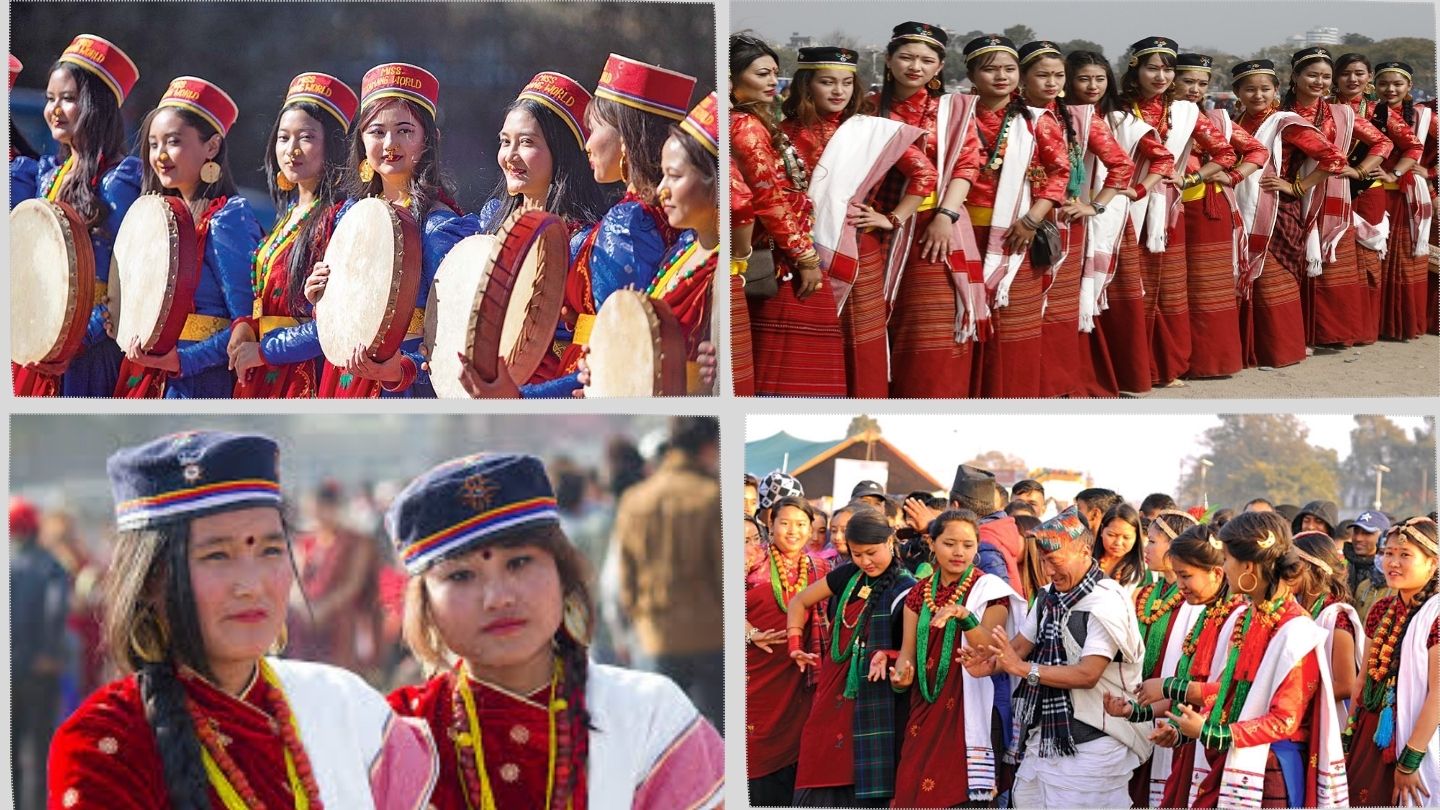
The identity of the Tamang community is strongly expressed through dress and music.
Damphu
Damphu is the main musical instrument of the Tamang community. It is said that Pengdorje first made a damphu using deer skin and wood.
This instrument connects the rhythm of nature with the rhythm of life.
Tamang Selo
“Selo,” sung to the beat of the damphu, expresses love, life experiences, and the natural world. Selo is not only a song form, but also an oral record of Tamang history.
Traditional Clothing
Women’s clothing such as “Shyama” (gunyu), lungi, and patuka, and men’s clothing such as daura-suruwal, jackets, and the Tamang cap reflect ethnic pride.
Challenges for the Younger Generation and Cultural Risks
In today’s era of globalization, many young people appear more attracted to Western culture than to their original identity. As a result, there is a growing risk that traditional practices may gradually disappear.
Real Problems
-
Language decline: Many Tamang youths do not know how to speak their mother tongue.
-
Lack of calendar knowledge: Many do not understand why Lhosar is celebrated and how the “Lho” is calculated.
-
Commercialization: Culture being treated only as a display object.
Practical Solutions
-
Inclusion in education: Local-level curricula should include information about Tamang history and the importance of Lhosar.
-
Digital documentation: Documentaries, blogs, and informative content should be shared through social media platforms used by young people.
-
Family-based transfer: Parents should provide practical knowledge about traditions at home to children.
Social and Economic Impact of Sonam Lhosar
Lhosar does not only create emotional unity. It also supports economic activity. It has a positive influence on local products, handicrafts (damphu, beads, clothing), and tourism.
Through homestays, Tamang settlements can offer both domestic and international visitors an experience of Lhosar, which can strengthen the local economy.
Conclusion
Sonam Lhosar is not only a festival, but also a proud history and identity of the Tamang community. It teaches us to value time, respect nature, and live together in harmony within society.
My message to the younger generation is: “Do not forget your roots.” Becoming modern does not mean abandoning originality. While celebrating Sonam Lhosar, we should adopt its philosophy, brotherhood, and discipline.
Until we respect our culture, the world will not respect us. This year’s Sonam Lhosar may bring happiness, peace, and prosperity to everyone. Protecting our language, dress, and culture is a shared responsibility of us all.
Final Note
This article has been prepared based on various historical texts, conversations with senior personalities from the Tamang community, and editorial experience. No political or controversial subject has been included. Its purpose is only to provide pure cultural and educational information.

.png)

Comments 0
No comments yet. Be the first to start the conversation.