



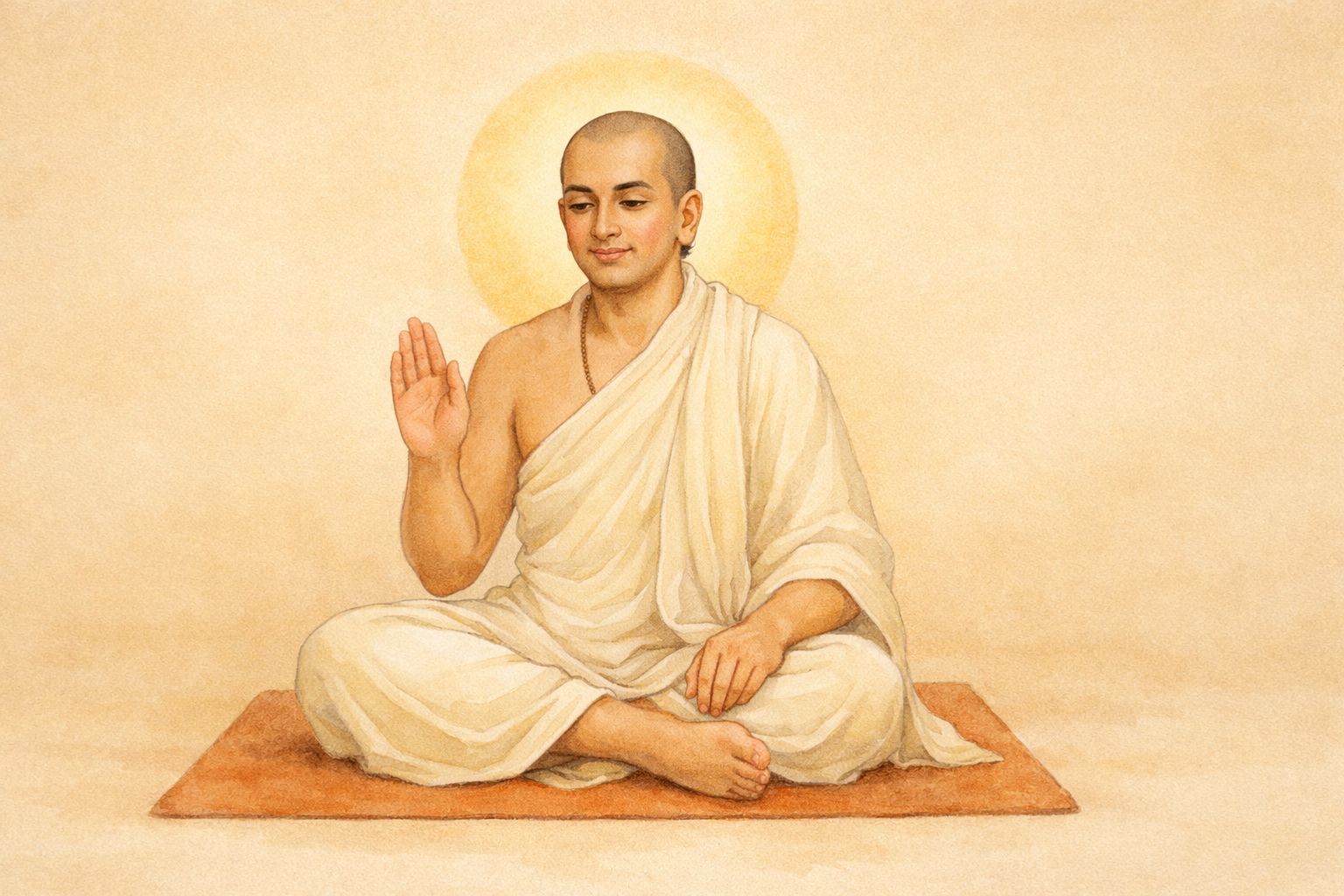
Vallabhacharya Jayanti: Shuddhadvaita Philosophy, Pushtimarg, and Its Relevance in Modern Life
In the spiritual history of Nepal and the Indian subcontinent, the 15th and 16th centuries are widely regarded as the golden era of the Bhakti movement. In this period, a thinker emerged who brought a fundamental change in how people understood God and the world. He was Jagadguru Shri Vallabhacharya.
Vallabh Jayanti is not only a religious occasion. It is also a celebration of a philosophy of human sensitivity, love, and dedication that teaches people not to abandon the world and retreat into forests, but to remain within worldly life while becoming one with God.
Celebrated on Vaishakh Krishna Ekadashi (Varuthini Ekadashi), this Jayanti guides people toward the path known as Pushtimarg.
Historical Background and the Emergence of Vallabhacharya
Shri Vallabhacharya was born in 1479 in Champaran (present-day Chhattisgarh). He belonged to a Telugu Brahmin family. His time was marked by rigid ritualism and philosophical complexity, which made ordinary people feel distant from God.
Research-based conclusion: After deep study of the Vedas, the Upanishads, and the Shrimad Bhagavatam, Vallabhacharya reached a clear conclusion: God and this world are not separate. The philosophy he presented is known as Shuddhadvaita.
A key point for young readers is that he rejected the idea of “Maya” (illusion) as a denial of reality. He accepted the world as true, because it originates from Truth itself (God).
Shuddhadvaita Philosophy: What Makes It Distinct?
Many young people may find philosophy dull as soon as they hear the word. However, Vallabhacharya’s philosophy is highly practical.
The World Is Real
Many philosophical schools describe the world as “false” or as “Maya.” Vallabhacharya argues differently: if gold (God) is real, how can ornaments made from gold (the world) be false?
This idea makes people responsible toward their actions and their worldly life.
The Relationship Between Part and Whole
Just as a small spark contains the qualities of fire, every living being contains a part of God. Therefore, hating someone becomes a form of disrespect toward God itself.
Pushtimarg: The Path of Grace
The path established by Vallabhacharya is called Pushtimarg. The word “Pushti” means divine grace (Grace of God).
Problem and solution: In today’s competitive era, many young people face burnout and mental stress. They often feel that everything depends only on personal effort. Pushtimarg teaches that along with effort, surrender and grace also matter.
When we offer our actions to God, anxiety about outcomes does not dominate the mind in the same way.
Pushtimarg Service Practice and Art
On Vallabh Jayanti, worship practices performed in temples and homes are distinct and artistic. This is called “Ashtayam Seva.”
Raga, Bhog, and Shringar
Lord Shrinathji (Krishna) is served in the form of a child. This includes a combined tradition of:
-
Music (Raga)
-
Pure satvik food offerings (Bhog)
-
Beautiful clothing and adornment (Shringar)
Preservation of Art
Pushtimarg has played a role in keeping Pichhwai painting and Haveli Sangeet alive. For those interested in culture and art, this becomes an important field of study.
Solutions to Modern Problems: Applying Vallabh’s Philosophy
Why should today’s youth understand Vallabh Jayanti? Here are some clear and practical reasons.
A) Sweetness in Relationships
Vallabhacharya emphasized devotion through vatsalya and sakhya bhava. This means love should not be driven by control, but by a spirit of service.
If we can bring service-mindedness (selfless intention) into our relationships, relationships do not easily break.
B) Diet and Health
In Pushtimarg, purity and discipline carry strong importance. The idea that home-cooked satvik food supports mental calm is also supported in modern discussion through the “gut-brain connection.”
C) Positivity
According to the principle of “Brahmavad,” seeing Brahman (God) in everything helps one move away from negativity. When people notice the positive side within situations, their capacity to work increases.
How Vallabhacharya Jayanti Is Celebrated
On this day, followers of Pushtimarg take an early bath and perform special worship of Shrinathji. They sing Vallabhacharya’s “Madhurashtakam” (Adharam Madhuram…).
This stotra teaches that every aspect of God—speech, form, walking, and action—is “sweet” (beautiful). Bringing this sense of beauty into life is the true meaning of celebrating the Jayanti.
Research and Evidence
Various scriptural studies and philosophers such as Dr. S. Radhakrishnan have regarded Vallabhacharya’s “Anubhashya” as one of the most balanced interpretations of the Upanishads.
He considered the Shrimad Bhagavatam as a “Pramana Grantha,” where love and devotion are placed above knowledge.
Conclusion
Vallabhacharya Jayanti is not only the birth anniversary of an ancient sage. It is also an opportunity for self-understanding. The key points young readers should take from this are:
-
Escaping from the world is not dharma. Living in the world with good conduct is dharma.
-
Love is the greatest power.
-
Accept your culture and philosophy not as superstition, but as an art of living.
Final Reflection
Vallabhacharya’s philosophy teaches acceptance. If, within today’s rushed lifestyle, we can add even a small measure of surrender and service-mindedness, we do not need to search far away for mental peace. Vallabh Jayanti points toward this inner light and its path.
Editorial’s Note
While preparing this article, Pushtimarg texts, historical documents, and philosophical analysis have been used as the foundation. Its purpose is not to spread religious narrowness, but to present the thought of a great philosopher in a modern and rational way.


.png)

Comments 0
No comments yet. Be the first to start the conversation.