




Vishwakarma Puja: Honoring Tools, Machinery and Labor—History, Traditions and Significance
Vishwakarma Puja is observed in honor of Lord Vishwakarma, who is regarded in Hinduism as the deity of architecture, craftsmanship, engineering and machinery.
The festival involves the worship of iron, metals, tools, factories and vehicles. Although traditionally celebrated by carpenters and artisans, in the modern era it has become a shared festival among workers across technical, mechanical and industrial sectors.
Mythological Beliefs and History
In Vedic literature, the Rigveda (Mandala 10, Suktas 81 and 82) uses the term “Vishwakarma” to refer to the supreme creator of the universe and the architect of creation. In later Puranic texts, including the Skanda Purana and Vishnu Purana, as well as in the epics, Vishwakarma is established as a distinct deity, craftsman and architect.
According to religious belief, Lord Vishwakarma created Mahadev’s trident, Vishnu’s Sudarshan Chakra, Indra’s Vajra, the golden palace of Lanka, the city of Dwarka and the Pushpak Vimana. However, from historical and anthropological perspectives, it is believed that the collective representation of the “Vishwakarma” community or guild, which developed outstanding architecture over long periods in ancient South Asia, later came to be symbolized as a deity.
Popular beliefs that large temples or palaces were constructed in a single night are described not as historical facts but as mythological narratives reflecting the skills of ancient artisans.
Time of Worship and Traditions in Nepal
Based on the solar calendar, the festival is mainly observed in Nepal and eastern India on the day of Kanya Sankranti. According to the Nepal Panchanga Nirnayak Samiti, Kanya Sankranti marks the day when the Sun moves from Leo to Virgo, and Vishwakarma Jayanti is traditionally observed around Asoj 1, corresponding to September 17 or 18.
Although some areas of northern and western India observe the festival on the day after Diwali or during the month of Magh, the tradition of performing Vishwakarma Puja on Asoj 1 is firmly established in Nepal.
Special worship ceremonies are organized at factories, garages, workshops, printing presses and transport companies across Nepal. As there is a belief that tools should not be used for work on this day, many technical and industrial activities remain suspended.
The main rituals include:
-
Cleaning: Workplaces, machines and vehicles, including buses, trucks, cars and motorcycles, are washed and cleaned.
-
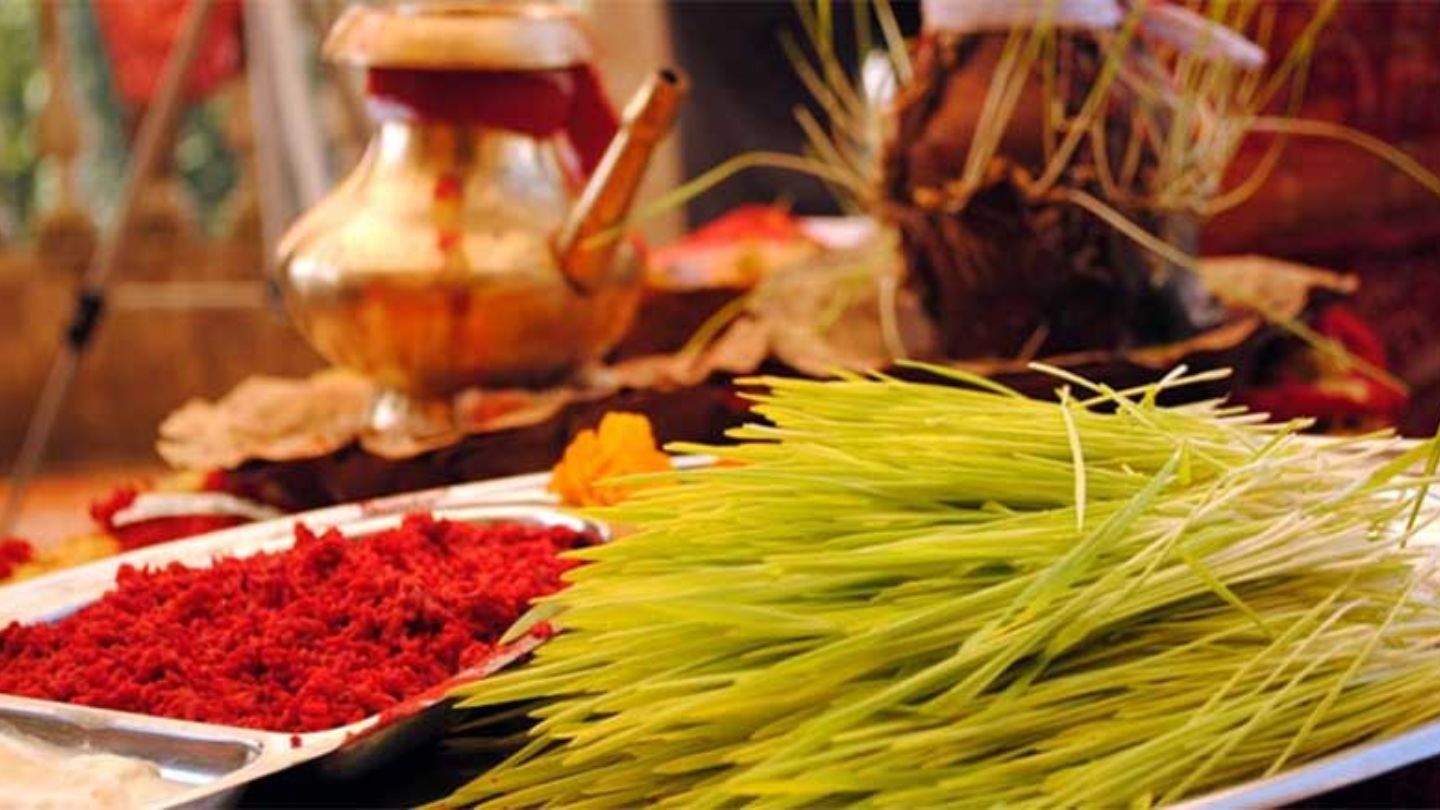
Installation of the Deity and Worship: An idol or picture of Lord Vishwakarma is placed at the workplace and worshipped with flowers, prasad, abir, kesari, incense and lamps.
-
Worship of Tools and Machinery: Red or yellow sacred threads are tied and tika is applied to equipment used in professional work, ranging from hammers and spanners to computers, laptops, printers and servers.
-
Sacrifice or Offering of Prasad: In most places, the worship is completed by breaking a coconut or distributing sweets, while some places follow the tradition of sacrificing goats or chickens.
Modern Form and Significance
With the development of information technology and industrialization, the scope of Vishwakarma Puja has also expanded. Once largely associated with iron tools, the worship now extends to servers at software companies, aircraft and highly advanced machinery.
The festival reflects respect for human labor, appreciation of technical knowledge and gratitude toward the tools and equipment that help people earn their livelihoods.
Safety Precautions During Vishwakarma Puja
Special safety precautions should be taken when lighting incense, lamps or fire in factories, petrol pumps, garages and other places where flammable materials are present.
When performing worship near machinery, care should also be taken while using water and colors to prevent electrical short circuits.
Similarly, accidents may occur if people consume alcohol and organize vehicle rallies or drive at high speed after worshipping their vehicles. The festival should therefore be observed in a disciplined manner with proper attention to safety.



Comments 0
No comments yet. Be the first to start the conversation.