



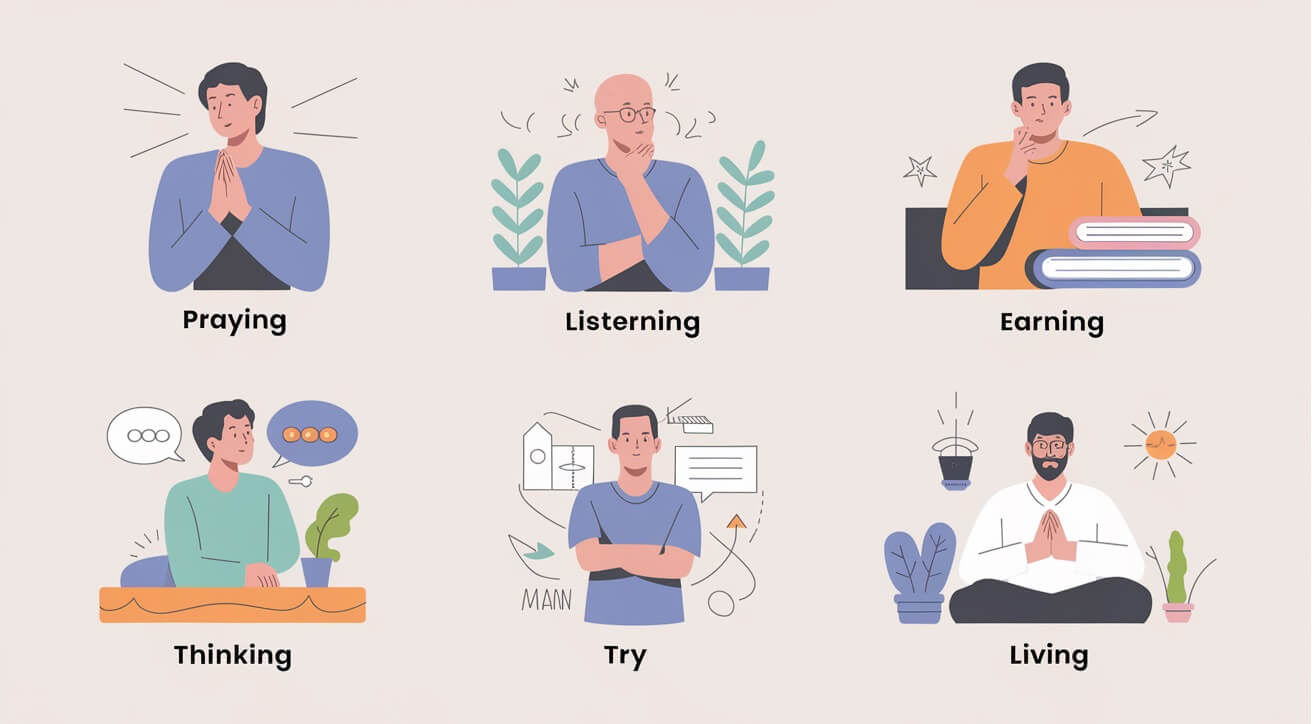
Crisis of Moral Values in Learning: The Need to Link Ethics with Every Teaching Process Rather Than Treating It as a Separate Subject, and the Challenge of AI
Education is necessary not only for the development of knowledge and skills but also for the holistic development of a person—physical, mental, and spiritual. However, in recent times, teaching limited only to the subject matter prescribed in textbooks has created a wide gap between education and society. As formal education gives priority only to subject content, the need to connect learning with moral values, human consciousness, and social realities has been pointed out.
In Nepal’s context, until before the Maoist armed conflict, “Moral Education” was taught at the school level as a separate subject. Later, in the name of making the curriculum appear scientific, objective, and highly modern, this subject was separated from general schools. In recent times, as incidents such as murder, violence, rape, and suicide have increased in society, the lack of moral education has often been regarded as one of the reasons. Society often concludes that, in the absence of moral education, young people are becoming one-dimensional and active only in purely personal interests.
However, it is not true that people who studied moral education have never been involved in corruption, conspiracies, and immoral activities. From the school level to the university level in Nepal, curriculum development and revision have also often taken place not on the basis of facts and research, but according to the whims and wishes of ministers or influential individuals. Moral education studied only through memorization or rote learning for examinations has not been found to have any substantial impact in real life.
Simply establishing or removing any subject as a separate subject does not necessarily make an impact. Whether it is chemistry, Nepali, social studies, or mathematics, every subject being taught should be connected interdependently with social realities and moral issues. According to former Indian President A.P.J. Abdul Kalam, “Education means qualities, conduct, and behavior.” The present need is to produce human resources who accept the supremacy of a scientific outlook, social values, and the human or moral dimension. For this, instead of a separate subject, the teaching and learning of every subject matter can be linked with moral values.
In the present AI era, it is no longer necessary that teachers themselves present subject matter that is neutral toward society and ethics; AI has already taken on this role. Teachers must now move forward in areas that AI cannot fulfill: human sensitivity, awareness of human values, and human awakening. For the holistic development of a person, it is becoming increasingly impossible for teachers who cannot promote the emotional dimension to remain in the profession.
Teaching moral education content merely by including good stories cannot create a personality rich in moral and human values. Education that turns a person into a machine cannot be real education; it can only become “Duwang”. Therefore, to protect the teaching profession from AI and to reawaken the human values, sensitivity, and tolerance being lost across the world, it is indispensable to make the objectives of the curriculum and the teaching methods ethics-oriented.




Comments 0
No comments yet. Be the first to start the conversation.