



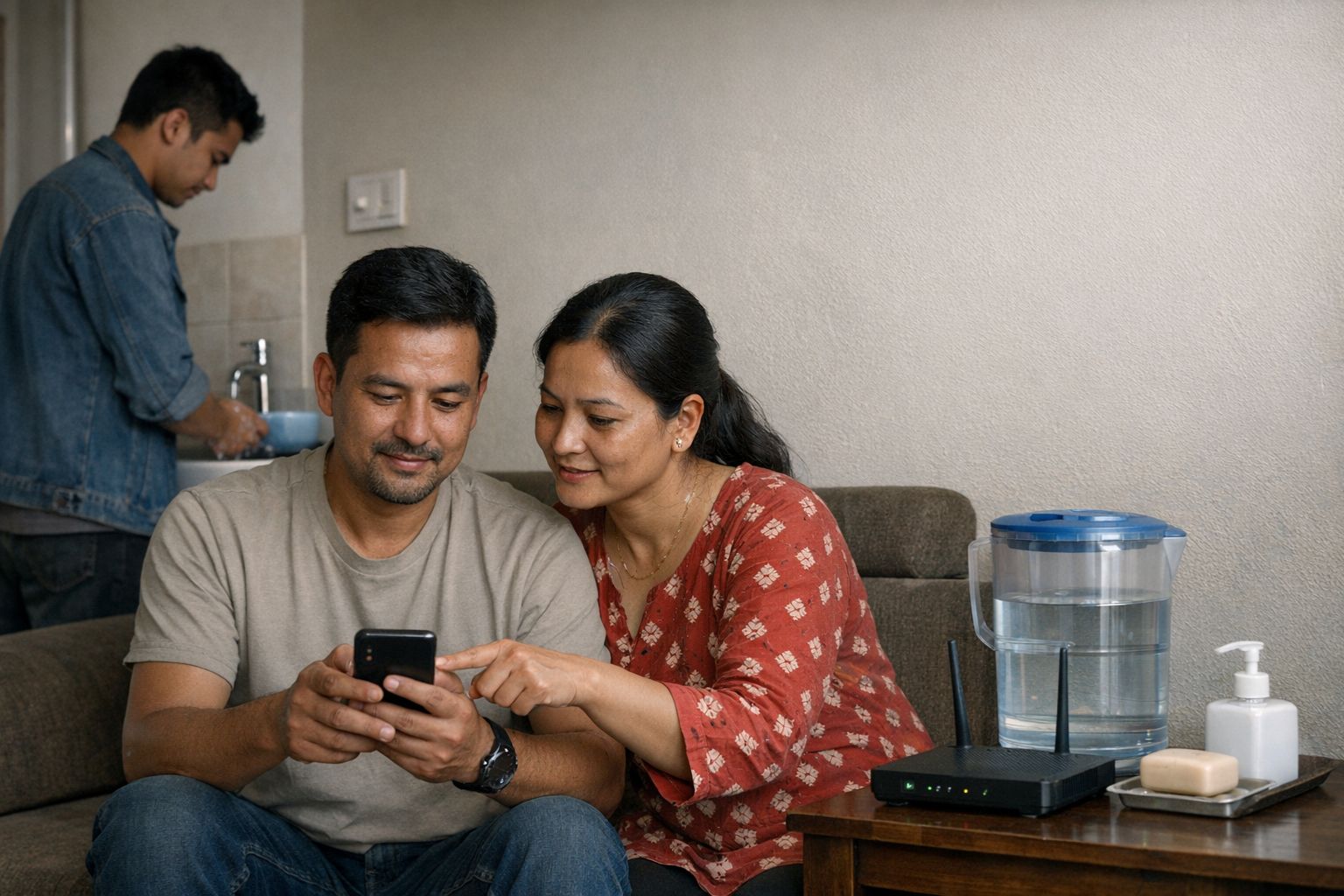
Over the past decade, Nepalis’ access to information and technology has increased significantly. It has also been found that, through the highest use of information and technology, citizens have become more aware of personal hygiene and community and personal health, and are moving toward a higher standard of human living.
Key Statistics
-
Men with own mobile phone (overall): 90%
-
Men (age 15–49) with own mobile phone: 90.4%
-
Men who used a mobile phone in the last 3 months: 78.7%
-
Women who use a mobile phone themselves (overall): 82%
-
Women (age 15–49) with own mobile phone: 81.6%
-
Women who used a mobile phone in the last 3 months: 72.7%
-
Households with access to electricity source: 96.7%
-
Gandaki Province (highest): 99.5%
-
Karnali (lowest): 80.8%
-
-
Households with access to telephone/mobile facilities: 95.5%
-
Households using internet-enabled devices: 82%
-
Population using improved drinking-water source: 98.2%
-
Household members using improved toilets: 92.2%
-
Exclusive use by own household members: 79.9%
-
-
Households with water + soap/other hygiene items at a handwashing place: 86.4%
-
Health insurance coverage (age 15–49):
-
Women: 17.7%
-
Men: 19.9%
-
-
Health insurance coverage (children):
-
Age 5–17: 15%
-
Under 5 years: 11.7%
-
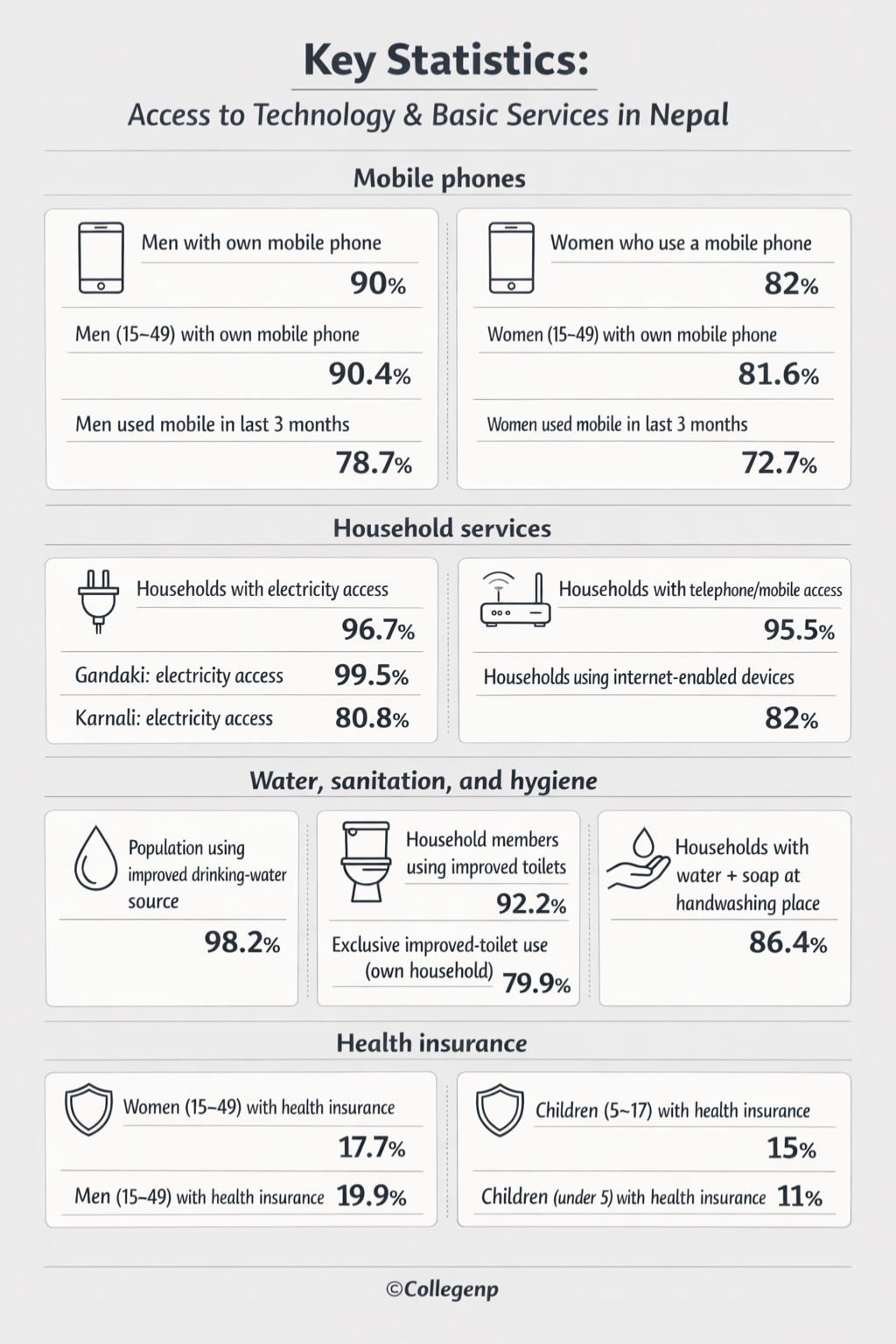
Such figures are reflected in the results obtained from a multi-indicator survey made public by the Rastriya Tathyanka Karyalaya (National Statistics Office). This has made it clear that Nepali citizens are gradually reaching a higher level in human and capacity development.
Recently in Nepal, it has been found that 90% of men have their own mobile phone, and among men in the 15 to 49 age group, 90.4% use their own mobile phone. The figures show that 78.7% of men used a mobile phone in the past three months. Similarly, 82% of women were reported to use a mobile phone themselves; among women in the 15 to 49 age group, 81.6% have their own mobile phone, and 72.7% used a mobile phone in the past three months.
Dundiraj Lamichhane, spokesperson for the Rastriya Tathyanka Karyalaya, said that Nepalis’ access to information and technology has increased significantly. He said, “Along with the increase in access to information and technology, the awareness level among Nepalis has also increased. Now, when using technology, it seems necessary to pay greater attention to the positive aspects.”
Access to a source of electricity service has reached 96.7% of Nepali households. By province, the highest access was found in Gandaki Pradesh at 99.5%, and the lowest in Karnali at 80.8% of households. Access to telephone and mobile phone facilities has reached 95.5% of households. Likewise, the figures show that four out of every five families—82% of households—used devices with internet facilities.
Sumant Ghimire, Associate Professor of Sociology at Tribhuvan Vishwavidyalaya, said that in the development of information and technology, the past 10 years can be described as a golden era for Nepali citizens. Recalling that development in information and technology during this period was greater than expected, he said, “Now, according to the demands of the time, the state’s attention must be focused on job creation and industrial development.” He said that if progress is made in job creation as well—like the progress seen in technology—then the compulsion for Nepalis to go abroad for employment should end forever.
In Nepal, 98.2% of the total population was found to use an improved water source for drinking water. Among total household members, 92.2% used an improved toilet; of these, 79.9% of household members were found to use improved toilets exclusively on their own. In 86.4% of households, water and soap or other hygiene items were found placed at a designated location for handwashing. Likewise, 17.7% of women and 19.9% of men in the 15 to 49 age group were found to have health insurance. The Rastriya Tathyanka Karyalaya made public figures showing that 15% of children in the 5 to 17 age group and 11.7% of children under five had health insurance.

Comments 0
No comments yet. Be the first to start the conversation.