



NMICS 2024-25 Results Report Made Public by National Statistics Office
The Government of Nepal, Office of the Prime Minister and Council of Ministers, National Statistics Office made public the results report of the “Nepal Multiple Indicator Cluster Survey 2081/82 (Nepal Multiple Indicator Cluster Survey-NMICS 2024-25)” on 2082 Magh 26, Monday.
The National Statistics Office, under the Office of the Prime Minister and Council of Ministers, made public the full survey results amid a program in Kathmandu.
The full results report of the Survey Findings Report has been made public and is available on this office’s website http://www.nsonepal.gov.np and on www.unicef.org/nepal/.
This survey was conducted with the objective of monitoring indicators of the Sustainable Development Goals, including the status of women and children in Nepal, education, health, drinking water, and nutrition, among others.
This survey, completed with technical and financial support from the United Nations Children’s Fund (UNICEF), is Nepal’s fourth Multiple Indicator Cluster Survey.
In line with the main objective of providing national- and regional-level monitoring and evaluation, supporting plan formulation, and making available quality and comparable indicators regarding the status of women and children in Nepal, the National Statistics Office conducted the Nepal Multiple Indicator Cluster Survey in FY 2081/82. This survey is Nepal’s fourth survey.
It is believed that this will reduce the shortage of data required for plan formulation, policy making, and monitoring of development works at the federal as well as provincial levels, and will make a concrete contribution to the monitoring of international declarations and Sustainable Development Goals indicators, as well as to the measurement of multidimensional poverty.
The implementation of this survey was carried out by the Government of Nepal, with the technical and financial support and collaboration of UNICEF Nepal, as part of the seventh global Multiple Indicator Cluster Survey series.
For data collection in this survey, out of 540 clusters (enumeration areas) across Nepal, 304 clusters from urban areas and 236 clusters from rural areas were selected using statistical methods, and 24 households were selected for enumeration from each cluster.
From the total 12,960 selected households, household information was collected. This included collecting details of women aged 15–49 years, men aged 15–49 years, children aged 5–17 years, and children under 5 years in each household, and measuring weight and height to understand child nutrition status.
For the first time, information related to mental health among adolescents aged 15–24 years was also collected.
In addition, there was a program to test drinking water that directly affects the health of selected households for harmful bacteria E.coli and for arsenic.
In this survey, data have been collected on education, maternal and newborn health, drinking water and sanitation, protection and discrimination, mental health, and other social sector topics.
This report includes disaggregated data for the national level, urban and rural areas of all seven provinces, and the Kathmandu Valley urban area.
Main results:
Child mortality
According to the survey findings report, among every 1,000 live births, 27 infants die before reaching 1 year of age.
Similarly, the under-five child mortality rate (child mortality rate) is 31 per 1,000 live births.
Also, among every 1,000 live births, 17 newborns die before reaching 1 month of age.
By province, the neonatal mortality rate is highest in Sudurpashchim Province at 26 per 1,000 births, while it is lowest in Bagmati Province at 10.
The highest infant mortality rate is 38 per 1,000 births in Sudurpashchim Province, and the lowest is 17 in Bagmati Province.
Likewise, the highest under-five child mortality rate is 48 per 1,000 births in Sudurpashchim Province, while the lowest is 20 in Gandaki Province.
Access to electricity and telephone
96.7 percent of households have access to a continuous source of electricity service. By province, the highest is Gandaki Province (99.5 percent) and the lowest is Karnali Province (80.8 percent).
In Nepal, 95.5 percent of households have access to telephone (landline telephone or mobile phone) services. By province, the highest is Bagmati Province (97.1 percent) and the lowest is Sudurpashchim Province (92.6 percent).
Use of information and communication technology
It was found that four out of every five (82.0 percent) households used a device with internet access.
Among women aged 15–49 years, 81.6 percent have their own mobile phone, and 72.7 percent used a mobile phone in the last three months.
Similarly, among men aged 15–49 years, 90.4 percent have their own mobile phone, and 78.7 percent used a mobile phone in the last three months.
Consumption of tobacco products
In Nepal, 5.1 percent and 41.8 percent, respectively, of women and men aged 15–49 years were found to have consumed some type of tobacco product in the month preceding the survey.
It was found that 7.6 percent of men and 2.1 percent of women had fully smoked one cigarette/bidi before the age of 15 years.
Reproductive and maternal health
In terms of the total fertility rate, women in the age group 15–49 years were found to have given birth to 1.9 live children per woman.
In terms of the adolescent fertility rate for the age group 15–19 years, 48 live births were found per 1,000 adolescents, while among women aged 20–24 years, one out of ten women (11.2 percent) was found to have given birth to a live child before the age of 18 years.
Among currently married women aged 15–49 years, one out of every three (35.0 percent) married women was found to have used family planning methods and devices (traditional or modern methods).
Among women in the same age group, one out of every two (55.2 percent) women was found to be satisfied with the use of modern family planning methods/services according to their demand.
Among women aged 15–49 years who had given birth to a live infant within the period up to two years before the survey, 85.0 percent were found to have received at least 4 antenatal check-ups with a health worker as recommended.
Among women aged 15–49 years who had given birth to a live infant within the period up to two years before the survey, 90.5 percent were found to have delivered at a health institution, 91.4 percent were found to have delivered with a skilled birth attendant, and 25.3 percent were found to have delivered through a surgical procedure.
Child health, nutrition, and development
According to the World Health Organization standards, the nutritional status of children under 5 years shows that children with low weight for age (linkhure) and children with low height for age (pudko) are 16.9 percent and 26.2 percent, respectively.
Similarly, children with low weight for height (khyautte) were found to be 6.6 percent, and children with high weight for height were found to be 2.1 percent.
Children with low weight for age (linkhure) are seen the most at 33.2 percent in Madhesh Province and the least at 9.6 percent in Bagmati Province.
Among 3 mothers, 2 (69.7 percent) were found to feed their child only their own milk up to 6 months after birth.
By province, this percentage is the highest at 76.6 percent in Sudurpashchim Province, followed by 72.3 percent in Madhesh Province and 71.6 percent in Karnali Province.
Among children aged 12–23 months, 80.7 percent of children were found to have received all vaccines in full within the first year only.
Among children under 5 years who had diarrhea within the period up to two weeks before the survey, 7.8 percent were found, and among them, 20.6 percent of children were found to have been given oral rehydration solution along with zinc tablets.
Among children under 5 years who had respiratory symptoms within the period up to two weeks before the survey, 2.7 percent were found.
Among children aged 36–59 months, 57.9 percent of children were found to attend an early childhood education program during the survey period, and overall, the early childhood development index 2030 was found to be 63.3 percent.
Education
It is seen that 4.5 percent of children are out of school at the basic school grades (1–5), 3.6 percent at grades (6–8), and 13.2 percent at secondary school (9–12).
Children of the age for entry into grade 1 of basic school grades (1–5) were found to be 41.2 percent.
Protection from violence and exploitation
Among mothers/caregivers of children under 5 years, 82.9 percent were found to know how to do birth registration.
Similarly, birth registration among children under 5 years was found to be 85.4 percent.
By province, birth registration among children under 5 years was found to be the highest (95.8 percent) in Karnali Province and the lowest (78.4 percent) in Koshi Province.
Among children in the age group 0–17 years, the death of biological parents (one or both) was found to be 3.4 percent. By province, it was found to be the highest (5.3 percent) in Sudurpashchim Province and the lowest (2.1 percent) in Madhesh Province.
Among children in the age group 0–17 years, biological parents (one or both) residing abroad were found to be 33.2 percent. By province, it was found to be the highest (40.8 percent) in Gandaki Province and the lowest (21.0 percent) in Bagmati Province.
Drinking water and sanitation
It is seen that 98.2 percent of Nepal’s total population used an improved water source for drinking water.
When testing water quality, harmful bacteria E. coli (>=1cfu/100ml) were found in the drinking water of 60.4 percent of household members.
Among Nepal’s total household members, 92.4 percent were found to use improved toilets, and among them, 79.9 percent of household members were found to use improved toilets exclusively by themselves.
In 86.4 percent of households, at the designated place for handwashing, water and soap or other cleaning items were found.
Health insurance
Among women aged 15–49 years, 17.8 percent, and among men, 19.6 percent were found to have health insurance.
Similarly, among children aged 5–17 years, 15.0 percent, and among children under 5 years, 11.7 percent were found to have health insurance.
(The Multiple Indicator Cluster Survey is one of the large statistical sources among various sources that provide data related to women, children, and households. This survey was conducted by adopting the international-level household survey method (Multiple Indicator Cluster Survey - MICS) developed by the United Nations Children’s Fund (UNICEF).)
Official information/notice details:
-
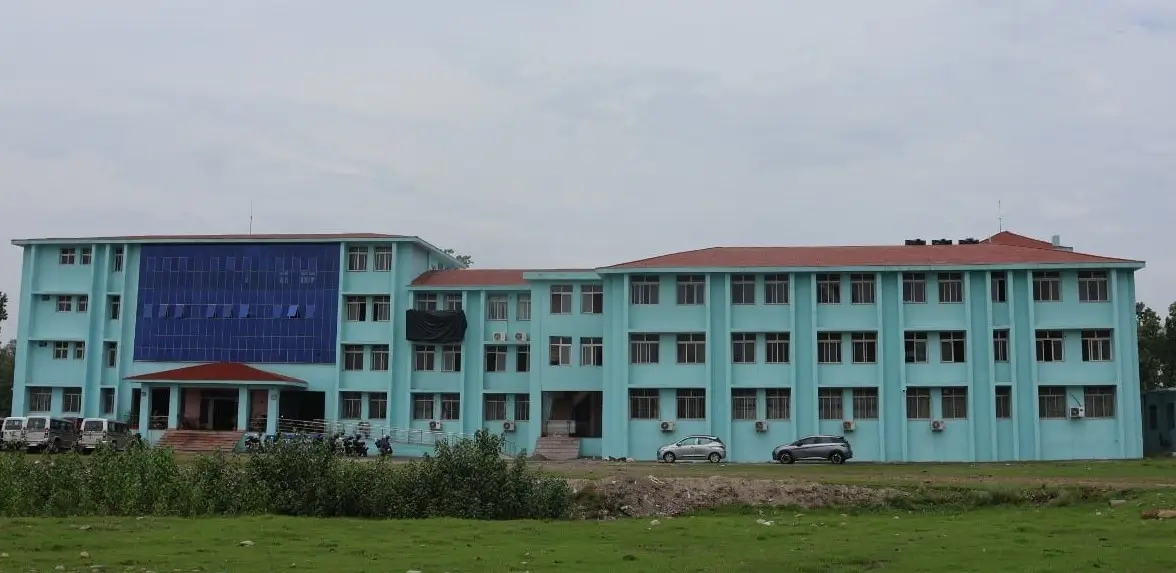
Office: National Statistics Office, Thapathali, Kathmandu
-
Position/Program: Nepal Bahusuchak Sarvekshan 2081/82 (NMICS 2024-25) results made public
-
Contact/Address/Website: Phone No.: 9841414392 (Spokesperson), Website: http://www.nsonepal.gov.np
It has been informed that the detailed report has been made available on the office’s website.


Comments 0
No comments yet. Be the first to start the conversation.