



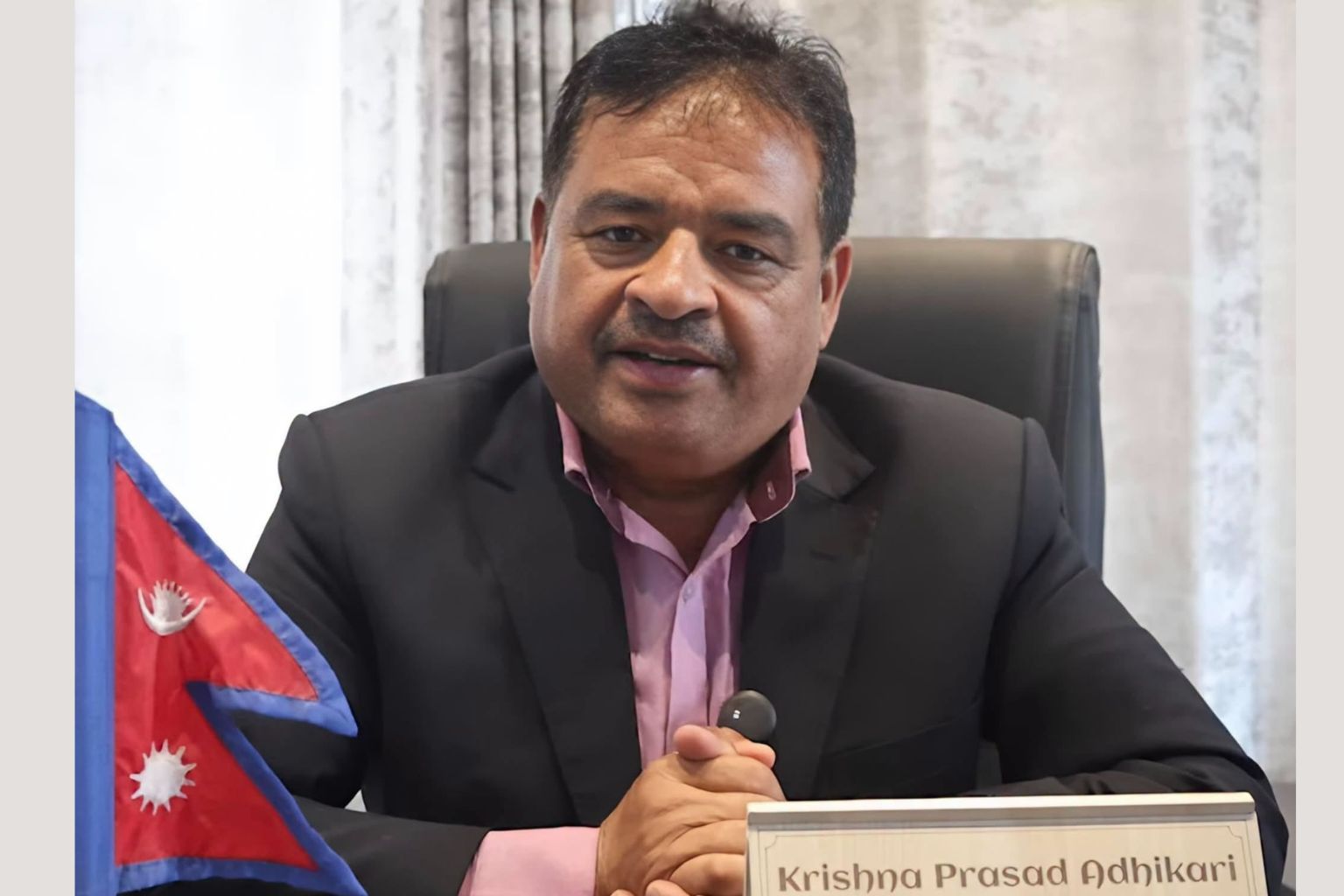
Kathmandu — PABSON President Krishna Adhikari has said that private schools were established to make profits and that students who cannot afford their fees should attend government schools.
Clarifying that private school operators did not enter the education sector to become ascetics, Adhikari said students from financially disadvantaged families should study in government schools, while private schools would provide quality education to those who could afford the fees.
His remarks focused on the distinction between private and public education funding and the responsibilities of the government and private school operators.
Schools Should Operate as Companies, Not Trusts
Adhikari demanded that private schools be allowed to continue operating as companies rather than being converted into nonprofit institutions or trusts.
He cited Anand Kuti School, which he said had closed after being converted into a trust, and Amar Adarsha School, which he claimed was also on the verge of closure.
Referring to the 400-year history of schools in Switzerland, Adhikari said schools in Nepal sometimes face closure immediately after the death of their founders.
He emphasized that the forthcoming education law should ensure the long-term survival of schools, whether government-run or institutional, rather than allowing their existence to depend on individual founders.
Demands Regarding Scholarships and Government Support
Adhikari indicated that the existing provision requiring private schools to provide 10–12 percent scholarships should be removed, arguing that the government itself should take responsibility for educating students from economically disadvantaged families.
However, he expressed willingness to reduce student fees if the government provided limited financial support for improving school facilities, including making schools technologically advanced and purchasing school buses.
He said private schools would pass the benefits of such government assistance on to students through reduced fees.
Teachers' Salaries and Social Security Fund Contributions
Adhikari clarified that schools operating as companies were paying teachers' salaries through banks in accordance with the Labour Act and were also prepared to participate in the Social Security Fund (SSF).
However, he argued that the existing contribution arrangement of 20 percent and 11 percent was too expensive.
He proposed revising the contribution rates to 10 percent and 11 percent, bringing the total to 21 percent, and said private schools could participate in the fund under such an arrangement.
Demand for Authority to Set School Fees Independently
Adhikari demanded that private schools be allowed to determine their own fees based on their investment and the facilities they provide.
He explained that schools would hold discussions with parents' committees and determine their fees in the Nepali month of Magh.
The fees, determined according to the facilities available at each school, would then be communicated to the relevant local government.
He said local governments or the federal government could regulate schools based on the fees and facilities disclosed.
Concerns Over Government Attitudes and Proposed Education Legislation
Adhikari expressed dissatisfaction with the attitudes of local, provincial, and federal governments toward private schools.
He complained that governments only focused on the profits earned by private schools but showed little concern when those institutions faced financial difficulties.
"We are citizens. We need the government's care, guidance to protect our institutions, and regulation," he said.
Adhikari also informed that private school representatives had prepared a draft education law intended to address the interests of the government, parents, students, teachers, and private school operators.
He expressed the expectation that the proposed legislation would establish a regulatory system under which a council would oversee schools and take action against institutions that failed to meet the required standards.
His proposals form part of the broader discussion surrounding education reforms in Nepal, particularly the regulation, financial sustainability, and operation of private educational institutions.
.jpg)


Comments 0
No comments yet. Be the first to start the conversation.