- DurationYear
About Teaching License
TSC Teaching License
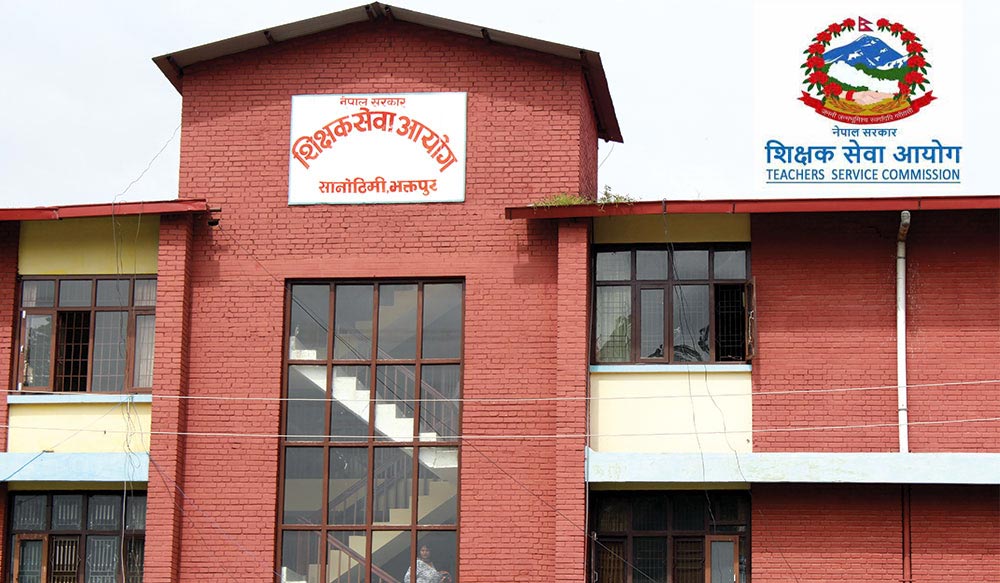
The Teacher Service Commission (TSC) has introduced the teaching license system to make the teaching profession in Nepal dignified and quality-oriented.
This license certifies that the concerned person has the minimum academic qualifications and teaching skills required to enter a classroom.
Why is the License Necessary?
Teaching is not only the act of sharing knowledge; it is also a psychological and scientific process.
The licensing system ensures the following.
-
Quality control: only those competent in both subject content and teaching methodology reach the classroom
-
Professionalism: establishing teaching as a distinct profession
-
Legal requirement: Section 12 of the Education Act, 2028 clearly states that no one may be a candidate for a teacher post without obtaining a license
Level-wise Eligibility
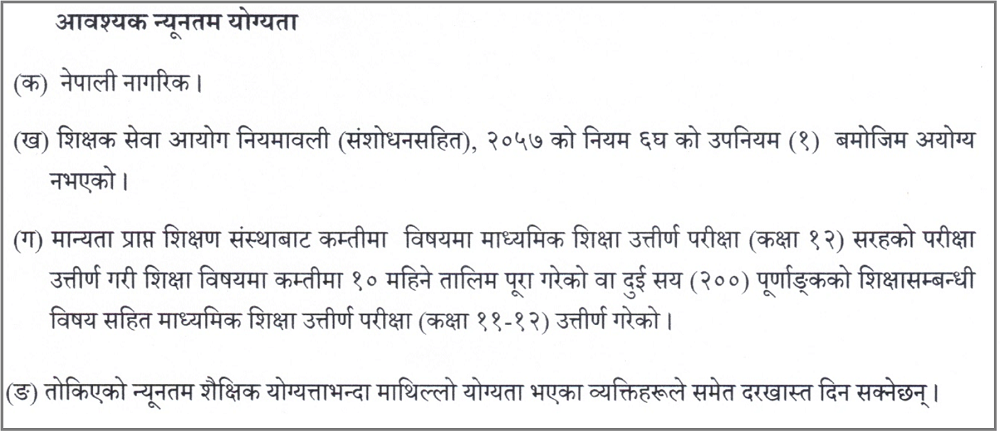
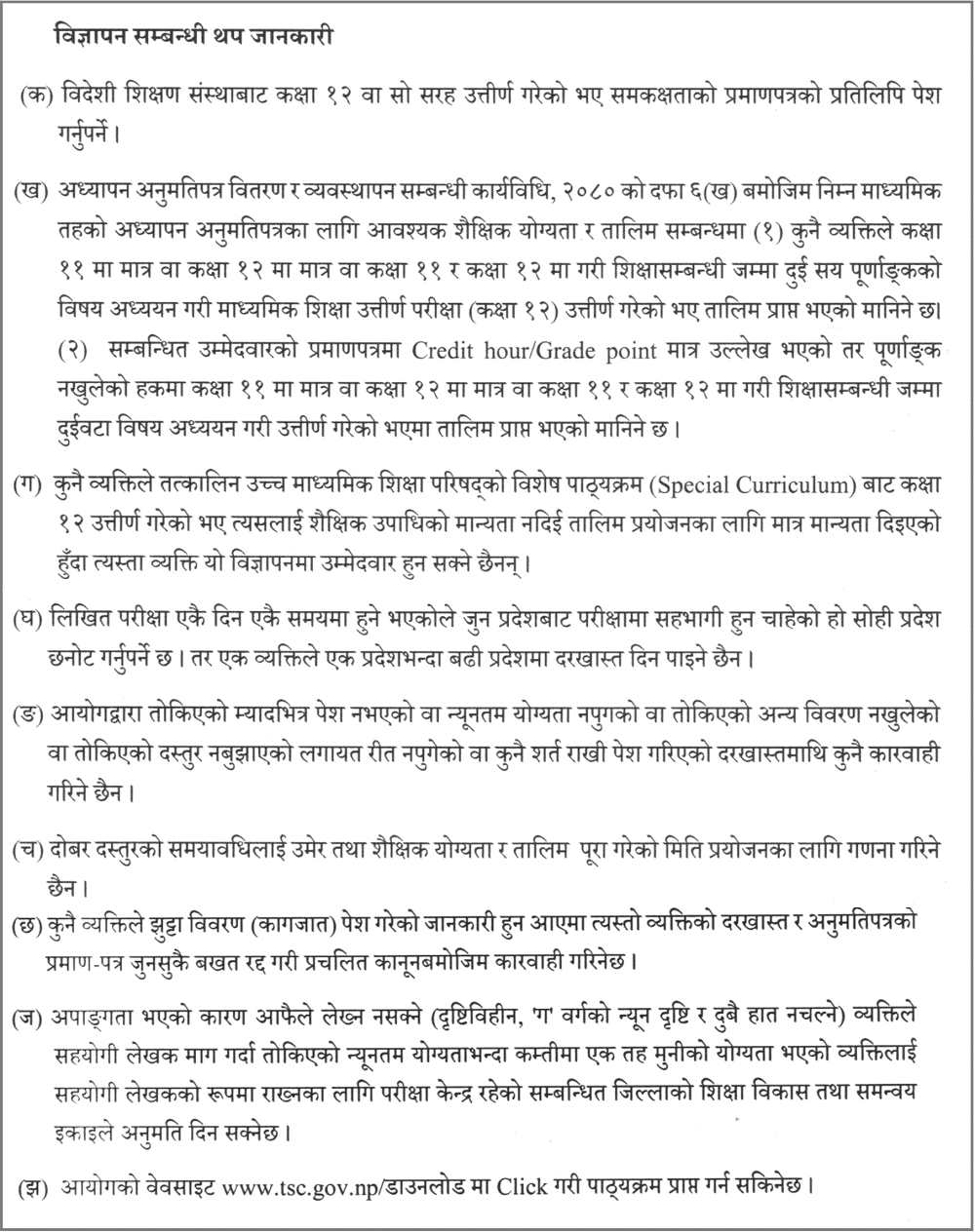
Before applying for the license, the candidate must confirm their academic background and training.
A) Secondary Level (Class 9–12)
-
Academic qualification: at least a Bachelor’s degree in the relevant subject
-
Training: a Bachelor’s degree in education or a 10-month training is mandatory
-
Special exemption: those who have completed a Bachelor’s degree in science, mathematics, English, accountancy, computer science, civil/electrical engineering, and animal/agriculture science may sit for the license exam without training. However, after permanent appointment, they must complete the training within the specified time
B) Lower Secondary Level (Class 6–8)
-
Academic qualification: a Bachelor’s degree in the relevant subject or equivalent
-
Training: at least a 10-month training in education or a Bachelor’s degree in education is mandatory
C) Primary Level (Class 1–5)
-
Academic qualification: completion of secondary education (Grade 12) or equivalent
-
Training: training in education is mandatory. For those who studied education as a 200-mark subject in Grades 11 and 12, this is considered equivalent to the training
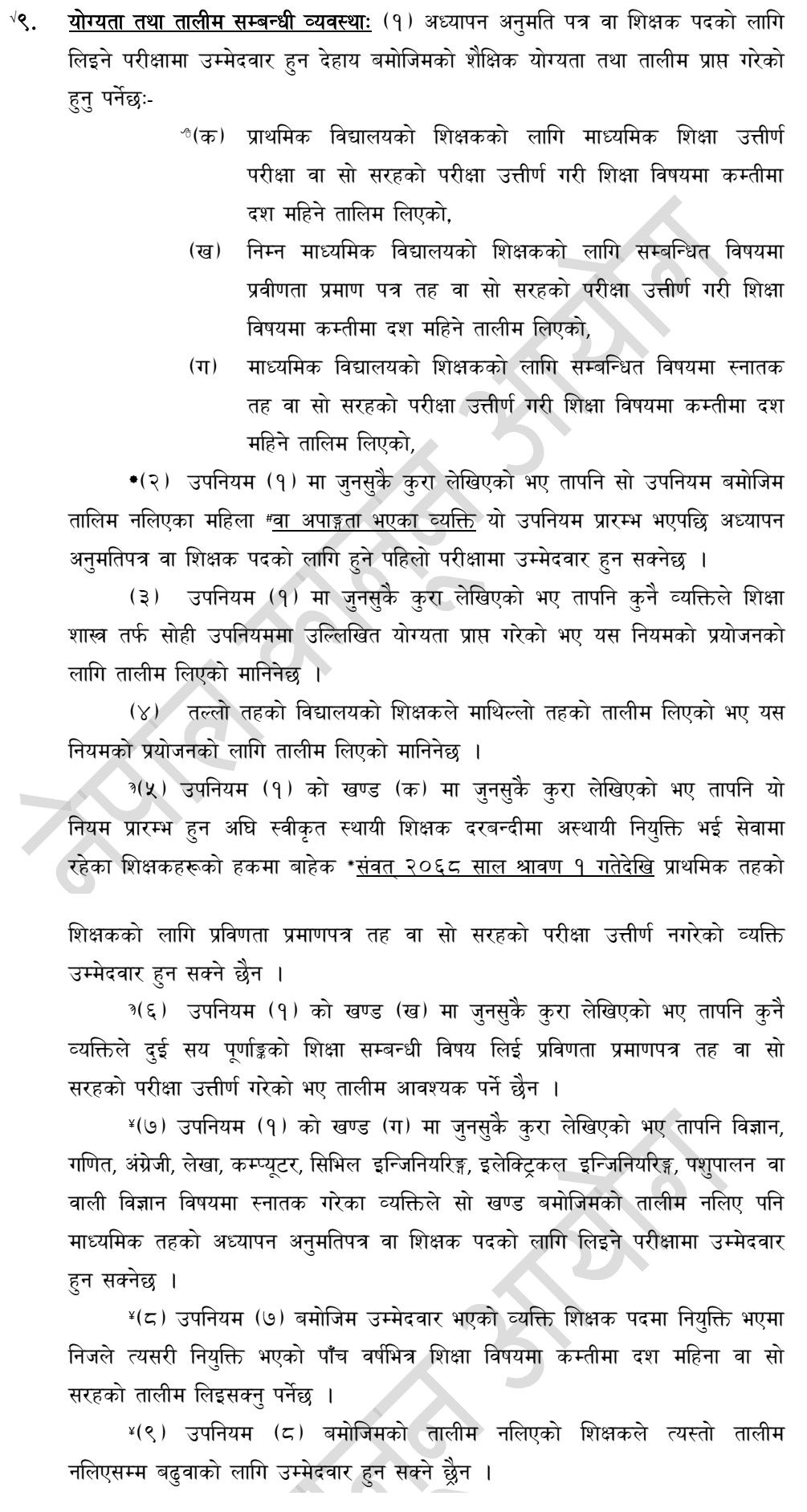
Must Read: Teachers Service Commission TSC Niyamawali 2078 Revised.pdf
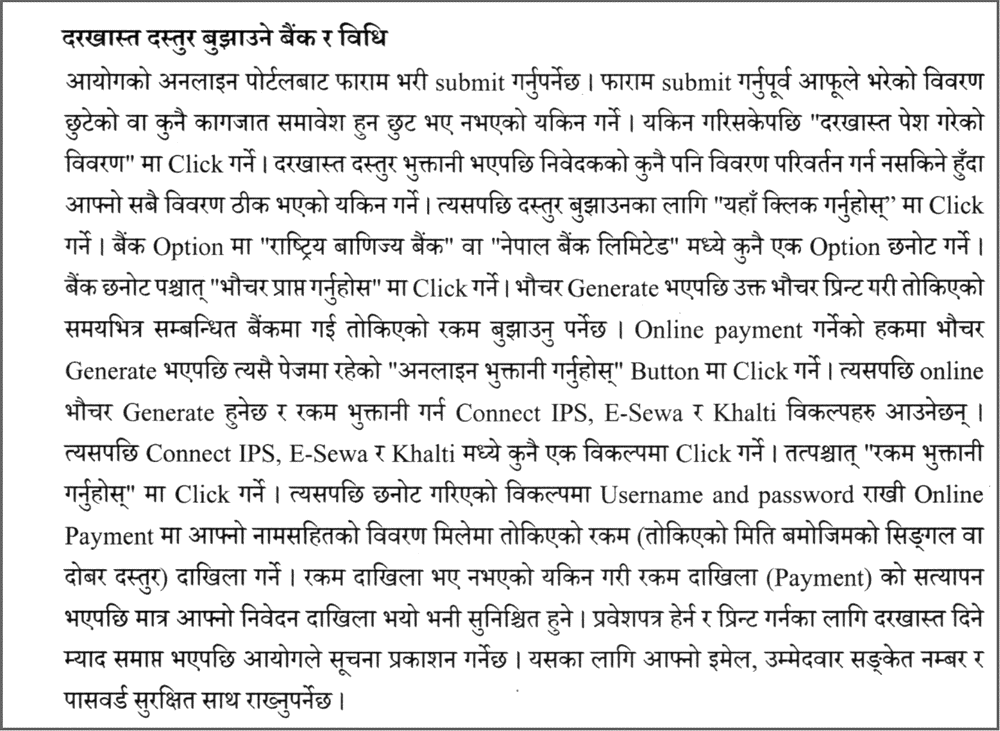
Application Process: Step-by-Step Roadmap
The Teacher Service Commission currently accepts license applications fully online.
Step 1: Create an account
Go to the Commission portal online.tsc.gov.np and create a new account using your email and phone number.
Step 2: Fill personal and academic details
Enter your name, address, citizenship details, and academic details from SEE to Bachelor’s level.
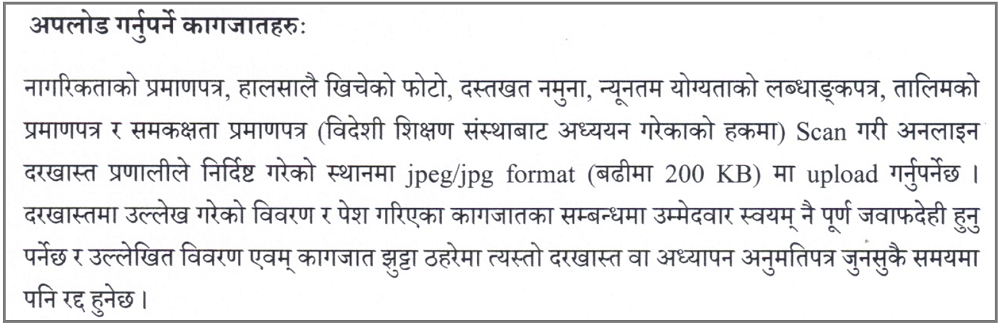
Step 3: Upload documents
Scan and upload the following documents clearly.
-
Recent photograph and scanned signature
-
Citizenship certificate
-
Transcript of minimum qualification and character certificate
-
Training certificate, if required
-
Equivalence certificate, if you have a foreign degree
Step 4: Pay the fee
Pay NPR 1,000 for the secondary level and NPR 700 for lower secondary/primary (or as specified in the notice) through online banking or a voucher at the designated bank.
Exam Pattern and Preparation
The license exam is comparatively simple but technical.
-
Question format: fully objective (Multiple Choice Questions, MCQs)
-
Total marks: 100 (50 questions, 2 marks each)
-
Pass mark: 50 marks (meaning 25 correct answers out of 50 are required)
-
Negative marking: there is no negative marking in the license exam, so it is beneficial to answer all 50 questions
-
Time: 1 hour
Syllabus areas
-
Teacher professional competence
-
Nepal’s education system and legal provisions
-
Child psychology and teaching methods
-
Classroom management and educational technology
-
Subject-related basic knowledge
Exam Day Guidelines
-
Admit card: entry is not allowed without the admit card downloaded from the Commission portal
-
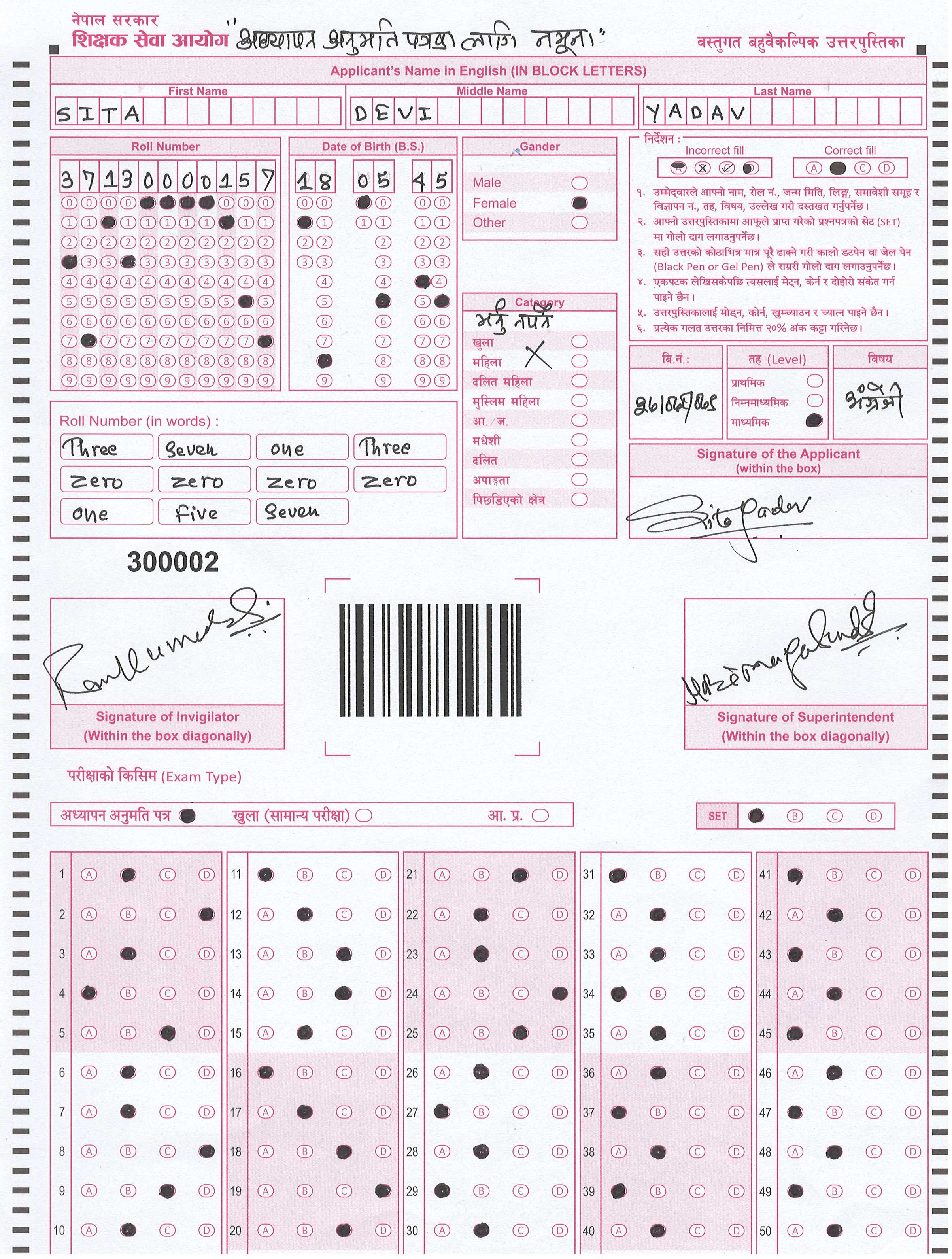
Black ink: for filling the OMR sheet, it is mandatory to use a black ink pen
-
Importance of the “Key”: the “Key” (A, B, C, or D) printed on the question paper must be circled on your answer sheet. If this is not done, the machine will not check the copy and you will automatically be unsuccessful
Result and Certification
A few months after the exam, the Commission publishes the results.
Those who pass receive the certificate through the following process.
-
Digital certificate: the Commission has arranged that a digitally signed certificate can be downloaded online
-
Verification: anyone can check the certificate’s authenticity through the QR code on it
-
Physical copy: in some cases, a notice may be issued to distribute physical certificates through the Education and Coordination Unit
Common Problems and Solutions
1) Major subject not shown in the transcript
Many transcripts may not show the “Major Subject.”
In such cases, you must obtain and upload a “Major Subject Opening” letter from the campus.
2) Differences in name, surname, or date of birth
If details differ between citizenship and academic certificates, a recommendation letter stating it is the same person is mandatory from the District Administration Office or the Ward Office.
3) Equivalence issues
Those who studied in India or other countries cannot apply unless they obtain an equivalence letter from the Curriculum Development Centre or Tribhuvan University.
4) Confusion for those without training
If you have neither completed the 10-month training nor studied education as a subject, you cannot sit for primary and lower secondary license exams, except for some special subjects at the secondary level.
Validity and Renewal
The teaching license remains valid for life.
Under the current legal arrangement, it does not need repeated renewal.
However, if the Commission introduces new rules in the future for teacher competency development, it must be followed accordingly.
Conclusion
A teaching license is not just a paper document; it is the first step in your teaching journey.
It makes you eligible to compete for any teacher post, whether temporary, contract, or permanent.
Advice: Many candidates have strong subject knowledge but are weak in pedagogy and the provisions of the Education Act. Therefore, give special focus to these aspects during preparation.
Every young person who wants to bring change in Nepal’s education sector should take this process seriously and begin their professional journey.
Note: If you have any queries related to the license exam, regularly check the Commission’s official website www.tsc.gov.np. Do not fall into the misinformation of middlemen.
Service Details
- Service TypeService Commissions
- DurationYear
- RecognitionMinistry of Education (MoE)
-
Offered At
Teachers Service Commission (TSC)
Sanothimi, Bhaktapur
Other Services at Teachers Service Commission (TSC) 5
Reviews
Questions & Discussions
Contact Teachers Service Commission (TSC), Bhaktapur
- AddressSanothimi, Bhaktapur, Nepal
- Phone+977-1-6637873
- Emailadmin@tsc.gov.np
- Websitetsc.gov.np
- Contact personShikshak Sewa Aayog