- DurationYear
About TSC Exams
Teacher Service Commission: Exam System and Process
The Teacher Service Commission’s examination system is multi-dimensional. It tests a candidate’s general knowledge, teaching skills, subject mastery, and personality. The examinations are conducted in line with the procedures prescribed by the Education Regulations and the Teacher Service Commission Regulations, 2057 (with amendments).
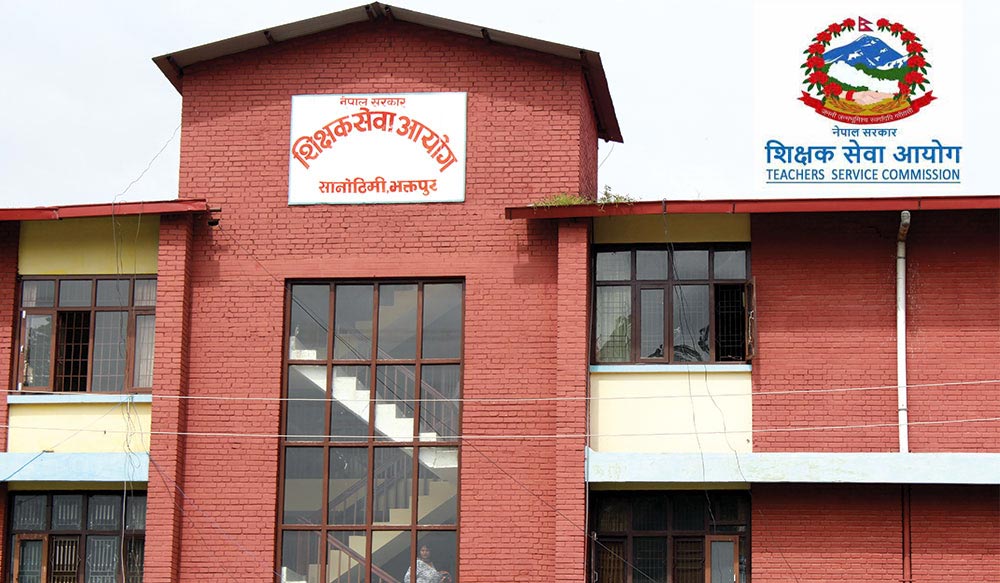
Structure of the Examination
The Commission’s permanent teacher examination is mainly divided into three stages.
A) First Stage: General Examination (Objective)
This is a type of screening or selection test.
Its main purpose is to filter out candidates who lack basic knowledge.
-
Full marks: 100 (50 multiple-choice questions, 2 marks each)
-
Time: 1 hour
-
Pass mark: 50 marks (meaning at least 25 correct answers are required)
-
Negative marking: for each wrong answer, 20 percent of the mark is deducted (if one question is wrong, 0.4 marks are deducted)
-
Special rule: only 50 percent of the marks obtained in the general examination are added to the final merit list
B) Second Stage: Subjective Examination
Only candidates who pass the general examination may sit for this exam.
This is a deeper test of the candidate’s subject knowledge and teaching methodology.
-
Full marks: 100
-
Time: 3 hours
-
Pass mark: 40 marks
-
Nature of questions: analytical questions requiring long and medium-length answers
-
Special rule: 100 percent of the marks obtained in this exam are added to the final merit list
C) Third Stage: Interview
Based on the results of the written examinations (general and subject-based), candidates are selected for interview in proportion to the number of posts demanded.
-
Full marks: 25
-
Distribution: marks are awarded based on experience (temporary service), academic qualification, and the evaluation by the interview board
Syllabus Overview
The Commission revises the syllabus from time to time.
The current syllabus covers the following areas.
-
General knowledge (GK): Nepal’s geography, history, culture, sustainable development, and international organizations
-
Basic education-related knowledge: meaning of education, psychology, teaching methods, concept of curriculum, and evaluation
-
Information and communication technology (ICT): basic computer knowledge, use of technology in teaching, and cyber security
-
Constitution, Acts, and regulations: Constitution of Nepal, Education Act, Teacher Service Commission Regulations, and Local Government Operation Act
-
Intelligence testing (IQ): verbal and non-verbal logical reasoning
Step-by-Step Flow of the Exam Process
Step 1: Admit Card
After the application is approved, the candidate must download the admit card from the online portal.
The admit card includes the candidate’s photo, roll number, and a QR code.
It must be kept safe because it is also required at the time of the interview.
Step 2: How to Fill the OMR Sheet
-Examination-OMR-Sheet-1.jpg)
The general examination uses an OMR sheet.
Many candidates fail due to small mistakes here.
-
Ink: always use a black ink ball point pen
-
Question set (Key): the “Key” (A, B, C, or D) mentioned on the question paper must be filled on the OMR sheet; if the key is not written, the answer sheet is cancelled
-
Shading the circle: the circle must be filled clearly; overwriting or half-filled circles may not be read by the machine
Step 3: Exam Conduct and Discipline
-
You must reach the center at least 30 minutes before the exam starts.
-
Write the roll number and name only in the designated spaces. Any sign that reveals identity such as your name, phone number, or other identification on inner pages is considered unlawful and the exam may be cancelled.
Step 4: Written Results
The Commission first publishes the results of the general examination.
Then the subject-based exam is conducted.
After combining both results, the interview shortlist is published.
Interview and Document Verification
Before going to the interview, the candidate must carry all original documents.
-
Document verification: detailed checks of citizenship, academic qualifications, training, teaching license, and inclusive certificates
-
Experience marks: if the candidate has worked in a community school under an approved position as a temporary or contract teacher, a fixed number of marks is added for experience (up to a maximum of 12)
-
Presentation: the interview board evaluates the candidate’s confidence, commitment to teaching, and views on contemporary educational issues
Final Merit List and Recommendation
The final result is calculated by adding the following marks.
-
50 percent of the marks obtained in the general examination
-
100 percent of the marks obtained in the subject-based examination
-
Marks for academic qualification (First Division: 5, Second Division: 3)
-
Marks for experience
-
Interview marks
The candidate with the highest total score is published in the main list and is recommended for appointment.
Troubleshooting Exam Issues
If there is an error in the question paper
Sometimes a question may contain a technical error.
In such cases, the Commission later takes expert opinion and decides either to award marks for that question to all candidates or remove the question.
Candidates should not waste time being stuck on such a question.
If there is overwriting on the OMR sheet
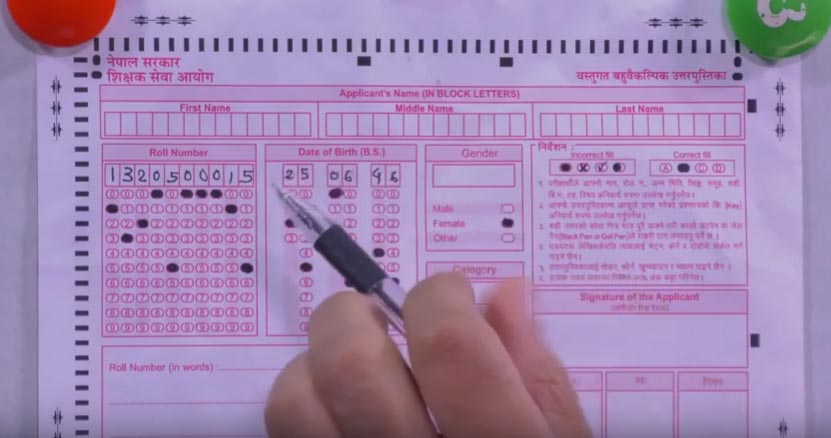
If there is a mistake on the OMR sheet, there is no way to correct it.
Using whitener has a high chance that the machine will not read it.
Therefore, think twice before filling.
Health problems or emergencies
If a candidate becomes ill on the exam day or is in a postnatal condition, the Commission may arrange for the candidate to sit for the exam at the center under special security and monitoring.
For this, written information must be provided a few days in advance.
Strategic Advice for Exam Preparation
As the suggestion of an experienced educationist:
-
Time management: in the subject-based exam, time is very limited; allocate only 18 to 20 minutes for each question
-
Answer structure: write answers in bullet points; a teacher’s answer must be clear, neat, and child-centered
-
Deep study of the syllabus: do not rely only on market guidebooks; study the reference materials specified in the syllabus and government reports (such as the School Education Sector Plan, SESP)
-
Avoid negative marking: if you are confused between two options, then only take a gamble; otherwise, leaving it blank is better
Conclusion
The Teacher Service Commission’s exam process is a difficult but fair journey. It selects only those who work hard and genuinely have interest in teaching. Understanding this system means completing half of your preparation. Your preparation should not be only to pass, but to become a good teacher. When you start thinking like a teacher, the Commission’s questions begin to feel easier.
Suggestion: Check your admit card and citizenship certificate once again before entering the exam hall. A small habit of forgetting can waste years of hard work.
Service Details
- Service TypeService Commissions
- DurationYear
-
Offered At
Teachers Service Commission (TSC)
Sanothimi, Bhaktapur
Other Services at Teachers Service Commission (TSC) 5
Latest Updates & Notices
- 06 May 26 TSC Postpones Interview Program for Lower Secondary and Primary Teachers
- 07 Apr 26 TSC Secondary (MaVi) Level Exam Centre Notice 2082
- 30 Oct 25 TSC Secondary Level Teaching License Exam Admit Cards Printing Notice
- 24 Dec 24 TSC Secondary Level Teacher Population Education Syllabus 2081
- 10 Nov 24 TSC Written Exam Centers for PraVi, NiMaVi 2081
- 22 Aug 24 Shikshak Sewa Aayog Written Exam Center for NiMaVi (Lower Secondary Level)
- 22 Aug 24 Shikshak Sewa Aayog Written Exam Center Makwanpur for NiMaVi
- 16 Aug 24 Shikshak Sewa Aayog (TSC) Exam Center of Lower Secondary Level (NiMaVi) 2081
Reviews
Questions & Discussions
Contact Teachers Service Commission (TSC), Bhaktapur
- AddressSanothimi, Bhaktapur, Nepal
- Phone+977-1-6637873
- Emailadmin@tsc.gov.np
- Websitetsc.gov.np
- Contact personShikshak Sewa Aayog