




After Grade 12, many Nepali students face one major question: should they continue their studies in Nepal or go abroad?
Studying abroad is a valid academic option. It may even be necessary when a particular subject, research facility, or career pathway is not available in Nepal. However, the assumption that going abroad is automatically the route to success and studying in Nepal is only a second choice is not supported by facts.
This is where the idea of “Stay in Nepal, Study in Nepal” becomes relevant.
It does not mean preventing students from going abroad. It means seriously evaluating the education available in Nepal, total study costs, the family’s financial capacity, program recognition, opportunities to develop skills, local opportunities, and long-term career goals before making overseas study the first and automatic choice.
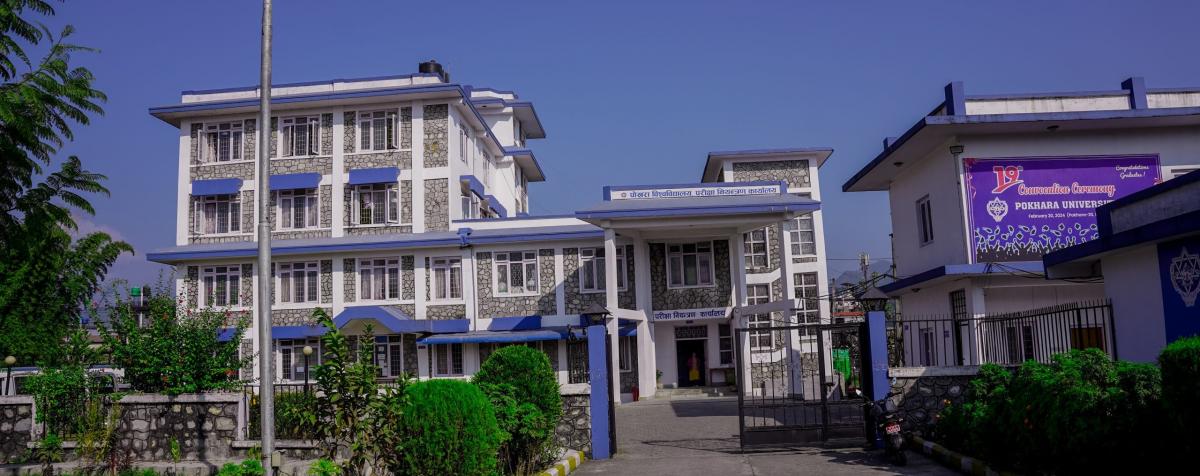
Nepal already has a large higher education system. According to University Grants Commission (UGC) data for 2024/25, Tribhuvan University alone has 1,045 campuses and 531,581 students. Kathmandu University has 22,858 students, Purbanchal University has 46,184, and Pokhara University has 35,754.
These numbers are not evidence that every institution provides the same level of quality. They do, however, provide a reason to reconsider the belief that study options in Nepal are extremely limited.
“Stay in Nepal, Study in Nepal” is not an argument against studying abroad. Its central message is that students should first seriously evaluate suitable, recognized, and financially manageable education available in Nepal. By combining the right college and academic program with practical skills, internships, projects, professional networks, and continuous learning, students can build a meaningful foundation for their careers while studying in Nepal. The final decision should still depend on the student’s subject, ability, goals, and personal circumstances.
Table of Content
- Why Is “Stay in Nepal, Study in Nepal” an Important Discussion?
- What Is the Current State of Higher Education in Nepal?
- Why Should Students Examine Options in Nepal Before Going Abroad?
- What Are the Possible Benefits of Studying in Nepal?
- Build Skills in Nepal, Not Just a Degree
- Make Internships, Projects, and Portfolios Part of Your Education
- Can Students Build a Global Career from Nepal?
- What Should Students Check When Choosing a College and Course?
- Why Is Recognition Important in Engineering, Medicine, and Other Professional Fields?
- When Can Studying Abroad Be the Right Choice?
- A Four-Year Action Plan for Students Studying in Nepal
- What Should the Role of Parents Be?
- Universities and the State Also Have Responsibilities
- Understand Your Goal, Not Just the Country
- Final Message: Stay in Nepal, Study in Nepal
Key Takeaways
-
Going abroad is not the only route to building a career.
-
Nepal has a large and diverse higher education system.
-
Students should examine the actual quality of a program and college rather than relying only on the name of the university.
-
A degree should be combined with practical skills, projects, internships, and professional experience.
-
Official recognition must be checked carefully in engineering, medicine, and other regulated fields.
-
Study costs and possible future returns should be compared using facts rather than emotion.
-
“Stay in Nepal, Study in Nepal” becomes meaningful when education, skills, and career planning are connected.
Why Is “Stay in Nepal, Study in Nepal” an Important Discussion?
Studying in Nepal does not need to be treated as an inferior option. Students can first understand what is available in their own country before deciding whether studying abroad is necessary for their academic or career goals.
After Grade 12, a student’s decision can be influenced by where friends are applying, which countries relatives’ children have moved to, or the lifestyles presented on social media. Career decisions, however, should not be based mainly on what everyone else appears to be doing. They should be based on individual needs and goals.
The question should not be:
“Where is everyone going?”
Students should instead ask:
-
What subject do I want to study?
-
Where is that subject available in Nepal?
-
What is the quality and recognition status of the program?
-
What will the total cost be over the entire study period?
-
How will my family manage that cost?
-
After four years, what skills will I have in addition to my degree?
-
Do I eventually want to work in Nepal, abroad, or in both markets?
If careful research shows that a suitable option is available in Nepal, choosing it should not be viewed simply as “I did not go abroad.” It can be a deliberate academic and career decision.
That is the practical basis of “Stay in Nepal, Study in Nepal.”
What Is the Current State of Higher Education in Nepal?
Nepal has multiple universities, campuses, and academic programs. However, the availability of a program and the quality of that program should not be treated as the same thing.
UGC data for 2024/25 shows that Nepal has a large university system. Tribhuvan University operates academic programs in fields including science and technology, engineering, medicine, agriculture, forestry, management, humanities, law, and education. Kathmandu University, Pokhara University, Purbanchal University, and other universities also offer programs across science, engineering, management, health sciences, and other disciplines.
Students should not interpret this to mean that every college in Nepal provides the same quality of education.
Important factors can differ significantly from one campus to another, including:
-
availability of teachers,
-
regularity of classes,
-
laboratories and equipment,
-
implementation of the curriculum,
-
opportunities for projects and research,
-
internships,
-
student support services,
-
examination management,
-
relationships with industry, and
-
the overall academic setting.
Instead of making a single judgment about the entire higher education system, students should separately evaluate the specific college and academic program they are considering.
Why Should Students Examine Options in Nepal Before Going Abroad?
If an appropriate academic program is available in Nepal, examining its cost, quality, and future usefulness before deciding to study overseas can be valuable from both an academic and financial perspective.
International study costs can extend well beyond tuition fees. Depending on the country, city, institution, and student lifestyle, expenses may also include:
-
accommodation,
-
food,
-
international travel,
-
insurance,
-
visa-related costs, and
-
everyday living expenses.
For this reason, assumptions such as “I will cover all my expenses through part-time work” should not be used as the main foundation of an overseas study plan.
The Government of Nepal’s official No Objection Certificate (NOC) system provides information about documentation and the prior approvals or regulatory requirements that may apply to Nepali students studying abroad. Additional regulatory procedures may apply in some health and professional disciplines.
Students planning to remain in Nepal should research prospective colleges just as carefully as students planning to go abroad research universities, visas, costs, and other requirements.
What Are the Possible Benefits of Studying in Nepal?
Studying in Nepal may allow students to combine education, financial planning, family support, local networks, and skill development according to their individual circumstances.
Financial Planning May Be Easier to Understand
It would be inaccurate to say that every course in Nepal is inexpensive. Fees can vary substantially by subject, university, and institution.
However, some expenses associated with international study—such as international travel, overseas accommodation, visa-related costs, and certain additional costs of daily life abroad—may not apply when studying in Nepal.
Depending on a family’s circumstances, resources saved in these areas could potentially be used for:
-
additional training,
-
a laptop or other necessary equipment,
-
professional certifications,
-
projects,
-
language or communication training,
-
research,
-
further education, or
-
a future business.
This should not be interpreted to mean that investing the money saved from overseas study into a business will guarantee success. Investment and entrepreneurship carry their own risks.
Students May Remain Closer to Family and a Familiar Social Setting
The period between approximately 18 and 24 years of age is not only a time for passing examinations. It is also a stage when students are developing working habits, responsibility, relationships, independence, and a clearer sense of career direction.
Living close to home is not an advantage for every student. However, a familiar setting may be useful for students who need significant family support.
Many students who study abroad also adapt successfully to new countries and communities. This factor should therefore be evaluated according to the individual student’s needs rather than treated as a universal advantage or disadvantage.
Students Can Build Local Professional Networks
For students who expect to work, establish a business, or practise a profession in Nepal in the future, local networks can become useful professional assets.
During four years of study, students may build relationships with:
-
teachers,
-
classmates,
-
alumni,
-
internship organizations,
-
professional communities, and
-
potential employers.
Networking does not replace qualifications or practical competence. It can, however, help skilled individuals connect with opportunities.
Build Skills in Nepal, Not Just a Degree
For “Stay in Nepal, Study in Nepal” to be meaningful, one of the most important requirements is developing useful skills alongside an academic qualification.
A college provides an academic foundation. Students must build practical capability on top of that foundation.
For example, an IT student can develop projects alongside the formal curriculum. A management student can practise analysing real businesses, accounting, or professional presentations. Engineering students can focus on design work, laboratory practice, fieldwork, and project-based learning.
The exact skills required will differ by subject, but several capabilities are useful across many professions:
-
clear writing and communication,
-
presentation skills,
-
problem-solving,
-
critical thinking,
-
digital literacy,
-
teamwork,
-
research skills,
-
time management, and
-
professional conduct.
After four years, employers and professional communities may not ask only:
“What degree do you have?”
Another important question will be:
“What can you do?”
Make Internships, Projects, and Portfolios Part of Your Education
Practical experience does not need to begin only after student life ends.
Depending on the subject and available opportunities, students can participate in projects, volunteering, research assistance, internships, or portfolio development while they are still studying.
The purpose of an internship should not be limited to collecting a certificate.
Useful practical experience can help students:
-
understand how real workplaces operate,
-
apply academic knowledge,
-
receive feedback from experienced people,
-
identify weaknesses,
-
create samples of their work, and
-
understand whether a particular career actually suits them.
From this perspective, four years spent studying in Nepal do not need to become simply a period of “waiting for a degree.” They can be used to build a professional identity.
Can Students Build a Global Career from Nepal?
In some professions and service industries, people can work from Nepal with international clients, organizations, or teams. However, this should not be presented as an easy or guaranteed route to high income.
In areas such as software development, design, writing, digital services, data-related work, and some professional services, a person’s skills, experience, communication ability, and portfolio may sometimes matter more than their physical location.
Students interested in this type of career can begin developing:
-
English and professional communication,
-
digital working practices,
-
a strong portfolio,
-
experience with real projects,
-
the ability to meet deadlines, and
-
communication skills for working with clients and teams.
Remote and freelance work is competitive. Income is not guaranteed. Students and professionals may also need to understand issues such as payments, taxation, contracts, and client management.
It is therefore more realistic to say:
“Students can develop skills in Nepal that allow them to compete internationally.”
It is less responsible to suggest that:
“Anyone can stay in Nepal and easily earn a large income.”
What Should Students Check When Choosing a College and Course?
Encouraging students to study in Nepal is not enough on its own. Choosing the wrong institution or academic program can cost students both time and money.
1. Check the University and Affiliation
Ask:
-
Who awards the degree?
-
Is the college a constituent, community, or affiliated institution?
-
Is the stated affiliation current and officially recognized?
Students should confirm such information through the official university or the relevant regulatory authority.
2. Look for Evidence Related to Quality
The University Grants Commission publishes information about higher education institutions that have received Quality Assurance and Accreditation (QAA), including reaccredited institutions. Published information can include the accreditation date and validity period.
Students may use such official information as one quality indicator when evaluating a college.
However, QAA status should not be the sole basis for choosing an institution. Students should also examine:
-
the academic program,
-
faculty,
-
academic results where meaningful,
-
learning conditions, and
-
actual student experience.
3. Read the Curriculum
The name of a course alone does not provide enough information.
Students should ask:
-
What subjects are included?
-
Are practical classes available?
-
Is a project compulsory?
-
Are there research opportunities?
-
Is an internship included?
-
How are students assessed?
-
Does the curriculum match my career goals?
A course title may sound attractive, but the actual curriculum determines what students are expected to learn.
4. Calculate the Total Cost
Students should look beyond the admission fee and estimate the cost of the entire program.
Possible expenses may include:
-
tuition fees,
-
examination fees,
-
university charges,
-
laboratory costs,
-
project expenses,
-
transportation,
-
accommodation, and
-
study materials.
Where possible, obtaining a written fee breakdown directly from the institution can help students make a more informed financial plan.
5. Speak with Current Students and Alumni
A website or brochure shows how an institution presents itself.
Current students and graduates may provide additional information about how academic activities actually operate.
Useful questions include:
-
Are classes held regularly?
-
Are teachers available when students need academic support?
-
What are the laboratories really like?
-
Are examinations conducted on time?
-
Does the institution support students in finding internships?
-
What are the main problems students commonly experience?
No single student’s experience should be treated as conclusive, but speaking with several people can help prospective students identify recurring strengths or concerns.
Why Is Recognition Important in Engineering, Medicine, and Other Professional Fields?
In regulated professions, the name of the degree alone may not be enough. Students must understand the official status of both the institution and the academic program.
The Nepal Engineering Council has guidelines concerning the recognition and monitoring of graduate and postgraduate engineering programs offered by engineering education institutions. The Council also provides institutional information related to registration and recognition.
In medical education, the Medical Education Commission’s standards and accreditation functions cover areas including infrastructure, faculty qualifications, curriculum requirements, and accreditation standards.
Students considering engineering, medicine, nursing, health sciences, or other regulated professions should therefore prioritize information from the relevant official regulatory authority rather than relying only on claims made on social media, by promotional materials, or by education consultancies.
A degree that does not meet the requirements of the relevant professional body can create serious problems later when a graduate seeks registration, licensing, further study, or professional practice.
When Can Studying Abroad Be the Right Choice?
“Stay in Nepal, Study in Nepal” does not mean that every student should remain in Nepal under every circumstance.
There are situations in which studying abroad may be an appropriate choice.
For example:
-
the required specialization is not available in Nepal,
-
a student needs a particular research or laboratory facility,
-
a specific international program is relevant to the student’s intended career,
-
the family has prepared a clear and realistic financial plan,
-
the program’s recognition and future usefulness have been verified, or
-
the student has carefully researched the country, institution, and academic program.
In such situations, studying abroad can be a purposeful academic decision.
However, reasons such as “all my friends are going” or “there is no future unless I go abroad” are not enough on their own.
Examining available options in Nepal first and then comparing them with international alternatives can lead to a more responsible decision.
A Four-Year Action Plan for Students Studying in Nepal
Choosing to study in Nepal should not mean assuming that the college will automatically take care of every aspect of career development.
Students can use each year deliberately.
First Year: Build the Foundation
-
Strengthen fundamental concepts in your subject.
-
Improve language and communication skills.
-
Learn relevant digital tools.
-
Begin exploring possible careers connected with your field.
Second Year: Develop Skills
-
Choose practical skills relevant to your field.
-
Start small projects.
-
Communicate more with teachers and senior students.
-
Learn about professional communities related to your subject.
Third Year: Add Experience
-
Look for an appropriate internship.
-
Work on projects that solve real problems.
-
Develop a portfolio.
-
Build relationships with people already working in your field.
Fourth Year: Convert Education into Career Readiness
-
Prepare your CV and portfolio.
-
Clarify whether your next step is employment, further study, or entrepreneurship.
-
Understand any licensing or professional registration requirements.
-
Practise applications and interviews.
With deliberate planning, “I stayed in Nepal” can become:
“I built the foundation of my career in Nepal.”
What Should the Role of Parents Be?
Parents can support students more effectively by helping them make decisions based on facts rather than pressuring them toward either Nepal or a foreign country.
Comparisons such as “so-and-so’s son went abroad” or statements such as “nothing can be achieved by staying here” do not provide useful career guidance.
Instead, families can have open discussions about:
-
the student’s interests and abilities,
-
subject selection,
-
college quality,
-
the family budget,
-
possible career paths,
-
the real costs of studying in Nepal and abroad, and
-
alternative plans if the first option does not work.
Choosing to study in Nepal should not be treated as a sign of failure.
Similarly, students who go abroad should not be placed under pressure to generate income simply because the family has invested in their international education. Education should remain the primary purpose of studying.
Universities and the State Also Have Responsibilities
A stronger higher education system cannot be created simply by telling students, “Stay in Nepal.”
Universities, colleges, and public authorities also have a responsibility to create conditions in which students can reasonably trust the education available in their own country.
Areas requiring attention include:
-
a regular academic calendar,
-
examinations and results on time,
-
availability of qualified teachers,
-
practical teaching,
-
research opportunities,
-
transparent fees,
-
student support,
-
career services,
-
meaningful internships,
-
industry–education collaboration, and
-
reliable educational data available to the public.
The University Grants Commission operates the QAA system in Nepal and publishes information on accredited institutions. Such quality assurance systems can provide useful information for students making academic decisions.
“Stay in Nepal, Study in Nepal” is therefore not only a message directed at students.
It also raises a question for universities and institutions:
Have we provided education of a quality that gives students good reasons to stay?
Understand Your Goal, Not Just the Country
There does not need to be a single path for every student after Grade 12.
For one student, a program available in Nepal may be fully suitable for their career. Another may genuinely need a specialized course available only abroad. Some may complete a bachelor’s degree in Nepal and pursue postgraduate study overseas. Others may complete their education in Nepal and work with international markets or organizations.
The main issue is not the name of the option.
The quality of the decision matters more.
If, in Nepal:
-
the subject you want to study is available,
-
the institution and program are credible,
-
the necessary professional recognition exists,
-
the total cost is manageable for your family,
-
you have opportunities to develop skills and experience, and
-
the program aligns with your future plans,
then studying in Nepal is a fully valid career decision worth serious consideration.
The narrative around studying in Nepal needs to move away from:
“I stayed because I could not go abroad.”
It can instead become:
“I evaluated my options and consciously chose to study in Nepal.”
Patriotic speeches alone are not enough to make that change possible.
Nepal needs quality education. It needs academic regularity. It needs practical learning. Students need to work seriously. Universities need accountability. Students also need an economic setting where education can connect with employment, professional practice, and entrepreneurship.
Only then does “Stay in Nepal, Study in Nepal” become more than a slogan. It becomes a practical option.
Final Message: Stay in Nepal, Study in Nepal
It would not be realistic to claim that Nepal’s education system has no problems.
The quality of education is uneven. Some institutions need significant improvement in academic management. Students often need to be proactive in finding opportunities. The labour market is competitive.
But those challenges do not automatically support the conclusion that “studying in Nepal leads nowhere.”
Nepal has universities. It has academic programs across different fields. Quality assurance structures are developing. Professional regulatory bodies operate in several disciplines. There are local problems that need skilled people to solve them. Digital technologies have also changed how people access knowledge and how some types of work can be performed.
The student’s task is to identify the right option.
Look beyond the college name and examine actual quality.
Build skills alongside your degree.
Start gaining experience from the first year.
Develop a portfolio that demonstrates what you can do.
Understand Nepal’s employment and professional market.
Develop the capacity to compete internationally.
Going abroad is not something students must avoid.
But going abroad is not something every student must do either.
If a suitable path for education, skills, and future development is available in Nepal, students can choose it with confidence.
Nepal should not be viewed only as a country to leave.
It can also be a place to learn, work, conduct research, build businesses, solve problems, and use one’s abilities.
With that message:
Stay in Nepal.
Study in Nepal.
Build skills in Nepal.
And develop the ability to compete anywhere.





Comments 0
No comments yet. Be the first to start the conversation.