



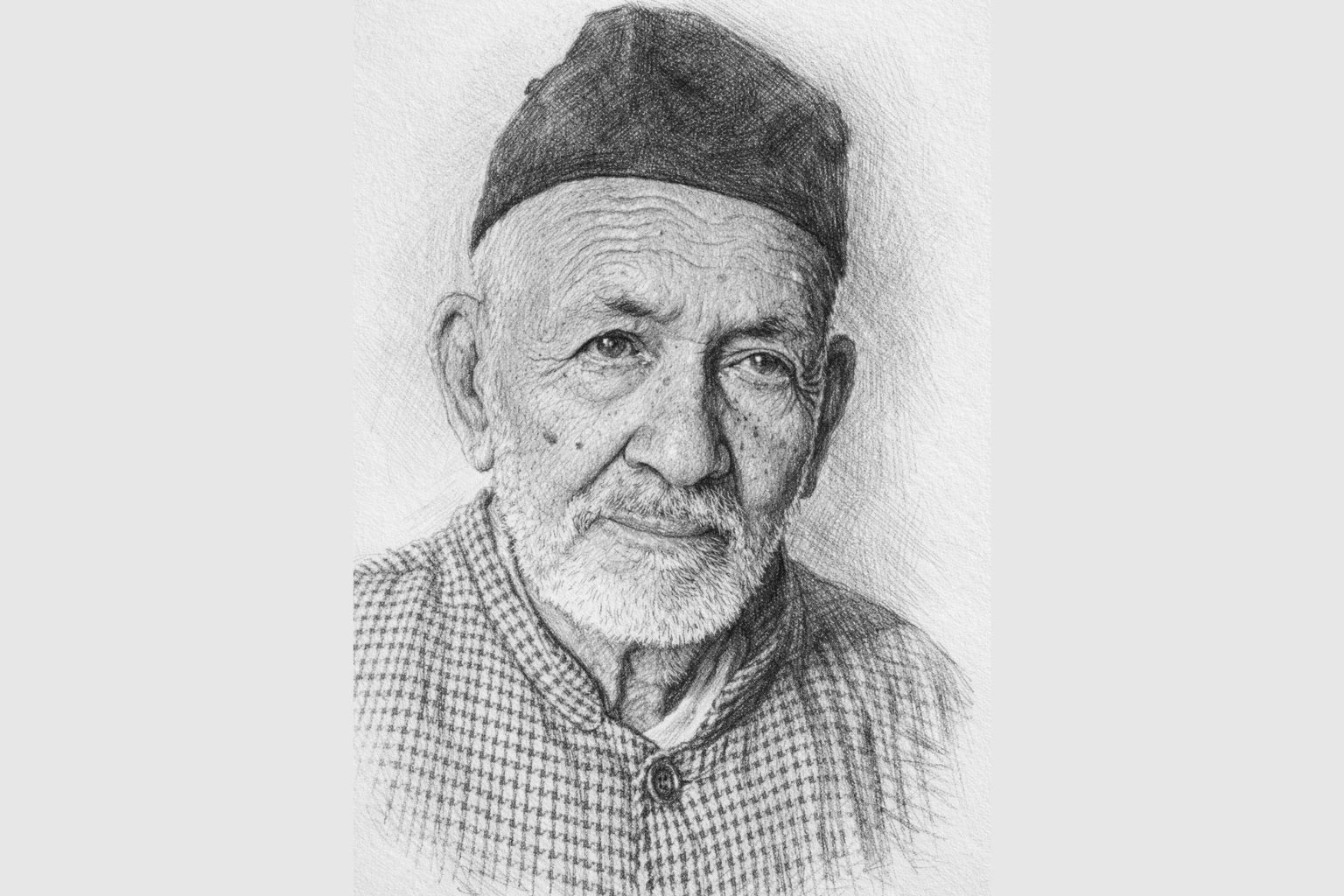
Baburam Acharya: A Multifaceted National Figure
Recognition as “Itihas Shiromani”
Itihaas Shiromani Baburam Acharya (B.S. 1944–2027) was established as an unforgettable national figure of multifaceted talent. In particular, through the search for historical facts, study and research, and the verification of subject matter, he made an incomparable and lasting contribution to the field of Nepal’s history.
In B.S. 2008, at the age of 64, he was honored by King Tribhuvan with the title “Itihas Shiromani.” He is also widely known as a “Guru of History.”
Even so, it is worth remembering here that, beyond history, he left a strong imprint in other diverse fields as well.
Table of Content
- Baburam Acharya: A Multifaceted National Figure
- Early Literary Work and Critical Writings
- History and Literature: Different Natures, Shared Value
- Biography, Culture, and Editorial Contributions
- Notable Articles and the Need to Collect Them
- Honors and Public Recognition
- Major Published Works
- Writing Approach and Critical Reception
- Perseverance Despite Loss of Sight
- Memory, Research, and Rana-era Studies
- Why Proper Evaluation Still Matters
Early Literary Work and Critical Writings
In B.S. 1963, his first article—titled “Malini Vilap”—was published in the magazine “Sundari.”
His literary works such as “Tulanatmak Sundar Kand” (2002) and “Purana Kavi ra Kavita” (2003) provide a strong introduction to his identity as a critic. Likewise, the essay-based work titled “Newa:, Newa: Bhay ra Sanskriti,” and the work titled “Baburam Acharya Ka Kavita,” cast deep light on his talents in essay writing and poetic creation.
History and Literature: Different Natures, Shared Value
History also speaks of destruction, but literature never endorses destruction. Literature represents a country, time period, and the contemporary environment as well. Literature embraces propriety, and it always moves toward construction rather than destruction.
History is event-centered, whereas literature is experience-centered. In light of this relationship, it is beneficial to view Baburam Acharya’s published books accordingly.
It is not very appropriate to consider him only as a historian, or to treat him solely as a scholar of history merely because King Tribhuvan conferred on him the title “Itihas Shiromani.” Certainly, he was a national figure with multifaceted talent.
Reflecting on this, everyone needs to properly internalize the fact that he was not only a personality of historical scholarship, but also a powerful and unforgettable signature in Nepal’s literary sphere.
Biography, Culture, and Editorial Contributions
In addition, he demonstrated strong ability in the field of biographical writing. His work titled “Shri 5 Badamaharajadhiraj Prithvi Narayan Shahko Sankshipta Jivani” sheds ample light on this fact.
His work titled “Nepalko Sanskritik Parampara” (2014) offers a vivid introduction to Nepal’s indigenous culture, grounded in Nepali culture, customs, and traditions.
He was also a skilled editor. Not only editing, but also carefully reviewing the edited content and presenting truth and reality to readers in a credible manner can be seen in the co-edited work with which he was involved, titled “Badamaharajadhiraj Prithvi Narayan Shahko Divya-Upadesh.”
When this is considered, one can also find the imprint of an inherently literary personality in his language, literature, culture, and historical writing. The meaningful words and phrases he used, and the style and emotional dimension they carried, are strongly illuminating.
Notable Articles and the Need to Collect Them
For example, the article titled “Gorkhapatrako Utthan,” published in Madhuparka in the month of Baisakh in 2028, and the article titled “Ghodejatrako Newar,” published in the monthly “Juneli,” are also distinguished by excellence of language, style, emotion, and ideas, along with simplicity and clarity.
Many such highly important articles of his have been published across various newspapers and magazines. If these could be collected and published in book form, this would not only be a major achievement for the field of Nepali literature, but they also appear to carry the quality to become established as timeless material.
It is also necessary to collect and bring to publication such writings that have been published both within and outside the country.
Honors and Public Recognition
In B.S. 2020, Baburam Acharya carried the responsibility of Honorary Member of the Royal Nepal Academy (Nepal Rajkiya Pragya-Pratisthan). In the same year, he was honored with the Tribhuvan Pragya Puraskar.
In B.S. 2027, he was decorated with the Gorkha Dakshin Bahu Second.
A commemorative postal stamp of him was also issued on March 12, 1973 (B.S. 2029 Falgun 29).
Major Published Works
His important historical works include:
-
“Nepalko Sankshipta Vrittanta” (2002)
-
“Ab Yasto Kahilyai Nahos” (2015)
-
“China Tibet ra Nepal” (2059)
-
“Shri 5 Pratap Singh Shah” (2060)
-
“Prachinkalko Nepal” (2063)
-
“General Bhimsen Thapa: Yinlai Maile Jasto Dekhen” (2065)
-
“General Bhimsen Thapa: Yinko Utthan ra Patan” (2069)
Writing Approach and Critical Reception
Whether the book was history-focused or related to literature, in all of them he advanced his writing by keeping the language of the general public in mind, in relation to its importance.
When studying his essays, poems, critiques, and various writings related to language, one finds that they were able to touch a new era in literary creation.
It is found that senior critic Tana Sharma (Taranath Sharma) discussed literary works such as “Tulanatmak Sundar Kand” and “Purana Kavi ra Kavita” as “the first model of scientific research.” He mentioned this fact in his work titled “Nepali Sahityako Itihas.”
In Baburam Acharya’s literary creation, one finds a logical interpretation and analysis of literary realities at a subtle level. The quality of meaningful achievement—based on emotion, thought, and reality, and on a work-force grounded in higher reflection—can be seen in many of his literary writings.
Whether in books on history or books on diverse literary subjects, his creative spirit is reflected in them. Writing and publishing works of any genre in an organized and reliable manner is seen as a defining feature of his works.
He believed that the Nepali language, literature, culture, and history must not be allowed to die; they must be preserved. This is the nation’s heritage, and it is extremely important and will remain so. Driven by this conviction, throughout his life he remained selflessly active in this direction.
Perseverance Despite Loss of Sight
Even while remaining continuously active in study, research, and writing, before reaching the age of 52, both of his eyes began to cloud severely. A few years later, even after he completely lost the sight of both eyes, he did not abandon his search, study, research, and writing.
He also undertook the work of speaking certain truths and facts within his knowledge, having others write them down, and arranging for their publication. The above-mentioned article titled “Ghodejatrako Newar” was also prepared and published in this way.
This writing is found to shed important light on aspects of Pahachaur, Ghodejatra, and the culture and characteristics of the Newar community. In this manner, many of his important writings were published in newspapers and magazines.
Memory, Research, and Rana-era Studies
Many have praised his extraordinary and remarkable memory. Before his eyes began to cloud, and before he completely lost the sight of both eyes, he had preserved in his mind and brain inscriptions, copperplates, and other diverse subjects that he had researched and studied.
In particular, the various aspects of study and research he carried out during the illiberal governance system of the Rana era later came to be published as diverse important books.
He remained continuously active in the work of writing, and having written, the subjects preserved in his mind and brain, with very careful attention.
Considering the facts that Baburam Acharya—who advanced toward literary creation and publication in the earlier half of his life—had his first article published in “Sundari” in 1963, published the critical work “Tulanatmak Sundar Kand” in 2002, and that most of his works were published only after the end of Rana rule, and also considering the reality that the curiosity toward history became active particularly after the change of 2007, it becomes as clear as daylight that his first attraction and interest was literature itself.
No one can conceal this reality. He played an unforgettable role not only in Nepal’s history but also in the field of Nepali literature itself. His creations carry the capacity to provide the greatest possible benefit to the country and society.
Whatever he wrote was written on the basis of inner reflection, always kept far from propaganda. He wrote a great deal, yet almost nothing has been written about him—one does not find it.
His overall historical and literary works have not received the practical respect they should have received. In its absence, it cannot be said that another correct and complete evaluation of him has been possible.
Why Proper Evaluation Still Matters
Verbal praise alone—such as Itihas Shiromani, Guru of History, an embodiment of sacrifice and penance, a historical personality—cannot constitute a correct evaluation of him, because he was not limited only to the subject of history.
By writing across diverse genres, he gifted Nepali society with works of varied substance. A correct evaluation of all his published works is necessary.
It is equally necessary for the nation and other concerned sides to carry forward, with strong interest and readiness, the work of searching for, studying, and facilitating the study of his published writings, and bringing them to light in book form.
Only when, while thoughtfully acknowledging this need, his important writings are collected and published—thereby presenting a comprehensive introduction to his sacrifice and dedication toward the country and society—can true respect toward him be affirmed.
All responsible sides need to give serious attention to this fact while there is still time. Only then will proper respect be affirmed for the national figure Baburam Acharya.







Comments 0
No comments yet. Be the first to start the conversation.