



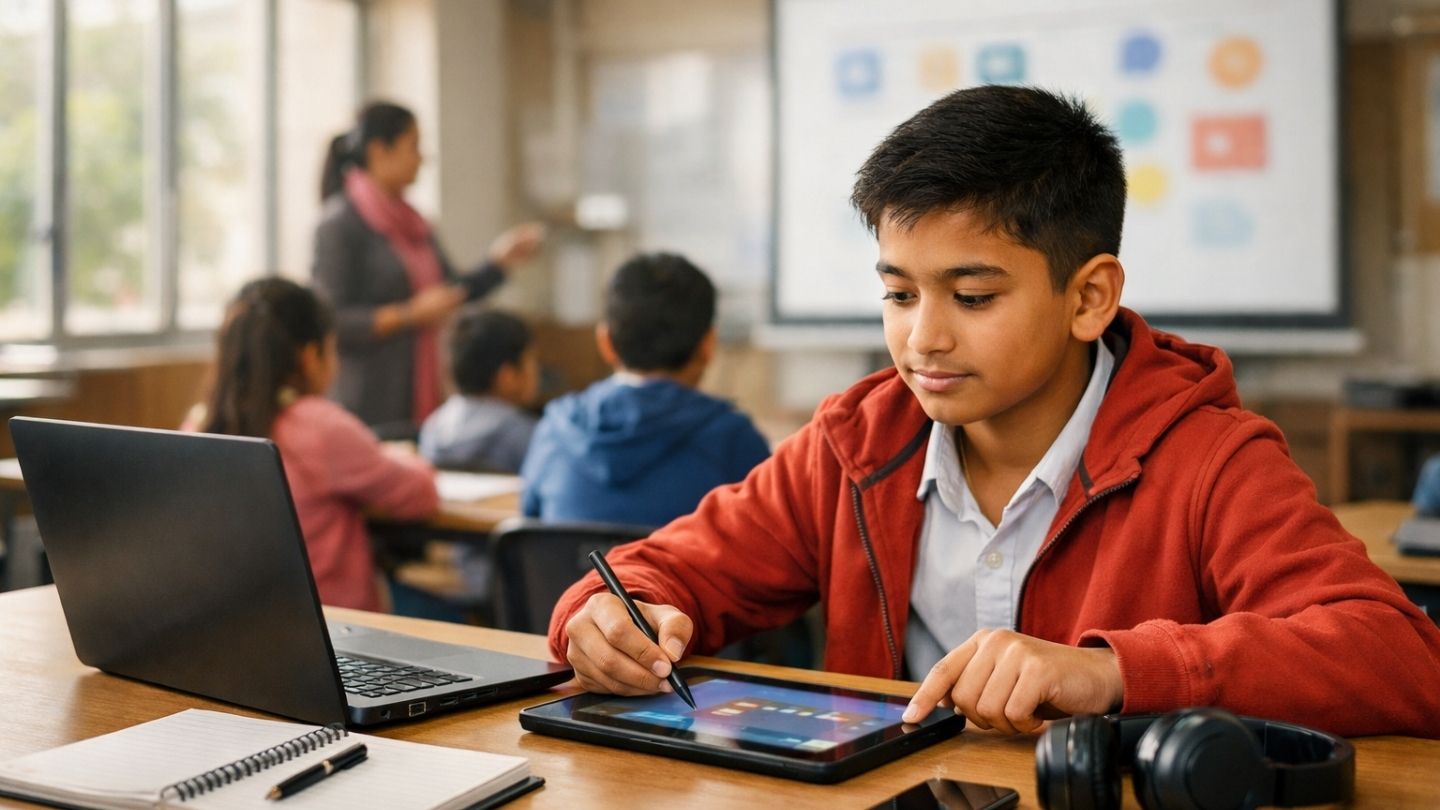
Digital Education in Nepal: Need and Way Forward
Over the past ten years, education has changed across the world. Learning is no longer tied to a single classroom or a specific place.
As digital technology, the internet, and smart devices have grown quickly, the way people study has also shifted. Nepal is trying to adjust its education system so it fits this new reality.
Digital education means teaching and learning through computers, the internet, smartphones, digital materials, and online platforms.
It allows students to learn beyond fixed time and place. It also makes it easier to study, practice, take assessments, and work with others using digital tools.
Educationist Dr. James Berry explains that using digital tools and online resources can increase students’ engagement and independence, helping them see learning from a wider angle than traditional methods alone.
In Nepal, schooling has long been mostly classroom-based. Teaching has often been teacher-led, strongly tied to textbooks, and focused on exams.
But in today’s world, learning only from textbooks and classroom lectures is not enough.
When students use digital tools properly, they can reach a wider range of learning sources, including updated materials and global knowledge.
This supports more than information. It also helps students think clearly, analyze ideas, and work toward practical solutions.
Digital education also encourages self-study and builds a wider view of the world, which strengthens the overall learning experience.
At its core, digital education is connected to how students grow intellectually and how they prepare for the future.
If Nepal can use this opportunity well, education can become more accessible and improve in quality for many learners.
Why digital education matters now
Digital learning is becoming a real need in everyday teaching and learning.
Wider access to learning materials
Through the internet and digital platforms, students can reach research, learning resources, and course materials from many countries.
This helps students go beyond memorizing facts and develop critical thinking and broader understanding.
Closing the rural–urban gap
Nepal has a clear difference in access between rural and urban areas.
In places where teachers and learning resources are limited, students cannot fully benefit from the traditional system.
Online classes, video lessons, and digital resources can bring learning closer to students at home and support inclusion.
Learning at a student’s pace
Students do not learn in the same way or at the same speed.
Digital learning gives students space to pause, revise, practice again, and learn in ways that fit their needs.
This makes learning more flexible and supports stronger learning outcomes.
Nepal’s path toward digital learning
Nepal’s education has changed over time—from the gurukul tradition to distance learning, and now to electronic and mobile-based learning.
The shift from slate-based learning to e-learning has widened how technology can support teaching and learning.
Many schools, both government and non-government, are working to introduce:
-
computer classes
-
e-learning platforms
-
digital libraries
During the COVID-19 period, online classes and video lessons expanded quickly.
That phase pushed teachers and students to use technology more often and helped schools explore different ways to continue learning.
Policy direction and internet access
Nepal has also tried to support digital learning through policy and curriculum planning.
-
The Teacher Competency Framework, 2072 recognizes “Information and Communication Technology” as one of the eight key teacher competencies.
-
The Information and Communication Technology Policy, 2072 set goals such as digital governance, digital literacy for 90 percent of citizens, internet access for all, and 80 percent of government services available online.
-
The National Curriculum Framework for School Education, 2076 highlights ICT use in education, including electronic learning materials, interactive content, and technology-based learning environments.
According to the Nepal Telecommunications Authority’s “Management System Report,” about 88 to 91 percent of Nepali citizens have internet access, with mobile internet covering the largest share.
Even so, many schools still lack:
-
enough computers
-
stable internet
-
trained teachers
-
technical support staff
Rural and remote schools face added problems, especially unstable electricity and unreliable internet. Many teachers also have limited skills in using digital tools and platforms, which reduces the impact of digital learning.
Key challenges Nepal must face
Digital learning in Nepal is affected by the digital divide—differences in access, device availability, and learning quality.
Because of this, not every student gets the same opportunity.
Technology alone does not solve the problem.
What also matters is:
-
teacher training
-
strong infrastructure (electricity, devices, internet)
-
quality learning materials
-
fair access for all students
Nepal is still at an early stage in this shift, so steady and coordinated work is needed from government, schools, and communities.
What needs to improve for better results
Teacher capacity is the starting point.
When teachers know how to use digital tools and online platforms well, students also become more confident and capable in digital learning environments.
Schools need practical support, including:
-
reliable electricity
-
enough computers, tablets, and projectors
-
stable internet access
-
basic technical support
Digital education should not serve only a few areas. Reducing the rural–urban gap needs shared effort from government, schools, and society.
Digital learning also supports skills beyond textbooks. It can help students develop problem-solving, creativity, and practical thinking.
To make learning more useful for students, Nepal also needs stronger learning resources in Nepali, such as:
-
digital books and reading materials
-
educational videos
-
animations
-
interactive learning content
Teachers can also track progress more effectively through online assessments and regular follow-up.
Over time, digital learning supports the practical digital skills students need for future work.
Lessons from other countries
Many countries have treated digital education as a national priority and put it into practice.
-
South Korea introduces digital tools and online platforms from early grades, helping students build technology skills early.
-
Finland focuses on regular teacher training and quality online materials, making learning more student-centered and easier to manage.
-
The United States and Canada use online classes, e-learning platforms, and digital libraries so students can learn at their pace and based on their learning style.
These examples point to the same foundations:
-
trained teachers
-
strong infrastructure
-
quality learning materials
-
inclusive access
For Nepal, this means teacher training, infrastructure strengthening, and better content development must stay at the center.
Conclusion
Digital technology in Nepal’s education has become a requirement, not a choice.
If schools cannot adapt with time, students may miss the knowledge and skills needed in modern life.
This is why government bodies, local levels, schools, teachers, parents, and communities need to treat digital education as a shared responsibility.
For digital learning to work well, Nepal needs:
-
practical teacher training
-
reliable infrastructure
-
quality digital learning materials
-
equal access for every child
When these areas improve, students can develop skills such as critical thinking, digital literacy, problem-solving, and innovation.
Digital education is not only about using computers or the internet. It is a practical way to make learning stronger and prepare students for the future.







Comments 0
No comments yet. Be the first to start the conversation.