




Why reading more can feel like running in place
Have you ever finished a chapter, closed the book, then realized you can’t clearly explain what you read? That moment is common, and it’s not a character flaw. It’s a method problem.
Most people try to fix that problem by adding more time: more pages, more sessions, more “I’ll catch up this weekend.” Yet the brain doesn’t reward time spent the way a stopwatch does. It rewards what you do during that time.
There’s another layer to this problem: how we read online. Jakob Nielsen’s web usability research reports that, on an average web-page visit, people have time to read at most 28% of the words, and 20% is more likely. Scanning is the norm. That scanning habit quietly spills into book reading, PDFs, research papers, and study notes.
So the goal is not to read less. The goal is to stop paying “time” and start paying “attention.”

The “I read it, so I know it” illusion
One reason we keep reading more is that familiarity feels like knowledge. You see the same line twice and it feels “known.” Yet that feeling can mislead you. Research on judgments of learning describes this gap: study conditions feel easier than test conditions, so confidence rises faster than actual recall.
Busy reading vs useful reading
Busy reading is moving your eyes and turning pages. Useful reading leaves traces: you can explain the main idea, connect it to an earlier point, and recall it a week later without re-reading the whole thing.
That difference is the heart of “read better.”
What “read better” means
Reading better is not a fancy trick. It’s a set of habits that pull your brain into work that creates memory and meaning.
Four outcomes that matter
-
Clear recall: You can restate key ideas in plain words.
-
Comprehension: You can explain what the author means, not only what the author wrote.
-
Transfer: You can apply the idea to a new example.
-
Selection: You can decide what to keep, what to skim, and what to skip.
When reading more still makes sense
Reading more can be fine for novels, light nonfiction, or broad exploration. The problem starts when you read a lot with a goal like exams, research writing, career learning, or skill-building—then forget most of it.
In those cases, better reading beats more reading.
The quiet traps: rereading, highlighting, familiarity
If you want to spot weak reading habits, watch what your hands do:
-
Re-read a paragraph right away
-
Highlight half a page
-
Copy quotes with no notes
-
Keep going when the meaning feels foggy
These habits feel productive. Yet many have low returns.
A well-known review in Psychological Science in the Public Interest rated common learning techniques. Practice testing and spaced practice scored high utility. Techniques like rereading and highlighting scored low utility for long-term learning in many typical study situations.
Why these habits feel good
They feel smooth. Smoothness feels like progress. Your eyes move, your pen moves, and your brain stays safe.
What research points to instead
If your goal is durable memory, methods that feel a bit harder tend to work better: recalling from memory, spacing your review, mixing problem types, and explaining ideas in your own words.

The five-step reading loop
Here’s a simple loop you can use for books, textbooks, reports, and long articles. It draws from long-standing active reading systems such as SQ3R (Survey, Question, Read, Recite, Review).
Step 1 — Preview in 3 minutes
Preview means you skim with a purpose:
-
Title, subheadings, summary
-
Figures, tables, bold terms (if present)
-
Chapter questions or learning goals
-
End-of-chapter summary
This step builds a mental map. It’s like checking signboards before you walk into a new city.
Step 2 — Turn headings into questions
Turn the structure into prompts:
-
“What causes X?”
-
“How does Y differ from Z?”
-
“What example proves this claim?”
Questions change your brain from “consume” to “hunt.”
Step 3 — Read in small blocks
Read one section or 1–3 pages, then stop. If you read 30 pages in one flow, you may feel busy, yet recall often collapses later.
Small blocks give you more checkpoints.
Step 4 — Recall before you look back
Close the book or look away from the screen and do a quick recall:
-
What was the main claim?
-
What were 2 supporting points?
-
What example was used?
-
What terms did I meet?
This is the moment that turns reading into learning.
Retrieval practice research supports this idea: recalling information strengthens later performance more than extra study in many settings.
Step 5 — Review on a calendar
Most people review when panic arrives. Better readers review when the calendar tells them to.
Spacing research has strong support across many experiments. A major review of distributed practice reported 839 assessments across 317 experiments from 184 articles.
Put simply: one long session feels strong today, then fades. Shorter reviews across days tend to last longer.
Retrieval beats rereading
Self-testing sounds academic, yet it can be simple and low-stress.
Roediger and Karpicke’s work on test-enhanced learning shows that taking memory tests can improve long-term retention compared with additional studying. Karpicke and Blunt found retrieval practice can outperform elaborative studying methods like concept mapping on later tests of learning.
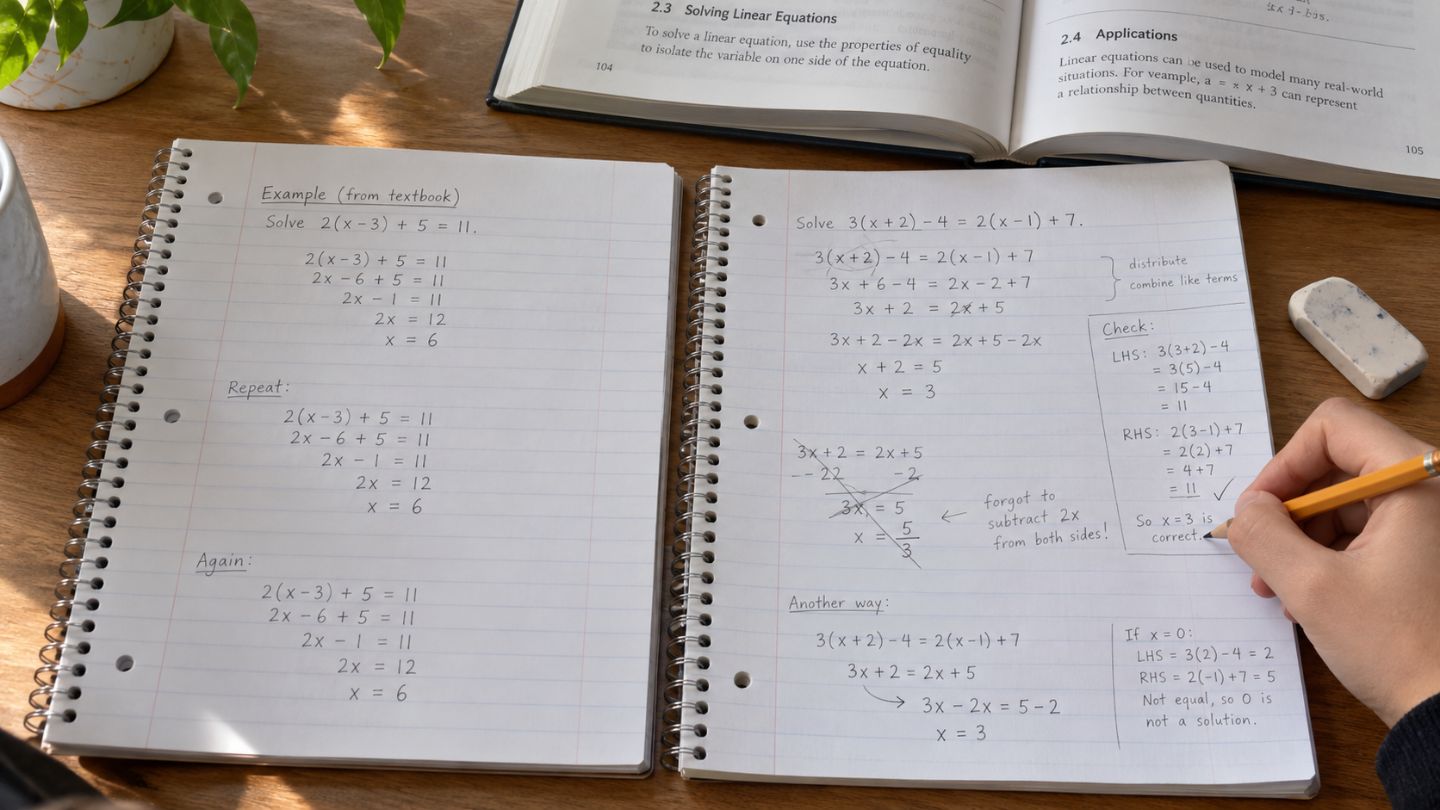
A simple “blank page recall” drill
After a reading block:
-
Take a blank page.
-
Write the core idea in 1–2 lines.
-
Add 3 bullets: key supports, examples, definitions.
-
Check the text only after you finish.
-
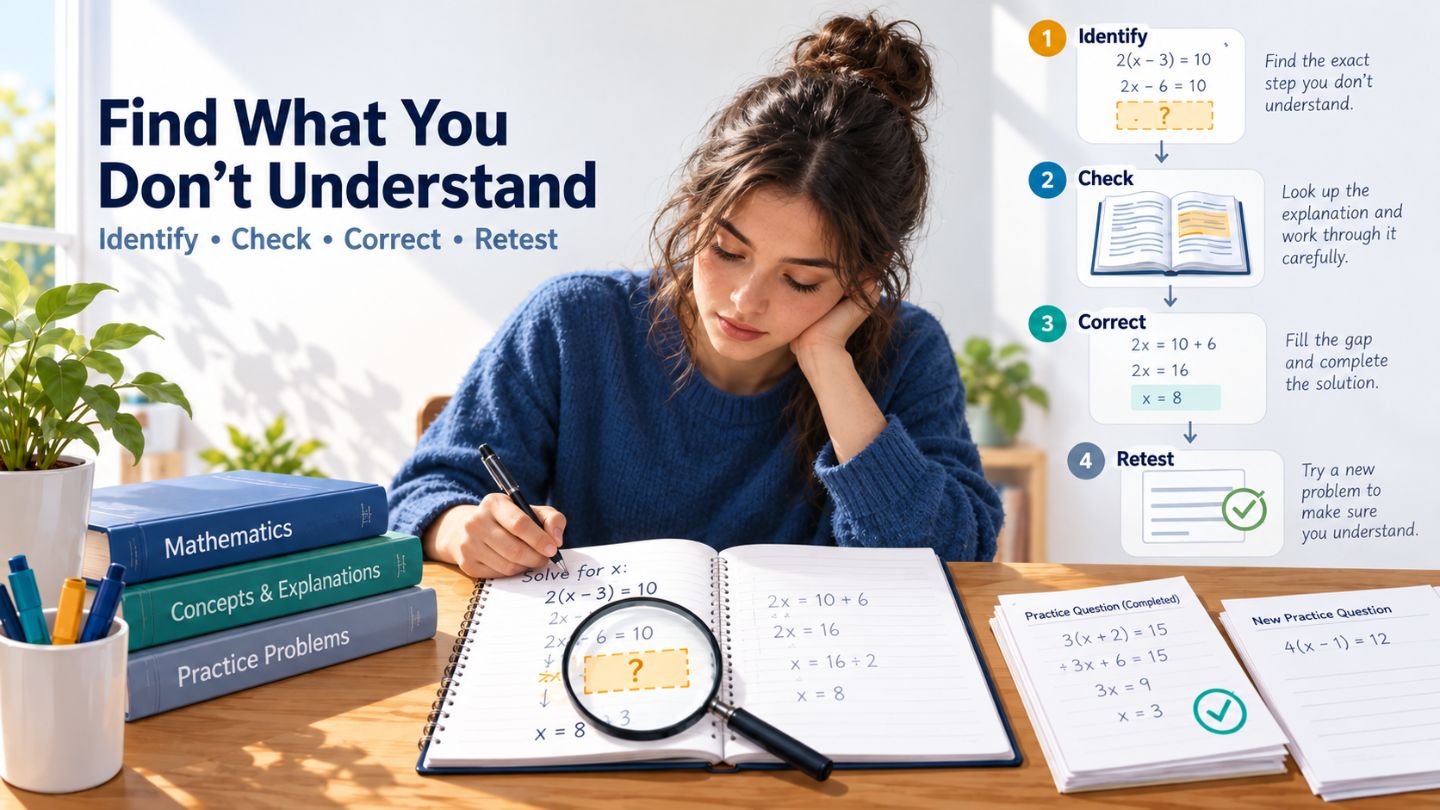
Circle what you missed, then rewrite that part once.
This feels slower than rereading. It often saves time later.
Tiny quizzes that fit real life
Try micro-quizzes:
-
3 questions after each section
-
5 questions at the end of a chapter
-
10 questions at the end of a book
Keep them in your notes. Revisit them on your spacing schedule.
Spacing: the calendar that helps memory stay
Spacing is not “study less.” It’s “review later, in small bites.”
A 1–3–7 plan you can repeat
-
Day 1: Read + recall
-
Day 3: Re-recall from your notes (no book)
-
Day 7: Re-recall again, add examples, fix gaps
-
Day 14 (optional): One more quick recall if it’s exam material
This lines up with the broad evidence that spacing beats massed practice across many tasks.
Mix practice to reduce confusion later
Many learners block one topic at a time: “I’ll finish chapter 1, then chapter 2.” That feels tidy, yet it can raise confusion when topics look similar.
Interleaving—mixing related topics or problem types—can improve discrimination and later performance. Rohrer’s work summarizes evidence for interleaving helping students tell similar concepts apart.
Interleaving in daily reading
-
Mix two chapters from related topics in one week
-
Mix theory reading with worked examples
-
Mix a concept with its counterexample
It’s like training your brain to choose the right tool, not only recognize the tool.
Notes that work: fewer words, more thinking

Many notes are transcripts. Transcripts don’t change your thinking.
A well-cited paper comparing longhand and laptop note-taking found laptop note takers often write more, yet perform worse on conceptual questions, linked to more verbatim transcription.
Replications add nuance. A direct replication by Urry and colleagues found laptop note takers recorded more words and more verbatim content, yet quiz performance did not beat longhand.
So the takeaway is not “ban laptops.” The takeaway is “avoid transcript notes.”
Handwriting vs typing: what to copy, what to change
If you type notes:
-
Write fewer words on purpose
-
Force a summary after each section
-
Add your own example
-
Add one “test question” per page
If you write longhand:
-
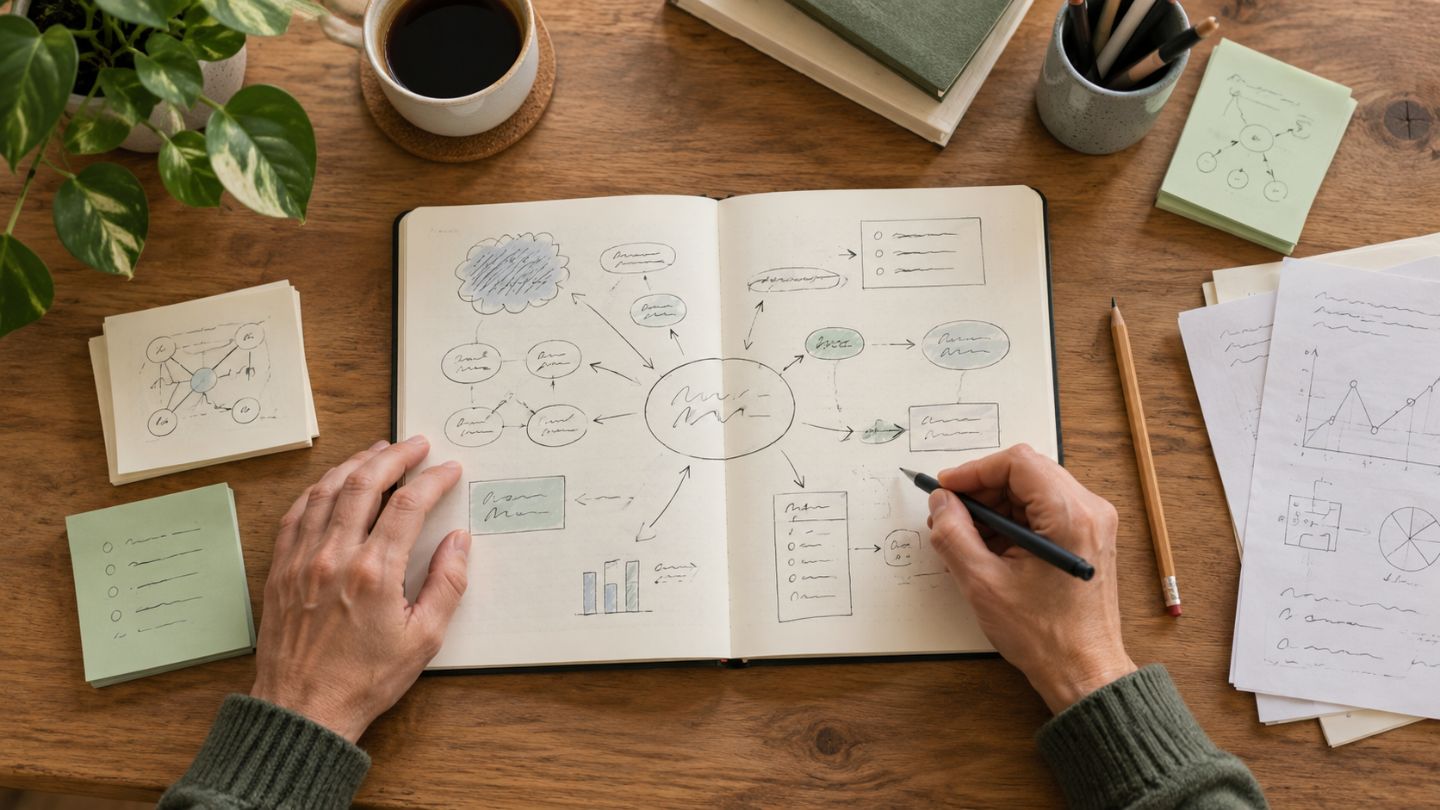
Keep it short
-
Use arrows, mini-diagrams, and headings
-
Leave space for later recall corrections
Paper or screen: choose on purpose

Screens are not evil. Paper is not magic. Yet medium can shape attention.
A large meta-analysis comparing reading on paper and screens reported paper advantages for comprehension in many settings.
A meta-analysis in Computers & Education also reported better comprehension on paper than on screen across studies, with reading speed showing no strong difference.
When paper helps
-
Dense theory
-
Text with arguments you must track
-
Long reading sessions
-
Exam-prep chapters
Paper reduces tab-hopping and lets you mark structure with your hand.
When screens make sense
-
Searchable references
-
Quick look-ups
-
Reading with hyperlinks
-
Note syncing across devices
Screen reading works best with rules: full-screen mode, notifications off, one tab, and a clear recall pause after each block.
A reading plan for busy weeks
You don’t need perfect routines. You need routines you repeat.
A 30-minute daily plan
-
3 minutes: Preview
-
17 minutes: Read one block
-
7 minutes: Recall + write
-
3 minutes: Pick your next questions
That’s it. That’s a full active reading cycle.
Student version
-
Use the plan for textbooks and past-paper topics
-
Keep a “question bank” for each chapter
-
Weekly: one 30-minute review session using only recall
Working-adult version
-
Use the plan for one report, one chapter, or one skill article
-
Write a 5-line “what I can use” note after recall
-
Weekly: re-read your recall notes, then do a 3-question self-check
How to tell your reading is working
Forget page counts. Track signals that match your goal:
-
One-sentence summary: Can you write it without looking?
-
Teach-back: Can you explain it to a friend in 60 seconds?
-
Question score: How many of your self-questions can you answer cold?
-
One-week recall: What remains after seven days?
If those scores rise, your reading is improving, even when your page count drops.
Conclusion
Reading better is a shift from passive exposure to active recall. Preview sets direction. Questions give your mind a task. Small reading blocks keep you honest. Recall reveals gaps. Spaced review helps the ideas stay. Over time, you read fewer pages that matter more, and you stop carrying the quiet stress of “I read a lot, yet I can’t use it.”
FAQs
1) How do I remember what I read from books?
Use recall right after each short reading block, then revisit your recall notes on a simple schedule (day 3, day 7). Memory grows from repeated retrieval, not repeated highlighting.
2) Should I finish every book I start?
No. If a book stops paying you back (low insight, repetitive, off-topic), stop without guilt. Better reading includes better selection.
3) Is speed reading worth it?
Speed helps when you’re scanning for structure or searching for one detail. For comprehension and long-term recall, slow down at key sections and add recall pauses.
4) What is the best note-taking style for nonfiction books?
Use short summaries in your own words, add one example, and add 2–3 self-questions per section. Avoid transcript notes.
5) How long should I read each day to improve?
A consistent 20–30 minutes with recall beats long sessions with passive reading. Start small, repeat daily, then add spaced review once a week.




Comments 0
No comments yet. Be the first to start the conversation.