



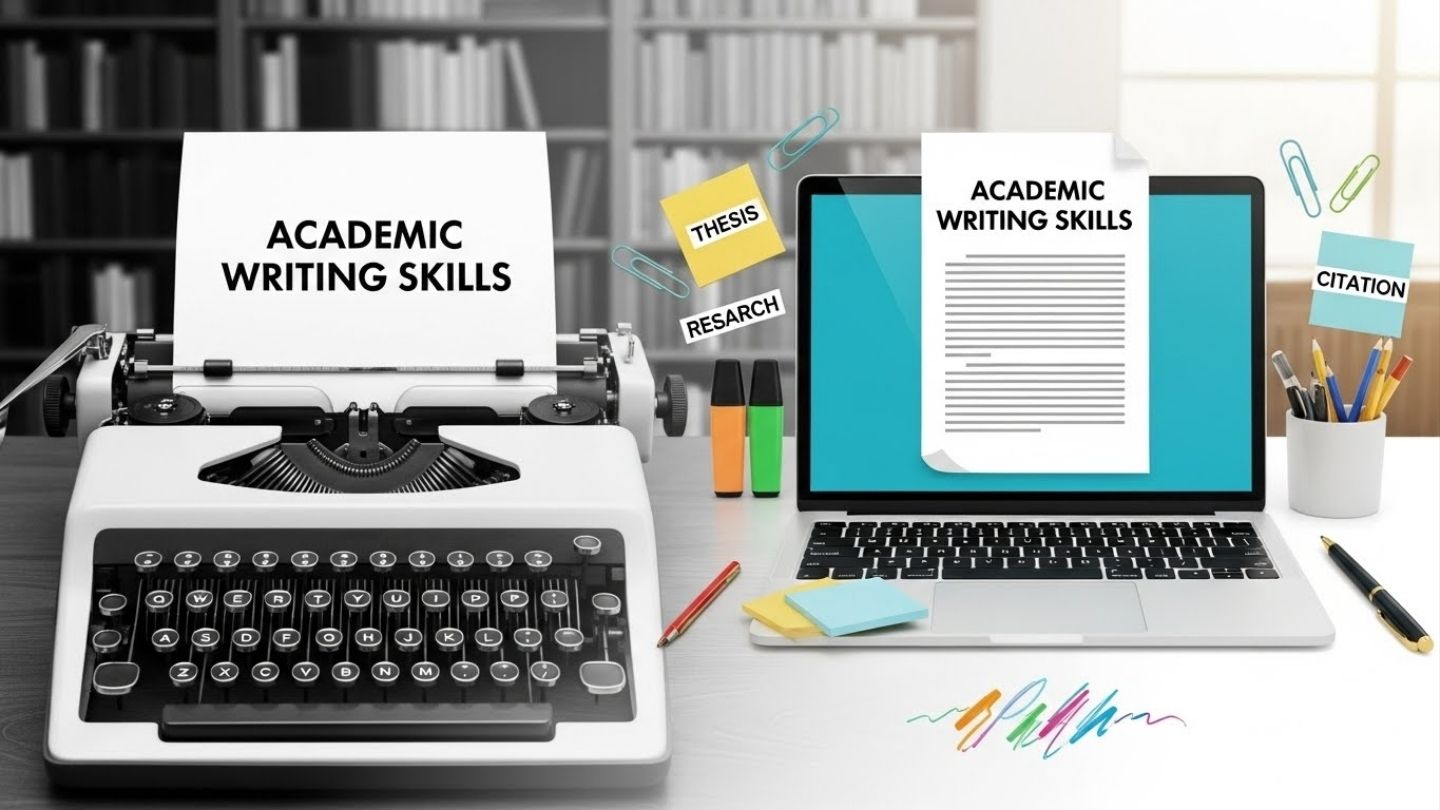
Why writing skills shape grades, trust, and career options
Writing is often treated like a school subject you finish and leave behind. Real life pushes back on that idea. A clear email can prevent a week of confusion. A well-structured essay can raise your grade even when the topic is hard. A clean project update can help your team act faster.
Employers have linked writing to hiring and promotion decisions for decades. One widely cited survey of business leaders reported that writing functions as a “threshold skill” in hiring and promotion, and it described large costs spent on fixing writing problems.
Recent employer data still puts writing near the top. In NACE’s Job Outlook 2025 report, “communication skills (written)” appears among the most requested resume attributes, with a listed share of 77.1% in the report’s ranked table.
Writing is not a talent lottery. It works like fitness: progress comes from a plan, repetition, and feedback. Once you adopt a repeatable workflow, your writing improves in a way you can measure.

A simple writing workflow you can reuse
Writing skills = clarity, structure, tone, and correctness for a specific reader and purpose. If you want one system that works for academic writing skills and professional writing skills, use a five-step loop:
-
define the reader and outcome
-
plan
-
draft
-
revise and edit
-
proofread
This sounds basic. The results come from doing each step with intention.
Step 1: Define reader, purpose, and outcome
Before you write, answer three questions:
-
Who will read this?
-
What do they need from me?
-
What should happen after they read it?
Write a one-line target at the top of your draft:
-
Academic: “This paper argues ___, using ___ as evidence.”
-
Professional: “After reading, the reader should decide ___ or reply with ___.”
I have seen strong students lose marks for one reason: the reader cannot spot the main point early. The same pattern appears at work when updates hide the request until the final paragraph. This one line keeps your draft on track.
Step 2: Plan with a tight outline
Planning is not decoration. It prevents wandering paragraphs.
Use a three-layer outline:
-
Section headings
-
One-sentence purpose for each paragraph
-
Bullet list of evidence or examples
A quick outline template that fits essays and reports
-
Opening: problem + why it matters + your main claim
-
Body: 3–5 points, each tied to the claim
-
Counterpoint: what a careful reader may question
-
Close: what you want the reader to think or do next
You can outline in 8–12 minutes. The time you save during revision is often larger than the time you spend planning.
Step 3: Draft fast, revise slow
Drafting is for getting the ideas down. Revision is for making the ideas clear.
A practical rule: draft without polishing each sentence. Save polishing for later. When you polish too early, you lock in weak structure and then fight the same paragraph again.
Step 4: Edit for clarity and concision
Clear writing is usually shorter, yet “shorter” is not the goal by itself. The goal is less friction for the reader.
Plain-language guidance used by public agencies pushes a consistent set of habits: state the main point early, keep paragraphs focused, use active voice when it helps clarity, and keep sentences short.
Try three editing passes:
-
Structure pass: Does each section deliver what its heading promises?
-
Clarity pass: Can a reader explain your point after one read?
-
Concision pass: Can you cut 10–15% of words without losing meaning?
For concision practice, Purdue OWL provides structured guidance on removing unnecessary words and tightening sentences.
Step 5: Proofread with a repeatable checklist
Proofreading works best after revision. Use a fixed order:
-
spelling and punctuation
-
names, dates, figures, citations
-
read aloud for missing words and awkward rhythm
-
format check (headings, spacing, references)
When I edited student papers in bulk, the strongest writers made fewer “small errors” not from luck, but from a steady checklist. A routine catches patterns your eyes miss.
Academic writing skills that improve marks
Academic writing is evaluated. That means your reader needs to see your thinking in a clear shape: claim, evidence, reasoning.
Thesis and argument: state your position early
A thesis is not a topic. It is a position you can support.
Weak: “This paper discusses online learning.”
Stronger: “Online learning improves access, yet learning outcomes depend on course design and support.”
The second version gives your reader a map. Each section now has a job.
Paragraph structure: claim → evidence → explanation
A reliable paragraph has four moves:
-
claim
-
evidence
-
explanation
-
link back to the thesis
If your paragraphs drift, the missing piece is usually the explanation step. Evidence without explanation reads like a pile of quotes.
Using sources without plagiarism
Academic credibility collapses when sources are used loosely. The fix is not fear. The fix is a clean method.
APA defines plagiarism as presenting someone else’s words, ideas, or images as your own. Harvard’s guide on using sources emphasizes adding citations as you take notes and draft, not at the last minute.
A note-taking system that prevents accidental copying
Use three labels in your notes:
-
Quote (exact words, with page number)
-
Paraphrase (your wording, with citation)
-
My point (your idea, built from what you read)
Here is the habit that saves time later: add the citation the moment the note enters your document. Waiting until the end turns citation into a guessing game.
Professional writing skills people reply to
Professional writing is judged by outcomes: clarity, speed, fewer follow-up questions, better decisions.
Emails that get clear answers
A strong email answers three questions fast:
-
What is this about?
-
What do you need from me?
-
When do you need it?
Plain-language guidance recommends stating the main point early and keeping the message easy to scan.
A practical email format
-
Subject: action + topic + date
-
First line: purpose in one sentence
-
Body: 2–6 bullets (facts, context, options)
-
Close: the exact next step and deadline
Example:
Subject: Confirm meeting time for Friday
First line: I need your confirmation on the time.
Bullets:
-
Option A: 10:00–10:30
-
Option B: 3:00–3:30
Close: Reply with A or B by Wednesday noon.
This structure cuts unnecessary back-and-forth.
Reports and updates that help decisions
Long updates fail when they bury the point.
The one-screen summary method
Start with a short summary that fits on one screen:
-
what changed
-
why it matters
-
what you recommend
-
what you need from the reader
Public plain-language standards support this “main point first” pattern.
I have rewritten project updates that were two pages long into eight lines plus bullets. The team moved faster, not from extra effort, but from clear structure.
Sentence-level skills that upgrade any draft
These micro-skills improve writing clarity even when your topic stays the same.
Active voice when clarity matters
Active voice often makes responsibility clear. Purdue OWL notes that active voice is often more concise than passive voice.
Passive: “The report was submitted late.”
Active: “I submitted the report late.”
The active version shows ownership. That matters in professional writing, and it can improve academic writing when you describe what your study or paper does.
Cut wordiness without cutting meaning
Concision is not about sounding short. It is about removing dead weight.
Purdue OWL provides practical methods for eliminating unnecessary words and rearranging phrases for clarity.
Try this edit move:
-
Circle the real subject and real verb in each sentence.
-
Move them near the start.
-
Delete filler openings.
Before: “It can be seen that the results indicate a change in student performance.”
After: “The results show a change in student performance.”
Flow: transitions and topic focus
Flow comes from logical connections, not fancy vocabulary.
Use transitions that show the relationship:
-
example
-
result
-
contrast
-
emphasis
-
next step
A fast test: read only the first sentence of each paragraph. If the argument still makes sense, your structure is solid.
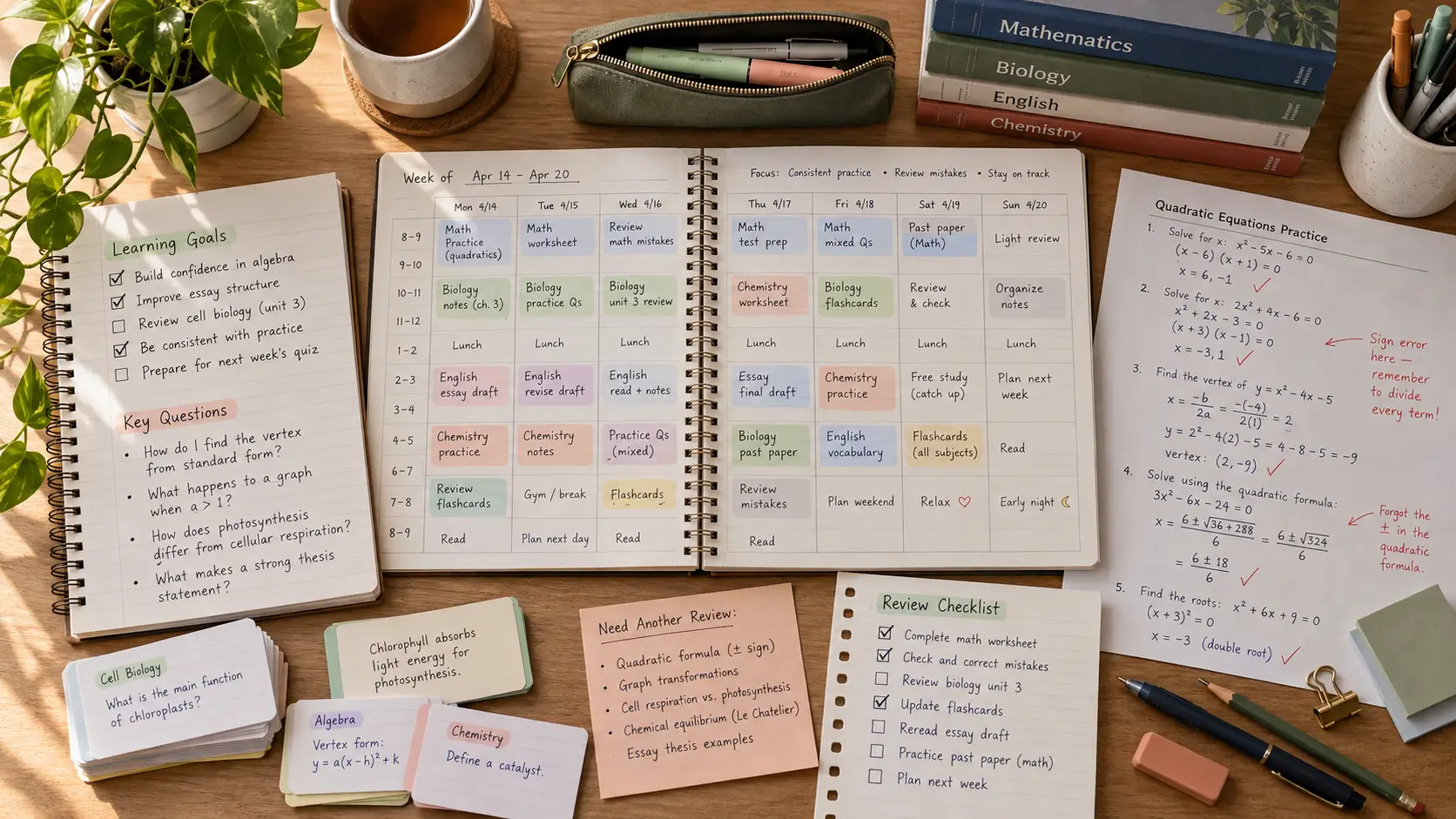
A 30-day practice plan
A plan matters more than motivation.
OECD’s PIAAC program measures adult literacy skills across countries and links these skills to participation in work and society. That context supports a simple idea: literacy and writing habits remain relevant well past school.
Daily drills (15–30 minutes)
Rotate one drill per day:
-
Write one paragraph using claim → evidence → explanation
-
Rewrite a long paragraph into three shorter paragraphs
-
Convert ten sentences into clearer active voice when it improves meaning
-
Cut 10–15% of words in a draft without losing meaning
-
Summarize an article in five sentences, then in two
Weekly deliverables
-
Week 1: one academic-style piece (600–900 words)
-
Week 2: one professional update (400–700 words)
-
Week 3: one argument piece with a counterpoint (900–1,200 words)
-
Week 4: one polished piece with full revision and proofreading
How to track progress
Pick three simple measures:
-
fewer unclear pronouns (this, it, they without a clear referent)
-
fewer repeated feedback comments on the same problem
-
faster outlining time with cleaner drafts
Progress is visible when the same fixes stop showing up.
Common writing problems and direct fixes
“I can’t start.”
Start with your outline and write the body first. Your opening improves after the body exists. Write a rough first paragraph, then move on.
“My writing feels unclear.”
This often comes from vague nouns and weak verbs.
Try this edit pass:
-
replace vague nouns with specific terms
-
swap “is/are” verbs where a stronger verb fits
-
add one concrete example per main point
“My paragraphs drift.”
Give each paragraph one job. Write that job as a one-sentence claim. Cut any sentence that fails the claim.
“I repeat words.”
Some repetition supports clarity. The problem starts when repetition has no purpose.
Use a short list of synonyms for your most repeated terms, yet keep key terms consistent when precision matters.
Conclusion
Improving writing skills comes down to a repeatable workflow, honest revision, and steady practice. Plan for the reader, draft without over-polishing, revise for structure, edit for clarity and concision, then proofread with a checklist. Add clean source habits that prevent plagiarism, and your academic and professional writing becomes easier to trust and easier to read. Employer research keeps placing written communication near the top of desired skills, which matches what teachers and managers see every day.
FAQs
1) What is the fastest way to improve writing skills?
Adopt one workflow and reuse it: define the reader and outcome, outline, draft, revise, edit, proofread. Consistency beats random tips.
2) How do I improve academic writing skills without sounding unnatural?
Use clear thesis statements, focused paragraphs, and plain language. Keep vocabulary simple when a simple word carries the meaning.
3) How do I write better professional emails?
Put the purpose in the first line, use bullets for key facts, end with a direct next step and deadline. Plain-language standards support this structure.
4) How do I avoid plagiarism when paraphrasing?
Label your notes (quote, paraphrase, your point), add citations as you write, and keep a clear record of where ideas came from. APA and Harvard provide clear guidance on what counts as plagiarism and how to avoid it.
5) How can I improve clarity and concision in my sentences?
Edit in passes. First fix structure, then rewrite for clear subjects and verbs, then cut unnecessary words. Purdue OWL offers practical concision methods you can practice.





Comments 0
No comments yet. Be the first to start the conversation.