




Education can help people enter a profession, improve how they work, and prepare for different responsibilities. But further study is not automatically the right next step for every career. A degree, technical qualification, short course, or workplace project may be useful for different reasons.
The practical decision is to identify the work you want to do, determine which qualifications and skills it requires, and choose learning that fits your available time and resources. Education can create opportunities, but career outcomes also depend on experience, local demand, personal circumstances, and access to employers.
How Are Education and Career Development Connected?
Education supports career development by building knowledge, developing skills, and helping people meet the entry requirements of certain occupations. It can also provide opportunities to practice communication, analysis, and teamwork.
The Organisation for Economic Co-operation and Development (OECD), in Education at a Glance 2026, reports that across OECD countries, full-time, full-year workers with a bachelor's degree earned 39% more on average than workers whose highest qualification was upper secondary education. Those with a master's, doctoral, or equivalent qualification earned 80% more on average.
These are group averages, not a prediction for an individual graduate. The differences vary by country, field, and age. They also describe an association: education is one factor among many influencing earnings. The OECD's 2026 employment data likewise show higher average employment rates among adults with tertiary education, but do not imply that obtaining a qualification guarantees a job.
Ways Education Can Support Career Growth
Build Knowledge and Practical Skills
Formal study can establish subject knowledge and help students develop ways to solve problems. Practical training can add experience with equipment, procedures, software, or workplace situations.
For example, a person interested in accounting may need an understanding of financial reporting alongside practice preparing records and using relevant software. A course that teaches the concepts but offers no opportunity to apply them may leave a gap.
Look for assessed assignments, supervised practice, projects, and feedback rather than relying only on course titles.
Meet Qualification Requirements
Some occupations require a particular qualification, supervised training, registration, or professional licence. Other employers may accept different combinations of education, experience, and demonstrated ability.
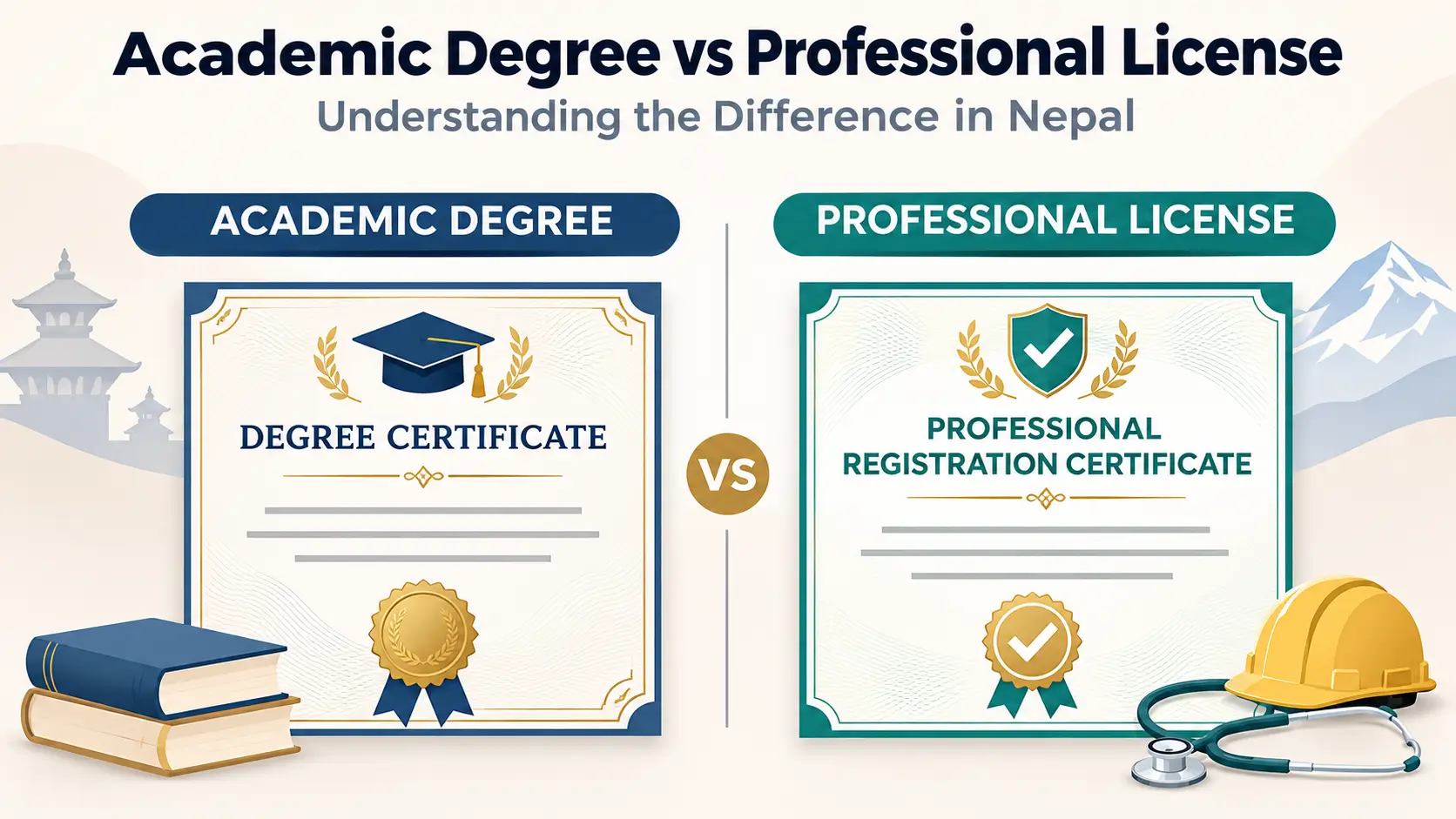
Before enrolling, check official requirements for the occupation and location in which you intend to work. A course certificate is not necessarily equivalent to a degree, and neither automatically meets professional licensing rules. If you plan to work abroad, check whether the qualification will be accepted there.
For career research in the United States, the Bureau of Labor Statistics' Occupational Outlook Handbook describes typical entry-level education, training, and licensing considerations for many occupations. Comparable national or professional authorities should be consulted elsewhere.
Apply Learning to Improve Work
Education has greater practical value when you can use it. A worker learning spreadsheet analysis, for instance, might create a clearer reporting system. Someone studying communication might practice giving structured project updates and seek feedback.
Keep a record of what you did, the problem it addressed, and any results that can be described accurately. This offers stronger evidence of ability than listing completed courses alone.
A new qualification may support a promotion or a job application, but decisions about advancement also depend on available positions, job performance, employer criteria, and other factors.
Develop Professional Relationships
Classmates, instructors, supervisors, and professional associations can introduce people to different roles and ways of working. A mentor may help you understand job requirements or evaluate learning options.
Approach networking as a way to exchange information and seek advice rather than expecting contacts to provide employment. Ask specific questions about the work involved, the skills needed, and common early-career difficulties.
Which Type of Education Should You Choose?
Different learning routes serve different purposes. The decision should begin with the qualification required for your intended role and the depth of learning you need.
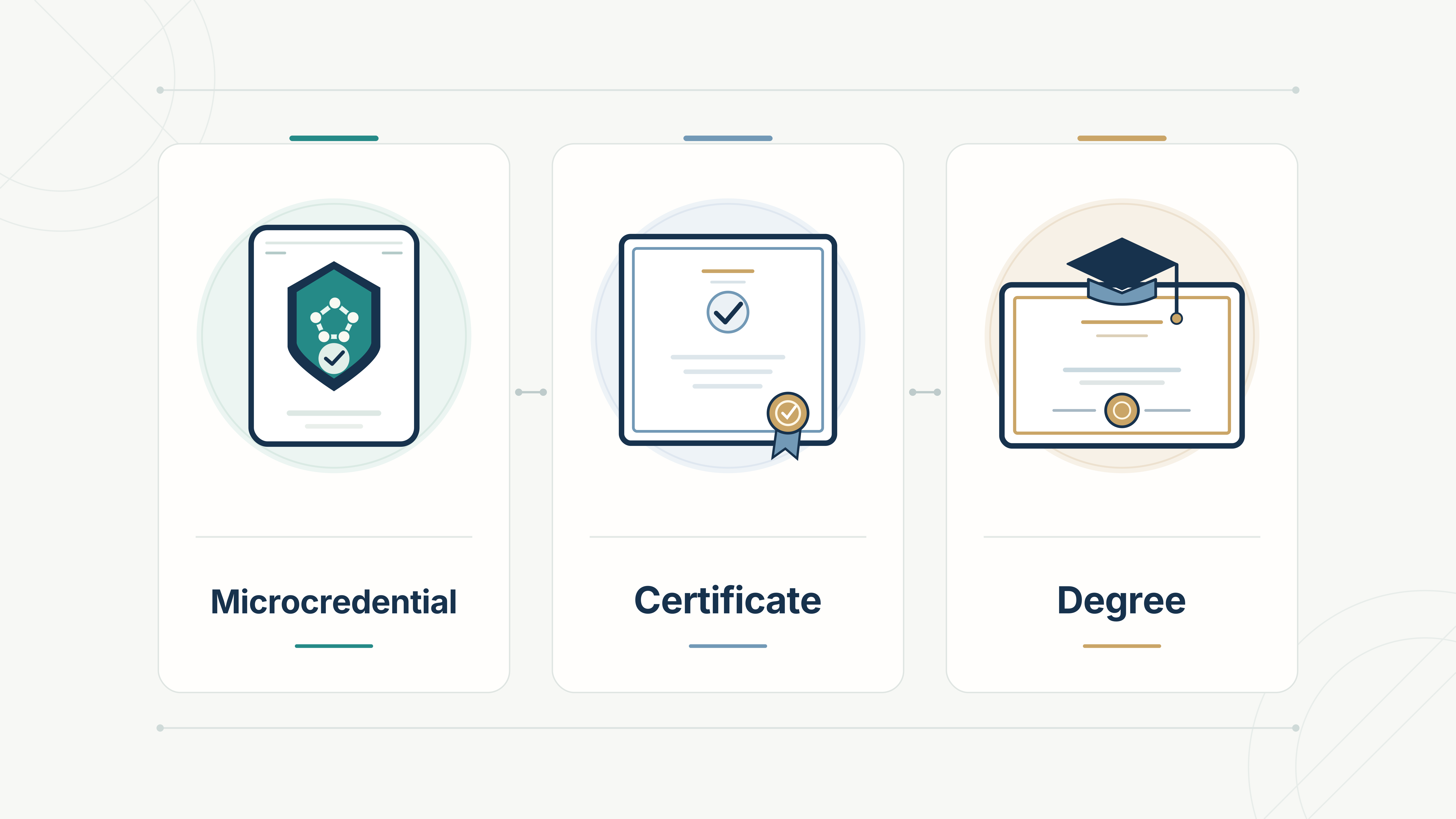
| Learning route | What it can provide | What to check |
|---|---|---|
| University degree | Broad or specialized academic study and an awarded qualification | Recognition, curriculum, duration, total cost |
| Technical or vocational training | Occupation-focused instruction and practical assessment | Equipment access, workplace practice, qualification acceptance |
| Short course or certificate | Focused learning in a defined topic or skill | Provider credibility, assessment, employer relevance |
| Workplace or self-directed learning | Experience through projects, mentoring, and practice | Feedback, evidence of competence, limits of formal recognition |
A short course can suit someone addressing a specific skill gap. A recognized degree may be necessary for a regulated occupation or useful for more advanced academic study. Apprenticeships and supervised training can offer another route where available.
A qualification's value is affected by its content, recognition, cost, and relevance—not simply how many certificates a person collects. For students still considering academic options, Collegenp's guide to choosing a suitable higher education course provides additional decision criteria.

Why Continuing Education Matters
Continuing education means taking organized courses or training after an initial qualification or after entering employment. Professional development also includes supervised learning, workplace practice, mentoring, and other activities intended to improve professional competence.
The OECD Skills Outlook 2025 describes adult learning as unevenly accessible. It identifies time, cost, family responsibilities, and limited course availability among barriers that can prevent adults from taking part. Participation therefore reflects opportunity as well as motivation.
Continuing learning can be valuable when job duties change, a worker moves into supervision, or an occupation introduces new tools. It is also relevant when someone wants to change fields. However, there is no need to enroll in a new course whenever an unfamiliar technology appears.
Start by identifying what the role requires. Ask whether the necessary competence can be gained through a workplace assignment, guidance from a colleague, a short course, or a longer qualification. See also Collegenp's article on lifelong learning and career opportunities.
How to Align Education With Your Career Goals
Identify the Role or Direction
Describe the kind of work that interests you. Include the tasks you would like to perform, the work setting, and any requirements that matter to you, such as location or working hours.
If you have not chosen a profession, compare a few fields rather than committing to an expensive qualification immediately.
Check Actual Job Requirements
Review several relevant vacancy notices, professional standards, and reliable occupational guides. Separate mandatory credentials from preferred qualifications. Look for repeated skills and experience requirements.
Job advertisements reflect particular employers and can change, so they are evidence to consider rather than a complete forecast of future demand.
Compare Your Current Skills With the Requirements
List what you can already demonstrate through study, employment, volunteering, or personal projects. Then identify gaps. Some may require formal qualifications; others may be addressed through practice and feedback.
Avoid paying for training in a skill you already possess unless formal evidence of competence is specifically required.
Choose a Realistic Learning Plan
Decide what to learn first, how it will be taught, and how you will judge whether it helped. Check total fees, transport, materials, schedules, and time away from other responsibilities.
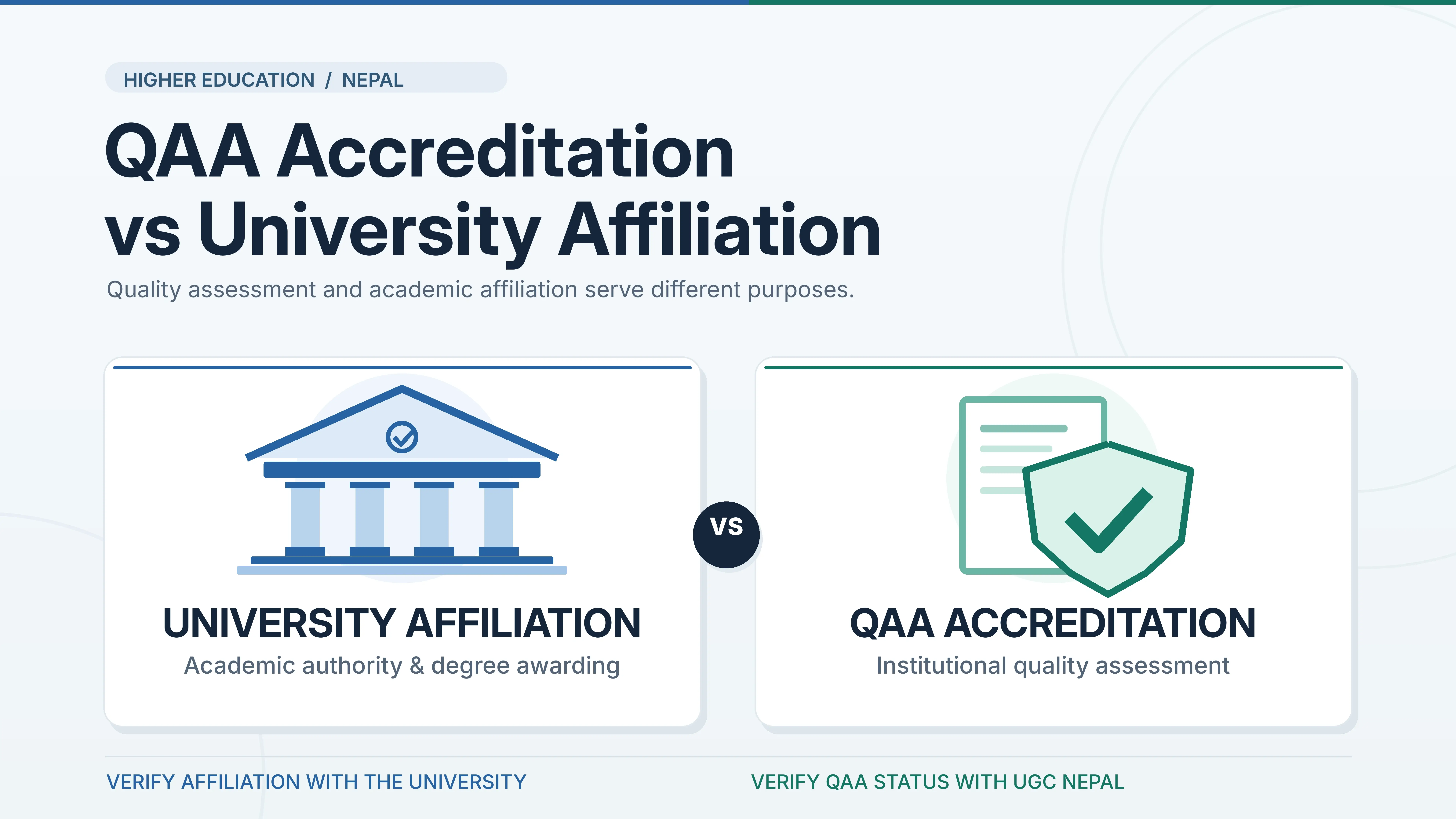
Before paying, verify the provider's status, the qualification awarded, and any claims about professional recognition. Scholarships or employer-funded training can reduce costs when genuinely available; confirm conditions in writing.
Review Your Direction Periodically
A career plan should change as you learn more about the work and your circumstances. After completing a course or project, assess what skills you gained, whether you used them, and which opportunities remain suitable.
A change of direction does not make previous education worthless. Knowledge and transferable skills may still be relevant in another field.
Practical Examples of Education Supporting a Career
The following examples illustrate decisions, not documented individual success stories.
A Student Preparing for an Occupation
A student interested in a profession requiring a recognized qualification begins by checking the relevant licensing or entry rules. They compare eligible programs, practical training opportunities, and costs before enrolling. During study, they seek supervised experience to understand the everyday work.
The important outcome at this stage is preparation for the required pathway, not an assurance of employment.
An Employee Seeking More Responsibility
An administrative employee wants to take on reporting duties. Instead of immediately pursuing an additional degree, they identify the spreadsheet, data-checking, and communication skills the tasks demand. They request training where available and apply what they learn in a supervised project.
If the next role requires a separate qualification, they can then assess whether further formal education is necessary.
Someone Considering a Career Change
A worker considering a new field studies local job requirements and speaks with people doing the work. They try introductory learning and a manageable project before committing to a longer course. They also consider whether the change would involve lower initial earnings or additional training.
The purpose is to gather evidence about suitability before making a major financial or professional commitment.
How to Judge Whether Further Education Is Worthwhile
Before enrolling, answer five questions:
-
Requirement: Is the qualification essential, preferred, or optional for the work?
-
Quality: Is the provider credible, and does the course include meaningful assessment and feedback?
-
Application: Will you be able to use or demonstrate what you learn?
-
Affordability: Can you manage the full cost and time commitment without relying on uncertain returns?
-
Alternatives: Could a shorter course, practical experience, or employer-supported training meet the same need?
Be cautious about providers promising jobs, salary increases, or promotions. Education can improve readiness, but hiring depends on more than attendance or completion.
Conclusion
Education can support career development by providing knowledge, practical competence, recognized qualifications, and opportunities to learn from others. Continuing learning can also help people respond to changes in their work or consider a different direction.
The useful question is not whether more education is automatically better, but which learning route addresses a real requirement. Check the evidence, weigh costs and limitations, and choose training you can apply and assess.



Comments 0
No comments yet. Be the first to start the conversation.