



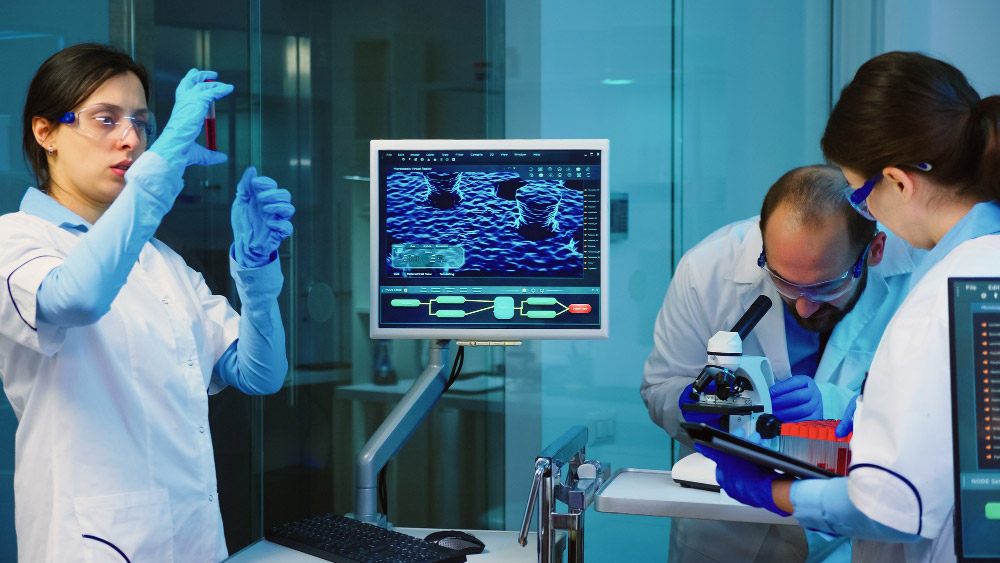
Biomedical engineering applies engineering methods to medical and biological problems. Its work supports the development of diagnostic equipment, implantable devices, prosthetics, rehabilitation systems, medical software, biomaterials, and technologies for monitoring patients inside and outside clinical settings.
The field is becoming increasingly important as healthcare systems adopt artificial intelligence, connected medical devices, patient-specific manufacturing, advanced imaging, and gene-based treatments. However, technical progress alone does not determine whether an innovation improves care. New technologies must also demonstrate safety, clinical value, usability, affordability, and reliable performance in real-world settings.
Table of Content
- What Is Biomedical Engineering?
- Current Applications of Biomedical Engineering
- Technologies Shaping the Future of Biomedical Engineering
- How Biomedical Engineering Can Improve Patient Care
- Major Challenges
- What the Next Phase May Look Like
- Conclusion
What Is Biomedical Engineering?
Biomedical engineering is a multidisciplinary field that combines engineering with medicine, biology, materials science, physics, and computing. Biomedical engineers often work with clinicians, laboratory researchers, software developers, rehabilitation specialists, manufacturers, and regulatory professionals.
The field covers several areas:
-
Medical devices and implantable systems
-
Biomedical imaging
-
Sensors and remote patient monitoring
-
Prosthetics, bionics, and rehabilitation engineering
-
Biomaterials and drug-delivery systems
-
Tissue engineering and regenerative medicine
-
Artificial intelligence and computational modeling
-
Clinical laboratory and point-of-care technologies
The National Institute of Biomedical Imaging and Bioengineering supports research across biomedical imaging, bioengineering, and health informatics, reflecting the field’s broad and interdisciplinary scope.
Students considering this academic path can also review the Bachelor of Engineering in Biomedical Engineering to understand the general course structure and career direction associated with the discipline.
Current Applications of Biomedical Engineering
Medical Imaging and Diagnosis
Biomedical engineers contribute to technologies such as magnetic resonance imaging, computed tomography, ultrasound, nuclear medicine, optical imaging, and image-guided procedures.
These systems allow clinicians to examine structures and processes inside the body without relying entirely on invasive procedures. MRI, for example, produces detailed anatomical images and is particularly useful for examining soft tissue. Unlike CT and conventional X-ray imaging, it does not use ionizing radiation.
Engineering work in medical imaging includes improving image quality, reducing scanning time, designing safer equipment, reconstructing images from limited data, and developing software that assists with interpretation.
Readers interested in the academic and career side of this specialization may also refer to the BSc Medical Imaging Technology guide.
Medical and Implantable Devices
Pacemakers, cochlear implants, artificial joints, vascular stents, insulin pumps, prosthetic limbs, and surgical instruments all involve biomedical engineering.
Designing these products requires more than mechanical or electronic performance. Engineers must consider how a device interacts with tissue, whether it can be sterilized, how long it must function, how it will be maintained, and whether patients and healthcare workers can use it safely.
Human-factors engineering is especially important because unclear controls, confusing instructions, poorly designed alarms, or difficult maintenance procedures can contribute to preventable errors. The US Food and Drug Administration treats usability and human interaction as important parts of medical-device safety.
Sensors and Remote Monitoring
Biomedical sensors measure physical, chemical, or biological signals and convert them into information that patients or healthcare professionals can use.
Examples include continuous glucose monitors, pulse oximeters, wearable heart-rate sensors, implantable monitors, and devices that track movement or sleep. Sensors may be mechanical, electrical, optical, chemical, or biological, depending on the measurement being taken.
Wearable devices can collect information between clinical visits, but their value depends on measurement accuracy, appropriate interpretation, patient adherence, data security, and the ability of healthcare teams to respond when a concerning result appears.
A broader discussion of their benefits and limitations is available in Pros and Cons of Wearable Technology.
Biomaterials and Drug Delivery
Biomaterials are natural or synthetic materials designed to interact with biological systems. They are used in products such as heart valves, dental implants, contact lenses, joint replacements, wound-care materials, tissue scaffolds, and drug-delivery systems.
The choice of material affects strength, flexibility, degradation, immune response, tissue integration, and product lifespan. Some biomaterials can also carry medicines, protect them inside the body, or release them gradually at a target location.
Technologies Shaping the Future of Biomedical Engineering
Artificial Intelligence in Healthcare
Artificial intelligence is being incorporated into medical imaging, physiological monitoring, clinical decision support, risk assessment, treatment planning, and administrative systems.
In imaging, an AI-enabled system may identify patterns, prioritize scans for review, measure anatomical structures, or help clinicians compare changes over time. In monitoring systems, algorithms may analyze sensor data and flag changes that require attention.
The FDA maintains a public list of AI-enabled medical devices authorized for marketing in the United States. The list shows that AI is already incorporated into regulated medical products, although the agency states that the resource may not include every authorized device.
The future of clinical AI will depend on more than initial accuracy. Developers and healthcare providers must also consider changes in patient populations, clinical practice, equipment, and data quality. The FDA has issued guidance addressing lifecycle risk management and planned changes to certain AI-enabled medical devices.
For a focused discussion of clinical uses, evidence, and safety concerns, see How AI Helps in Healthcare: Evidence, Safety and Use Cases.
Automated and Closed-Loop Treatment Systems
Closed-loop systems combine sensors, software, and treatment devices. They measure a biological signal, analyze it, and adjust treatment within defined limits.
Automated insulin-delivery systems are an established example. These systems combine continuous glucose monitoring, algorithm-based software, and an insulin pump. The software uses glucose information to calculate or adjust insulin delivery according to the system’s approved design.
Similar approaches are being researched for neurological stimulation, rehabilitation, medication delivery, and other chronic conditions. Their safe use depends on reliable sensors, secure communication, carefully tested algorithms, and safeguards for missing or inaccurate data.
Three-Dimensional Printing and Patient-Specific Devices
Three-dimensional printing, also called additive manufacturing, creates objects layer by layer from a digital design. In medicine, the design may be based on a computer-aided drawing or medical image.
The technology can produce complex structures and devices matched to an individual patient’s anatomy. Medical applications include orthopedic and cranial implants, surgical instruments, dental restorations, anatomical models, surgical guides, and external prosthetics.
Patient-specific manufacturing may improve anatomical fit and surgical planning, but customization does not remove the need for quality control. Materials, production methods, sterilization, mechanical strength, software accuracy, and manufacturing consistency must still be evaluated.
Bioprinting uses cells or biologically compatible materials to produce tissue-like structures. It is an active research area, but complex printed organs are not part of routine clinical care.
Regenerative Medicine and Tissue Engineering
Regenerative medicine aims to repair, replace, or support damaged tissue. Biomedical engineers contribute by developing scaffolds, hydrogels, biodegradable materials, cell-delivery systems, and physical environments that influence how cells grow and organize.
One difficulty is the body’s response to implanted materials. An implant may trigger inflammation or become surrounded by fibrous tissue, reducing its effectiveness. Researchers are therefore developing materials that interact more predictably with cells, immune processes, and surrounding tissue.
Progress in tissue engineering will depend on solving problems related to blood-vessel formation, immune response, mechanical strength, cell organization, and long-term function.
Robotics, Bionics, and Neuroengineering
Robotic and bionic systems are used in surgery, rehabilitation, mobility support, sensory restoration, and assistive care.
Rehabilitation robots can guide repeated movements during therapy. Exoskeletons may support mobility or rehabilitation in selected users. Advanced prosthetic limbs use sensors, processors, and control systems to respond to muscle activity or movement. Cochlear implants convert sound into electrical signals that stimulate the auditory system.
Future systems may provide more natural control, improved sensory feedback, lighter materials, and closer interaction with nerves and muscles. Their practical value will depend on comfort, training requirements, maintenance, surgical risk, and affordability.
Genome Editing and Cell-Based Therapies
Genome editing sits at the intersection of biomedical engineering, molecular biology, and genetic engineering. It allows researchers to make targeted changes to genetic material and is being studied for inherited disorders, cancers, immune conditions, and other diseases.
Readers seeking an academic overview of this related discipline may refer to the Genetic Engineering Course guide.
Casgevy, a treatment involving CRISPR/Cas9-edited blood stem cells, became the first FDA-approved therapy to use this form of genome-editing technology in 2023.
On July 1, 2026, the FDA expanded its approval to patients aged two years and older with sickle cell disease involving recurrent vaso-occlusive crises or transfusion-dependent beta thalassemia. The treatment uses a patient’s own blood-forming stem cells, which are edited and returned after preparatory treatment.
This approval demonstrates that genome editing can be used in regulated clinical treatment. However, it is not a simple or widely applicable intervention. Treatment requires specialized facilities, patient assessment, cell collection and processing, intensive preparatory care, and long-term monitoring.
How Biomedical Engineering Can Improve Patient Care
Biomedical engineering can influence patient care in several ways.
It can improve diagnosis through clearer images, more sensitive tests, and better tools for interpreting complex information. It can support less invasive treatment through image-guided procedures, small implants, robotic instruments, and localized drug-delivery systems.
It can also support more individualized care. Patient-specific implants, programmable devices, genomic information, and continuous monitoring may help clinicians adapt treatment to a person’s anatomy, physiology, or response over time.
Remote technologies may reduce some unnecessary hospital visits and allow healthcare teams to monitor selected patients between appointments. However, these systems require reliable devices, appropriate clinical oversight, secure communication, and access to follow-up care.
Major Challenges
Clinical Evidence and Safety
A working laboratory prototype is not automatically a safe or effective medical product. Technologies must be tested for their intended purpose, patient group, user, and clinical environment.
Evaluation may include technical testing, usability studies, clinical trials, software validation, manufacturing controls, and post-market monitoring. The level of evidence required depends on the product and the risks associated with its use.
Data Quality and Algorithmic Bias
AI systems depend on the data used to develop and evaluate them. Incomplete, inaccurate, or unrepresentative datasets may lead to unreliable performance.
A system that performs well in one hospital or patient population may not perform equally well elsewhere. Developers and healthcare institutions therefore need to evaluate performance across relevant patient groups and monitor systems after deployment.
Cybersecurity and Privacy
Connected medical devices can store or transmit sensitive health information. They may also depend on hospital networks, mobile applications, cloud platforms, or communication with other devices.
Cybersecurity must be addressed throughout the product lifecycle, including design, manufacturing, software updating, maintenance, and incident response. In February 2026, the FDA issued updated guidance on cybersecurity considerations for medical devices and the information expected in certain premarket submissions.
Usability
A technically advanced product may still create risk if its controls, instructions, displays, alarms, or maintenance procedures are difficult to understand.
Effective biomedical design must account for the abilities, limitations, working conditions, and behavior of patients, caregivers, technicians, and clinicians.
Cost and Unequal Access
Advanced technologies may require expensive equipment, trained specialists, maintenance services, reliable electricity, internet connectivity, and supporting clinical infrastructure.
These requirements can limit access, particularly in rural areas and health systems with fewer resources. The World Health Organization states that digital health should support affordable, equitable, and universal access to quality health services, while recent WHO work continues to identify gaps in digital-health access and implementation.
Regulation and Long-Term Monitoring
Medical devices and software may change after their initial development. Software can be updated, materials can degrade, and device performance may vary under different conditions.
Responsible oversight therefore extends beyond initial authorization. It includes manufacturing quality, incident reporting, maintenance, cybersecurity updates, clinical follow-up, and monitoring of long-term performance.
What the Next Phase May Look Like
Biomedical engineering is moving toward connected systems rather than isolated devices. A future platform may combine a wearable sensor, analytical software, a clinician dashboard, and a treatment device that adjusts therapy within approved safety limits.
Medical imaging may become faster and more quantitative. Implants may respond to biological conditions or deliver medicine locally. Prosthetic systems may provide more natural movement and sensory feedback. Biomaterials may be designed to support healing rather than simply remain tolerated by the body.
The most useful developments will not always be the most technically complex. Affordable diagnostic tools, durable equipment, accessible rehabilitation systems, and devices designed for settings with limited resources may have substantial clinical value.
Conclusion
Biomedical engineering is changing how healthcare professionals diagnose disease, deliver treatment, restore physical function, and monitor patients.
AI-enabled devices, automated insulin delivery, patient-specific implants, advanced biomaterials, robotic systems, and genome-edited therapies show how engineering research can move into clinical care. Each technology, however, carries different limitations, risks, and evidence requirements.
Future progress will depend on careful testing, responsible regulation, clinical collaboration, secure data practices, and attention to affordability and access. Biomedical engineering will have its strongest impact when technical innovation is developed around verified healthcare needs and evaluated according to the outcomes that matter to patients.
Engineering Topics