Chamunda College, Dailekh is a community-based, non-profit higher education institution located in Chamunda Bindrasaini Municipality-3, Dailekh, Karnali Province, Nepal. The college is affiliated with Tribhuvan University and recognized by the University Grants Commission of Nepal.
The college runs education programs under the Faculty of Education, including Bachelor of Education (B.Ed.) and Master of Education (M.Ed.). It was established through local community participation to expand access to higher education in the Dailekh region, especially for students who need to study within their own district.
College Name: Chamunda College
Location: Chamunda Bindrasaini Municipality-3, Dailekh, Karnali Province, Nepal
College Type: Community-based, non-profit institution
Affiliation: Tribhuvan University
Recognition: University Grants Commission of Nepal
Faculty: Education
Programs Offered: Bachelor of Education (B.Ed.) and Master of Education (M.Ed.)
B.Ed. Specializations: Nepali Education, English Education, Population Education, Mathematics Education, Health Education
Student Enrollment: 366 students
Campus Chairperson: Nirak Bahadur Shahi
Campus Chief: Prem Bahadur Bista
Facilities: Library, basic laboratories, ICT lab, smart boards, Wi-Fi, CCTV, hostel, seminar hall, playground, canteen
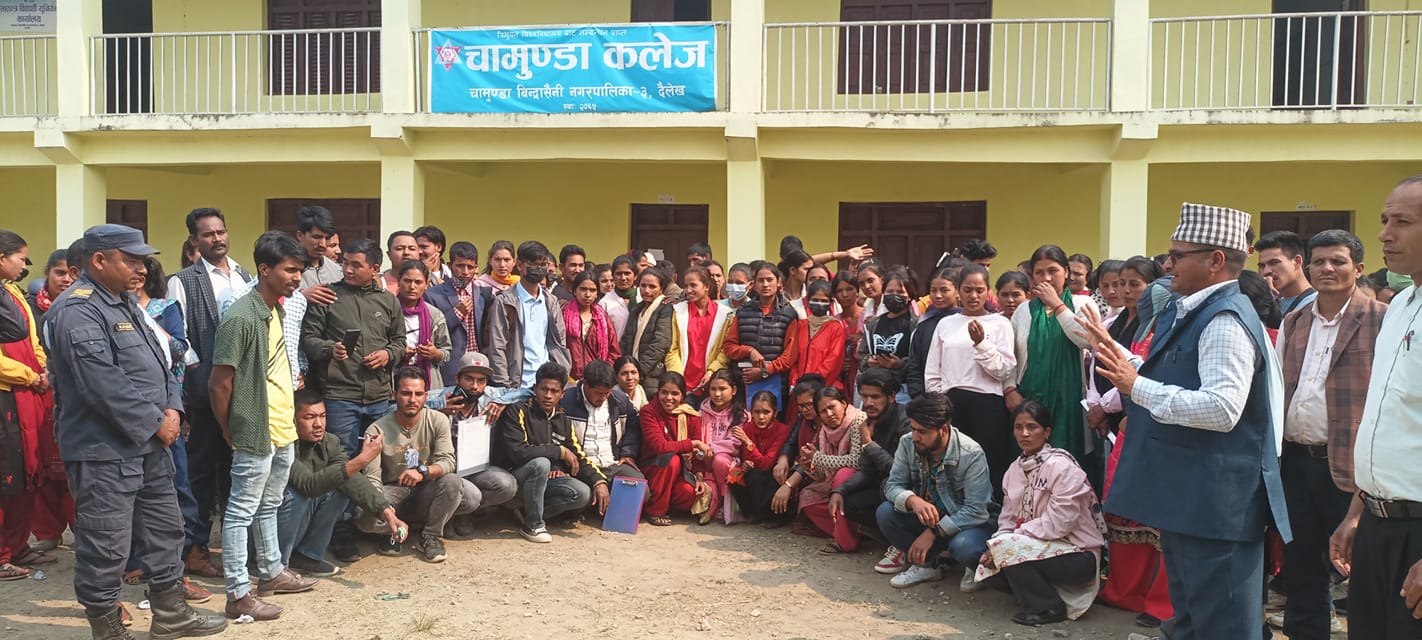
Chamunda College was established in 2007 AD as a community-owned college in Dailekh. The formal initiative to establish the campus began after a gathering held on 2064 Mangsir 28 at Shree Chamunda Secondary School, Hadakot. Political leaders, activists, social workers, intellectuals, education supporters, and guardians from the local area participated in the meeting.
The establishment process moved forward under the leadership of Mr. Hark Bahadur Shahi of Chamunda Bindrasaini-4, Dailekh. A preliminary infrastructure committee was formed to begin the official process of founding the campus.
Tribhuvan University granted temporary affiliation to the college on 2065 Falgun 25. The affiliation allowed bachelor-level classes in English, Nepali, and Population Studies. In the academic year 2065/066, the college began its academic operation with 52 students filling out examination application forms for the first year of the B.Ed. program.
The college was founded to serve students from a geographically remote district where access to higher education was limited. Its purpose was to create a local pathway for working students, underprivileged students, and students from nearby settlements to pursue higher education without leaving the region.
Chamunda College has completed 17 years and entered its 18th year. It has developed its physical and academic structure through coordination with local bodies, the University Grants Commission, supporting institutions, donors, and the local community.
Chamunda College is situated in Chamunda Bindrasaini Municipality-3, Dailekh. The college is located at an elevation of 1,675 meters above sea level and lies approximately 39 kilometers west of the district headquarters.
The college serves students from Chamunda Bindrasaini, Thantikandh Rural Municipality, Aathabis Municipality, Bhairabi Rural Municipality, Mahabu Rural Municipality, and Narayan Municipality. Students also come from nearby districts including Achham, Kalikot, and Surkhet.
The area around the college includes secondary schools that teach up to Class 12. The college serves a region that includes marginalized, educationally underserved, and economically disadvantaged communities. Its local role is tied to the need for accessible higher education in western Dailekh.
Chamunda College offers two main academic programs under the Faculty of Education of Tribhuvan University.
The Bachelor of Education (B.Ed.) program is offered under Tribhuvan University. The B.Ed. program follows the four-year annual system under the Faculty of Education.
The college offers the following B.Ed. specialization subjects:
Nepali Education
English Education
Population Education
Mathematics Education
Health Education
The four-year B.Ed. annual system is a professional and academic program designed for teacher preparation. Under the TU Faculty of Education structure, students study communication skills, professional core education courses, specialization major courses, specialization minor courses, and teaching practice or practicum.
The Master of Education (M.Ed.) program is offered under Tribhuvan University. The M.Ed. program follows the semester system.
The TU M.Ed. program has a normal duration of two years and consists of four semesters. It carries 69 credit hours, including core professional courses, specialization courses, teaching practice or practicum, and thesis writing.
The M.Ed. program is structured for students who plan to work as teachers, educators, education planners, administrators, managers, supervisors, and education researchers. The course delivery includes lecture sessions, project work, assignments, seminars, case studies, and field studies.
Admission to bachelor-level and master-level programs follows the rules, guidelines, notices, and academic calendar of Tribhuvan University, the Faculty of Education, and the campus.
Eligible applicants submit the prescribed application form with the required academic documents.
Admission may include entrance examination, merit-based selection, or both, depending on the program and applicable TU or campus policy.
For B.Ed., applicants must have completed Grade 12, Higher Secondary Education, PCL, or an equivalent qualification, with subject-specific requirements for the chosen specialization area.
For M.Ed., students with B.Ed. or Post-Graduate Diploma in Education from Tribhuvan University or a recognized university are eligible, along with specialization-specific requirements.
M.Ed. student selection is based on marks obtained in the entrance examination, including educational aptitude and specialization subject knowledge.
Selected candidates complete admission by submitting required documents and paying the prescribed fees.
Academic registration, examinations, and results follow TU rules, guidelines, and the applicable academic calendar.
Final examinations under the B.Ed. annual system are conducted by TU through the Office of the Controller of Examinations.
Semester-end examinations under the M.Ed. semester system are conducted by the Office of the Dean.
Academic Transcript or Grade Sheet of Class 12, +2, or equivalent
Character Certificate from the previous institution
Migration Certificate, if the previous board or university is different
Transfer Certificate from the previous school or college
Citizenship Certificate or Birth Certificate copy
Passport-size photographs
Entrance Examination Scorecard, if required by the program or campus
Completed Admission or Application Form of the campus
Admission Fee Payment Receipt
Equivalence Certificate, only if the qualification is from a foreign board or university
Bachelor’s Degree Transcript or Marksheet
Bachelor’s Degree Certificate or Provisional Certificate
Character Certificate from the bachelor-level institution
Migration Certificate, if the bachelor’s degree is from another university
Transfer Certificate from the previous campus or college
Citizenship Certificate or Birth Certificate copy
Passport-size photographs
Entrance Examination Scorecard, if required by the program or faculty
Completed Admission or Application Form
Admission Fee Payment Receipt
Equivalence Certificate, if the bachelor’s degree is from a foreign university
Chamunda College has 17 staff members, including teaching and non-teaching staff. The non-teaching staff includes technical and administrative personnel.
The college uses trained educators and discussion-based teaching methods. Student-teacher interaction is part of the teaching approach. The college has also introduced ICT-supported learning through an ICT lab and smart boards.
The higher education management information system grant received under the digitalization work performance grant program for fiscal year 2081/82 BS supports the college’s effort to organize physical, financial, academic, administrative, and statistical records. The digitalization effort is also linked with physical and online teaching support.
23 ropani of land
6 concrete buildings
17 classrooms
10 administrative rooms
One hostel with 16 rooms
1 seminar hall
1 student union room
Library
Basic laboratories
ICT lab
Smart boards
Wi-Fi
CCTV cameras installed in rooms and college premises
Office facilities
Playground
Canteen
175 sets of desks and benches
40 plastic chairs
9 sofa sets
16 office tables
9 armchairs
9 computers
3 printer sets
1 projector
6 laptops
3 bookshelves
Chamunda College serves students from multiple municipalities, rural municipalities, and nearby districts. Its location in western Dailekh allows students from the surrounding region to pursue B.Ed. and M.Ed. studies within a local community setting.
The campus has a playground, canteen, student union room, hostel, classrooms, library, seminar hall, and ICT-supported learning spaces. These facilities support academic activity, student interaction, and day-to-day campus use.
The college’s student base reflects its regional role. It was established to address local higher education needs and continues to serve students from Dailekh and neighboring districts.
Scholarship opportunities are available at the college.
The college operates with regular and physical grants from the University Grants Commission.
The college receives physical grants from local levels.
Donor contributions and student fees support institutional operation.
A fund of around 11 million rupees has been raised through donations from education-supporting guardians.
The college has 30 donors, and all donors are members of the college assembly.
A community gathering at Shree Chamunda Secondary School, Hadakot, on 2064 Mangsir 28 initiated the establishment process.
A preliminary infrastructure committee was formed under the leadership of Mr. Hark Bahadur Shahi.
Tribhuvan University granted temporary affiliation on 2065 Falgun 25.
The college began B.Ed. first-year academic operation in 2065/066 with 52 students filling out examination application forms.
The college developed physical, academic, and administrative structures after beginning without its own physical, academic, or administrative setup.
The college owns 23 ropani of land and has developed buildings, classrooms, office spaces, hostel space, and learning facilities.
The college has received a grant for the establishment of a higher education management information system under the digitalization work performance grant program of fiscal year 2081/82 BS.
Chamunda College has completed 17 years and entered its 18th year.
Chamunda College is chaired by Nirak Bahadur Shahi. Prem Bahadur Bista serves as the Campus Chief and contact person.
The college’s governing structure has been reorganized according to the provisions in its rules and regulations as prescribed by TU. Its community base remains part of its institutional identity, with donors participating as members of the college assembly.
The college’s development has been supported through local participation, University Grants Commission support, local-level grants, donor contributions, and student fees.
Chamunda College, Dailekh, has developed as a community-based higher education institution focused on education programs under Tribhuvan University. Its academic work centers on B.Ed. and M.Ed. programs, with undergraduate specialization options in Nepali Education, English Education, Population Education, Mathematics Education, and Health Education.
The college’s institutional story is closely linked with local participation in Chamunda Bindrasaini and the wider Dailekh region. Its facilities, student enrollment, governance structure, and TU affiliation make it a relevant institution for students seeking education programs in Karnali Province.
College Name: Chamunda College
Location: Chamunda Bindrasaini Municipality-3, Dailekh, Karnali Pradesh, Nepal
Phone: +977-9858071678
Email: college.chamunda@gmail.com
Website: chamundacollege.edu.np
Chairperson: Nirak Bahadur Shahi
Campus Chief: Prem Bahadur Bista
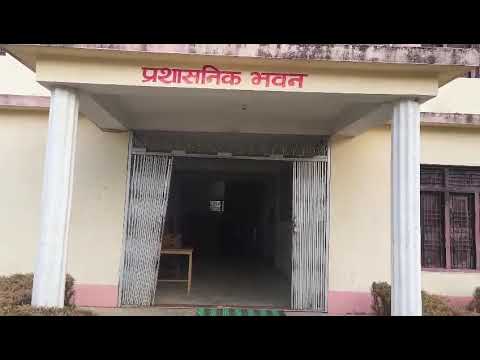
Chamunda College is located in Chamunda Bindrasaini Municipality-3, Dailekh, Karnali Province, Nepal.
Chamunda College is affiliated with Tribhuvan University.
Yes. Chamunda College is recognized by the University Grants Commission of Nepal.
Chamunda College offers Bachelor of Education (B.Ed.) and Master of Education (M.Ed.) programs under the Faculty of Education.
The B.Ed. specialization subjects available at Chamunda College are Nepali Education, English Education, Population Education, Mathematics Education, and Health Education.
The B.Ed. program under Tribhuvan University follows a four-year annual system.
The M.Ed. program under Tribhuvan University follows a two-year, four-semester structure with 69 credit hours.
Chamunda College has classrooms, library, basic laboratories, ICT lab, smart boards, Wi-Fi, CCTV, hostel, seminar hall, student union room, playground, canteen, and office facilities.