HA
Admission




Devdaha Medical College & Research Institute is a private medical college located at Bhaluhi, Devdaha-9, Rupandehi, Lumbini Province, Nepal. Established in 2009 AD, the institution is also commonly known as Devdaha Medical College, Rupandehi.
The college is affiliated with Kathmandu University (KU) for its medical, nursing, allied health, and postgraduate academic programs. It operates alongside Devdaha Medical College Teaching Hospital, giving students access to clinical learning within the same institutional setting.
Its academic programs include MBBS, BSc Nursing, BSc Medical Laboratory Technology, BSc Medical Imaging Technology, and a range of postgraduate MD/MS specialties. Medical education admissions, seat allocation, scholarships, and related procedures are governed by the prevailing framework of Nepal's Medical Education Commission, while Kathmandu University governs the academic curriculum, examinations, and degree-awarding process.
| Field | Details |
|---|---|
| Official Name | Devdaha Medical College & Research Institute |
| Common Name | Devdaha Medical College |
| Established | 2009 AD |
| Institution Type | Private medical college |
| Location | Bhaluhi, Devdaha-9, Rupandehi, Lumbini Province, Nepal |
| Municipality | Devdaha Municipality |
| Affiliation | Kathmandu University |
| Academic Areas | Medicine, nursing, medical laboratory technology, medical imaging technology, MD/MS specialties |
| Teaching Hospital | Devdaha Medical College Teaching Hospital |
| Bachelor-Level Entrance | MECEE-BL for applicable medical and nursing programs |
| Postgraduate Entrance | MECEE-PG for applicable MD/MS programs |
| Degree Award | Kathmandu University |
| Professional Regulation | Relevant professional councils according to the program |
| Website | www.devdahamedicalcollege.edu.np |
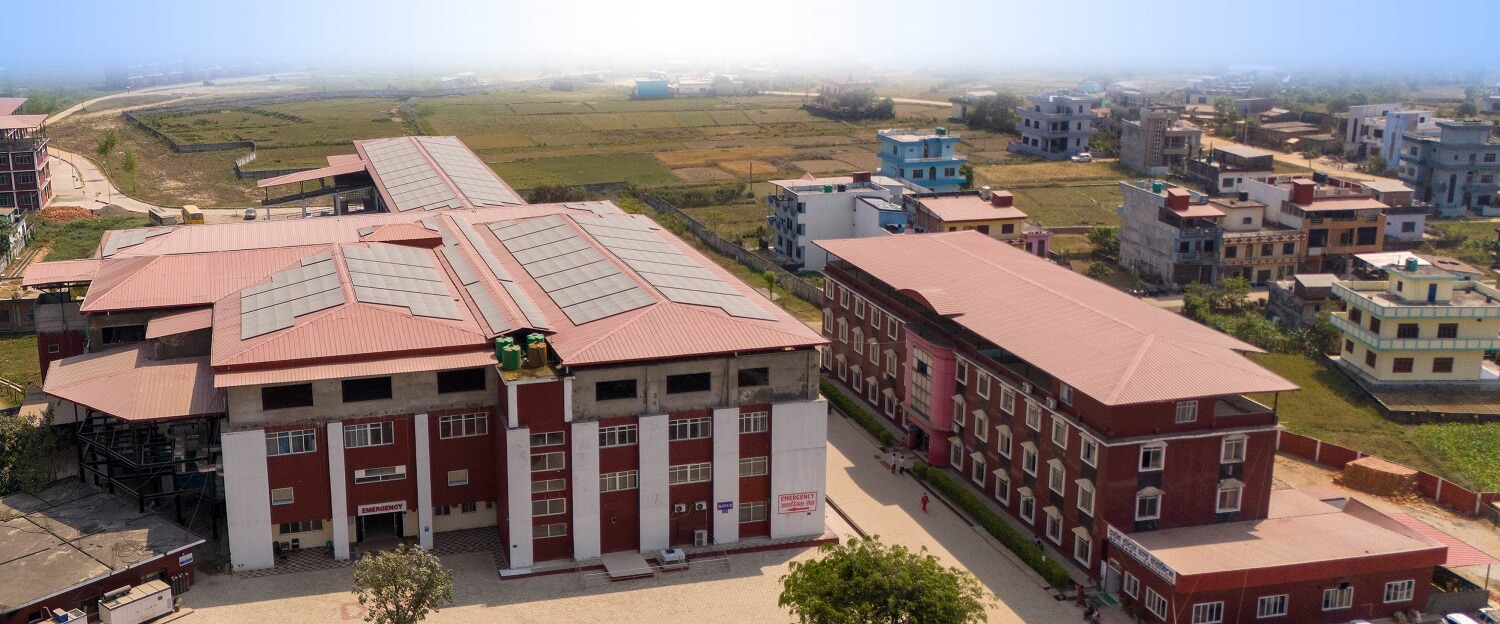
The college is situated within Devdaha Municipality in Rupandehi. Its academic campus and teaching hospital function within the same institutional environment, connecting classroom study with laboratory, clinical, and hospital-based learning.
Devdaha Medical College & Research Institute combines medical and health science education with clinical service and practical training. Its academic structure is intended to prepare students through classroom instruction, laboratory work, community exposure, and supervised clinical learning.
Teaching methods associated with the college include small-group tutorials, problem-based learning, interactive lectures, laboratory exercises, clinical training, community visits, and bedside learning. These methods support the study of basic sciences alongside their application in clinical settings.
The institution also includes research within its academic objectives. Medical and nursing education is connected with research activities, professional learning, and healthcare practice.
Community-oriented learning forms another part of the educational setting. Students may encounter health issues not only through hospital-based practice but also through community-related learning activities linked to their academic programs.
Devdaha Medical College is affiliated with Kathmandu University for its stated undergraduate and postgraduate programs.
Kathmandu University provides the academic framework for affiliated programs. Curriculum structure, academic assessment, examinations, progression requirements, and degree awards follow the applicable KU rules and regulations.
For students enrolled at the college, this means that:
the relevant curriculum follows Kathmandu University academic requirements;
university examinations are conducted according to KU regulations;
progression and completion depend on meeting the academic requirements of the university;
program structure and academic assessment follow the rules applicable to the respective degree; and
eligible graduates receive their degrees through Kathmandu University.
The university's academic role is different from the admission-regulation role of the Medical Education Commission. MEC governs major parts of medical education admission, seat determination, scholarship allocation, and matching, while Kathmandu University governs the academic delivery, examination system, and degree-awarding process.
Medical education admissions in Nepal operate under the Medical Education Commission (MEC). Devdaha Medical College follows the applicable MEC system for programs that fall within the commission's jurisdiction.
Bachelor-level medical and nursing admissions are based on the applicable MECEE-BL process. Postgraduate medical admissions follow the MECEE-PG framework.
MEC rules cover areas such as entrance examinations, admission procedures, seat allocation, scholarship provisions, fee regulation, codes of conduct, matching procedures, and the official admission calendar.
Seat numbers and category distribution are determined under the applicable MEC process and may change between admission cycles. Students should use the seat matrix issued for the admission cycle in which they are applying.
Professional regulation continues after academic completion. Medical graduates fall under the professional framework of the Nepal Medical Council, nursing graduates under the Nepal Nursing Council, and eligible allied health graduates under the Nepal Health Professional Council (NHPC), according to the profession and prevailing registration requirements.
Devdaha Medical College offers undergraduate study in medicine, nursing, medical laboratory technology, and medical imaging technology under Kathmandu University affiliation.
| Program | Total Seats | Seat Distribution |
|---|---|---|
| Bachelor of Medicine, Bachelor of Surgery (MBBS) | 75 | Foreign: 24; Paying: 43; Scholarship: 8 |
| BSc in Nursing | 40 | Foreign: 13; Paying: 23; Scholarship: 4 |
| BSc Laboratory Medicine | 5 | Foreign: 2; Paying: 2; Scholarship: 1 |
| BSc Medical Imaging Technology (BSc MIT) | 5 | Foreign: 1; Paying: 3; Scholarship: 1 |
The MBBS program combines foundational medical science, clinical study, practical training, and compulsory internship. The stated program duration is five and a half years, including a one-year internship.
Early phases of study cover basic and pre-clinical subjects, followed by progressively greater clinical exposure. Academic areas include anatomy, physiology, biochemistry, pharmacology, pathology, microbiology, community medicine, and clinical disciplines.
Clinical rotations connect classroom knowledge with supervised hospital practice. Students are expected to complete the academic, clinical, examination, and internship requirements prescribed for the program.
The stated MBBS intake is 75 seats:
Foreign seats: 24
Paying seats: 43
Scholarship seats: 8
Open scholarship seats: 4
Reservation scholarship seats: 4
The four reservation scholarship seats are distributed as follows: Dalit 1, Khasarya 1, Tharu 1, and Pichhadiyeko Chhetra 1.
Admission follows the applicable MECEE-BL process and the prevailing MEC admission and matching system.
BSc Nursing is a four-year undergraduate nursing program. It combines theoretical study with practical and clinical education.
Study areas include nursing fundamentals, anatomy, physiology, pharmacology, microbiology, community health nursing, and other components prescribed within the applicable curriculum.
Clinical learning forms an important part of the program. Students develop nursing knowledge through supervised practice alongside classroom-based study.
The stated intake is 40 seats:
Foreign seats: 13
Paying seats: 23
Scholarship seats: 4
Open scholarship seats: 2
Reservation scholarship seats: 2
The two reservation scholarship seats are allocated as Adibasi Janajati 1 and Pichhadiyeko Chhetra 1.
Admission follows the applicable MECEE-BL and MEC framework for bachelor-level nursing education.
BSc MLT, or Medical Laboratory Technology, is a four-year undergraduate program related to laboratory-based diagnosis and medical laboratory science.
Its academic areas include clinical biochemistry, microbiology, hematology, immunology, molecular biology, and laboratory techniques. The program combines scientific study with practical laboratory training.
The stated intake is five seats:
Foreign seats: 2
Paying seats: 2
Open scholarship seats: 1
No reservation scholarship seat is included in the stated distribution.
BSc Medical Imaging Technology is a four-year undergraduate program focused on medical imaging science and its clinical application.
Students study imaging techniques and technologies while gaining practical exposure relevant to the discipline.
The stated intake is five seats:
Foreign seats: 1
Paying seats: 3
Open scholarship seats: 1
No reservation scholarship seat is included in the stated distribution.
Postgraduate education at Devdaha Medical College includes basic medical science and clinical MD/MS specialties under Kathmandu University affiliation.
The stated seat structure separates postgraduate programs into categories identified as MD/MS without experience and MD/MS with experience.
| Program | Total Seats | Allocation |
|---|---|---|
| MS Anatomy / Clinical Anatomy | 2 | 2 Open |
| MD Pathology / Clinical Pathology | 1 | 1 Open |
| MD Pharmacology / Clinical Pharmacology | 1 | 1 Open |
These programs cover postgraduate study in anatomy, pathology, and pharmacology within the academic and examination requirements applicable to Kathmandu University medical education.
| Program | Total Seats | Allocation |
|---|---|---|
| MD Anaesthesiology | 1 | 1 Open |
| MS General Surgery | 3 | 2 Open; 1 Foreign |
| MD Internal Medicine | 3 | 3 Open |
| MD Obstetrics and Gynaecology | 2 | 2 Open |
| MS Ophthalmology | 2 | 2 Open |
| MS Orthopedics / Orthopedics and Trauma Surgery | 3 | 3 Open |
| MD Paediatrics | 1 | 1 Open |
| MD in Psychiatry | 1 | 1 Open |
| MD Radiodiagnosis / Radiology | 2 | 2 Open |
These postgraduate programs cover a range of clinical specialties, including medicine, surgery, women's health, child health, eye care, musculoskeletal care, mental health, anaesthesia, and diagnostic imaging.
Admission is governed by the applicable MECEE-PG process, MEC regulations, and Kathmandu University requirements for postgraduate medical education.
Devdaha Medical College Teaching Hospital operates within the college's campus setting in Bhaluhi, Devdaha, Rupandehi.
The hospital provides the clinical environment required for medical, nursing, and health science education. Classroom knowledge can be followed by supervised clinical exposure according to the structure of each academic program.
Medical students move from basic and pre-clinical study into clinical rotations, where they encounter patient-based learning in relevant departments. Nursing education also combines classroom teaching with supervised clinical practice. Laboratory and medical imaging students receive practical training connected with their respective technical fields.
The institution uses several forms of teaching and learning, including:
classroom lectures;
small-group tutorials;
problem-based learning;
laboratory exercises;
clinical demonstrations;
bedside teaching;
community visits; and
supervised practical training.
The combination of college and teaching hospital functions allows academic teaching and clinical education to take place within the same institutional system.
Admission to Devdaha Medical College is governed by the applicable rules of the Medical Education Commission and Kathmandu University.
For bachelor-level programs covered by the medical education entrance system, candidates are required to follow MECEE-BL requirements.
For postgraduate MD/MS programs, candidates follow the applicable MECEE-PG process.
Depending on the program and admission category, the admission system may involve:
meeting prescribed academic eligibility;
qualifying in the relevant entrance examination;
participating in MEC matching or selection procedures;
meeting scholarship or reservation requirements where applicable;
applying under the appropriate paying, scholarship, or foreign category;
submitting the required academic and identification documents; and
completing admission procedures within the applicable MEC and university schedule.
The exact eligibility criteria depend on the academic program and the prevailing regulations applicable to the admission cycle.
Scholarship provisions form part of the regulated medical education admission system.
For MBBS, eight of the stated 75 seats are scholarship seats. Four are open scholarship seats, while four are reservation scholarship seats.
For BSc Nursing, four of the stated 40 seats are scholarship seats. Two are open scholarship seats and two fall under reservation categories.
BSc MLT and BSc MIT each have one open scholarship seat within their stated five-seat intake.
Scholarship admission remains subject to MEC rules on merit, category, reservation, matching, and other applicable conditions.
Seat figures should not be treated as permanently fixed. The Medical Education Commission determines seats and may revise total intake or category distribution from one admission cycle to another.
The curriculum for programs offered at Devdaha Medical College follows the applicable Kathmandu University academic framework.
Medical education includes basic sciences, clinical subjects, practical work, community-based learning, clinical rotations, and internship components according to the relevant program.
Nursing education combines theoretical study with clinical practice, while laboratory and medical imaging programs combine scientific instruction with technical and practical training.
Postgraduate MD/MS programs focus on specialty-specific academic study, clinical training, assessment, and examination requirements.
Academic progression depends on fulfilling the curriculum, attendance, practical, clinical, assessment, and examination requirements prescribed for the respective program.
Kathmandu University governs examinations and academic assessment for its affiliated programs at Devdaha Medical College.
Students must meet the required academic and examination standards before completing their respective programs. Where internship or clinical training is part of the curriculum, completion of those requirements is also necessary.
The relevant degree is awarded through Kathmandu University after the student fulfills the academic conditions applicable to the program.
University degree completion should be distinguished from professional registration. A graduate may complete the academic program but still need to satisfy the licensing or registration requirements of the relevant professional council before entering regulated professional practice.
Medical and health professions in Nepal are regulated through professional councils.
MBBS graduates must meet the applicable licensing and registration requirements of the Nepal Medical Council before practising medicine professionally in Nepal.
BSc Nursing graduates are subject to the professional registration requirements of the Nepal Nursing Council.
Graduates of allied health programs may fall under the professional registration framework of the Nepal Health Professional Council, depending on the profession and applicable regulations.
The professional pathway therefore involves two distinct stages: completion of the university degree and fulfillment of the registration or licensing requirements of the responsible council.
Research is included within the academic objectives of Devdaha Medical College. The institution connects medical and health science education with research-related activities intended to develop familiarity with scientific inquiry and evidence-based academic work.
Community exposure is also part of its teaching approach. Community visits allow students to encounter health needs outside the hospital setting and relate classroom knowledge to public and community health contexts.
The college's educational structure therefore places students in several learning environments: classrooms, laboratories, hospital departments, clinical settings, and community-based activities.
Devdaha Medical College & Research Institute is located at Bhaluhi, Devdaha-9, Rupandehi, Lumbini Province, Nepal.
The academic college and teaching hospital are situated within the same institutional setting. This is relevant for programs that require continuing access to hospital departments, laboratories, practical sessions, and clinical rotations.
Students comparing medical institutions can also review Nepal Medical College, Kathmandu as a separate college profile. Academic affiliation, seat allocation, courses, and admission structures differ between institutions, so each college should be considered according to its own academic and regulatory arrangements.
Medical education admission is regulated and several important details may change from one admission cycle to another. Applicants should pay particular attention to:
the program included in the relevant MEC admission cycle;
current total seat allocation;
paying, scholarship, reservation, and foreign seat categories;
MECEE-BL or MECEE-PG requirements;
program-specific academic eligibility;
scholarship and reservation provisions;
admission and matching procedures;
the applicable MEC admission calendar;
Kathmandu University academic requirements; and
professional council requirements associated with the intended field.
This is particularly important for seat allocation. The seat figures stated for the programs provide the specified distribution, but MEC may revise seats in a later admission cycle.
Devdaha Medical College & Research Institute is a private medical college established in 2009 AD and located at Bhaluhi, Devdaha-9, Rupandehi, Lumbini Province.
The college is affiliated with Kathmandu University and operates together with Devdaha Medical College Teaching Hospital. Its undergraduate programs include MBBS, BSc Nursing, BSc MLT, and BSc MIT, while postgraduate education includes MD/MS specialties across basic medical sciences and clinical disciplines.
Admissions to applicable bachelor-level medical and nursing programs follow the MECEE-BL framework, while postgraduate medical admissions follow MECEE-PG. The Medical Education Commission regulates admission-related matters including seat allocation, scholarships, and related procedures, while Kathmandu University governs curriculum, examinations, and degree awards.
Graduates entering regulated health professions must also meet the professional registration or licensing requirements of the council responsible for their field.
Devdaha Medical College & Research Institute was established in 2009 AD.
The college is located at Bhaluhi, Devdaha-9, Rupandehi, Lumbini Province, Nepal.
Devdaha Medical College is affiliated with Kathmandu University. Its stated undergraduate and postgraduate programs operate under the applicable academic rules and regulations of KU.
The undergraduate programs include MBBS, BSc Nursing, BSc MLT (Medical Laboratory Technology), and BSc MIT (Medical Imaging Technology).
The stated MBBS intake is 75 seats, comprising 24 foreign seats, 43 paying seats, and eight scholarship seats. Seat allocations are determined under the MEC framework and may change between admission cycles.
The stated BSc Nursing intake is 40 seats. These include 13 foreign seats, 23 paying seats, and four scholarship seats.
Yes. The college offers postgraduate MD/MS programs in areas including Anatomy / Clinical Anatomy, Pathology / Clinical Pathology, Pharmacology / Clinical Pharmacology, Anaesthesiology, General Surgery, Internal Medicine, Obstetrics and Gynaecology, Ophthalmology, Orthopedics, Paediatrics, Psychiatry, and Radiodiagnosis / Radiology.
Applicable bachelor-level medical and nursing admissions follow the MECEE-BL framework. Postgraduate MD/MS admissions follow the MECEE-PG framework under the prevailing rules of the Medical Education Commission.
Yes. Devdaha Medical College Teaching Hospital operates within the same institutional setting in Bhaluhi, Devdaha, Rupandehi and supports clinical education for relevant programs.
Kathmandu University awards the relevant degrees after students fulfill the academic, examination, clinical, internship, and other program requirements that apply to their course.
Graduates entering regulated health professions must meet the applicable registration or licensing requirements of the responsible professional council. Medical graduates come under the Nepal Medical Council, nursing graduates under the Nepal Nursing Council, and applicable allied health graduates under the Nepal Health Professional Council.
Yes. The stated seat structure includes scholarship seats for MBBS, BSc Nursing, BSc MLT, and BSc MIT. Scholarship categories and allocation operate under the applicable MEC framework.
Yes. Medical Education Commission seat determination can vary between admission cycles. Applicants should follow the seat allocation applicable to the year in which they apply.
Admission
HA