Hetauda School of Management and Social Sciences (HSMSS) is a higher education institution in Hetauda, Makawanpur, Nepal. Established in 1995 AD (2052 BS), it began with 35 students in the Management stream at the higher secondary level and has since expanded into a multi-level institution serving more than 2,500 students annually across more than 14 academic programs. HSMSS is affiliated with Tribhuvan University (TU) and the National Examinations Board (NEB), with academic offerings that extend from secondary to master’s level.
The institution offers study opportunities in Science, Management, Arts, Education, and Information Management. Its academic environment combines lectures, seminars, workshops, hands-on training, and self-learning practices, alongside student clubs, campus activities, academic support services, and community engagement initiatives. The institutional motto, “Strict Discipline, Quality Education,” reflects the emphasis placed on structured learning, academic standards, and student development.
Established: 1995 AD (2052 BS)
Location: Hetauda-4, Makawanpur, Nepal
Affiliation: Tribhuvan University (TU), National Examinations Board (NEB)
Institution Type: Secondary to master’s level institution
Student Base: More than 2,500 students annually
Academic Scope: Science, Management, Arts, Education, and Information Management
Motto: Strict Discipline, Quality Education
Key Recognition: QAA certification from the University Grants Commission in Baisakh 2080
Contact: info@hsm.edu.np | +977-57-524701, +977-57-524711
Website: hsm.edu.np
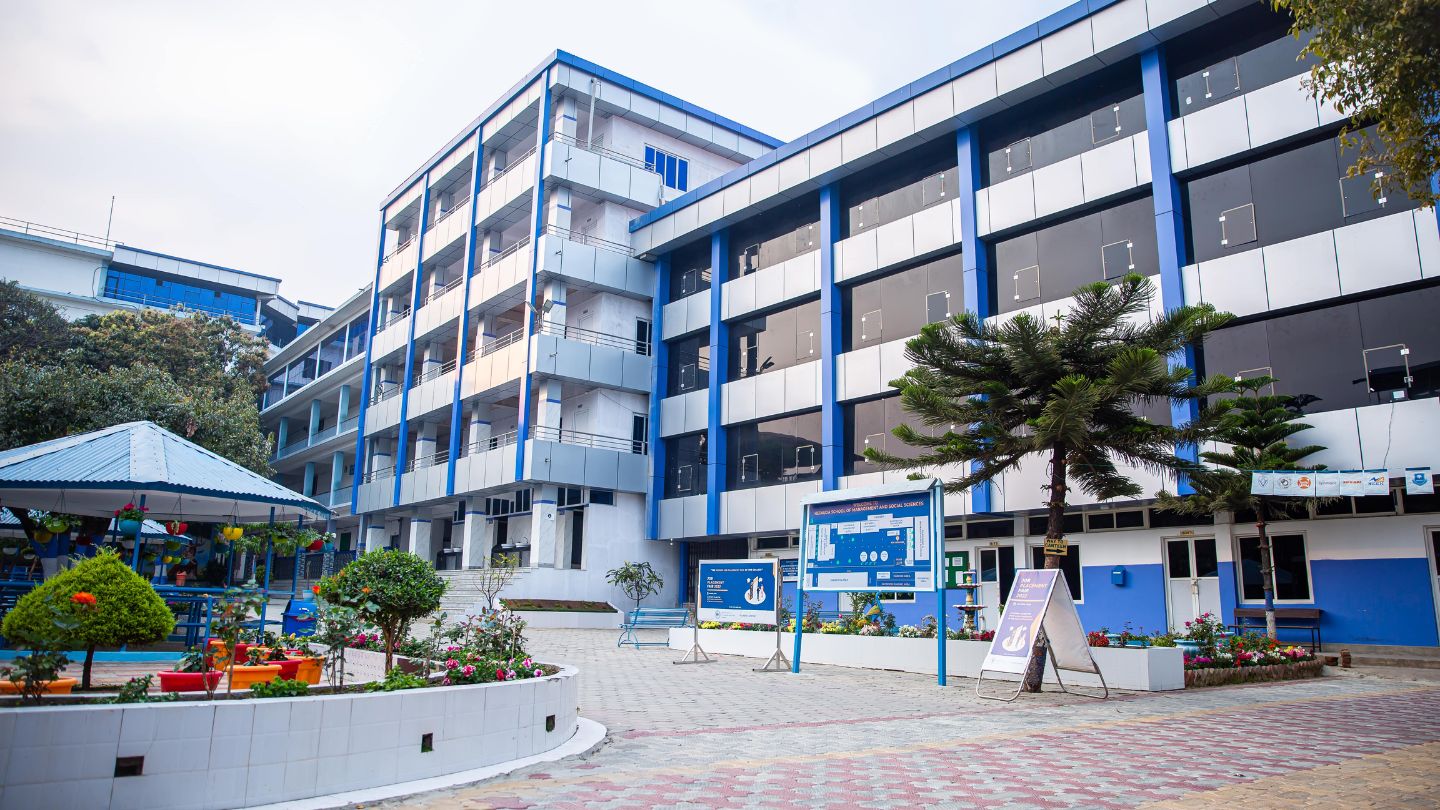
HSMSS has grown from a small higher secondary institution into a broader academic center in Hetauda. Its early focus was Management education, but over time it expanded to include secondary, undergraduate, and graduate programs across multiple disciplines. Located in the center of Hetauda, the institution serves students from both the Terai and hill regions.
The college has built its academic identity around discipline, structured learning, and practical engagement. Its campus environment is shaped not only by classroom teaching but also by seminars, workshops, field-based activities, student clubs, and development-oriented programs. HSMSS also places emphasis on academic continuity, offering pathways from secondary education to postgraduate study within the same institution.
Over the years, the institution has introduced newer academic options alongside its long-running programs. The inclusion of technology-oriented courses such as Bachelor of Information Technology Management and Bachelor of Computer Application reflects an expansion from its earlier management-centered base into more diverse academic areas.
HSMSS presents its mission as providing experimental design thinking platforms for transforming challenges into opportunities. This aligns the institution with a practical and problem-solving approach to education.
Its vision is to be a preferred 21st century higher learning institution in Nepal for transformative, experiential education. The vision reflects a long-term orientation toward applied learning, student participation, and contemporary academic delivery.
The institution identifies the following values:
Positive discipline
Integrity
Respect
Continuous improvement and sustainability
These values correspond closely with the college’s stated educational culture and its broader focus on student conduct, responsibility, and institutional development.
HSMSS offers education from the secondary level to the master’s level. Across its academic structure, the institution includes programs in Science, Management, Arts, Education, and Information Management.
The secondary-level offerings include:
Ten Plus Two (+2) Science
Ten Plus Two (+2) Management
Ten Plus Two Hotel Management
The +2 Science program includes computer, physical, and biological group pathways. The +2 Management program supports foundational study in management and related subjects. The +2 Hotel Management option is oriented toward hospitality-related learning and industry awareness.
The undergraduate programs identified are:
Bachelor of Computer Application (BCA)
Bachelor of Information Technology Management (BITM)
Bachelor of Business Studies (BBS)
These programs represent the institution’s undergraduate presence in business and information technology. BCA focuses on computer applications and software-related study. BITM combines information technology with management-oriented academic content. BBS provides a management-focused undergraduate route under Tribhuvan University.
The graduate-level program identified is:
Master of Business Studies (MBS)
MBS extends the institution’s academic offerings in management and provides postgraduate study in business and management.
In addition to the program list highlighted above, the institution also refers more broadly to undergraduate programs in Management, Education, and Information Technology Management, along with graduate programs in Management, Arts, and Education. This indicates an academic structure wider than the core list of named programs.
BITM is a four-year undergraduate program under Tribhuvan University with 8 semesters and 120 total credits. The curriculum includes programming, database management, system analysis and design, networking, web development, project work, information security, artificial intelligence, business information systems, and internship components. The medium of instruction is English. The listed class timing is 6:10 AM to 10:10 AM, and the available seats are 66.
BCA is a four-year undergraduate program under Tribhuvan University with 8 semesters and 120 total credits. It includes computer fundamentals, digital logic, programming, system analysis and design, software engineering, database management, networking, mobile programming, distributed systems, cloud computing, internships, and project work. The medium of instruction is English. The listed class timing is 6:10 AM to 10:10 AM, and the seat capacity is 35.
BBS is a four-year undergraduate management degree under Tribhuvan University. The course areas include business English, statistics, economics, accounting, management, business law, marketing, taxation and auditing, organizational behavior, entrepreneurship, research methods, and project work. The medium of instruction is English. The listed class timing is 6:10 AM to 10:10 AM, and the seat capacity is 80.
MBS is a two-year semester-based postgraduate program under Tribhuvan University with 4 semesters and 60 total credits. The course structure includes marketing management, managerial economics, statistical methods, organizational behavior, financial management, business environment, research methodology, international business, strategic management, entrepreneurship, and specialization-oriented subjects in finance, marketing, and accountancy. The medium of instruction is English. The listed class timing is 6:10 AM to 10:10 AM, and the available seats are 32.
HSMSS describes its academic approach through a combination of lectures, seminars, workshops, hands-on training, and self-learning. This creates a learning setting that goes beyond routine classroom instruction and places value on participation, practice, and applied understanding.
The institution also links education with wider personal and professional development. Its broader academic environment includes field visits, industry visits, talk programs, soft-skill workshops, project-based work, and internship-related exposure. The emphasis on learning by doing supports both academic progression and professional readiness.
Faculty members form an important part of the institution’s academic identity. HSMSS associates its teaching environment with experienced and trained faculty, and it connects this strength with the overall quality of the student experience. The educational approach is therefore not limited to program delivery but extends to confidence building, self-direction, and responsible participation in society.
Student development is supported through structured academic and non-academic initiatives. HSMSS identifies a Student Development Cell that is intended to support students in their overall growth. The institution links this work with the development of confidence, self-direction, and a positive outlook.
Skill-building appears as a clear institutional priority. The college connects student development with entrepreneurial thinking, training activities, and readiness for changing academic and professional environments. Activities such as CCNA workshops, financial literacy sessions, IoT training, and entrepreneurial programs are part of this broader student development framework.
Extracurricular and co-curricular engagement is also an established part of campus life. HSMSS notes that it maintains six club structures, each guided by mentors, to give students organized spaces for participation and development.
The Career Crafters Club brings together entrepreneurship and career preparation. It provides a platform for exploring business ideas, building employability skills, participating in workshops and training, preparing for interviews, and engaging in career counseling and networking activities.
The Social Service Club focuses on community-oriented activities such as charity work, donations, event management for social causes, and the development of social responsibility among students. It also encourages discussion and participation around community concerns.
The Art Club serves students interested in music, dance, craft, sketching, and public speaking. It supports artistic expression, cultural participation, communication, and recreational involvement.
The IT Club is designed for students interested in information technology and provides opportunities to strengthen IT-related knowledge and skills.
The institution treats extracurricular and co-curricular participation as part of overall student growth. These activities are linked with teamwork, leadership, communication, social competence, and organizational ability, making student engagement an integrated part of the academic experience.
HSMSS identifies a range of campus facilities and student support services that contribute to academic and campus life. The listed features include:
Library
Sports
Computer Lab
Multimedia
Journal
Counseling
Scholarships
Classrooms
Conference Hall
Tour
ECA
These facilities support both instructional and developmental needs. Academic infrastructure such as classrooms, a library, a computer lab, multimedia support, and a conference hall contributes to teaching and learning, while counseling, scholarships, sports, tours, and ECA participation extend the support structure beyond routine academic work.
The institution also presents its campus as peaceful and safe. It describes the setting as being in the middle of a residential area while remaining free from noise and dust pollution, with a green environment and views of Hetauda city and the northern hills. This setting is linked with student well-being and a supportive learning atmosphere.
HSMSS includes institutional platforms that go beyond standard coursework.
IHub is presented as an experiential learning platform where students learn different dimensions of entrepreneurship and develop business skills. Its mission is to build an entrepreneurial mindset among students and entrepreneurs. Its vision centers on a functional and self-sustaining incubation center that recognizes innovative ideas with scalability and offers strategic, technical, and financial support.
The objectives of IHub include the development of entrepreneurial thinking, support for innovation, improvement of self-employability, reduction of risk in entrepreneurial efforts, and contribution to local and national economic growth.
The institution also identifies a Research Department. It is described as a unit where researchers engage in projects across different disciplines and contribute to academic excellence and intellectual exploration. This adds a research dimension to the institution’s academic framework alongside teaching, student engagement, and skill development.
HSMSS connects education with broader social responsibility. The institution highlights social initiatives intended to support underprivileged groups and community welfare. It mentions regular donation programs for old age homes and participation in works related to temple construction and support infrastructure.
The college also links community engagement with sports. It has financially supported matches involving national football and cricket players and organizes alumni-community matches. These activities reflect an effort to encourage sportsmanship, teamwork, and continued engagement between alumni, students, and the wider community.
Sustainability is identified as part of the institution’s broader outlook. HSMSS connects environmental responsibility with student awareness and future-oriented institutional practice, including activities such as tree planting and environmental care.
A major institutional milestone for HSMSS is its Quality Assurance and Accreditation recognition. The institution reports that, after sustained effort beginning in 2070 BS, it received QAA certification in Baisakh 2080 from the University Grants Commission. It also notes the passing of the Pre-PRT in June 2022 as part of the quality assurance process.
Within the institutional context, this recognition is presented as the result of long-term academic and organizational effort. The QAA certification marks an important point in the institution’s development and reflects its focus on academic standards and institutional improvement.
HSMSS has established workplace safety and grievance handling guidelines related to sexual exploitation, abuse, and harassment. The institution sets out a code of conduct intended to maintain a safe, respectful, and inclusive workplace for employees, with particular attention to the safety and dignity of female staff.
To support this framework, the college has formed a Safe Space Cell and a Workplace Safety Investigation Committee. These bodies are intended to handle complaints through a confidential, survivor-centered process. Reporting channels include a physical complaint drop box, an anonymous online grievance form, direct email to the Safe Space Cell, and in-person reporting. The process includes preliminary screening, investigation, recommendations, corrective measures, and protection from retaliation.
This governance structure adds an important administrative dimension to the institution’s profile and reflects a formal approach to accountability and workplace conduct.
The principal message associated with the institution is attributed to Puran Bahadur Joshi. The message emphasizes quality education, faculty support, moral integrity, behavioral discipline, and the overall development of students. His leadership is also associated with the period in which the college received QAA recognition.
Contact Hetauda School of Management and Social Sciences's administrative office for detailed information on the course, admissions, location, fees, scholarships, facilities, counseling, or eligibility.
Location: Hetauda-4, Makawanpur, Bagmati Province, Nepal
Email: info@hsm.edu.np
Phone: +977-57-524701, +977-57-524711
Website: hsm.edu.np
Hetauda School of Management and Social Sciences was established in 1995 AD (2052 BS).
HSMSS is located at Hetauda-4, Makawanpur, Nepal.
HSMSS is affiliated with Tribhuvan University (TU) and the National Examinations Board (NEB).
HSMSS offers programs from the secondary level to the master’s level.
The named courses include +2 Science, +2 Management, +2 Hotel Management, BCA, BITM, BBS, and MBS.
The institution’s motto is “Strict Discipline, Quality Education.”
Yes. HSMSS received QAA certification from the University Grants Commission in Baisakh 2080.
The institution identifies facilities and support services such as a library, sports, computer lab, multimedia, journal, counseling, scholarships, classrooms, conference hall, tours, and ECA activities.