Makawanpur Multiple Campus (MMC - मकवानपुर बहुमुखी क्याम्पस) is a community campus in Hetauda, Makawanpur, established in 1980 AD (2037 BS). It operates as a non-profit making public campus and is governed by a management committee drawn from different sections of society. The campus is affiliated with Tribhuvan University (TU) and the National Examination Board (NEB), and it holds QAA Certification Award recognition from the University Grants Commission (UGC).
Over time, MMC has grown from a regional higher education initiative into a multi-level institution with Ten Plus Two, bachelor’s, and master’s programs. Its role in Makawanpur and nearby districts is closely linked with access, affordability, teaching, research, and community engagement, supported by a steadily expanded academic and physical infrastructure.
Established: 1980 AD (2037 BS)
Institution Type: Community campus; non-profit making public campus
Governance: Managed by a management committee with members from different sections of society
Affiliation: Tribhuvan University (TU) and National Examination Board (NEB)
Recognition: QAA Certification Award by University Grants Commission (UGC)
Location: Municipality Road, Hetauda, Makawanpur, Nepal
Academic Levels: Ten Plus Two, bachelor’s, and master’s
Student Base: About 4500 students in bachelor’s and master’s levels
Key Resources: Administrative and academic buildings, library and e-library, conference hall, seminar hall, computer and science labs, auditorium hall, botanical garden, and canteen
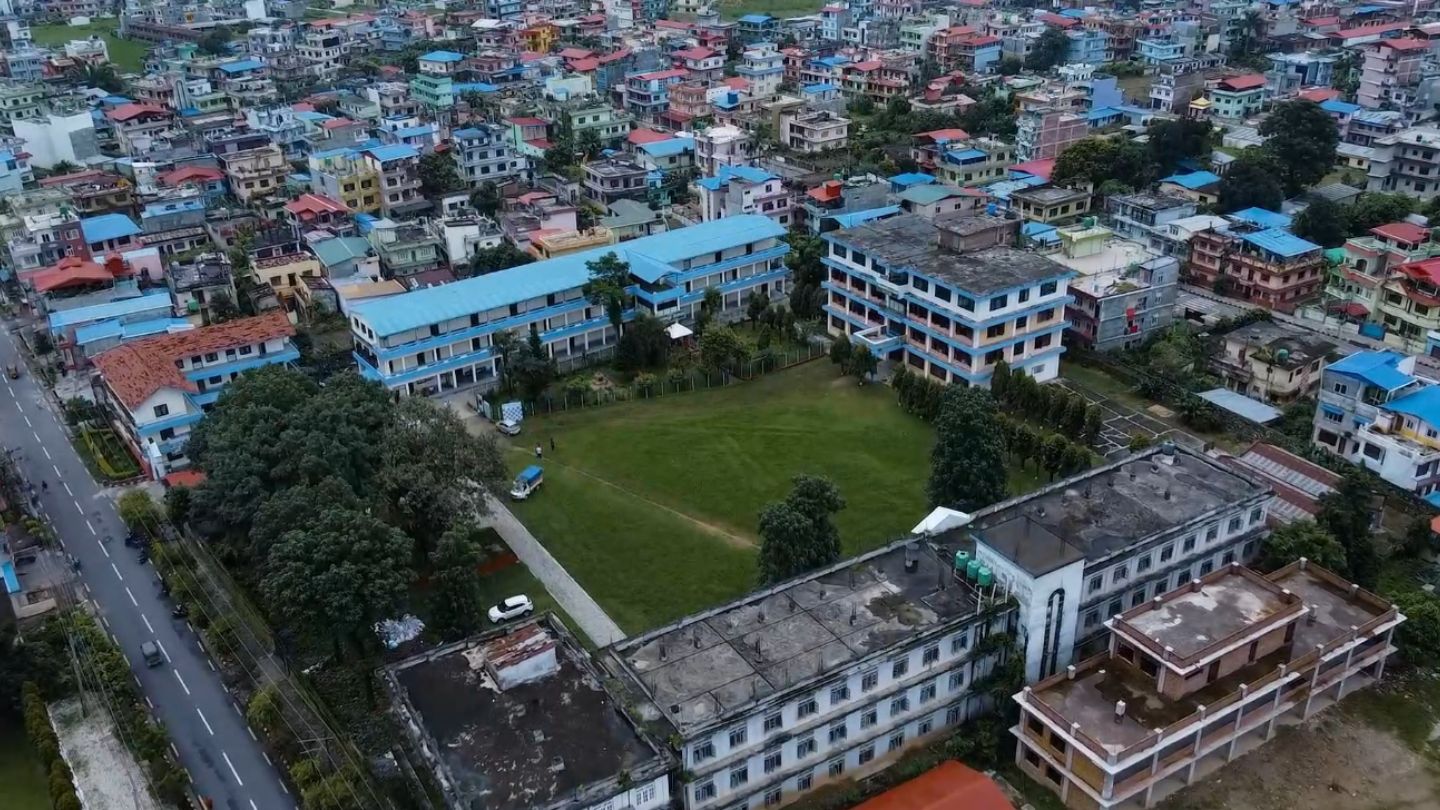
Makawanpur Multiple Campus was established with the aim of bringing higher education within reach of people in Makawanpur district and neighboring areas. It is rooted in community effort and public purpose, with a long-standing role in the educational development of the district and the surrounding region.
The governance model is community based. MMC is run by a management committee that includes members from different social backgrounds. This structure reflects the tradition of community campuses in Nepal, where local participation and institutional responsibility remain closely connected. The campus is also identified as a non-profit making public institution, reinforcing its academic and social purpose.
Its affiliation with Tribhuvan University and the National Examination Board gives the campus a dual academic identity. MMC serves students in higher education under TU and also offers Ten Plus Two programs under NEB. The QAA Certification Award from the University Grants Commission adds a quality assurance dimension to its institutional standing.
The campus has changed significantly in scale since its establishment. What began as a smaller institution has developed into a multi-building campus with expanded academic and administrative facilities. This growth reflects sustained institutional effort and long-term community support.
MMC’s mission centers on teaching, learning, research, and service. It aims to create knowledge through academic work, prepare competent and entrepreneurial human resources, develop problem-solving, leadership, and teamwork skills, offer education and research programs to the regional community, and widen access to higher education.
Its vision points toward growth as a vibrant educational institution with the potentiality of a Deemed University. This vision is linked with the role of local bodies, social organizations, the local community, and other concerned groups in raising the standard of higher education and research at both regional and national levels.
The campus has set broad institutional objectives that combine academic, administrative, and developmental priorities. These include increasing nationally recognized programs, strengthening professional development for the management team, faculty, and staff, admitting and enrolling strong students, raising graduation rates, creating research infrastructure, building a research-oriented teaching-learning environment, increasing the use of modern technology in classrooms, improving administrative efficiency through technology, expanding infrastructure for academic activities, improving the campus environment, strengthening external relations, and presenting a clear institutional image to stakeholders.
Its major strategies for achieving these objectives include assuring academic excellence, attracting and graduating stronger students, developing the campus as a regional research institution, integrating modern technology with teaching-learning and research, improving physical facilities and the campus environment, and promoting external relations. Together, these goals present MMC as an institution that links academic growth with management, technology, research, and community connection.
MMC began its academic journey with intermediate-level commerce and later expanded into multiple faculties and levels. It now serves a broad student population and has developed into a campus offering programs in management, humanities, education, and science. About 4500 students are studying at bachelor’s and master’s levels.
At the school level, the campus runs Ten Plus Two programs under the National Examination Board. The available streams are Science, Management, Humanities, and Education. This allows MMC to serve both higher secondary and university-level students within the same institution.
At the bachelor’s level, the campus offers programs in Management, Humanities, Education, and Science. The named programs include Bachelor of Business Studies (BBS), Bachelor of Business Management (BBM), Bachelor of Business Administration (BBA), Bachelor of Arts (BA), Bachelor of Education (B.Ed.), one-year Bachelor of Education (B.Ed.), BEd in Information Communication Technology (BICTE), and Bachelor of Science (B.Sc.) General.
At the master’s level, the campus offers Master of Business Studies (MBS), MA (Sociology), MA (English), M.Ed. (English), and M.Ed. (EPM). These programs strengthen the campus’s role as a higher education institution serving Makawanpur and neighboring districts.
The academic structure includes both annual and semester-based programs. The academic progress section identifies the following pattern:
Management programs include BBS as a four-year morning program, BBM as an eight-semester day program, BBA as an eight-semester day program, and MBS as a four-semester evening program. Humanities programs include BA as a four-year morning program, MA (Sociology) as a four-semester evening program, and MA (English) as a four-semester evening program. Education programs include B.Ed. as a four-year morning program, BICTE as an eight-semester day program, M.Ed. (English) as a four-semester evening program, and M.Ed. (EPM) as a four-semester evening program. Science includes B.Sc. (General) as a four-year program.
This mix of morning, day, and evening schedules gives the campus a flexible academic structure across different faculties. The arrangement reflects the way community campuses often serve students with varied educational and personal circumstances while maintaining a broad academic spread.
The campus record also notes that students from MMC have secured high positions in Tribhuvan University final examinations in different years. This reflects an established record of academic performance within the university system.
The teaching method at MMC is described as generally lecture based, while also moving toward more student-oriented practices. Teaching methods are linked to the nature of the subject and curriculum, with practical learning forming an important part of the academic approach.
The teaching-learning methods identified in the campus record include observational visits, industrial tours, internships, guest lectures from outside subject experts, audio-visual presentation, discussion methods, problem-solving methods, group discussion, field visits and presentations, and case study. These methods suggest an academic environment that combines classroom instruction with practical and participatory learning.
Semester-based programs such as BBS, BBM, and BBA are run regularly through multimedia. The increased use of projectors in classrooms, fixed projectors in some rooms, and the replacement of blackboards with whiteboards show a gradual shift toward technology-supported teaching. This development aligns with the campus objective of increasing the use of modern technology in teaching-learning activities.
The academic environment also extends beyond the classroom. Students are sent for internships, and local organizations contribute to these opportunities. This connection between academic programs and institutions in the surrounding area adds a practical dimension to the learning experience.
MMC has made sustained physical progress since its establishment. It began from a small building with six rooms and later expanded into a campus with six buildings, more than fifty classrooms, a three-storied administrative building, a double-storied library, and a separate canteen. This expansion reflects both institutional growth and a long-term commitment to improving academic infrastructure.
The named infrastructure includes a three-storied administration building with separate account, examination, and store sections, along with the offices of the campus chief and assistant campus chief. It also includes a main building with 25 rooms, a science building with 28 rooms, and a new building with 18 rooms. These facilities indicate a campus with dedicated administrative and academic spaces.
The library is one of the central academic resources of the campus. The library building includes a textbook section on the first floor and a reference library with e-library facilities on the second floor. The campus has also developed a separate e-library with internet access and references hundreds of journals and international online journals. Library services are available to teachers, staff, non-teaching staff, and students, and library software has been installed to computerize library activities. CCTV is used in the library, administrative offices, and across campus premises.
Laboratory and classroom resources add further strength to the academic environment. The campus has a computer lab and separate Physics, Chemistry, and Biology labs. Science lab facilities have been extended in response to growing student numbers. In classrooms, multimedia projector use has increased, some rooms have fixed projectors, and whiteboards have replaced blackboards. These developments show that infrastructure growth has included both physical expansion and improvements in teaching support.
The wider campus environment includes a well-equipped auditorium hall, a seminar hall, four offices for faculty heads, seven separate subject departments, a canteen, a botanical garden, and a temple of Saraswati goddess. Together, these spaces support classes, seminars, administration, library use, departmental activity, and campus life.
MMC serves not only students from Hetauda and Makawanpur but also students from neighboring districts such as Bara, Parsa, Rautahat, Sarlahi, Dhading, Kavre, and Sindhuli. This wider student reach places the campus within a broader regional educational network.
The campus also pays attention to access for students from economically, socially, and educationally backward groups. The record names Tamang, Danuwar Rai, Magar, Chepang, and other ethnic groups in this context. MMC has served backward-class students from both Makawanpur and surrounding districts, reinforcing its role in widening access to higher education.
Its mission also supports this regional and inclusive role. Broad access to higher education is part of the campus mission, while the vision emphasizes the role of local bodies, social organizations, and the local community in institutional growth. Academic development and social reach are presented as closely connected parts of the campus identity.
Makawanpur Multiple Campus maintains an active relationship with the wider community through extension programs, stakeholder engagement, and social activities. The campus conducts extension programs regularly to build support and receive feedback from stakeholders and the community. This approach has contributed to a sense of community ownership around the institution.
The Alumni Association is named among campus stakeholders. External organizations such as the Bankers Association and Chambers of Commerce are identified as contributors to internship opportunities, while commercial banks, FM stations, and media houses are also linked with student support and practical exposure. These connections show that the campus maintains working relationships with institutions beyond the classroom.
The social activities named in the campus record include health camps, fund raising for needy people, environment programs, anti-drug programs, tree plantation and sanitation programs, and the provision of the auditorium hall, seminar hall, and exam hall for different organizations to conduct programs and examinations. The campus has also operated as a Covid-19 Vaccine Center and Regular Vaccine Center. These activities reflect a wider civic role within the locality.
Society’s contribution to the campus appears in several forms, including scholarship support for needy students, internship opportunities from commercial and media organizations, and awareness programs conducted by clubs and other groups. The campus has also identified future areas of contribution and social involvement such as library facility, sanitation and green environment awareness, sports meets, interaction programs on job opportunities, blood donation and health camps, interaction on education quality and employment, and training, workshops, seminars, and talk programs.
MMC is described as a community campus that generates internal funds through available resources and additional student charges. The sources named for internal income include rental revenue, interest from fixed deposits, and development fees. This approach indicates an institutional model that combines community-based management with self-supporting financial practices.
Its administrative and financial structure aligns with its broader public-service orientation. The management model, internal resource generation, and academic mission together present MMC as an institution shaped by community participation, educational delivery, and long-term institutional development within the framework of TU and NEB affiliation.
Contact Makwanpur Multiple Campus's administrative office for detailed information on the course, admissions, location, fees, scholarships, facilities, counseling, or eligibility.
Location: Municipality Road, Hetauda, Makawanpur, Nepal
Email: mmc@ntc.net.np
Phone: +977-57-521867, +977-57-523732, +977-57-520620
Website: http://mmchetauda.org
Makawanpur Multiple Campus is located on Municipality Road, Hetauda, Makawanpur, Nepal.
The campus was established in 1980 AD (2037 BS).
MMC is affiliated with Tribhuvan University (TU) and the National Examination Board (NEB). TU affiliation covers higher education programs, while NEB affiliation covers Ten Plus Two programs.
The campus runs Ten Plus Two programs in Science, Management, Humanities, and Education. Its named bachelor’s and master’s programs include BBS, BBM, BBA, BA, B.Ed., one-year B.Ed., BICTE, B.Sc. General, MBS, MA (Sociology), MA (English), M.Ed. (English), and M.Ed. (EPM).
The campus uses lecture-based teaching in general while moving toward more student-oriented methods. Its teaching methods include observational visits, industrial tours, internships, guest lectures, audio-visual presentation, discussion, problem solving, field visits, presentations, and case studies.
MMC has an administration building, main building, science building, new building, more than fifty classrooms, a library with textbook and reference sections, an e-library, auditorium hall, seminar hall, faculty offices, subject departments, computer lab, Physics lab, Chemistry lab, Biology lab, canteen, botanical garden, and a temple of Saraswati goddess.
The campus has an e-library with internet facility, access to journals and international online journals, library software, CCTV monitoring, multimedia projectors in classrooms, whiteboards, and computer and science labs. Semester-based programs such as BBS, BBM, and BBA are run regularly through multimedia.
The campus conducts extension programs, health camps, environment and sanitation activities, anti-drug programs, and public support activities such as providing halls for programs and examinations. It also receives support from alumni, commercial organizations, and local institutions through scholarships, internships, and awareness programs.
Makwanpur Multiple Campus
Email Address: mmc@ntc.net.np
Phone Number: +977-57-521867, +977-57-523732, +977-57-520620
Website: http://mmchetauda.org
Location: Municipality Road, Hetauda, Makawanpur, Nepal