Bachelor of Education (B.Ed.) at Makawanpur Multiple Campus is a Tribhuvan University education program offered in Hetauda, Makawanpur. Makawanpur Multiple Campus is a community campus established in 1980 AD (2037 BS) and operates as a non-profit making public institution. At MMC, B.Ed. is run as a four-year morning program. The course follows the annual examination system and combines academic study with professional teacher preparation.
It is structured around communication skills, professional core areas, specialization subjects, and teaching practice. Students study within a campus environment that includes classrooms, a library, an e-library, seminar and auditorium halls, multimedia-supported teaching, and a broader teaching-learning setting that uses discussion, presentations, field visits, and practical academic activities.
Course: Bachelor of Education (B.Ed.)
College: Makawanpur Multiple Campus
Location: Municipality Road, Hetauda, Makawanpur, Nepal
Affiliation: Tribhuvan University
Faculty: Education
Duration: 4 years
Shift: Morning
Study Pattern: Annual examination system
Total Courses: 22
Total Marks: 2200
Recognition: QAA Certification Award by University Grants Commission (UGC)
B.Ed. at Makawanpur Multiple Campus is part of the campus’s bachelor-level education stream under Tribhuvan University. The program is professional as well as academic in character and is intended for students preparing to teach two subjects at the secondary level.
The four-year B.Ed. structure replaced the earlier three-year pattern by introducing two specialization subject areas: one major and one minor. This gives the course a subject-based structure within the wider framework of teacher education.
Eligibility: Students who have completed 10+2 or equivalent examinations with a minimum D+ grade in all subjects of Grade 11 and Grade 12 are eligible to enroll in the B.Ed. program of Tribhuvan University.
Alternative Eligibility Route: Students with Higher Secondary Education Examination Pass Certificate (HSE) or Proficiency Certificate Level (PCL), or an equivalent qualification, are also eligible for admission.
Subject-Specific Requirements: Additional entry requirements apply for different specialization major subject areas. These requirements depend on the subject selected for major study.
The B.Ed. program requires students to pass 22 courses carrying a total of 2200 marks. The curriculum is divided into five groups.
This group includes two courses carrying 200 marks:
General Nepali
General English
This group includes four courses carrying 400 marks. The named core courses include:
Philosophical and Sociological Foundations of Education
Educational Psychology
Curriculum and Evaluation
Students are required to select one specialization major area with 10 courses carrying 1000 marks. The listed major areas include:
Nepali Language Education
English Language Education
Math Education
Science Education
Health & Physical Education
Population Education
Students are required to select one specialization minor area with 5 courses carrying 500 marks. The minor subject must be different from the major subject. Students majoring in Science Education (Physical Science) must select biology as the minor subject.
The teaching internship or practicum carries 100 marks and forms the practice-based component of the program.
The year-wise distribution of marks is arranged as follows:
First Year: 600 marks
Second Year: 600 marks
Third Year: 500 marks
Fourth Year: 500 marks
This structure places communication skills and core educational study alongside subject specialization and teaching practice across the full duration of the program.
B.Ed. students study within the wider academic environment of Makawanpur Multiple Campus. Teaching at the campus is generally lecture based, while also using student-oriented methods according to the nature of the subject and curriculum. Practical learning is an important part of the teaching-learning process.
The campus uses discussion methods, problem-solving methods, group discussion, field visits, presentations, case study, guest lectures, observational visits, and audio-visual presentation. These methods fit well with a teacher education course that combines subject study, classroom practice, and teaching-related preparation.
The campus has also increased the use of multimedia projectors in classrooms, and whiteboards have replaced blackboards. This supports regular classroom teaching and presentation-based academic work.
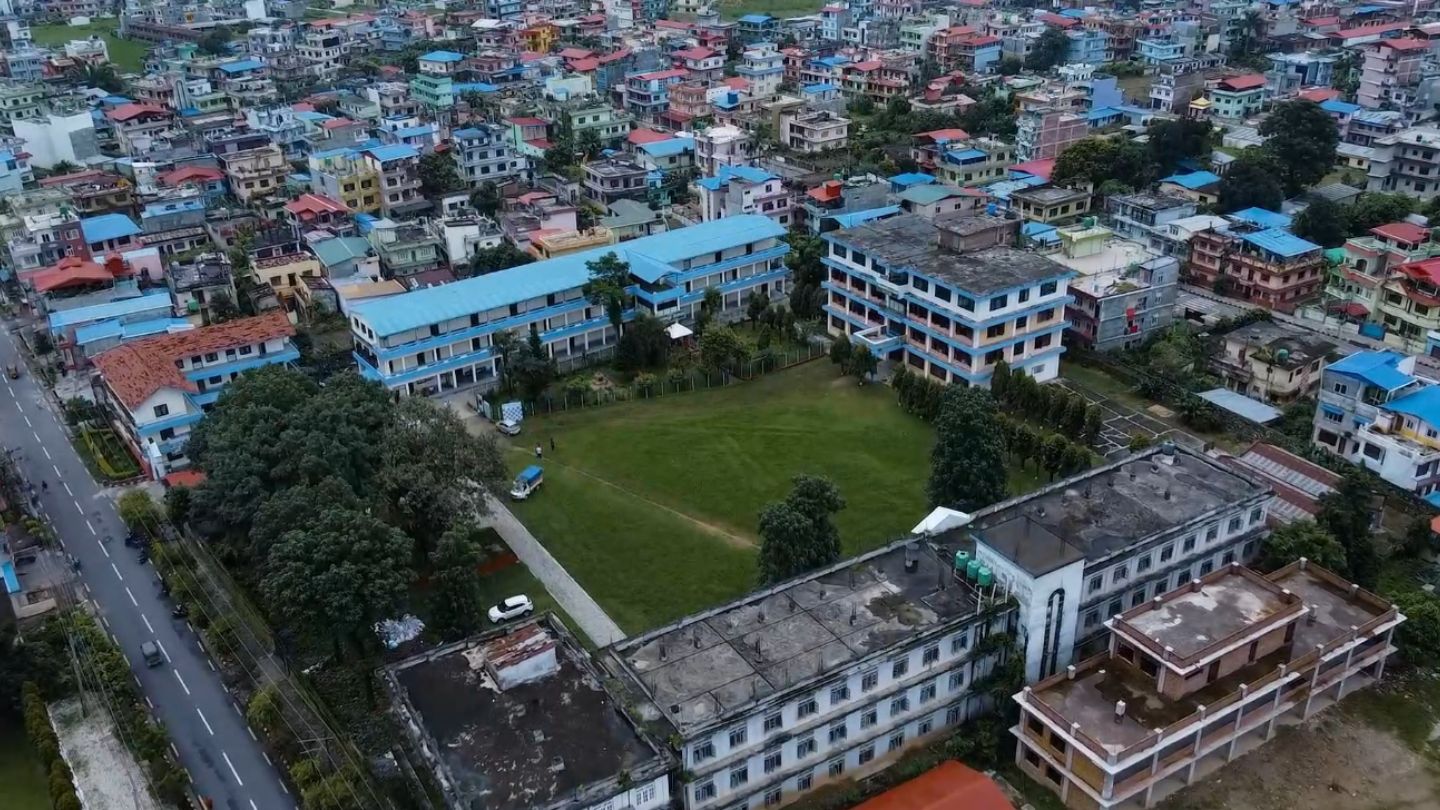
B.Ed. students at Makawanpur Multiple Campus study in a campus setting that includes more than fifty classrooms, academic and administrative buildings, a library, an e-library, seminar and auditorium halls, and subject departments.
The library includes textbook and reference sections, while the e-library provides internet access and journal resources. The campus also has a computer lab. These resources support coursework, reading, classroom preparation, and practical academic work during the four-year program.
Location: Municipality Road, Hetauda, Makawanpur, Nepal
Email: mmc@ntc.net.np
Phone: +977-57-521867, +977-57-523732, +977-57-520620
Website: http://mmchetauda.org
B.Ed. at Makawanpur Multiple Campus is a four-year program.
B.Ed. is run in the morning shift.
The B.Ed. program at Makawanpur Multiple Campus is affiliated with Tribhuvan University.
The course follows the annual examination system.
Students who have completed 10+2 or equivalent with a minimum D+ grade in all subjects of Grade 11 and Grade 12 can apply. Students with HSE, PCL, or equivalent qualifications are also eligible.
Yes. The four-year B.Ed. includes one specialization major subject and one specialization minor subject.
The program requires students to complete 22 courses carrying a total of 2200 marks.
Yes. The course includes Teaching Internship/Practicum carrying 100 marks.
B.Ed. students have access to classrooms, a library, an e-library, a computer lab, seminar and auditorium halls, subject departments, and multimedia-supported teaching spaces.