Janaki Medical College (JMC) is a medical and nursing education institution in Ramadiya Bhawadi, Janakpurdham, Dhanusa, Nepal. Established in 2003 AD, JMC was founded with a clear purpose: to develop competent health professionals for Nepal and to strengthen accessible, patient-oriented healthcare services through an academic health system. The college operates with Tribhuvan University affiliation and maintains professional accreditation through the Nepal Medical Council and the Nepal Nursing Council, supporting structured pathways in medicine and nursing from undergraduate entry to selected postgraduate residency training.
JMC’s academic environment is anchored by a dedicated teaching-learning premise at Ramdaiya and a strong clinical learning platform through two hospitals: a 160-bed hospital at Ramdaiya and a 365-bed city-centre hospital that supports bedside learning and internship exposure. This dual-hospital model connects classroom learning, laboratory-based understanding, and real patient care across the full arc of professional development—from foundational sciences to clinical decision-making, communication, ethics, and supervised practice.
As a college community, JMC maintains a community-oriented approach to health education. Students engage with clinical realities early, connect learning to public health needs, and develop the habits expected of modern healthcare professionals: disciplined study, teamwork, professional integrity, reflective practice, and continuous improvement. Alongside clinical services and academic training, JMC’s institutional direction emphasizes medical education, healthcare delivery, and research culture—building toward long-term growth as a leading center of excellence in the region.
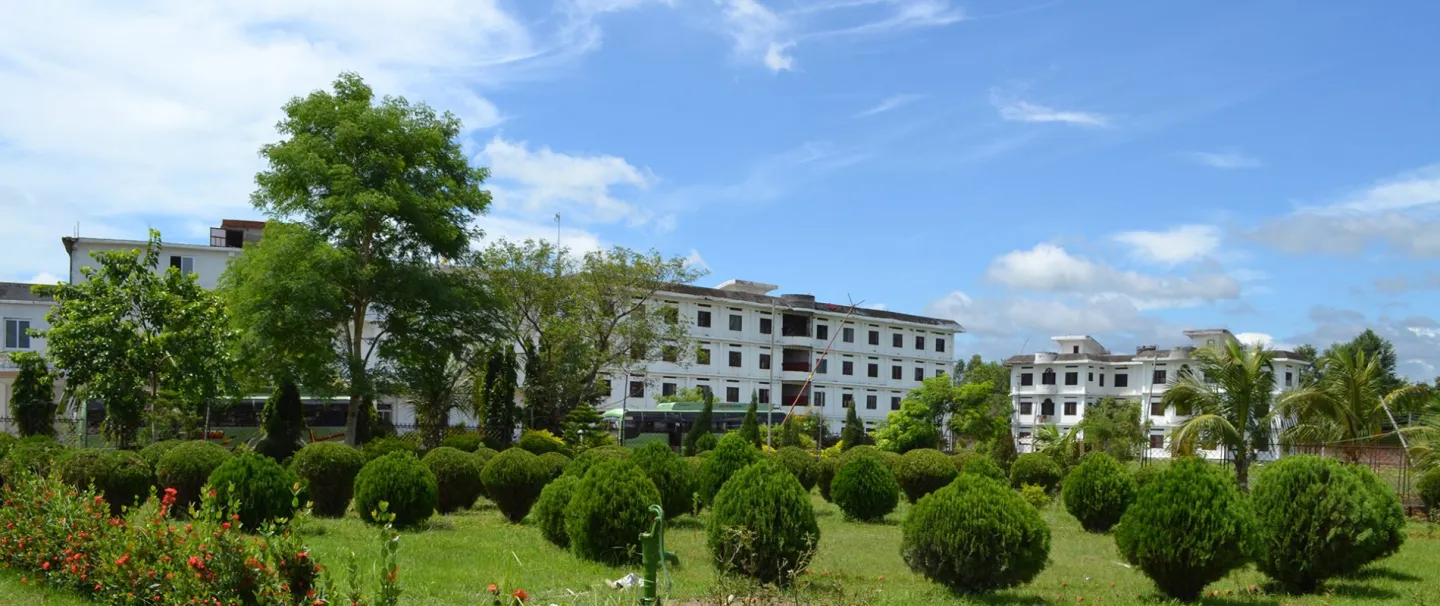
Full Name: Janaki Medical College (JMC)
Established: 2003 AD
Location: Ramadiya Bhawadi, Janakpurdham, Dhanusa, Nepal
Affiliation: Tribhuvan University
Accreditation: Nepal Medical Council (NMC); Nepal Nursing Council (NNC)
Teaching Hospitals:
Ramdaiya Hospital: 160 beds
City-Centre Hospital: 365 beds
Campus Area: More than 16 Bigahas at Ramdaiya
Programs: MBBS, B.Sc. Nursing, and selected postgraduate MD/MS programs
Official Contact:
Email: info@janakimedicalcollege.edu.np
Phone: +977 1-4435957, +977-41-524174, +977-41-693719, +977-9802308014
Website: https://janakimedicalcollege.com
JMC is based in Janakpurdham, Dhanusa—an important cultural and administrative center of Madhesh Province with growing healthcare needs and increasing demand for trained professionals. The college’s principal academic premise at Ramdaiya extends across more than 16 Bigahas and includes academic buildings, hostel buildings, hospital facilities, and administrative blocks. This integrated setup supports a structured learning rhythm—lecture-based learning, practical instruction, and clinical exposure—within a single academic ecosystem.
The setting supports the college’s community orientation. Students learn medicine and nursing in direct contact with the public health realities of the surrounding districts, with an emphasis on patient-centered care and practical competence. The clinical learning network is strengthened by a city-centre hospital that broadens exposure to bedside teaching, hospital systems, and internship responsibilities in a busy care environment.
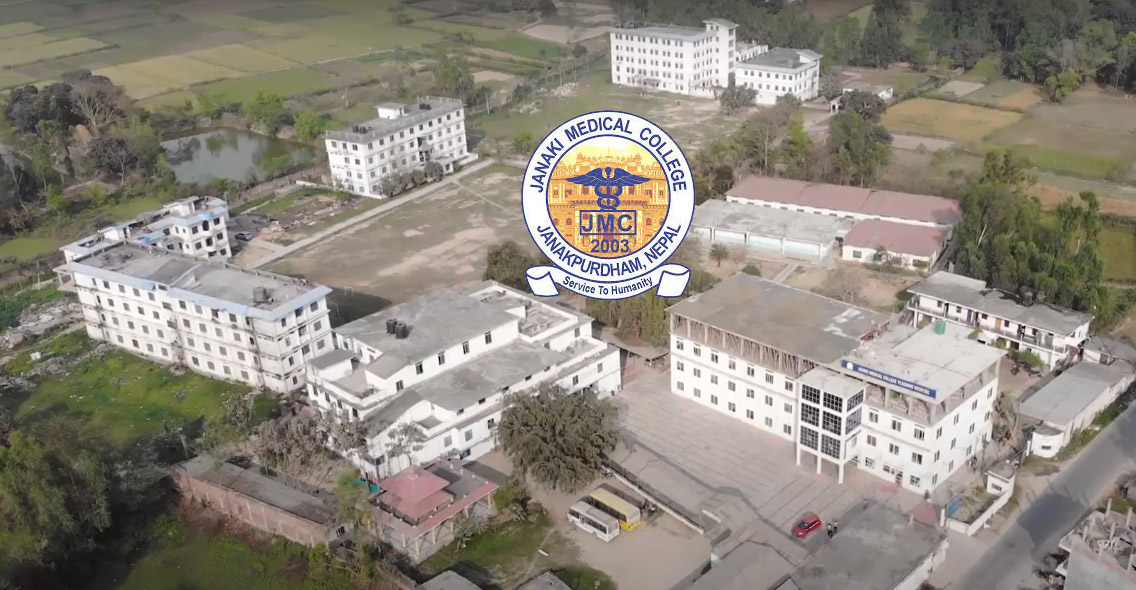
Clinical education at JMC is supported by two hospitals designed to connect theory with practice:
Ramdaiya Hospital serves as a key academic clinical site where many teaching-learning activities take place. It supports clinical correlation for undergraduate students and contributes to an environment where basic science learning is consistently linked to patient care realities.
The city-centre hospital is used extensively for bedside learning and internship exposure. Students gain supervised experience in patient communication, clinical reasoning, ward routines, and professional teamwork—skills that become essential during internship and in early professional practice.
Together, these hospitals support continuity of learning: foundational knowledge builds toward practical competence, and competence develops into professional readiness through supervised responsibility.
JMC runs undergraduate programs and selected postgraduate residency programs under Tribhuvan University affiliation. Seat numbers and associated fees are reviewed annually as per the Medical Education Commission (MEC) framework and guidelines.
MBBS: 60 seats
B.Sc. Nursing: 20 seats
MD Internal Medicine: 1 seat
MS General Surgery: 1 seat
MD General Practice (MDGP): 2 seats
MS Orthopaedic and Trauma Surgery: 1 seat
The MBBS program is a 5½-year integrated program, structured as 4½ years of academic training followed by a one-year rotatory internship. The program integrates basic medical sciences with clinical and community learning to develop graduates who can think clinically, act responsibly, and communicate effectively.
The MBBS approach emphasizes:
Integrated learning in basic sciences with clinical correlation
Early exposure to community medicine and clinical subjects
Problem-based learning and self-directed learning habits
Medical ethics and information management awareness
Communication skills and professional behavior as core outcomes
By design, students develop competence in history-taking, clinical examination, diagnosis, evidence-based management, and emergency response—while learning to collaborate with patients, families, and healthcare teams in a respectful and ethical manner.
Year 1 (IBMS):
Anatomy
Biochemistry
Microbiology
Pathology
Pharmacology
Physiology
Community Medicine
History Taking & Communication Skills
Year 2 (IBMS):
Anatomy
Biochemistry
Microbiology
Pathology
Pharmacology
Physiology
Community Medicine
Clinical Examinations
Year 3:
Community Medicine
Forensic Medicine
Internal Medicine
Surgery
Paediatrics
Year 4:
Psychiatry
Dermatology
Ophthalmology
ENT
Orthopaedics
Gynaecology & Obstetrics
Family Planning
Dentistry
Community & Clinical Experience
Field Management
Year 5 (First 6 months):
Internal Medicine
Surgery
Gynaecology & Obstetrics
Paediatrics
Anaesthesiology
Radiology
Emergency Medicine & Family Practice
Information Technology
Ethics and Research
Year 5–6:
Rotatory Internship
Eligibility follows standard science-background entry criteria and equivalence requirements. Accepted academic pathways include:
10+2 / Grade 12 Science (Physics, Chemistry, Biology) with minimum 50% or 2.4 CGPA
A-Level or equivalent, with Physics, Chemistry, Biology, and required equivalence performance
Selected health science diplomas/proficiency certificates with required marks and recognized equivalence to Grade 12 Science group, along with relevant council registration where applicable
Admissions follow the common entrance and admission system under the Medical Education Commission (MEC). The entrance framework for MBBS is aligned with MECEE-BL. A qualifying threshold is applied in the integrated admission process, and entrance scoring follows the stated marking pattern:
+1 for each correct answer
–0.25 for each wrong answer
At admission, students complete formal registration steps and submit required original documents and photocopies, including academic certificates, transcripts, character certificate, identification documents, admit card, reservation documents (when applicable), and equivalence documentation (when applicable).
The MBBS academic structure includes formal progression requirements, examination attempt limitations for early phases, and a defined maximum time window to complete the program from the date of enrollment. Attendance and timely reporting at the start of the academic session are treated as essential responsibilities of professional training.
The one-year rotatory internship is the final professional preparation stage. Internship training builds confidence in real clinical environments while maintaining supervision, professionalism, and patient safety. Interns practice clinical decision-making, patient communication, documentation discipline, teamwork, and essential emergency responses while strengthening the habits required for licensing and independent practice.
The B.Sc. Nursing program is a four-year undergraduate degree delivered in English. It prepares nurses for diverse roles in hospitals and community health settings with a strong community orientation and an evidence-informed approach to practice.
The program prepares multi-skilled nurses able to meet community healthcare needs across preventive, promotive, curative, and rehabilitative services. It supports professional development for leadership roles in clinical practice, education, and management, and builds a foundation for health research engagement.
Admission requires:
10+2 Science (Physics, Chemistry, Biology) with minimum 50% aggregate or GPA 2.4 (or equivalent)
Performance meeting the qualifying threshold in the entrance process under MEC
Compliance with Government of Nepal rules and relevant institutional procedures
The entrance framework for nursing is aligned with MECEE-BL, and selection is merit-based. Seat matching follows candidate priority and eligibility, including provisions applicable to domestic and foreign candidates within the national admission framework.
Students complete a medical fitness assessment through a Medical Board constituted by the college, and final admission is granted upon being declared medically fit.
First Year:
Integrated Health Sciences (Theory & Practical)
Fundamentals of Nursing (Theory & Practical)
Community Health Nursing (Theory & Practical)
Nutrition & Diet Therapy (Theory)
Second Year:
Adult Nursing I & II (Theory)
Geriatric Nursing (Theory)
Adult & Geriatric Nursing (Practical)
Psychiatric Nursing (Theory & Practical)
Nursing Concepts (Theory)
Social & Behavioural Science (Theory)
Third Year:
Midwifery I & II (Theory & Practical)
Child Health Nursing (Theory & Practical)
Family and Reproductive Health Nursing (Theory & Practical)
Fourth Year:
Management and Health Economics
Management Practicum
Educational Science
Education Practicum
Research and Biostatistics
Research Practicum
Graduates develop competencies across:
Nursing process application in diverse clinical settings
Community health nursing and public health alignment
Critical thinking, safe practice, and ethical standards
Technology-enabled healthcare support
Communication and health education skills
Leadership and managerial competence
Need-based research engagement and evidence use
Equity-minded care for individuals, families, and communities
Scholarship provisions exist within the national framework referenced under the National Medical Education Act, 2018 and National Medical Education Regulations 2020, aligned with MEC processes and applicable seat provisions.
JMC offers selected postgraduate residency programs under Tribhuvan University affiliation, aligned with the national entrance framework for postgraduate medical education.
Postgraduate entry follows MECEE-PG, using a single best response MCQ format with:
200 questions
3 hours duration
A balance of recall, understanding, and application-based assessment
Residency training follows a full-time residential model, structured academic activities, supervised clinical responsibilities, formal internal assessment, and final examinations. Logbook maintenance, clinical presentations, academic meetings, and research components form a consistent part of residency professionalism.
This residency program develops comprehensive competence in internal medicine through clinical training, supervised patient management, and academic performance requirements. Residents follow institutional and university rules for training structure, leave, discipline, and academic responsibilities. Private practice is not permitted during the residency period.
Seats at JMC: 1
This program develops surgical knowledge, clinical judgment, procedural competence, professionalism, and research capability. Training includes rotations, supervised responsibility in OPD/IPD settings, duty schedules, academic sessions (including journal clubs and clinical meetings), and structured examination phases. OSCE-based evaluation components strengthen objective assessment of practical competence.
Seats at JMC: 1
MDGP develops broad competence across common medical conditions, emergency care, and life-saving interventions, with a strong orientation toward comprehensive patient care. Training and evaluation combine rotation-based internal assessment, annual examinations, clinical case management, OSCE components, logbook evaluation, viva, and a research project.
Seats at JMC: 2
This residency builds competence in orthopaedic and trauma care, including emergency procedures, perioperative management, supervised procedural development, and academic growth through structured training and assessment. The program includes part-wise examinations with internal assessment, thesis requirements, and final theory/practical components. Full-time residency standards apply.
Seats at JMC: 1
To demonstrate leadership in medical education, healthcare services, and research, with long-term growth toward becoming a deemed university.
To emerge as a center of excellence in medical education, healthcare services, and research.
Deliver high-quality education in health sciences
Strengthen research culture aligned with contemporary standards
Build partnerships that support medical education and healthcare services
Promote institutional sustainability through responsible academic and service development
Provide quality education across medical, dental, nursing, and allied health disciplines
Expand academic programs based on evolving national needs and student aspirations
Deliver patient-oriented services with modern technology at affordable cost
Support national health policies and public health programs
Strengthen diagnostic and clinical service systems
Provide preventive, promotive, curative, and rehabilitative services aligned with community needs
JMC maintains an institutional rhythm built on professional standards, academic discipline, and continuous improvement. Inspections and oversight activities are carried out through relevant academic and regulatory bodies including the Institute of Medicine (IoM) of Tribhuvan University, Nepal Medical Council, and the Ministry of Education. Recommendations arising through these processes are integrated into academic and hospital services to strengthen institutional performance and student learning.
Academic culture emphasizes structured learning, clinical responsibility under supervision, ethical practice, and competency-based progression. Across undergraduate and postgraduate programs, the college environment supports:
Strong foundations in core sciences and clinical correlation
Patient-centered communication and professional behavior
Logbook discipline, clinical documentation, and evidence-informed care
Research orientation and academic participation
Community engagement and public health alignment
JMC operates with a strong service-learning perspective. The college is positioned to collaborate with government and community stakeholders to improve health education and health services in Dhanusha and adjoining districts. Community orientation remains a practical element of professional formation, preparing graduates who can serve effectively in both hospital-based systems and broader public health environments.
Janaki Medical College is located in Ramadiya Bhawadi, Janakpurdham, Dhanusa, Nepal.
JMC is affiliated with Tribhuvan University.
JMC maintains accreditation through the Nepal Medical Council and the Nepal Nursing Council.
Clinical learning is supported through a 160-bed hospital at Ramdaiya and a 365-bed city-centre hospital used for bedside learning and internship exposure.
MBBS is a 5½-year program with 4½ years of academic training followed by a one-year rotatory internship.
MBBS has 60 seats and B.Sc. Nursing has 20 seats under the listed Tribhuvan University programs at JMC.
Selected programs include MD Internal Medicine, MS General Surgery, MDGP, and MS Orthopaedic and Trauma Surgery.
MECEE-BL applies for MBBS and B.Sc. Nursing entry, and MECEE-PG applies for postgraduate MD/MS residency entry, within the MEC framework.
Contact Janaki Medical College (JMC)'s administrative office for detailed information on the course, admissions, location, fees, scholarships, facilities, counseling, or eligibility.
Janaki Medical College (JMC)