The B.Sc. Nursing program at Janaki Medical College (JMC), Janakpurdham, is a four-year undergraduate degree that prepares competent nurses for hospital and community health settings. The program follows a community-oriented, evidence-based approach and builds professional values alongside strong clinical and practical skills.
Teaching-learning is supported by JMC’s academic premise at Ramdaiya and clinical exposure through its teaching hospitals, helping students develop safe practice habits, effective communication, and decision-making skills required in real healthcare environments. Graduates are prepared to work as care providers, educators, and mid-level managers, with a foundation for lifelong learning and professional growth.
B.Sc. Nursing at Janaki Medical College (JMC), Janakpurdham is a 4-year Tribhuvan University–affiliated program taught in English. Learn eligibility, MECEE-BL admission, curriculum structure, seats, medical fitness, and licensing pathway.
Course Name: Bachelor of Science in Nursing (B.Sc. Nursing)
College: Janaki Medical College (JMC)
Location: Ramadiya Bhawadi, Janakpurdham, Dhanusa, Nepal
Affiliation: Tribhuvan University
Regulatory Council: Nepal Nursing Council (NNC)
Program Level: Undergraduate
Duration: 4 years
Language: English
Entrance Exam: MECEE-BL (MEC framework)
Seat Intake: 20 seats
Clinical Learning Base: 160-bed Ramdaiya Hospital and 365-bed city-centre hospital
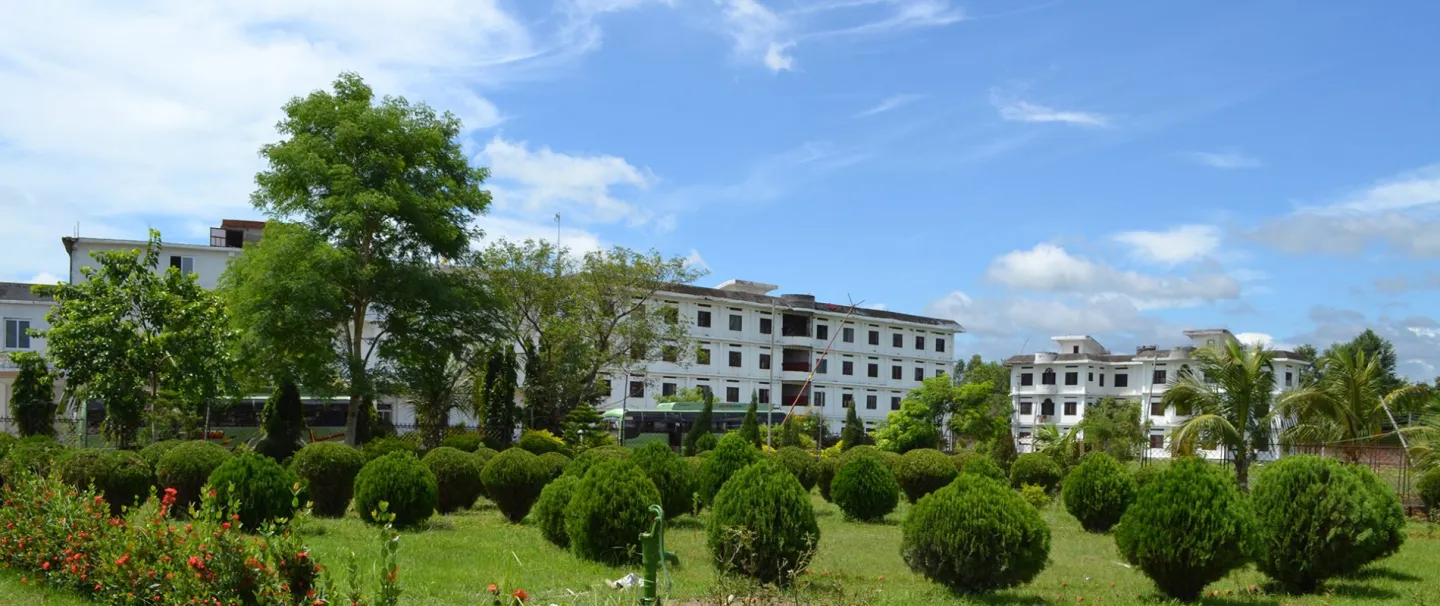
B.Sc. Nursing at JMC is structured to develop nurses who can respond to healthcare needs across preventive, promotive, curative, and rehabilitative services. The course emphasizes competence in clinical care, community health, communication, teaching, leadership, and research awareness. Students learn to deliver safe and equitable nursing services across diverse settings, including hospitals and community health environments.
The program prepares nursing graduates who are equipped to function in multiple roles within healthcare delivery:
Care providers who apply nursing processes and clinical judgement in varied settings
Educators who can teach individuals and groups in clinical, community, and educational environments
Mid-level managers who contribute to team coordination and service quality improvement
The program’s orientation supports service readiness in both rural and urban contexts and builds a professional mindset focused on safe practice, accountability, and continuous improvement.
The B.Sc. Nursing curriculum is organized year-wise and includes theory, practical components, practicums, and research-focused courses.
Integrated Health Sciences I (Theory)
Integrated Health Sciences II (Theory)
Integrated Health Sciences (Practical)
Fundamentals of Nursing (Theory)
Fundamentals of Nursing (Practical)
Community Health Nursing (Theory)
Community Health Nursing (Practical)
Nutrition & Diet Therapy (Theory)
Adult Nursing I (Theory)
Adult Nursing II (Theory)
Geriatric Nursing (Theory)
Adult & Geriatric Nursing (Practical)
Psychiatric Nursing (Theory)
Psychiatric Nursing (Practical)
Nursing Concepts (Theory)
Social & Behavioural Science (Theory)
Midwifery I (Theory)
Midwifery I (Practical)
Midwifery II (Theory)
Midwifery II (Practical)
Child Health Nursing (Theory)
Child Health Nursing (Practical)
Family and Reproductive Health Nursing (Theory)
Family and Reproductive Health Nursing (Practical)
Management and Health Economics
Management Practicum
Educational Science
Education Practicum
Research and Biostatistics
Research Practicum
Across four years, the program develops knowledge and practice in:
Health sciences foundations and nursing fundamentals
Adult, geriatric, psychiatric, child, and maternal health nursing
Community health nursing and public health alignment
Management, education, research, and biostatistics
Practical learning is integrated throughout the program:
Nursing fundamentals and community health practicums from early years
Clinical-focused practicums in adult/geriatric and psychiatric nursing
Midwifery and reproductive health practical components
Management and education practicums in the final year
Research practicum supporting applied learning and evidence use
The program’s objectives focus on building a multi-skilled nurse who can:
Meet community healthcare needs across all settings
Provide preventive, promotive, curative, and rehabilitative nursing services
Initiate, participate in, and support health research
Develop leadership capacity for nursing education, management, and clinical roles
Contribute to the progressive development of nursing as a profession in Nepal
By completion of the program, graduates are prepared to:
Apply nursing processes in diverse settings
Address individual and community health needs within healthcare delivery systems
Use critical thinking in clinical decisions to support quality care
Communicate effectively with individuals, groups, and healthcare teams
Provide nursing care aligned with national health policies and programs
Demonstrate leadership and managerial skills in clinical and community settings
Conduct need-based research and apply findings to improve care quality
Promote equitable nursing services for disadvantaged groups and communities
The program builds practical competence and professional maturity in:
Clinical nursing practice: safe procedures, patient monitoring, and care planning
Community health: outreach orientation, prevention-focused care, and health promotion
Communication: patient interaction, counselling, teamwork, and reporting
Teaching skills: patient education and group teaching in clinical and community settings
Leadership and management: coordination, supervision readiness, and service improvement mindset
Research literacy: understanding research processes and applying evidence to practice
Teaching-learning is structured to connect classroom instruction with practical skill-building. The program integrates theory and practical components across years, supported by clinical learning in JMC’s hospital environment. The college’s location and teaching hospitals contribute to a learning setting where students gain exposure to both hospital-based care and community health priorities.
Admissions follow the national common entrance and matching framework under the Medical Education Commission (MEC).
Candidates must have:
Passed 10+2 Science with Physics, Chemistry, and Biology with minimum 50% aggregate or GPA 2.4 (or equivalent); or
Secured an equivalent percentage for certificate-level programs (such as A-Level) under equivalence standards
Achieved 50th percentile or above in the entrance examination to qualify
The entrance examination for B.Sc. Nursing is MECEE-BL under the MEC framework.
Selection follows merit-based matching using the candidate’s priority of colleges and available seats. Candidates appearing in the entrance examination conducted by MEC receive first priority within the stated process.
The application is submitted online through MEC portals, with document upload and self-declaration. Admit cards are printed by candidates through the application status system, and a confirmation page is available after payment verification.
After meeting eligibility and selection requirements, students visit the college with guardians, present original academic certificates, and complete institutional documentation and agreement processes.
Final admission requires a medical test conducted by a Medical Board constituted by the college, and the candidate must be declared fit.
Students in B.Sc. Nursing must pass all subjects within the course duration plus 4 years from the start of the academic session.
For professional practice, the referenced licensing pathway is the Nepal Nursing Council Licensing Examination for B.Sc. Nursing.
B.Sc. Nursing graduates typically pursue roles across clinical and community settings, including:
Nursing services in hospitals and community health settings
Health education roles involving patient and community teaching
Mid-level managerial responsibilities within nursing teams and service units
Research support and quality improvement roles aligned with nursing practice
Career pathways depend on licensing requirements, professional development choices, and service needs across healthcare institutions.
Students choose B.Sc. Nursing at JMC for clear academic and professional reasons:
Four-year undergraduate structure in English medium instruction
Curriculum that integrates clinical practice, community health, management, education, and research
Competency focus on critical thinking, communication, leadership, and equitable service delivery
Learning environment supported by JMC’s teaching hospitals in Ramdaiya and the city centre
Admission pathway aligned with MECEE-BL under the MEC entrance and matching framework
B.Sc. Nursing at Janaki Medical College is a four-year undergraduate program that develops skilled nurses for clinical and community health practice. The curriculum builds strong foundations in nursing science, structured practical learning, midwifery and child health competencies, psychiatric and adult nursing practice, and final-year readiness through management, education, and research practicums. Graduates complete the program prepared for professional nursing responsibilities and the Nepal Nursing Council licensing pathway.
The program duration is 4 years.
The program runs under Tribhuvan University affiliation.
Admission uses MECEE-BL under the Medical Education Commission framework.
Candidates need 10+2 Science with Physics, Chemistry, and Biology with minimum 50% aggregate or GPA 2.4 (or equivalent), and at least 50th percentile or above in the entrance examination.
B.Sc. Nursing intake is 20 seats.
Yes. Final admission requires a medical test by a Medical Board constituted by the college, and the candidate must be declared fit.
Students must pass all subjects within the course duration plus 4 years from the start of the academic session.
The Nepal Nursing Council Licensing Examination applies for B.Sc. Nursing.