



The Bachelor of Science in Nursing (BSN), offered at Everest College of Nursing in Budanilkantha 10, Kapan, Kathmandu, is a four-year undergraduate nursing program affiliated with Purbanchal University.
The program combines nursing science with basic health sciences, hospital nursing, community health, midwifery, research, education, and management. Practical and clinical learning runs alongside academic study, with simulation, field practice, clinical practice, assignments, projects, and nursing care activities included in the teaching process.
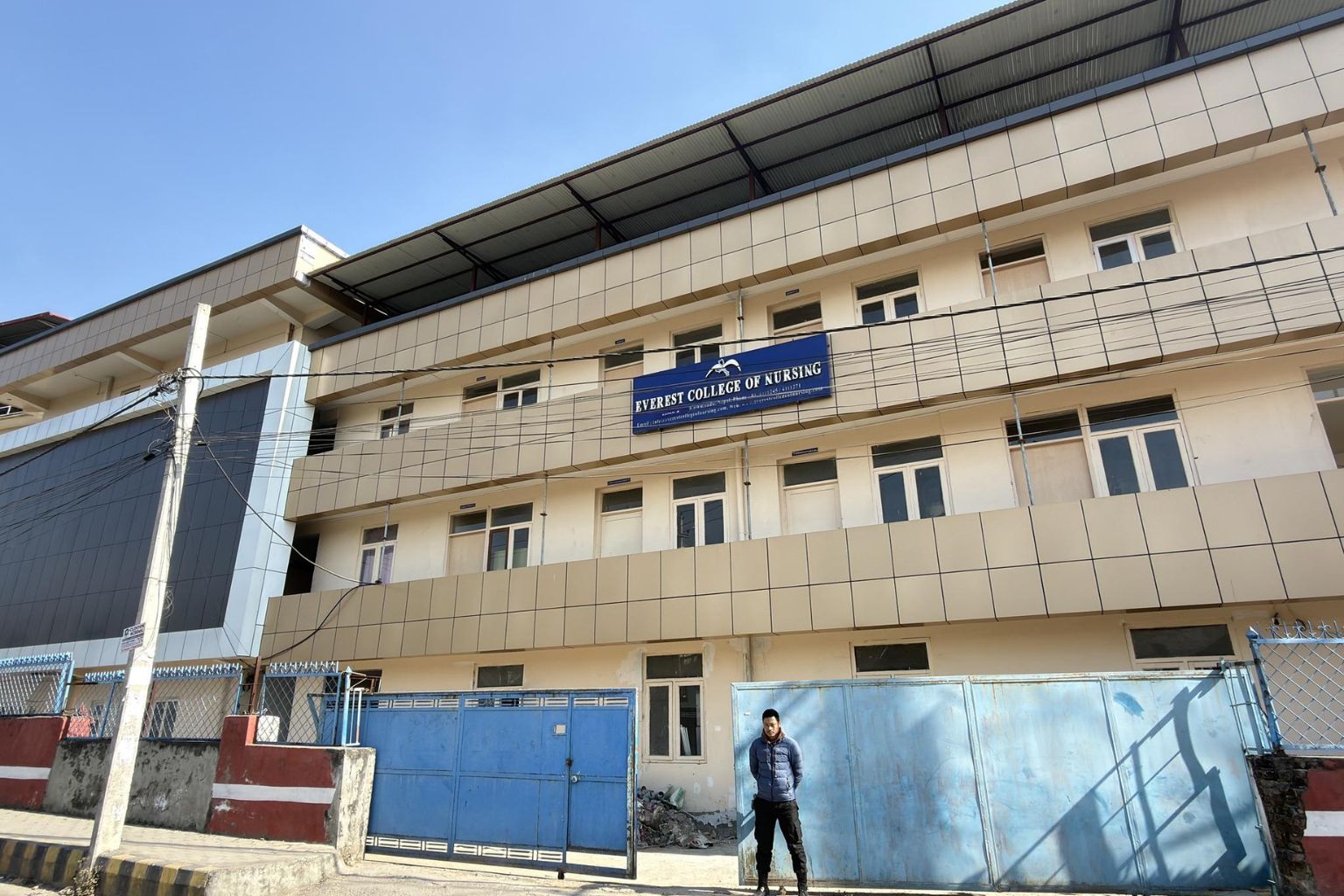
Course: Bachelor of Science in Nursing (BSN)
College: Everest College of Nursing
Affiliation: Purbanchal University
Duration: 4 academic years
Location: Budanilkantha 10, Kapan, Kathmandu, Nepal
Entrance Examination: 100 multiple-choice questions in 2 hours
Selection: Merit-list based
The BSN program is structured to develop nursing knowledge and practical competence across preventive, promotive, curative, and rehabilitative care. Its academic scope covers individuals, families, and communities while connecting nursing practice with primary health care, reproductive health, midwifery, hospital nursing, community health, research, communication, teaching, and management.
The curriculum also develops decision-making, nursing-process application, health-system understanding, epidemiological knowledge, research skills, and leadership in nursing services.
Eligibility: Candidates must have completed Intermediate Science, 10+2, or A Level with Biology, with an equivalent C+ or 50% aggregate as per the National Examination Board, Nepal. Candidates must also be physically and mentally fit and have completed 17 years of age.
The entrance examination consists of 100 multiple-choice questions with a duration of two hours. Selection is made on the basis of the merit list. The course commences according to the Purbanchal University academic calendar.
The four-year curriculum moves from basic sciences and nursing foundations to clinical nursing, community health, midwifery, research, education, and management.
| Year | Major Areas of Study |
|---|---|
| First Year | Anatomy and Physiology, Biochemistry, Microbiology/Parasitology, Pathophysiology, Pharmacology, Nutrition and Dietetics, Foundation of Nursing, Community Health Nursing-I |
| Second Year | Nursing Concept and Theories, Medical-Surgical Nursing-I and II, Psychiatric Nursing, Community Health Nursing-II, Medical Sociology/Anthropology, Geriatric Nursing |
| Third Year | Pediatric Nursing, Midwifery-I, II and III, Community Health Nursing-III, Basic Epidemiology, Gynaecology Nursing |
| Fourth Year | Research and Biostatistics in Nursing, Educational Science, Leadership and Management, Medical-Surgical Nursing-III (Advance) |
Theory and practical components are built into much of the curriculum. Across four years, the program carries 141 theory credit hours and 122 practical credit hours.
Teaching methods include lectures, discussions, group work, demonstrations, self-directed learning, problem-based learning, observation, skill-lab simulation, field and clinical practice, written assignments, project work, and group presentations. This structure allows students to study nursing concepts academically and apply them through supervised practical activities.
At Everest College of Nursing, students also have access to classrooms, simulation laboratories, library resources, and clinical learning opportunities through healthcare institutions. Academic advising, counseling, career guidance, and faculty mentoring are included in the college's student support arrangements.
Theory subjects use 20% internal assessment and 80% final assessment. Written examinations may include multiple-choice questions, problem-based questions, long-answer questions, and short-answer questions.
Practical assessment is divided equally between internal and final evaluation. Practical assessment activities may include performance evaluation, case presentations, nursing care plans, procedure evaluation, logbooks, teaching activities, reports, OSPE/OSCE or simulation, and viva examinations.
The BSN program prepares graduates for nursing responsibilities in healthcare services, education, administration, community settings, and research-related work. The curriculum identifies roles connected with nursing care, nursing officer responsibilities, teaching, basic-level research, management, and community health across different health institutions and programs.
The Bachelor of Science in Nursing program runs for four academic years.
The program is affiliated with Purbanchal University.
Candidates must have completed 17 years of age.
Yes. The entrance examination contains 100 multiple-choice questions and has a two-hour duration. Selection is based on the merit list.
Yes. Practical work, skill-lab simulation, field practice, clinical practice, nursing procedures, assignments, and other applied learning activities are included throughout the program.
Fourth-year study includes Research and Biostatistics in Nursing, Educational Science, Leadership and Management, and Medical-Surgical Nursing-III (Advance).



.png)





