Kathmandu Medical College (KMC) is a private medical college established in 1997. Its academic activities are organized across two principal locations: Duwakot, Bhaktapur, for Basic Sciences and Sinamangal, Kathmandu, for Clinical Sciences and Kathmandu Medical College Teaching Hospital.
The college is affiliated with Kathmandu University (KU). Its academic portfolio includes medicine, dentistry, nursing, physiotherapy, postgraduate medical and surgical specialties, postgraduate dental education, and selected DM and MCh super-specialty programs.
KMC operates within a wider academic and regulatory structure. Kathmandu University governs the curriculum, academic regulations, university examinations, and degree awards for its affiliated programs. The Medical Education Commission regulates major admission-related matters such as entrance examinations, seat allocation, scholarship provisions, fee structures, and admission procedures. Professional practice after graduation is subject to the licensing and registration requirements of the relevant professional council.
| Particular | Detail |
|---|---|
| Institution | Kathmandu Medical College (KMC) |
| Institution type | Private medical college |
| Established | 1997 |
| University affiliation | Kathmandu University |
| Basic Sciences location | Duwakot, Bhaktapur |
| Clinical Sciences location | Sinamangal, Kathmandu |
| Teaching hospital | Kathmandu Medical College Teaching Hospital |
| Academic fields | Medicine, dentistry, nursing, physiotherapy, postgraduate medical and surgical specialties, DM and MCh programs |
| Admission framework | MEC entrance and admission system with applicable Kathmandu University academic regulations |
| Degree awarding university | Kathmandu University |
| Professional regulation | Relevant professional council according to the field of study |
Kathmandu Medical College began its academic activities in 1997. Its two-location structure separates much of the foundational sciences education from the hospital-based clinical phase of professional training.
Duwakot, Bhaktapur, serves as the Basic Sciences location. Sinamangal, Kathmandu, houses the Clinical Sciences component and Kathmandu Medical College Teaching Hospital. The arrangement reflects the progression followed in medical education, where students first establish a scientific foundation and later move into more intensive clinical learning.
The teaching hospital forms an important part of this academic structure. Medical education requires both classroom-based instruction and supervised learning in a hospital environment. The Clinical Sciences setting provides the institutional environment for patient-oriented teaching and specialty-based clinical education.
The same academic structure also supports postgraduate medical and surgical programs. Nursing, dentistry, physiotherapy, and other health professional programs follow their respective curricula and practical requirements within the broader KMC academic system.
Students considering KMC should therefore understand that study is not concentrated in a single academic location. The learning environment changes according to the stage and nature of the program.
Kathmandu Medical College is affiliated with Kathmandu University. This affiliation defines the academic status of its KU programs and the authority responsible for the university degree.
KMC provides teaching, practical instruction, clinical education, and institutional support, while Kathmandu University provides the academic framework under which affiliated programs operate. Curriculum requirements, academic progression, examinations, and degree awards follow the applicable KU rules and regulations.
The division of responsibilities can be summarized as follows:
| Area | Main authority | Responsibility |
|---|---|---|
| Curriculum, academic regulations, examinations and degree | Kathmandu University | Academic structure, university requirements and degree award |
| Entrance, admission, seats, fees and scholarships | Medical Education Commission | Medical education admission framework and related regulatory provisions |
| Professional practice | Relevant professional council | Licensing, registration and professional requirements |
For applicants, the distinction between these authorities is important. University affiliation does not mean that the college independently controls the complete admission process. Likewise, completing a university degree does not automatically replace the professional licensing requirements that apply after graduation.
The Medical Education Commission regulates key aspects of medical education admission, including entrance examinations, seats, scholarship provisions, fees, and admission procedures under the prevailing framework.
Medical and dental graduates fall within the professional framework of the Nepal Medical Council. Nursing graduates are subject to the applicable requirements of the Nepal Nursing Council. Allied health graduates come under the relevant professional regulatory structure, including the Nepal Health Professional Council (NHPC) where applicable to the profession.
Kathmandu Medical College offers programs at bachelor, postgraduate, and super-specialty levels. Its academic range includes medicine, dentistry, nursing, physiotherapy, MD and MS specialties, MDS, and selected DM and MCh programs.
The following seat figures represent the stated allocation reference. Seats are determined within the Medical Education Commission system and may vary between admission cycles.
The program structure shows that KMC is not limited to undergraduate medical education. Students can enter the institution at bachelor level in medicine, dentistry, nursing, or physiotherapy, while qualified graduates can pursue postgraduate medical, surgical, dental, and selected super-specialty training.
Because seat allocation is regulated by MEC, the number attached to an individual program should not be treated as a fixed figure for every admission cycle.
The MBBS program follows the Kathmandu University academic framework and has a total duration of five and a half years. It consists of four and a half years of academic study followed by one year of compulsory rotating internship.
The course progresses from basic sciences to clinical sciences. Early study establishes the scientific foundation required for medical education, while the clinical phase places greater emphasis on patient assessment, diagnosis, clinical decision-making, and supervised hospital learning.
The internship forms part of the professional education pathway rather than an optional period after the degree course. Students must complete the prescribed academic and internship requirements before moving to the professional licensing and registration stage.
The BDS program also follows a five-and-a-half-year structure. It includes four and a half years of academic study followed by one year of compulsory rotating internship.
The Kathmandu University BDS curriculum combines general medical sciences with dental and oral health disciplines. The course progresses through foundational and pre-clinical subjects before moving into clinical dental education.
Major areas within the academic structure include oral biology, dental materials, community dentistry, periodontics, orthodontics, oral and maxillofacial surgery, conservative dentistry, endodontics, and prosthodontics.
The course therefore combines scientific study, dental laboratory and pre-clinical learning, clinical instruction, and internship within one professional degree pathway.
The Bachelor of Physiotherapy program has a four-year academic duration.
BPT education focuses on movement, physical function, rehabilitation, and the clinical principles associated with physiotherapy practice. The program combines academic study with practical and clinical learning relevant to the profession.
Students completing the degree must follow the professional requirements that apply to physiotherapy practice under the relevant regulatory framework.
BSc Nursing is a four-year bachelor-level nursing program.
Its academic scope covers nursing care in preventive, promotive, curative, and rehabilitative settings. Students are prepared to work with individuals, families, groups, and communities within the professional scope of nursing education.
The program combines theoretical learning with clinical education. Completion of the university degree is followed by the professional requirements applicable to nursing practice.
Bachelor in Nursing Science is another nursing degree available within the KMC academic structure.
The program is intended for bachelor-level nursing education and includes areas related to nursing practice, evidence-informed professional knowledge, leadership, case management, and health promotion.
BNS has a different entry structure from direct-entry bachelor programs. Applicants therefore need to meet the eligibility and admission conditions specifically attached to BNS rather than applying the criteria of BSc Nursing or another bachelor program.
KMC offers a range of MD programs covering clinical as well as basic medical specialties.
The listed MD courses include:
MD Anaesthesiology
MD Dermatology
MD Internal Medicine
MD Obstetrics and Gynaecology
MD Paediatrics
MD in Psychiatry
MD Radio Diagnosis
MD in Pharmacology
MD in Physiology
MD in Microbiology
MD Pathology
MD Community Medicine
MD General Practice (MDGP)
These programs represent separate specialty pathways after the primary medical degree. Clinical programs involve specialty-focused hospital training, while basic and laboratory-oriented disciplines have their own academic, practical, and departmental requirements.
The MS programs at KMC include:
MS Ophthalmology
MS General Surgery
MS in Orthopedics
MS Otorhinolaryngology
Each course follows the academic and clinical requirements of its specialty under the Kathmandu University framework.
Postgraduate surgical education differs from undergraduate clinical exposure because students enter a defined specialty and undertake focused training within that field.
KMC also offers postgraduate dental education through the Master in Dental Surgery program.
Kathmandu University's MDS courses are three-year postgraduate programs in dental specialties. Admission to MDS falls within the postgraduate medical education entrance and admission framework administered by the Medical Education Commission.
MDS study builds on the professional knowledge and clinical background acquired through the BDS degree and focuses on advanced education within dental specialties.
KMC's academic portfolio extends into selected super-specialty programs.
The DM programs listed are:
DM Neonatology
DM Critical Care Medicine
The MCh programs listed are:
MCh GI Surgery
MCh Neurosurgery
MCh Urology
These courses are positioned beyond the primary medical and postgraduate specialty levels. Entry depends on the academic and regulatory requirements applicable to each super-specialty program.
The stated seat numbers for these courses are small, and seat allocation remains subject to MEC determination for the applicable admission cycle.
Admission to medical, dental, nursing, physiotherapy, postgraduate, and super-specialty programs at Kathmandu Medical College follows the applicable medical education admission framework rather than an independent college-only process.
For bachelor-level medical, nursing, and health professional programs covered by the common entrance system, admission is based on MECEE-BL.
For postgraduate master's-level medical education, admission is based on MECEE-PG.
The admission pathway generally involves:
meeting the academic eligibility for the selected program;
appearing in the applicable MEC entrance examination;
satisfying the required qualifying and merit conditions;
participating in the prescribed admission or matching procedure;
receiving a seat through the authorized allocation system; and
completing enrollment under the applicable university and institutional requirements.
KMC provides the academic and clinical environment after admission, while the entrance, matching, and seat allocation process remains within the MEC framework.
Eligibility differs according to the program and academic level.
For undergraduate medicine and dentistry, candidates must meet the science or recognized equivalent academic requirements prescribed under the applicable admission framework.
The academic pathway can also include specified equivalent routes where the required science subjects, equivalence conditions, and professional registration provisions are satisfied.
Eligibility for nursing programs differs between BSc Nursing and BNS. Applicants should therefore follow the entry requirements attached to the specific nursing course.
Postgraduate MD, MS, and MDS programs require the relevant prior professional qualification together with the registration and experience conditions applicable to the program.
DM and MCh admission follows the academic and professional requirements established for the particular super-specialty course.
Kathmandu University is the academic authority for the KU-affiliated programs offered at KMC.
Curriculum, academic requirements, assessment structure, and degree standards are therefore governed within the university framework. KMC's responsibility is to provide the teaching, practical learning, clinical education, and institutional environment required to complete those programs.
The structure is particularly clear in MBBS and BDS. Both begin with foundational subjects and progress toward clinical learning before concluding with compulsory internship requirements.
BPT and nursing programs follow different professional objectives but also combine academic study with the practical or clinical learning required for the profession.
At postgraduate level, the curriculum becomes specialty-specific. Students study within the requirements of their chosen medical, surgical, basic medical, dental, or super-specialty discipline.
Examinations are conducted under the Kathmandu University academic system. Internal assessments form part of the academic process, while university examinations follow the requirements established for the respective programs.
KMC does not independently award the KU degrees offered through the college. Students who successfully complete the required academic, examination, clinical, and internship components receive the applicable degree from Kathmandu University.
This distinction separates the role of the teaching institution from that of the degree-awarding university.
Assessment structures differ by program. MBBS, BDS, nursing, physiotherapy, MD, MS, MDS, DM, and MCh programs therefore do not operate under one identical examination pattern.
Kathmandu Medical College Teaching Hospital is associated with the Clinical Sciences setting in Sinamangal.
The hospital provides the environment required for patient-oriented medical education and supervised clinical learning. Students progress from classroom and foundational sciences into clinical departments where learning is connected with the practical responsibilities of healthcare education.
The hospital is also important for postgraduate medical and surgical programs. MD, MS, DM, and MCh education requires specialty-based clinical exposure and supervised learning within the relevant department.
Dental, nursing, and physiotherapy education also includes practical and clinical components according to the structure of each program.

Kathmandu Medical College has academic facilities supporting both Basic Sciences and Clinical Sciences teaching.
The learning environment includes:
Basic Sciences and Clinical Sciences libraries;
departmental library collections;
postgraduate seminar space;
practical rooms;
demonstration rooms;
internet access for academic use;
photocopying facilities;
hostel accommodation; and
canteen and mess services.
KMC maintains separate library facilities for Basic Sciences and Clinical Sciences. These libraries contain books and general, scientific, and medical journals. Departmental libraries provide additional subject-specific reading material.
Practical and demonstration spaces support laboratory and teaching activities, while seminar facilities serve postgraduate academic work.
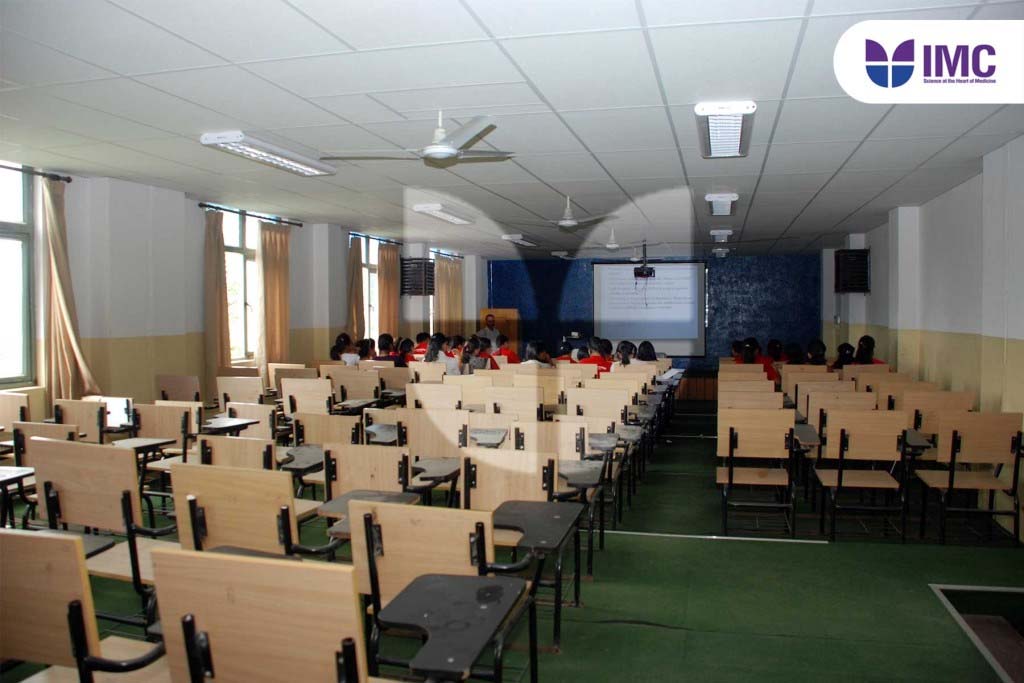
Student accommodation is available in connection with both Duwakot and Sinamangal.
The Duwakot hostel arrangement serves students associated with the Basic Sciences location. Accommodation is also maintained in Sinamangal, including hostel arrangements for male and female students.
Mess facilities, common-room arrangements, and administrative support form part of the accommodation structure.
The two-location model is relevant to student life because the academic setting can change as students progress from basic sciences into clinical study.
Fees, scholarships, and seat allocation for medical education are governed within the Medical Education Commission framework.
KMC does not independently replace the fee structure or scholarship provisions prescribed under the national medical education system.
MEC rules cover areas that include:
entrance procedures;
scholarship provisions;
seat allocation;
applicable fee structure;
admission procedures;
matching arrangements; and
the medical education admission calendar.
The number of seats assigned to individual programs may vary between admission cycles according to MEC decisions.
The same regulatory principle applies to scholarship allocation. Scholarships operate through the prescribed medical education framework rather than through an independent admission system created by the college.
Internship forms a compulsory part of major professional programs such as MBBS and BDS.
Both programs include one year of compulsory rotating internship after completion of their academic study periods.
Internship represents a supervised stage of professional education. It is separate from ordinary classroom instruction and forms part of the requirements students must complete before proceeding to the applicable professional licensing and registration process.
Other programs follow their own practical, clinical, or professional completion requirements according to their curricula.
Completing a university degree and entering professional practice are separate stages in regulated health professions.
Medical and dental graduates must meet the applicable licensing and registration requirements of the Nepal Medical Council before professional practice.
Nursing graduates must follow the professional licensing and registration requirements of the Nepal Nursing Council.
Allied health graduates are subject to the professional regulatory requirements applicable to their field, including NHPC requirements where the profession falls within its jurisdiction.
The university degree confirms successful completion of the academic qualification. Professional registration or licensing determines entry into regulated practice.
The academic pathway at Kathmandu Medical College involves several institutions with separate responsibilities.
A student first meets the eligibility requirements for the chosen program and enters through the applicable MEC admission system. After admission, study takes place at KMC under the Kathmandu University academic framework. Students complete the required academic, practical, clinical, examination, and internship components before receiving the relevant KU degree.
Graduates of regulated health professional programs then proceed to the licensing or registration stage required by the relevant council.
The sequence can be summarized as follows:
Meet the academic eligibility for the selected program.
Appear in the applicable MEC entrance examination.
Qualify under the prevailing merit and admission system.
Receive a program and seat through the prescribed allocation process.
Enroll at Kathmandu Medical College.
Follow the Kathmandu University curriculum and academic requirements.
Complete the required practical, clinical, examination, and internship components.
Receive the applicable Kathmandu University degree.
Complete the professional licensing or registration process required for practice.
This structure separates admission authority, academic authority, institutional teaching, and professional regulation rather than placing all four functions under a single organization.
Kathmandu Medical College was established in 1997.
It is affiliated with Kathmandu University.
Basic Sciences activities are based in Duwakot, Bhaktapur.
Clinical Sciences and Kathmandu Medical College Teaching Hospital are based in Sinamangal, Kathmandu.
KMC offers bachelor, postgraduate, and selected super-specialty programs in health and medical sciences.
The academic portfolio includes MBBS, BDS, BSc Nursing, BNS, BPT, MDS, MD, MS, DM, and MCh programs.
Relevant bachelor-level medical and health education admission follows MECEE-BL.
Postgraduate medical education admission follows MECEE-PG.
Admission, seats, scholarships, and fee structures operate within the Medical Education Commission framework.
Seat allocations may vary between admission cycles.
Curriculum, university examinations, and degree awards follow Kathmandu University regulations.
MBBS and BDS include compulsory rotating internship.
A KU degree and professional council licensing are separate requirements.
Graduates must meet the licensing or registration requirements applicable to their profession before entering regulated professional practice.
Kathmandu Medical College combines basic sciences education, clinical training, undergraduate professional programs, postgraduate specialty education, and selected super-specialty training within one KU-affiliated academic structure.
Its two principal locations serve different parts of that structure. Duwakot supports Basic Sciences education, while Sinamangal provides the Clinical Sciences and teaching hospital environment.
For students, the institution is one part of a broader medical education pathway. MEC governs the major entrance and admission functions. Kathmandu University governs academic requirements and degree awards. KMC delivers the teaching and clinical training. Professional councils regulate entry into practice after graduation.
Understanding these separate roles helps applicants interpret admission requirements, university affiliation, examinations, internships, and professional licensing without treating them as a single process controlled entirely by the college.
Kathmandu Medical College operates from two main academic locations. Basic Sciences activities are based in Duwakot, Bhaktapur, while Clinical Sciences and Kathmandu Medical College Teaching Hospital are based in Sinamangal, Kathmandu.
Kathmandu Medical College is affiliated with Kathmandu University. The university governs the curriculum, academic regulations, university examinations, and degree awards for the KU-affiliated programs offered at KMC.
KMC offers bachelor, postgraduate, and selected super-specialty programs. Its academic portfolio includes MBBS, BDS, BSc Nursing, Bachelor in Nursing Science (BNS), Bachelor of Physiotherapy (BPT), Master in Dental Surgery (MDS), various MD and MS programs, and selected DM and MCh programs.
Admission follows the applicable Medical Education Commission framework together with Kathmandu University academic requirements. Candidates must meet the eligibility conditions for the chosen program, qualify through the applicable entrance examination, and complete the prescribed admission or matching process.
Relevant bachelor-level medical, nursing, dental, and health professional programs follow the MECEE-BL entrance and admission framework administered by the Medical Education Commission.
Postgraduate medical education admission follows the MECEE-PG framework. Candidates must meet the academic and professional eligibility requirements applicable to their chosen postgraduate program.
Seats, fee structures, scholarship provisions, and major admission procedures are governed within the Medical Education Commission framework. Seat allocations may vary between admission cycles according to MEC decisions.
Both MBBS and BDS follow a five-and-a-half-year structure under Kathmandu University. Each includes four and a half years of academic study followed by one year of compulsory rotating internship.
No. Students studying KU-affiliated programs at KMC receive their degrees from Kathmandu University after successfully completing the applicable academic, examination, clinical, and internship requirements.
Yes. Graduates of regulated health professional programs must meet the licensing or registration requirements of the relevant professional council before entering professional practice. Medical and dental graduates follow Nepal Medical Council requirements, nursing graduates follow Nepal Nursing Council requirements, and allied health graduates follow the regulatory requirements applicable to their profession.