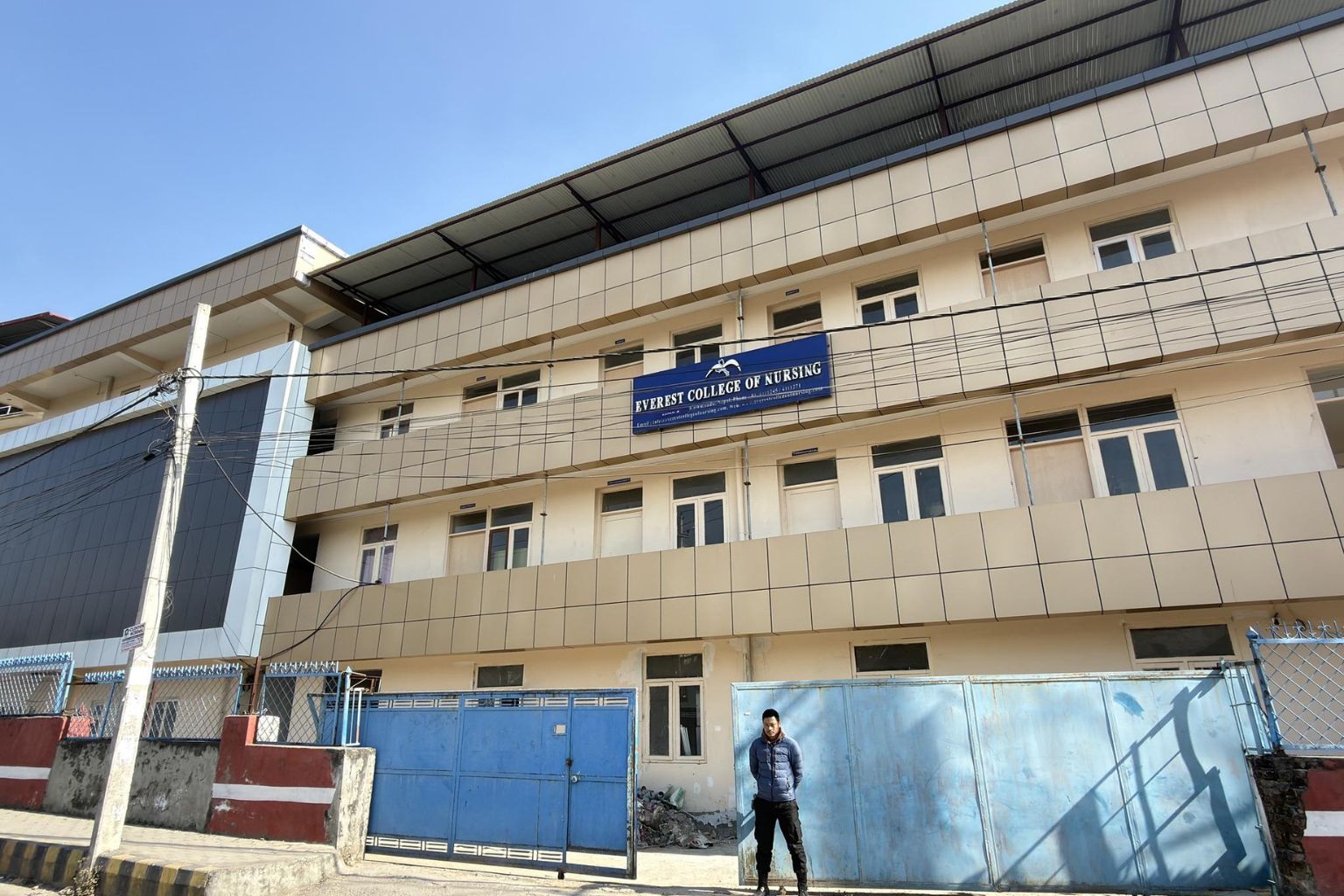
The Post-Basic Bachelor of Nursing Science (PBNS) at Everest College of Nursing, Budanilkantha 10, Kapan, Kathmandu, is a three-year bachelor's-level nursing program affiliated with Purbanchal University. It is designed for nurses who have already completed PCL Nursing and have professional work experience after obtaining a nursing license.
The course develops advanced knowledge and practical skills across hospital nursing, community health, midwifery, psychiatric nursing, research, education, and nursing management. The curriculum also allows students to pursue an elective area during the third year.
Course: Post-Basic Bachelor of Nursing Science (PBNS)
Duration: 3 academic years
College: Everest College of Nursing
Affiliation: Purbanchal University
Location: Budanilkantha 10, Kapan, Kathmandu, Nepal
Eligibility: PCL Nursing with required professional experience after NNC license
Entrance: 150-mark entrance examination
Selection: Merit basis
Elective Areas: Community Health Nursing, Midwifery, Medical-Surgical Nursing, or Psychiatric Nursing
Purbanchal University previously used the title Post-Basic Bachelor of Nursing (PBBN) and changed the program name to Post-Basic Bachelor of Nursing Science (PBNS) from Academic Year 2075/76. The revised curriculum is structured over three academic years.
PBNS is intended to build on prior nursing education and professional experience. Its academic focus includes primary health care, hospital nursing, reproductive and maternal health, research, health management, communication, leadership, and community participation.
The program also prepares students for responsibilities connected with nursing education, management, research, clinical care, and community-based health work.
Eligibility: Applicants must have passed PCL Nursing from a recognized institute. They must also have at least one year of work experience in a recognized health institution after obtaining a Nepal Nursing Council license.
The entrance examination follows Purbanchal University rules and carries 150 marks:
English: 50 marks
Nursing Science: 100 marks
Question type: Objective
Minimum pass mark: 50%
Selection: Merit basis
The Nursing Science component includes problem-solving and questions related to the concerned major subject or area.
The curriculum progresses from health sciences and clinical nursing to community, maternal, psychiatric, educational, research, and management areas.
| Year | Major Subjects |
|---|---|
| First Year | Anatomy and Physiology, Pharmacology, Pathophysiology, Microbiology/Parasitology, Biochemistry, Nutrition and Dietetics, Medical-Surgical Nursing-I, Nursing Concept and Theories, Pediatric Nursing, Medical Sociology/Anthropology, Professional English |
| Second Year | Midwifery-I, Community Health Nursing-I, Psychiatric Nursing-I, Educational Science, Epidemiology, Geriatric Nursing, Applied Computer Technology |
| Third Year | Leadership and Management, Research and Biostatistics in Nursing, Oncology Nursing, Elective Subject and Elective Practicum |
In the third year, students select an elective from Community Health Nursing-II, Midwifery-II, Medical-Surgical Nursing-II, or Psychiatric Nursing-II.
Practical learning takes place across different health and educational settings. First-year clinical practice includes general and children's hospital settings, along with basic science and nutrition practice.
Second-year clinical areas include maternity, specialty and mental health settings, senior citizen care, nursing education practice, and community health placements. Community practice may involve health offices, primary health care centres, health posts, and selected communities.
Third-year practical work includes management practice, oncology-related clinical exposure, research activities, and practicum in the chosen elective area. Research practice covers proposal writing, conducting research, and report writing.
At Everest College of Nursing, nursing students also have access to classrooms, simulation laboratories, library resources, faculty guidance, clinical learning opportunities, academic advising, counseling, and career guidance.
Teaching methods include interactive lectures, group discussions, observation, demonstrations, written assignments, presentations, practical assignments, term papers, self-directed study, and problem-based learning.
For theory courses, internal assessment carries 20% and the final examination carries 80%. Practical evaluation carries 80% internal assessment, while the final examination in the major elective subject carries 20%.
The PBNS curriculum develops advanced nursing knowledge in clinical care, health management, community health, research, education, and leadership. Its four elective areas allow students to concentrate on Community Health Nursing, Midwifery, Medical-Surgical Nursing, or Psychiatric Nursing.
The program's academic objectives also include preparation for responsibilities as educators, managers, researchers, and nursing professionals working with individuals, families, communities, and healthcare institutions.
The Post-Basic Bachelor of Nursing Science program is structured over three academic years.
Applicants must have passed PCL Nursing from a recognized institute and completed at least one year of work experience in a recognized health institution after receiving an NNC license.
The entrance examination carries 150 marks: 50 marks in English and 100 marks in Nursing Science.
Candidates must secure at least 50% in the entrance examination. Selection is made on merit.
Students can choose Community Health Nursing-II, Midwifery-II, Medical-Surgical Nursing-II, or Psychiatric Nursing-II in the third year.
Yes. The third year includes Research and Biostatistics in Nursing with research practicum covering proposal writing, conducting research, and report writing.